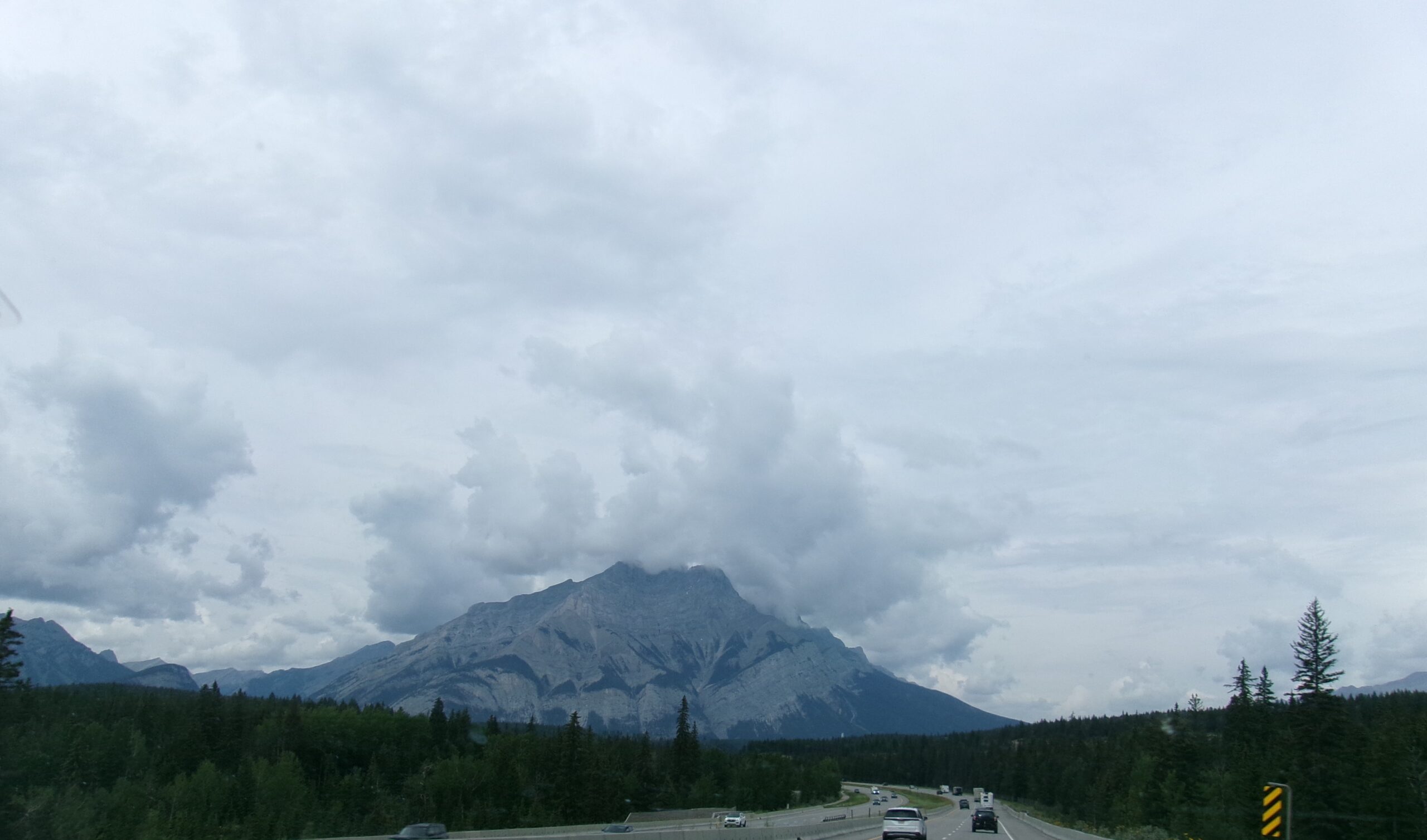
We travelled quickly through Alberta. We had hoped to make a couple of stops visiting family and friends, but our various schedules did not match, so we completed this portion of the trip at a fast clip.
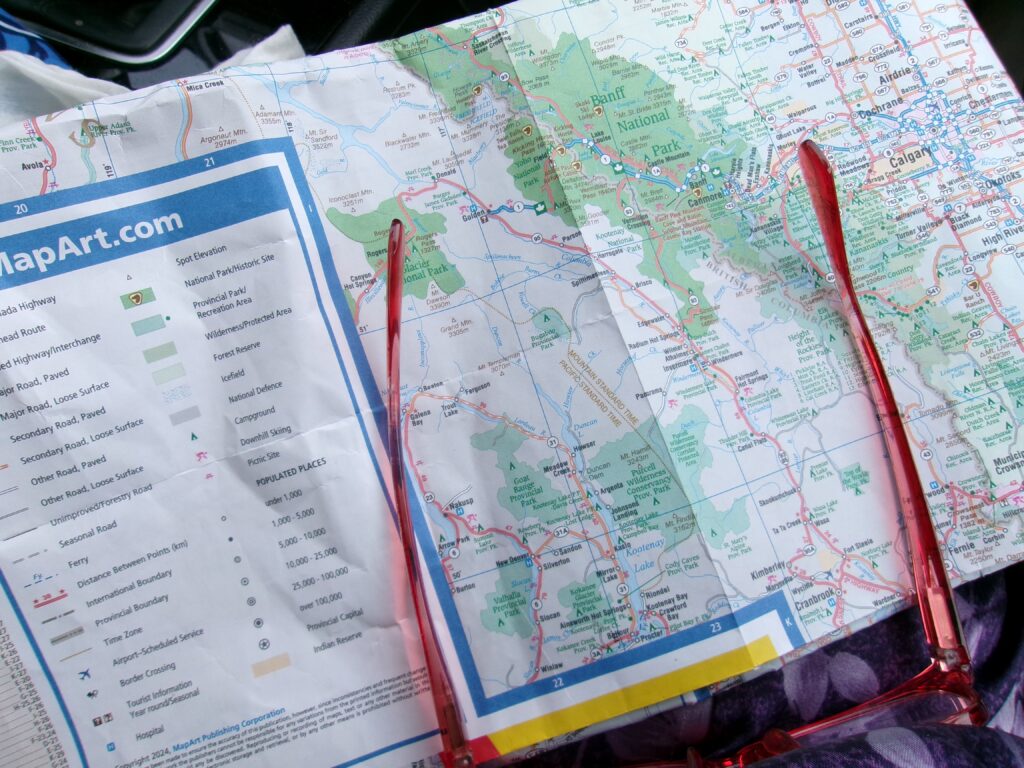
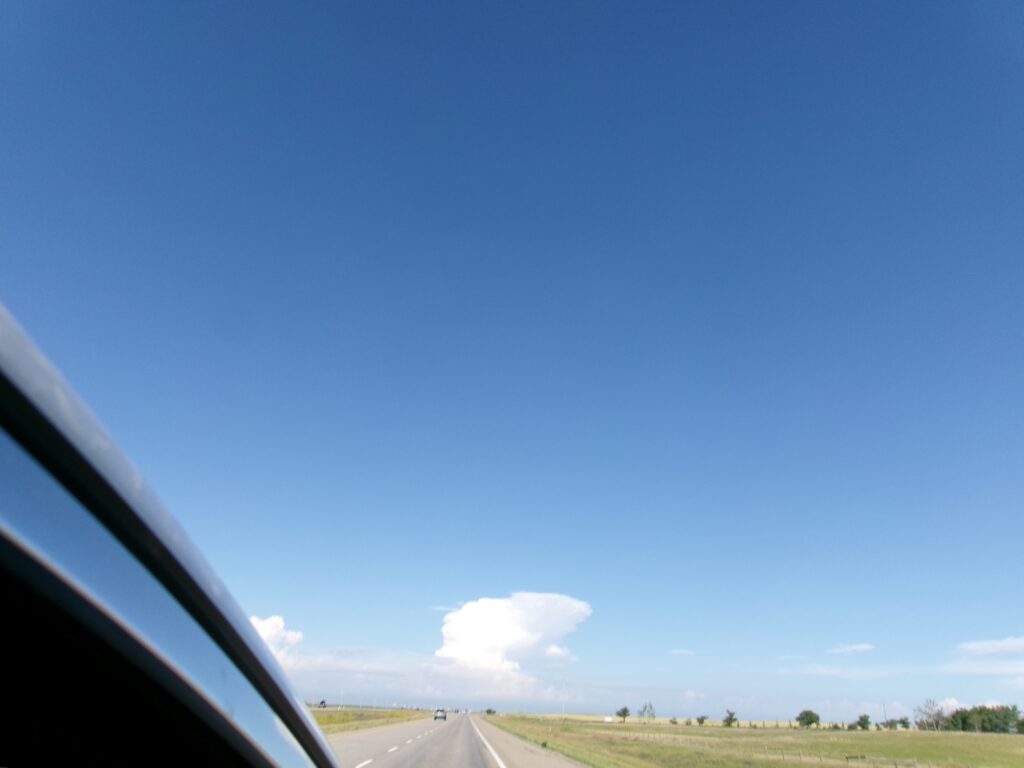
It was just fine, because initially we found what seemed a bleak and barren land. There was grassland, with dismally dry, rather unkempt fields dominating the landscape.
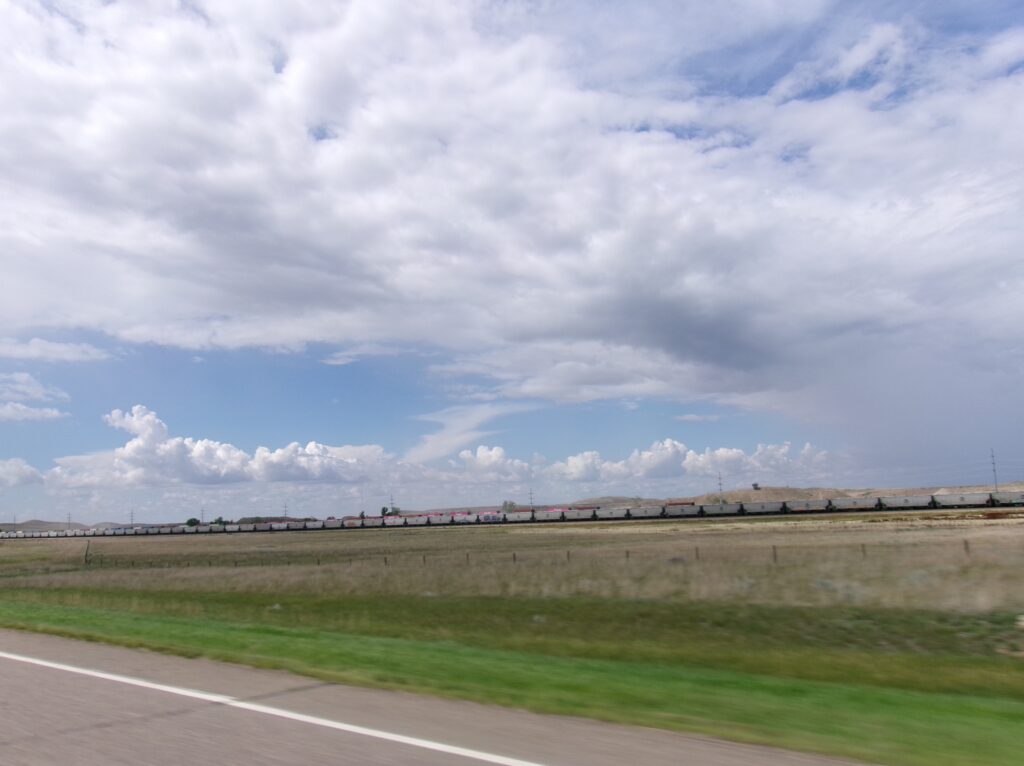
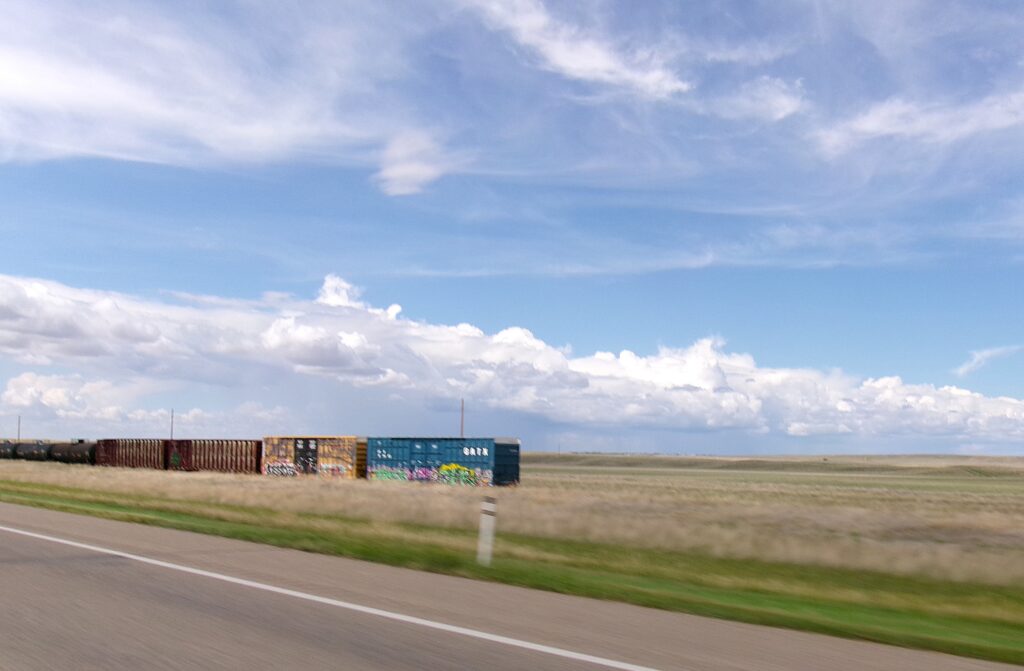
Colours were bleached by the sun, faded so they barely tinted the fields. It was a beige land. A similarly colourless train was barely discernible from the grasses.
In the midst of this dull landscape there were highlights. Farm ponds were everywhere, and they seemed bigger, surrounded with greener grasses than the ones seen previously. This was a lovely sight because Alberta is a cattle-ranching province, and these grasslands are where the bovine herds are raised.
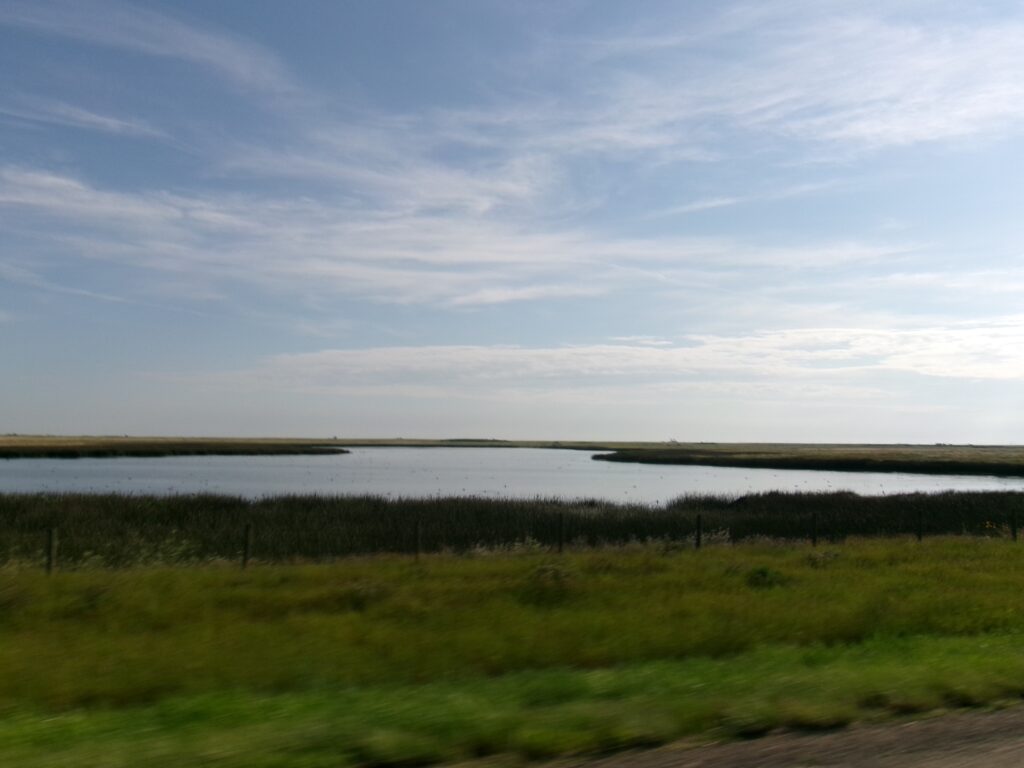
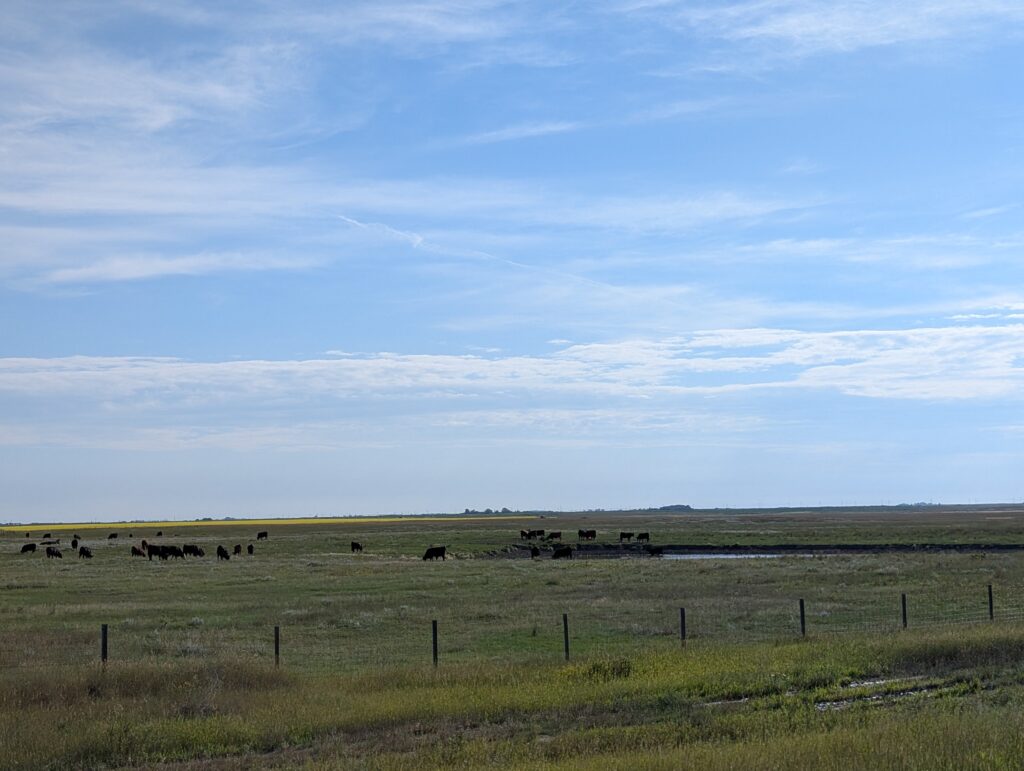
Water is essential for healthy cows. If it is as easily available as the many farm ponds seems to indicate, then these grasslands are swaying with riches. The herds we saw were chunky and sleek, looking very healthy. Eating grasses and drinking cool water as they ambled around the ranch is what has given Alberta beef its fine reputation.
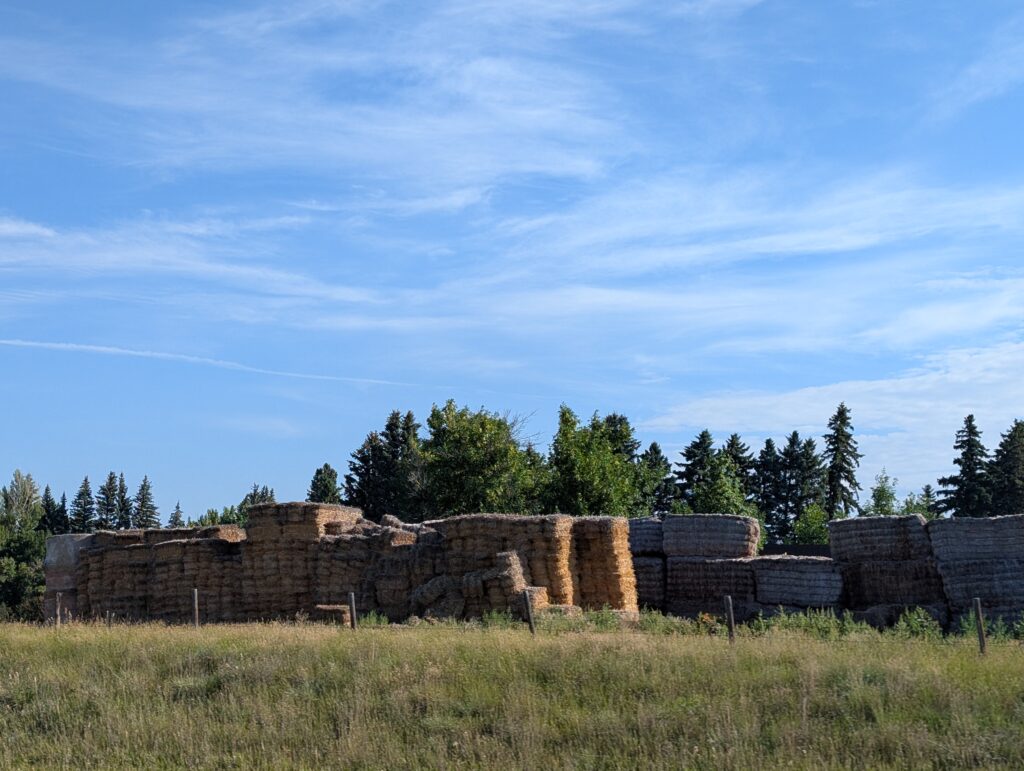
Winter preparations were underway to ensure the continuing production of fine beef. Stacks of hay bales as high as an apartment building waited for transportation to the barns. This would supplement the commercial food provided for the cattle when snow prevented them from grazing in the fields.
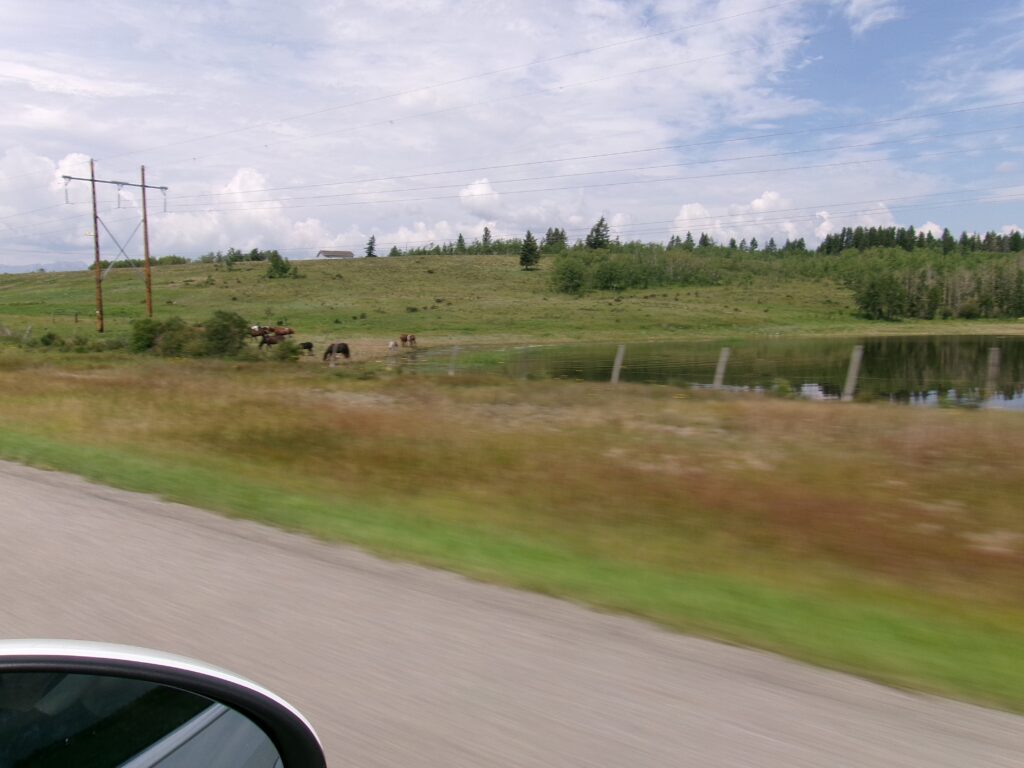
We played a driving game – ‘spot the highlight’ in the landscape. Sometimes it was horses, not cows, that roamed the fields. That fit with another Alberta stereotype, that every ranch kept a herd of horses for work and pleasure.
Well tended farm buildings were surrounded by a ring of trees. Very often they were classic tin construction, like tin nissen huts, and squat silos. A little bit different, but certainly indicative of care, attention, and wealth.

That care and attention was necessary to ensure that another Alberta agriculture product, wheat, got what it needed to grow in these dry grasslands. Many fields had pivot irrigation systems, working on regulators to ensure equitable and timely distribution of water.

We paused at Tillebrook Provincial Park, about a third of the way across the province. It had been a long day of driving. We turned off the road into a small oasis of green. The trees and grass of Tillebrook provided a welcome relief from the beige and muted green fields.
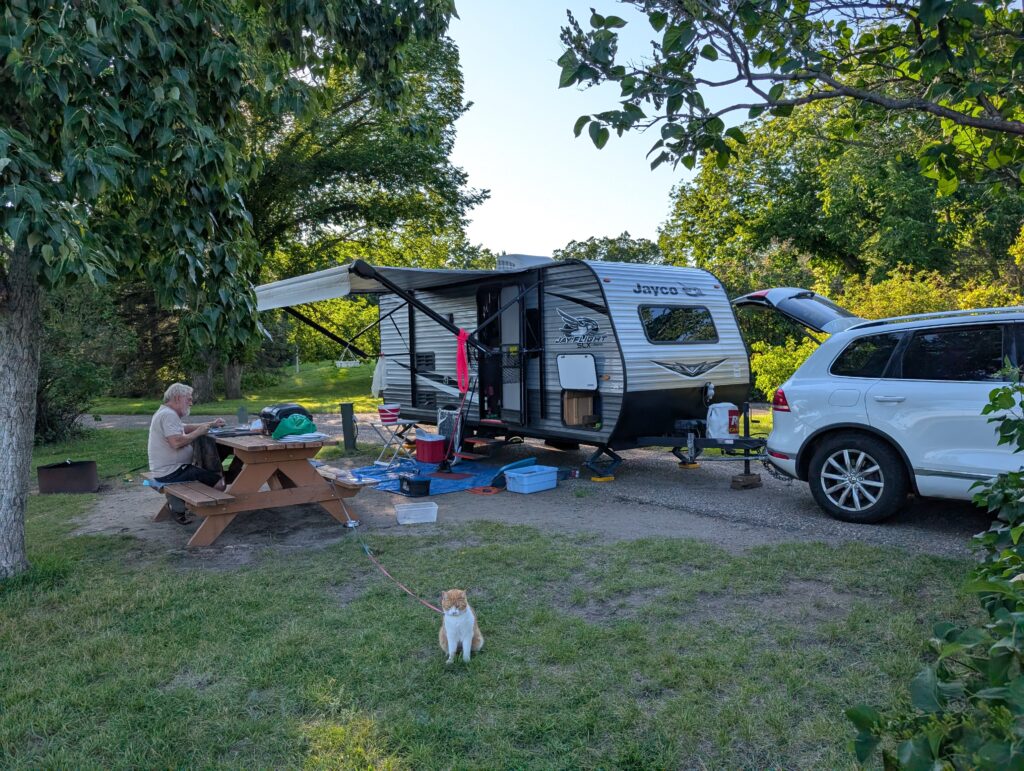
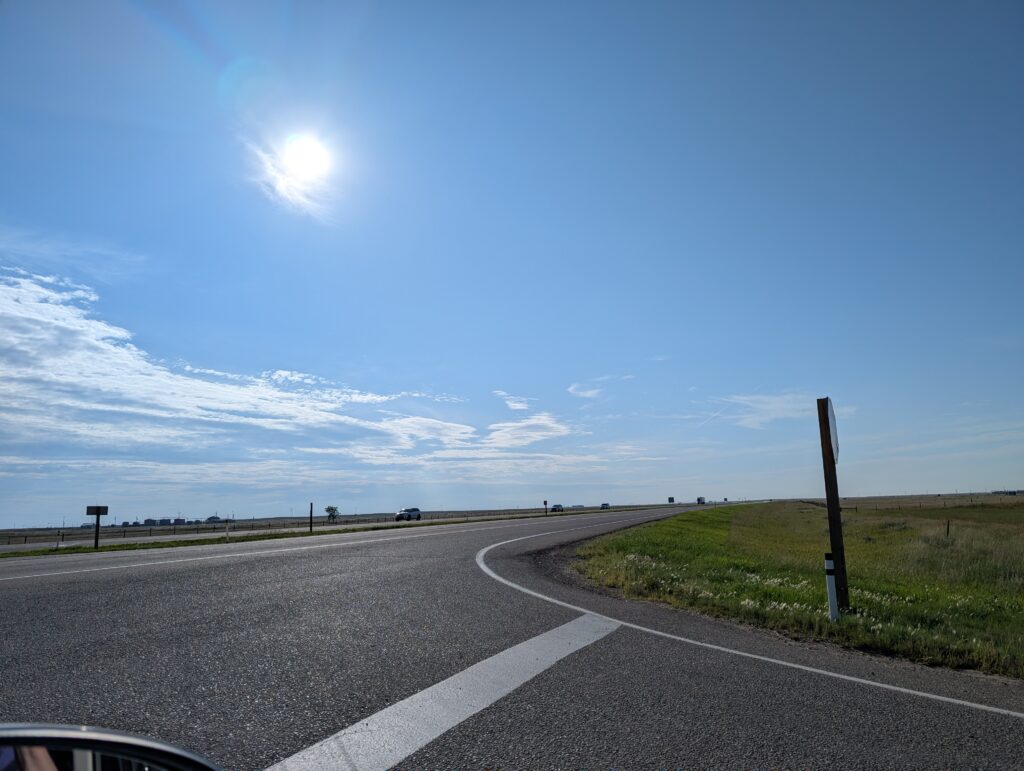
For one night we revelled in the cool prettiness of Tillebrook. Then it was back to the straight road and the beige landscape. That straight road was a blessing for the driver – wide and smooth, easy to drive the long distances we were travelling on these two days.
We continued our ‘spot the highlight’ game. What did we see? Colourful, comic relief. A brightly decorated train sat on the track at the edge of a pale yellow wheat field.
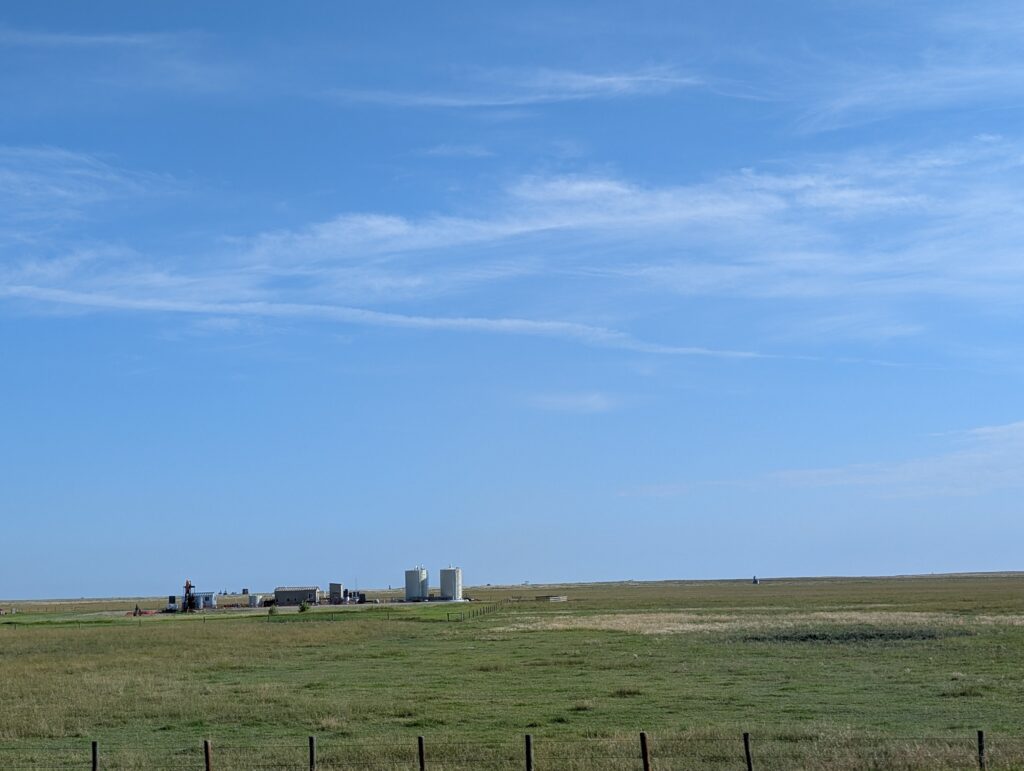
Some oil rigs in a field indicated Alberta’s most well-known product – oil and gas. It seems that the province has a unique geological base that has provided vast oil and gas reserves. The province sits on the Western Canadian Sedimentary Basin which contains deposits of this ‘liquid gold’. Sedimentary basins are made from layers of mud at the edges and under the water of oceans, lakes and rivers. Millions of years ago, plants grew abundantly. When they died, they fell into the mud, decomposed, and under pressure become oil and gas. This is one main source of Alberta’s wealth.
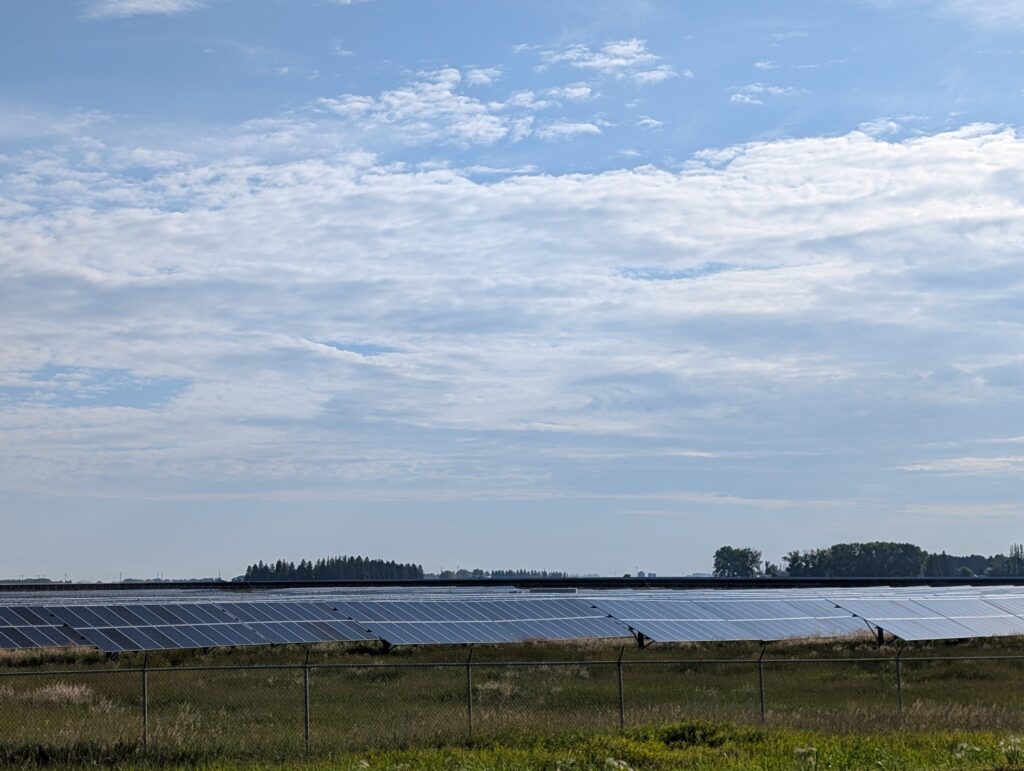
The province has bountiful solar panel farms, harvesting energy from the sun with the ease that it harvests oil, gas, grain and cattle. Oil and gas reserves fill the province’s geological cellar, but there is foresight and application of solutions to using other sources for energy production on the main landscape – wind and solar power were evident on the platform.
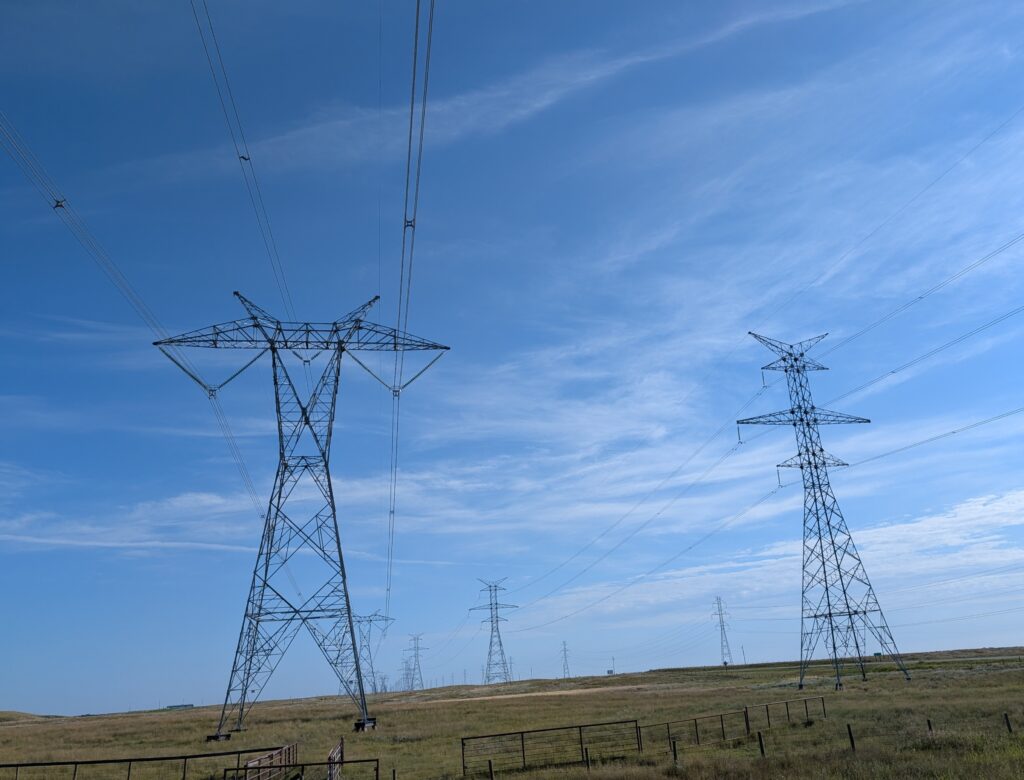
At frequent intervals, we noticed banks of powerlines. The industries need high voltage electricity, and the province ensures that it is transported efficiently across the province. Nigel, who had spent several years and hundreds of kilometres surveying powerlines similar to these, enjoyed spotting them and reminiscing about his survey days.
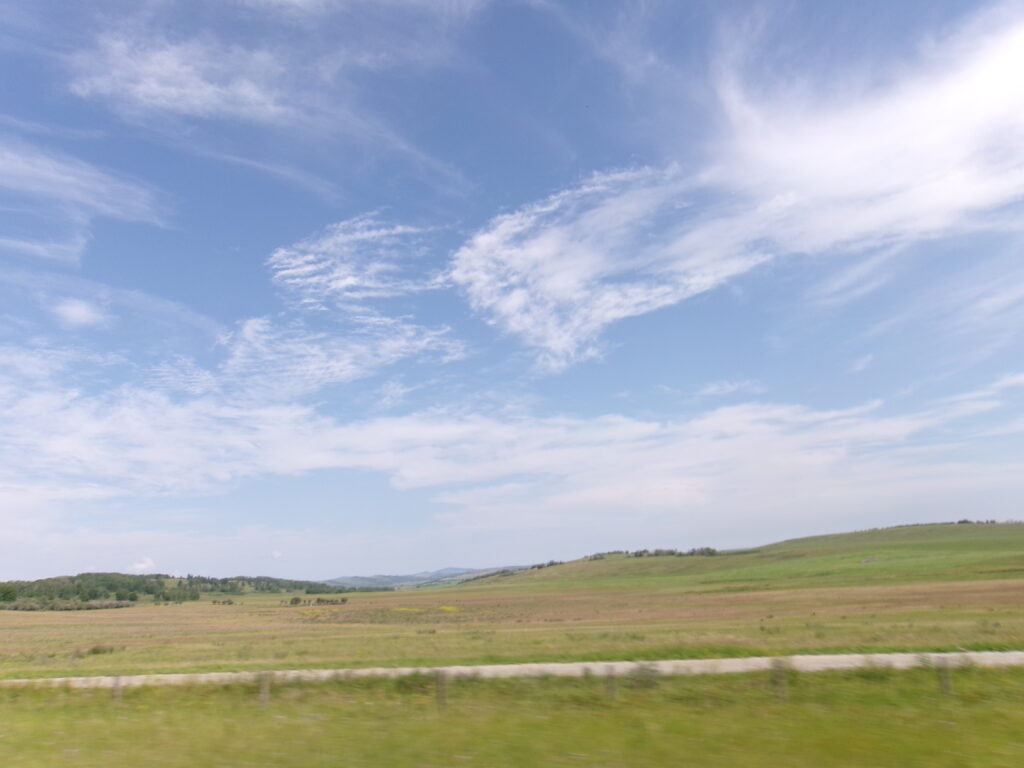
Then, quite suddenly we were noticing relief. There were undulations, and rolling hills in the landscape. Colours were deepening, becoming more prominent.
Within kilometres there was noticeable tall vegetation. The almost treeless landscape transformed into large groves of trees. We reckoned we’d see mountains soon.
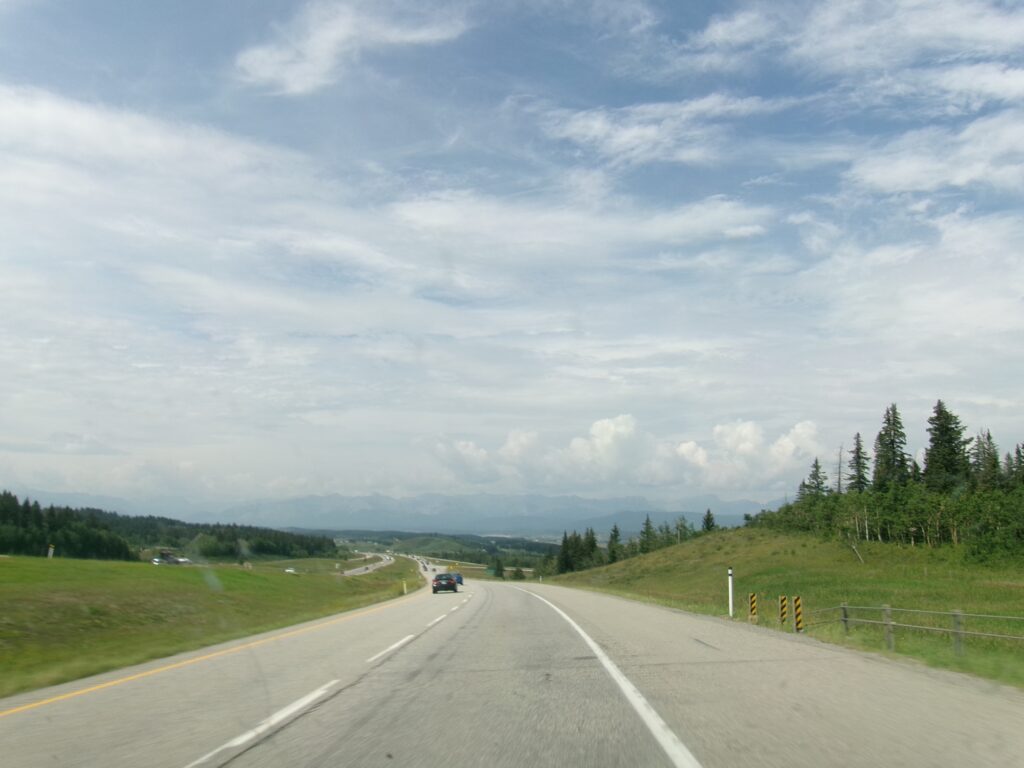
First, though, we had to get around Calgary. Thankfully, a bypass has been built around the city. Unaccustomed as we are to driving in a large city, we breathed a sigh of relief. Bypasses have wide views, so when we rounded a bend at the north-west corner of Calgary, we caught sight of the Rocky Mountains. They were in the distance, but they filled the horizon. What a sight!

As we got closer, the details in the mountains came into sharp relief. The bare rocky sides of the mountains seemed soul-less, rocky chunks of Earth thrown up in a fit of pique. Nearly 80 million years ago the tectonic plates collided. The pressure and heat caused the Earth’s crust to buckle, bend and fold, pushing up the Rocky Mountains. The glaciers of the ice age sculpted the peaks and valleys creating the marred and craggy features with which we are familiar.

All the geological and glacial grumbling created the iconic Canadian Rocky Mountains that we saw as we drove along this portion of the Trans-Canada Highway.

Wildlife is a concern – for conservation and for driving safety. Special wildlife overpasses have been built over the highway. This gives the animals safe passage, and helps reduce the number of animal-vehicle collisions. We give the overpasses the credit for keeping the animals invisible to us as we drove along this wild-life corridor. Not a single sighting of an animal.
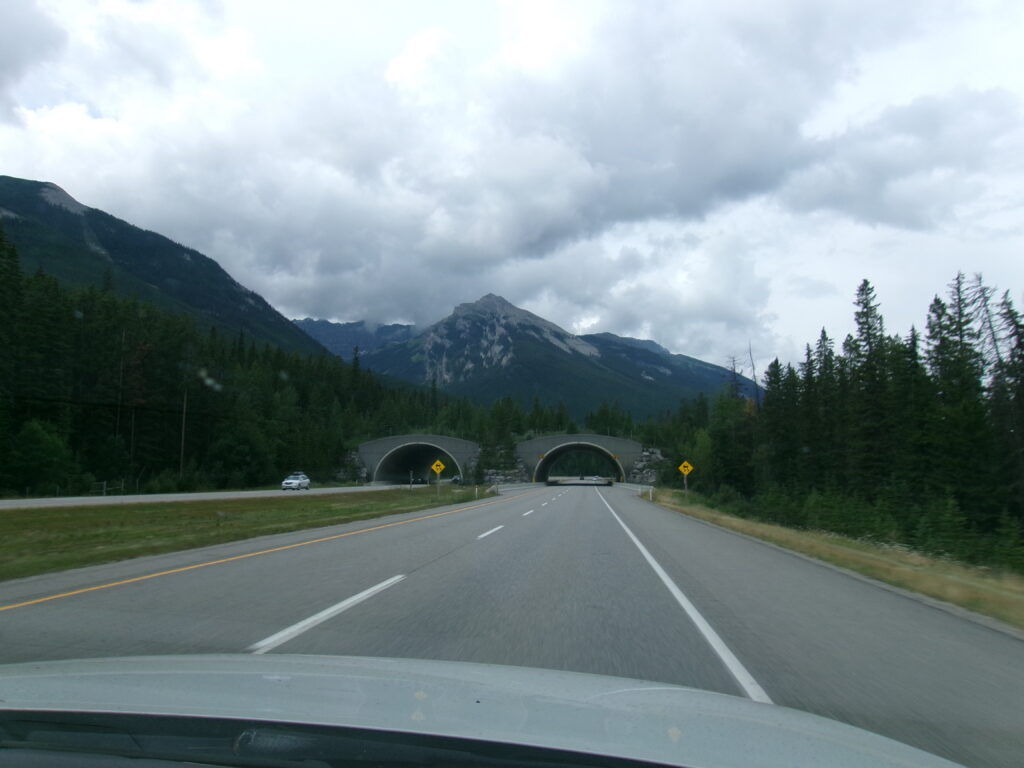
We did spot plenty of geographic sights. Glaciers carved these mountains. The glacial melt-water continuously refills large lakes and raging rivers, sometimes green, sometimes aqua, and sometimes nearly indigo blue. It all contributes to an idyllic vista of the Rockies.
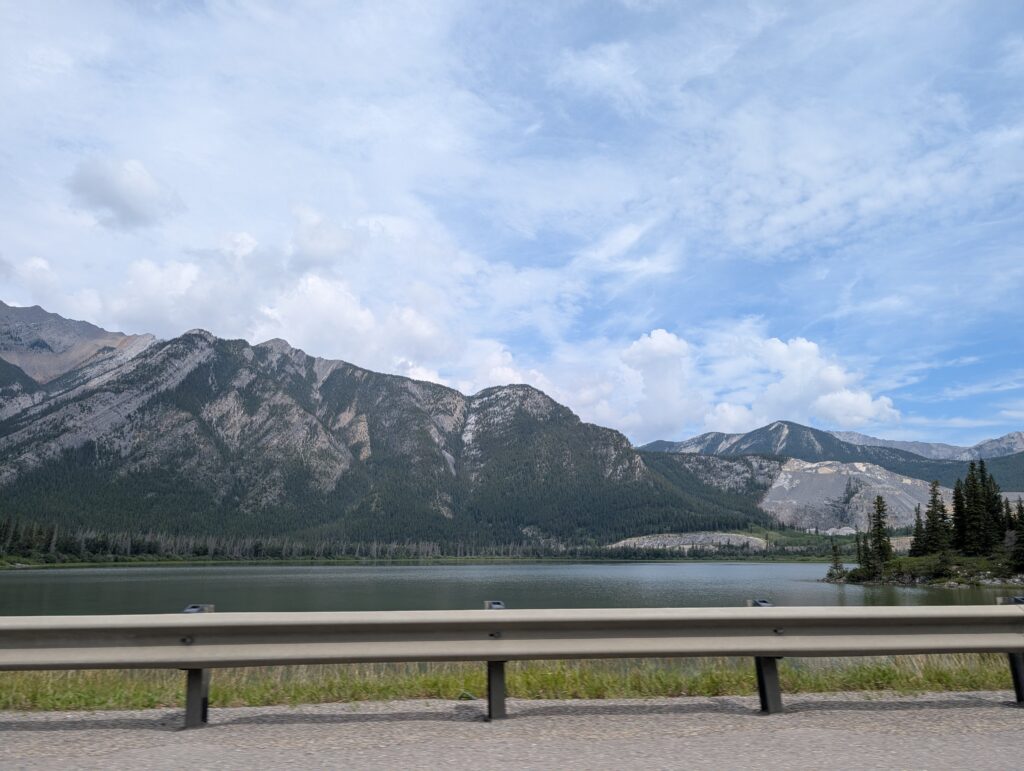
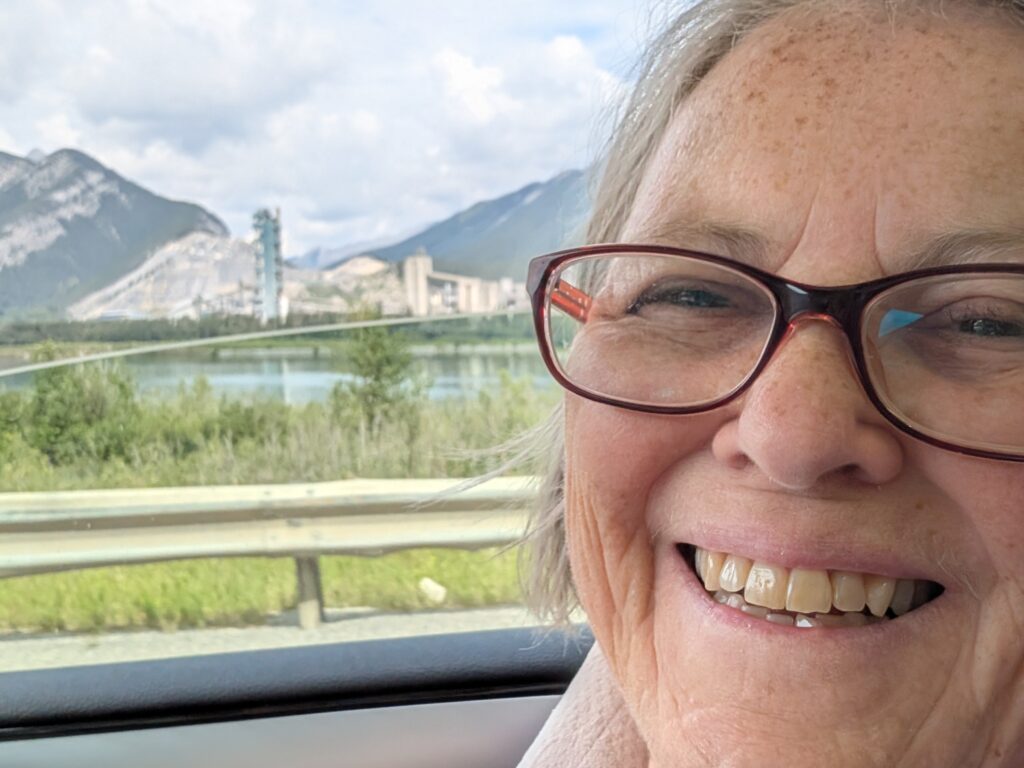
Somehow, in the midst of it all, industry finds a way to be in the scene. The Lafarge Cement Factory sits on Lac des Arcs, at Exshaw. It has been there since 1906. Apparently there have been some disputes about the environmental impact of the company, but there it sits, providing work, and doing its best to meet the required standards of good stewardship.
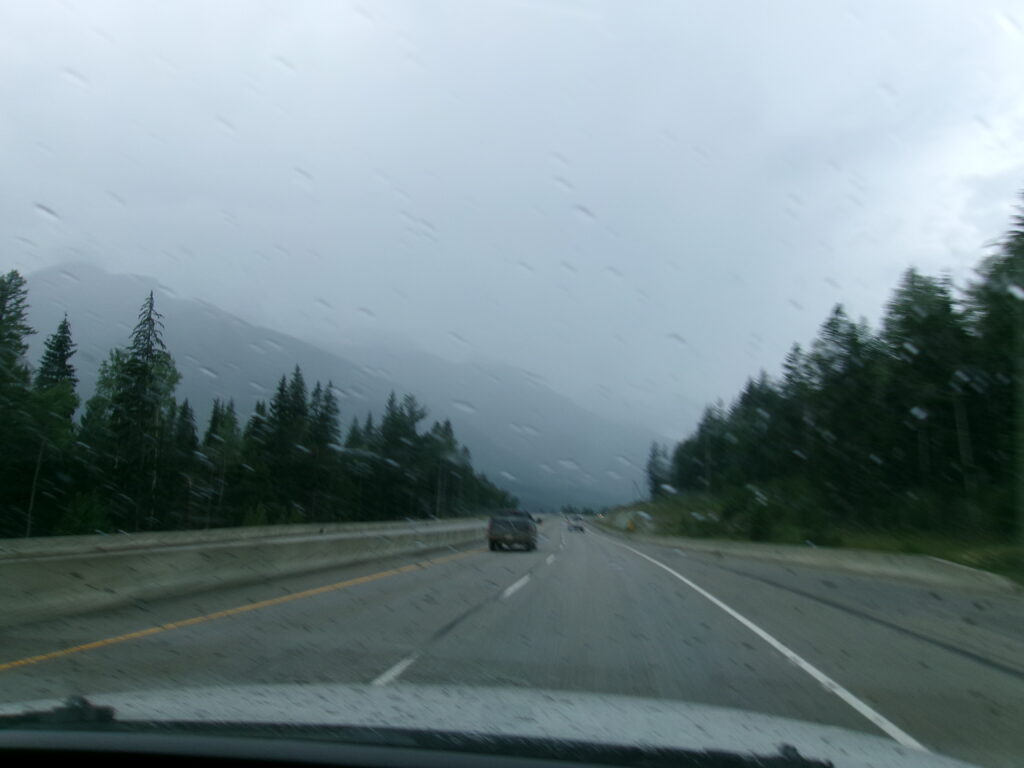
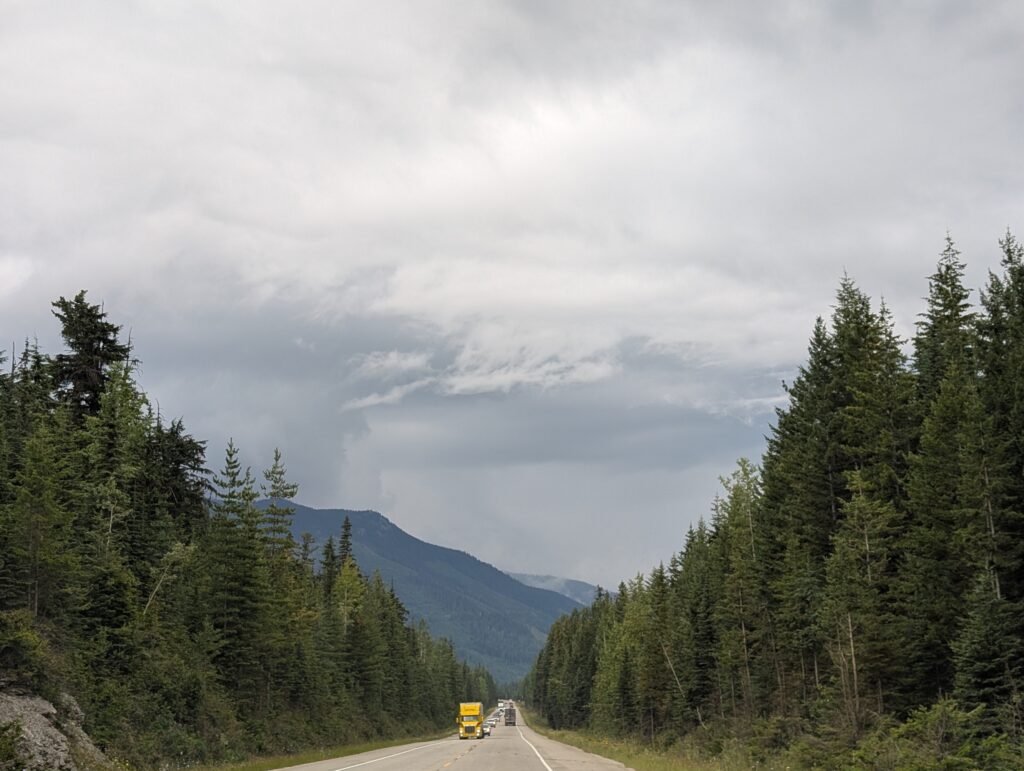
As happens with mountains, the weather changed as we climbed up through the Kicking Horse Pass. Thankfully, it was summer, so the precipitation was rain. Rain, although problematic, is much easier to deal with than snow. You might hydroplane, if you are careless, but you don’t get stuck in a snowbank or lose the road in a blizzard.
Kicking Horse Pass crosses the Continental Divide, meaning that the water on the west side of the pass flows towards the Pacific Ocean, and the water on the east side of the pass flows towards Hudson Bay or the Gulf of Mexico. The highest point is at 1 627 metres, which is not so very high, considering that many of the Canadian Rocky points are 2 500 to 3 500 metres high.
The Pass was given this unusual name because one of the members of the exploratory expedition was kicked by his horse in this area. There is a commemorative plaque in the large rest area just after the long bridge spanning the Kicking Horse River.
That’s our well travelled vehicle and trailer in the parking lot.

From there it was a downhill road through the remainder of the pass towards British Columbia. Less stressful on the vehicle, but still stressful on the driver.
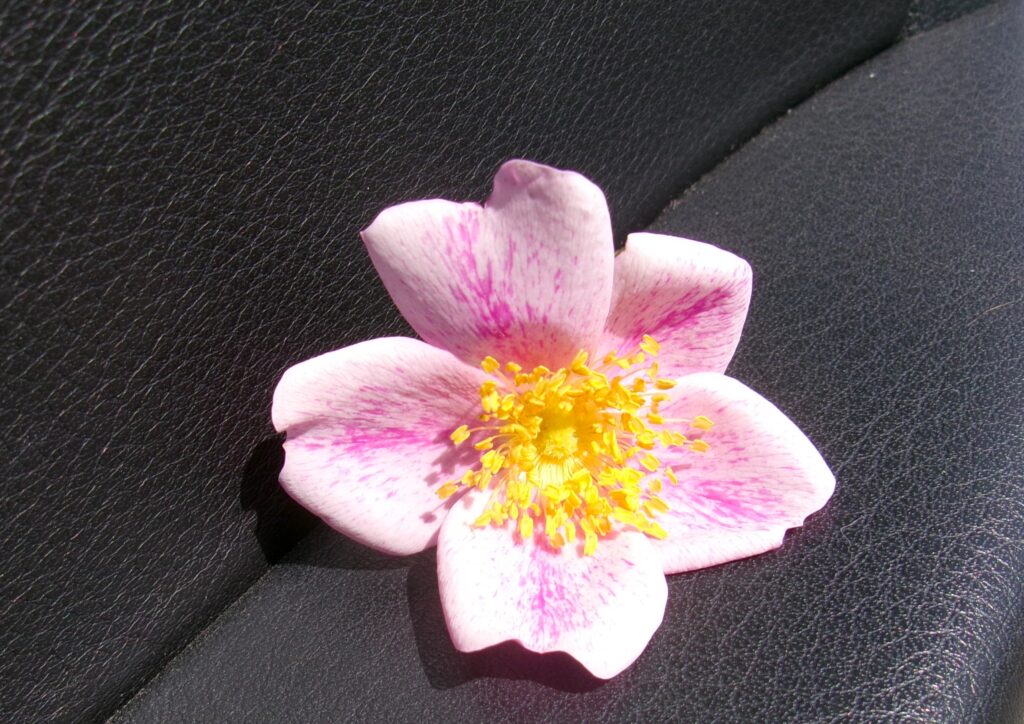
Alberta was a province of contrasts from dry grasslands to wet mountain roads, from oil rigs to solar farms, from cows and horses to cement factories. At a roadside stop, we picked a Wild Rose, the official flower of Alberta. It kept us company across the province, symbolically including us in the wild beauty of Alberta.


Leave a Reply