
The road to a friend always creates a light-some, positive atmosphere in the vehicle. A smile hovered around serious-driver Nigel’s mouth. He, and I, were enjoying the scenery – the brightly coloured fields of grain, the magnificently expansive sky, the view to a horizon kilometres away – which, possibly because we were driving to visit a friend from Botswana days, brought to mind aspects of the wide landscapes of areas of southern Africa. It’s not the same, of course not, but there are similarities.
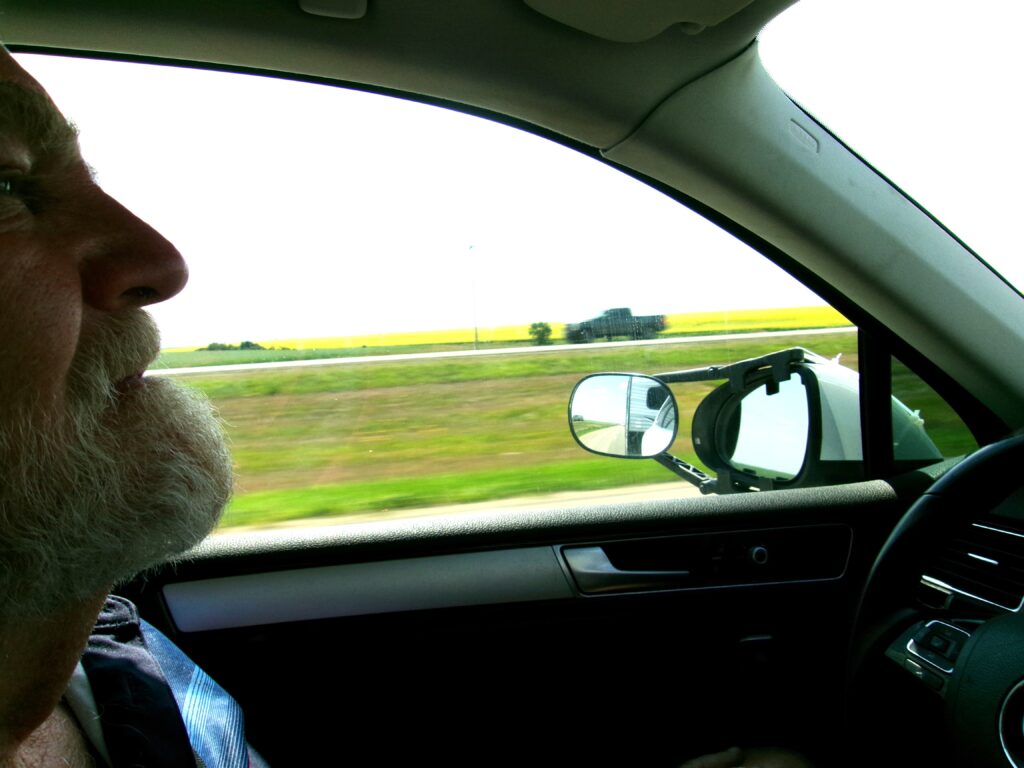
We were almost relaxed driving on the smooth, wide Trans-Canada highway. Swathes of Canada to the left of us, much more of Canada to the right, and kilometres of Canada in front. It’s a huge country. By driving across it, we were increasingly aware of the size of Canada. It’s the second largest country in the world. We were very glad to have a wide road, even if from time to time construction reduced it to a single lane.

We turned off the Trans-Canada onto Highway 35, a secondary highway oriented north-south. This would take us to our destination. The road passed through a small town, Qu’Appelle. We were amused with the residual advertisement on the Red & White store wall. The faded paint from days of past glory seems an apt metaphor in what seems to be a declining town.
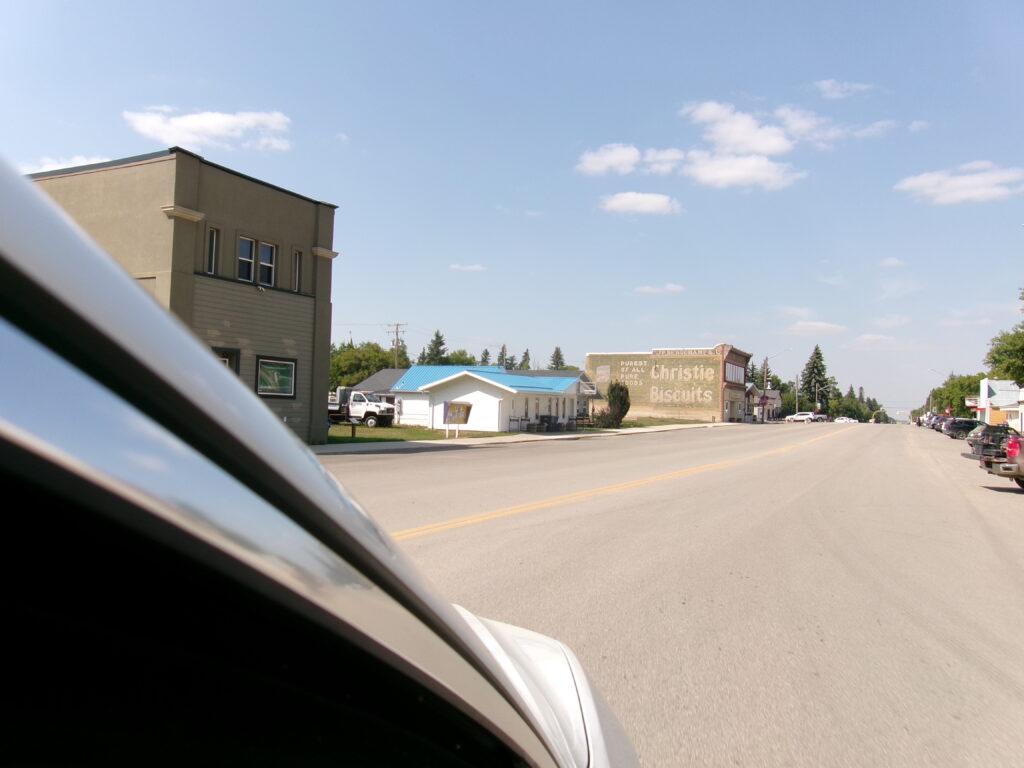
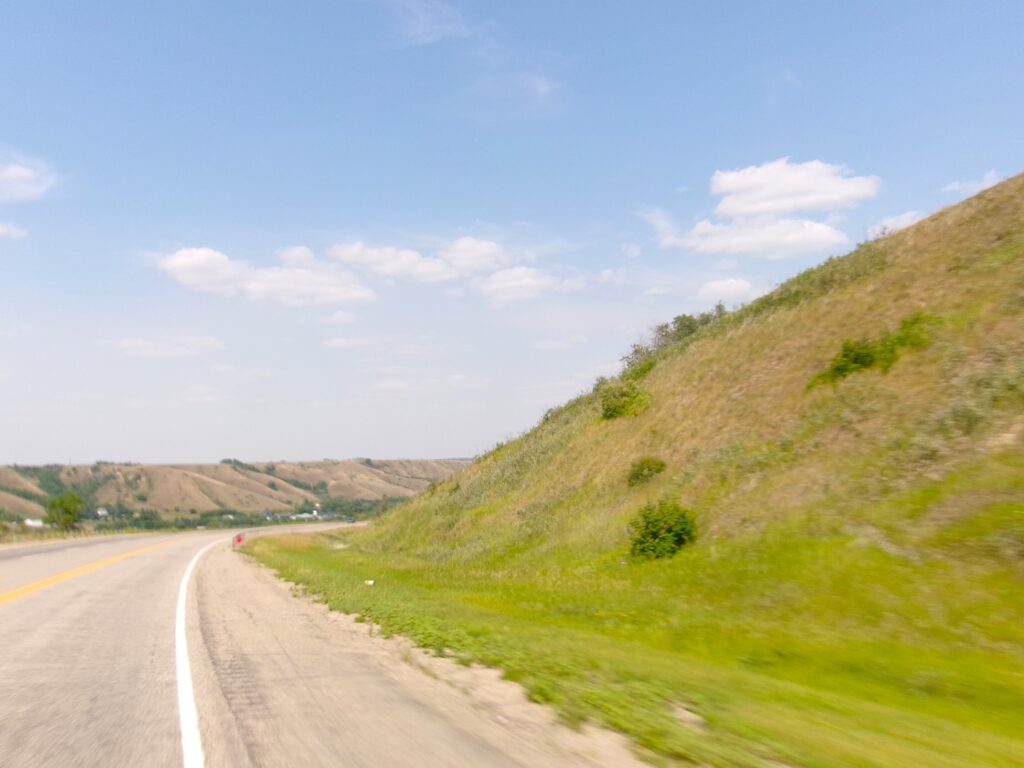
Just a few kilometres further north we were in for a visual surprise. The now familiar flat fields
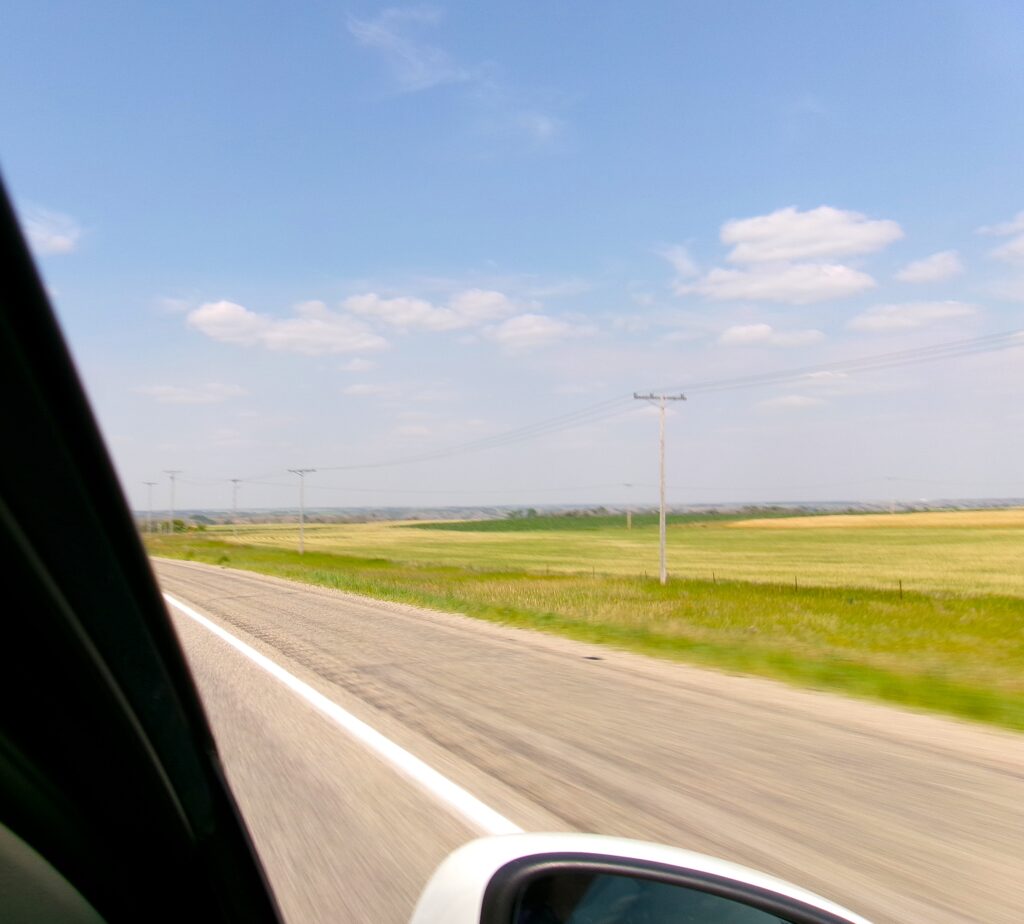
suddenly broke open into a wide coulee, a dry ravine created by meltwater carving into the land after the last Ice Age, about 14 000 years ago.
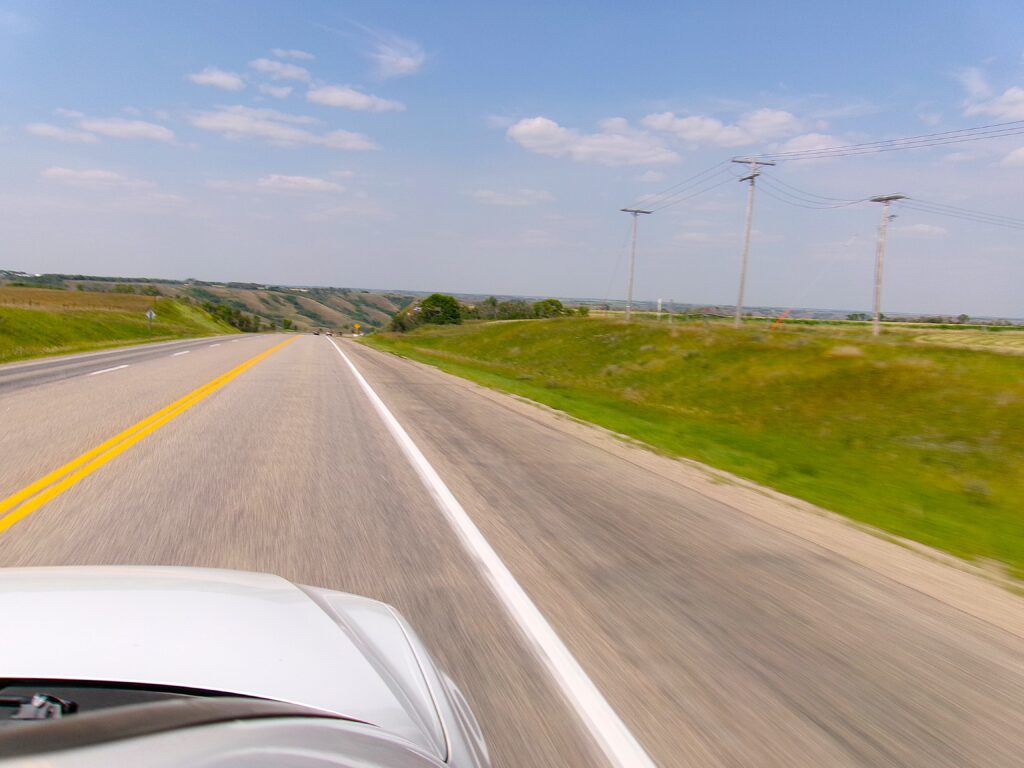
It’s a round-edged ravine, breathtaking because it was unexpected, and dramatic because of its width and depth. This landscape has texture, a linen tablecloth lying draped over the Prairies.
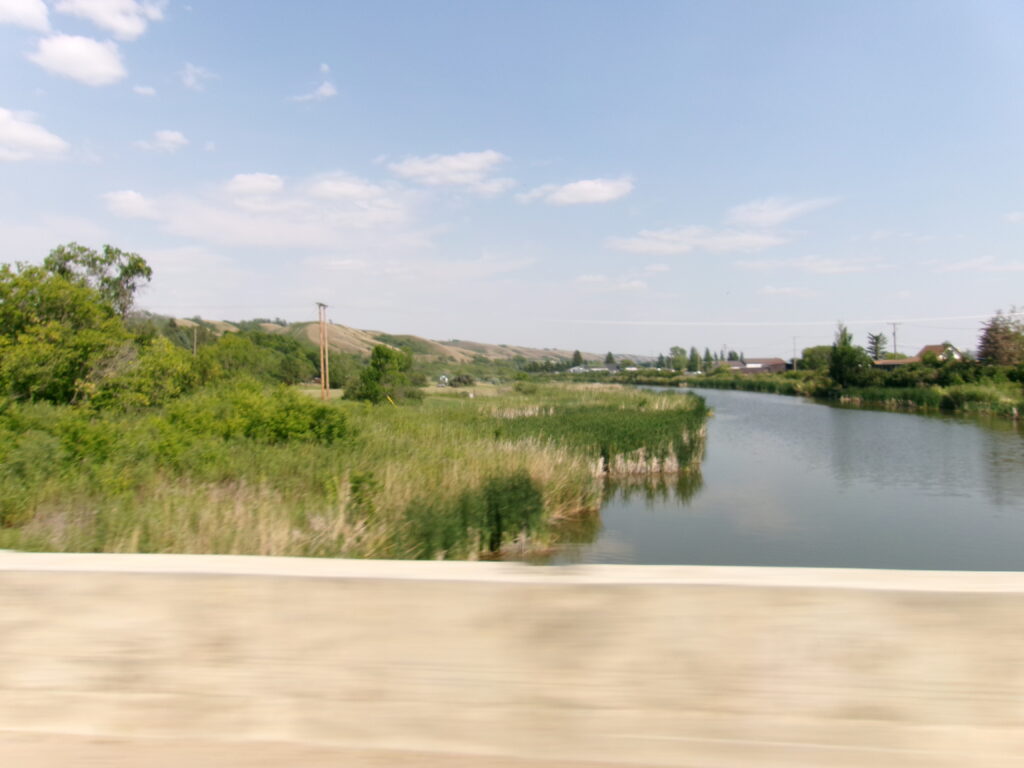
At the u-shaped floor of the ravine we crossed the Qu’Appelle River, surprisingly narrow at this bridge. Nearby, the river opens into lakes, remnants of remaining indentations from the pressure of the glaciers during the Ice Age, and Glacial Lake Regina, the post glacial-era lake that filled much of the watershed.
The effect of that glaciation and meltwater can be found in geological formations from Lake Diefenbaker and Last Mountain Lake in the west to the Manitoba border, 430 kilometres to the east, where the Qu’appelle River joins the Assiniboine River.
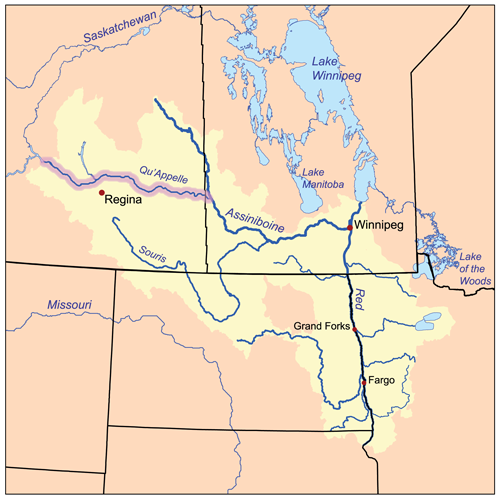
The Red River drainage basin, with the Qu’Appelle River highlighted. https://en.wikipedia.org/wiki/Qu%27Appelle_River
Climbing up out of the valley, the effect left by glacial erosion and deposition was noticeable as rippled, undulating hills. Cows love this type of landscape, because they can lie down and watch the world go by, or tuck themselves into one of the hollows to avoid the wind.

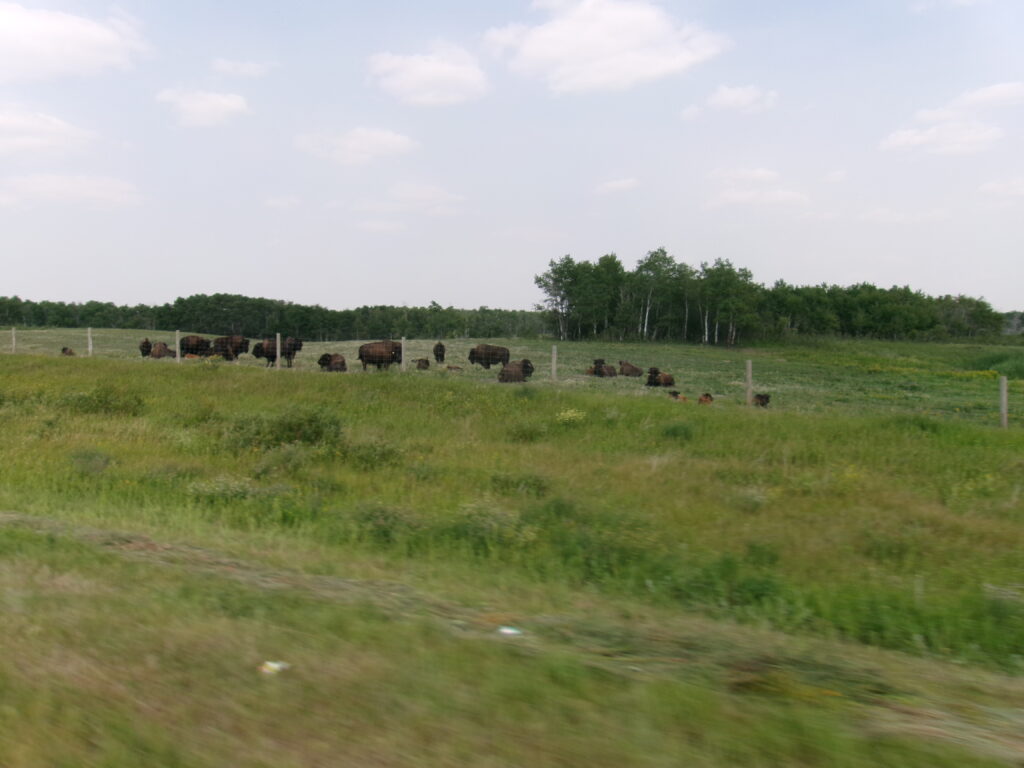
A quick by-pass, and a double take. Those were bison grazing in that field just up the road from the cows. Bison join cows in the Bovidae family, and can cross breed. We speculated whether these handsome creatures were being farmed and fed to breed with the cows down the road. Sort of like the boys school and the girls school at opposite ends of the town – never the twain shall meet except at those opportune moments like the debs ball, or in Bovidae parlance, the cattle pen.
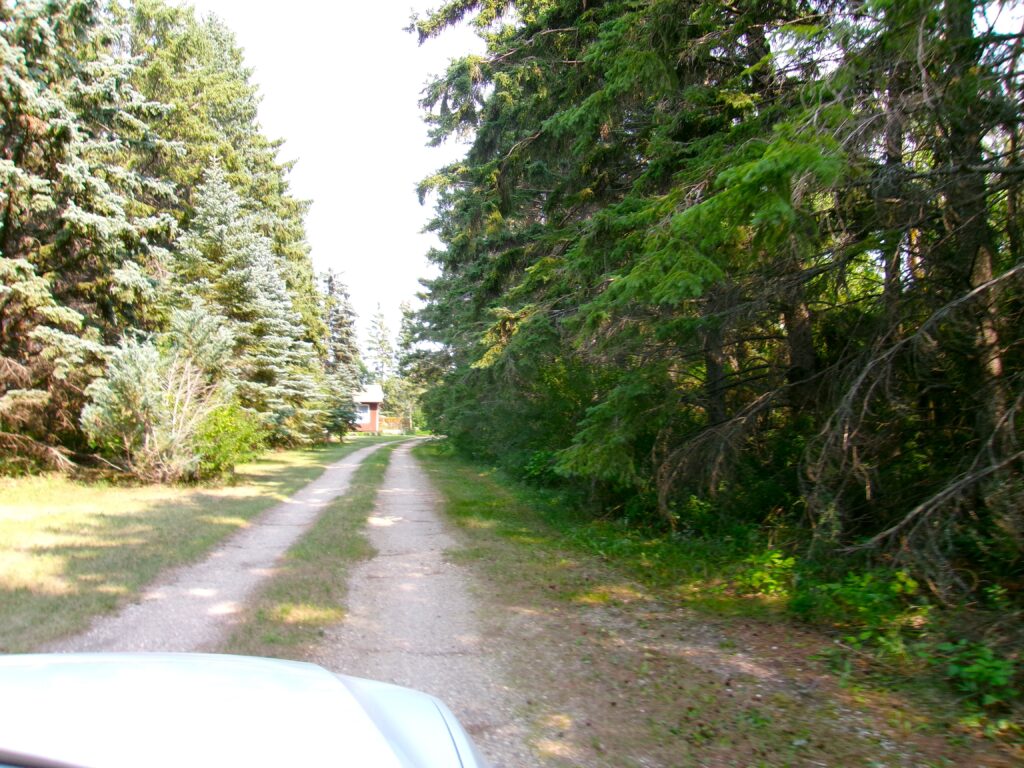
Chris was just up the road from the bovine alley. We turned into his long, tree-lined driveway with a sense of relief; turning into a quiet place, ready for some rest and relaxation with a friend from ages ago.
Chris gave us a tour of the domestic yard. His backyard revealed a colourful quilt of grain fields. This farmer grows canola, wheat, and chickpeas. As Chris explained, it is best to grow a variety of grains and pulses because the unpredictable weather might damage one crop reducing its yield, but not necessarily all of the crops. Hectares of variety lay before us.
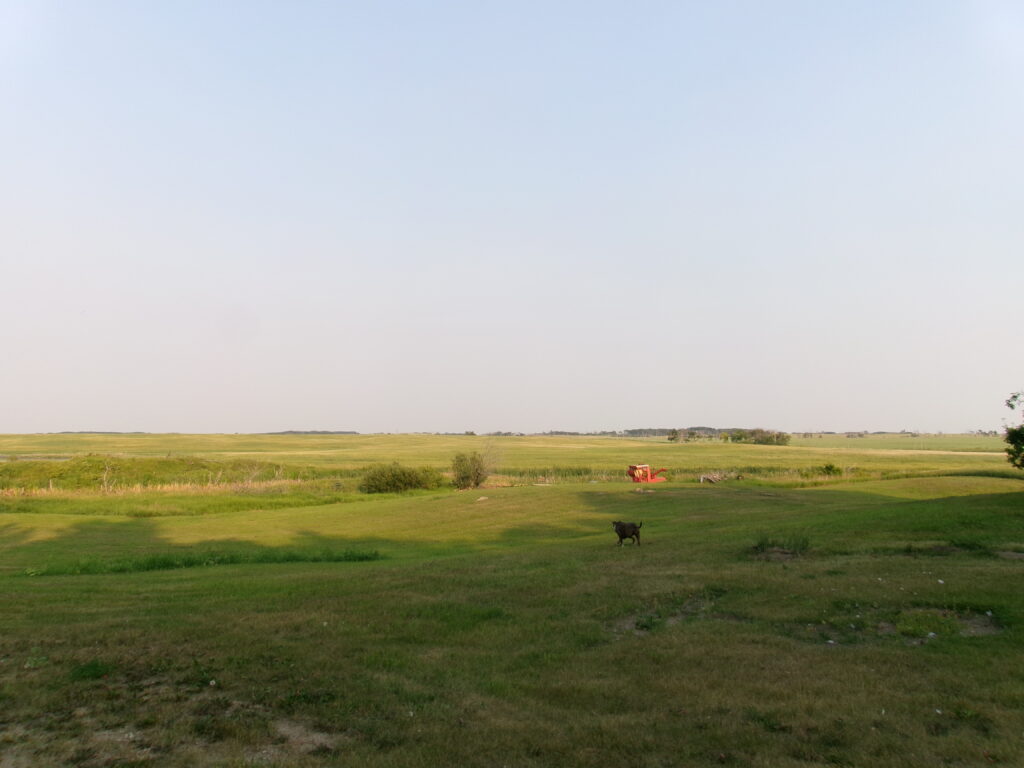
Water for the house comes from a pond in the yard. This is field-drained water. Wildlife like fox, deer, and raccoons, share the water with the house. There is a basic filter at the house ensuring that the water is useable for washing, but not for drinking. Apparently many farms have a similar system, which is why there are watering ponds dotted around the farms.

Tour over, the two friends did what Africans do – they had a braai. That entailed preparing some meat, watching the coals get hot, talking a lot, having a beer or three, and talking some more. Chris’s patio was the perfect spot for all this activity.
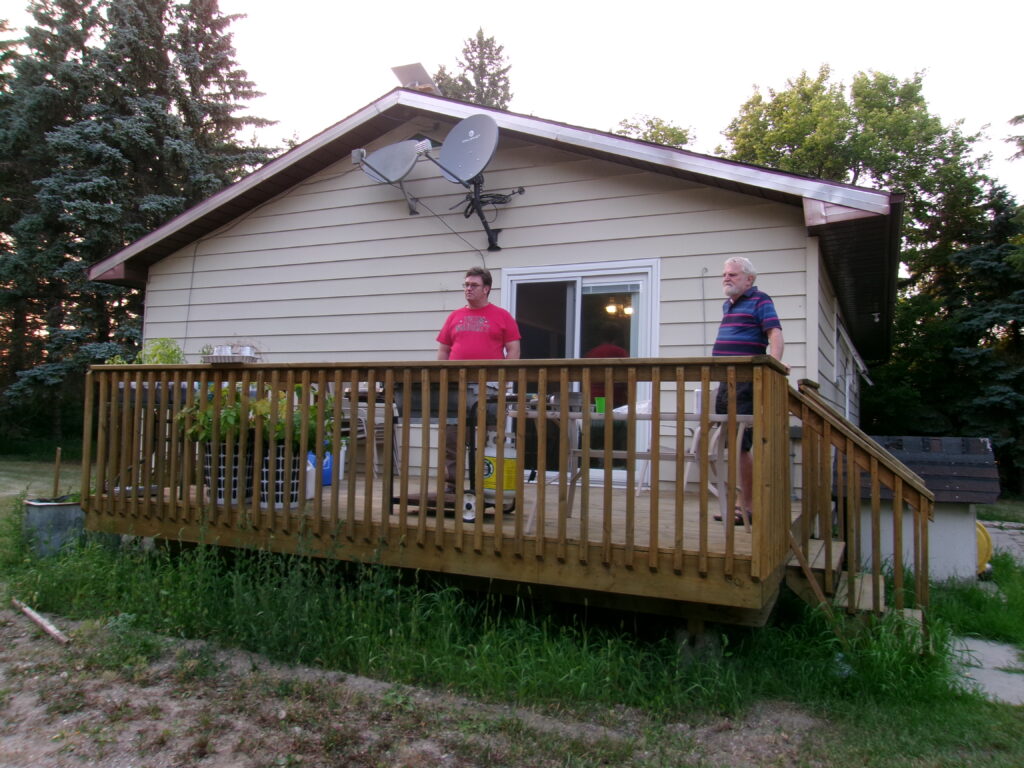
After some time, the coals were ready, and the chicken was put on the braai. I think peri-peri or an equivalent was used to flavour the chicken. Hot and spicy for the men. Milder flavouring for me.

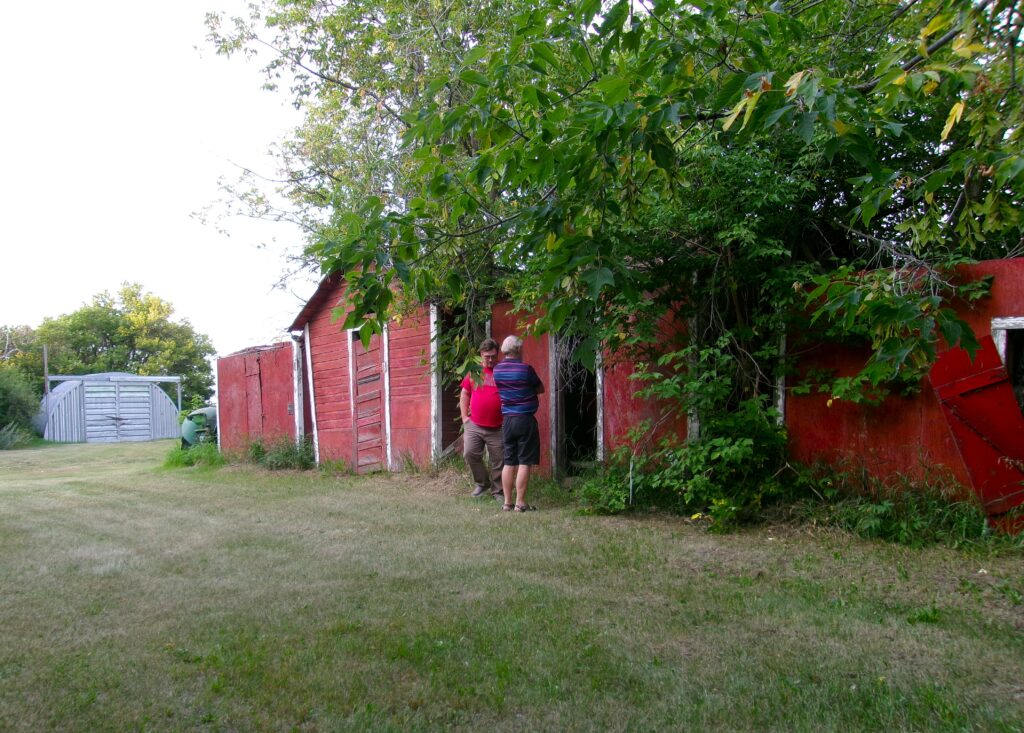
Chris, a former restaurateur, had prepared a hearty meal for us. We required a brief post dinner perambulation around the side yard. The various outhouses and their previous functions were explained, and examined. Like on most farms, there was storage space, a hen house, a wood shed, a work shop, and a couple of buildings that might have been used for tending babies or sickly animals.
Granville, being the scamp that she is, roamed and roved through the yard, on guard against the squirrels and raccoons. Just like at home. She was in her element.

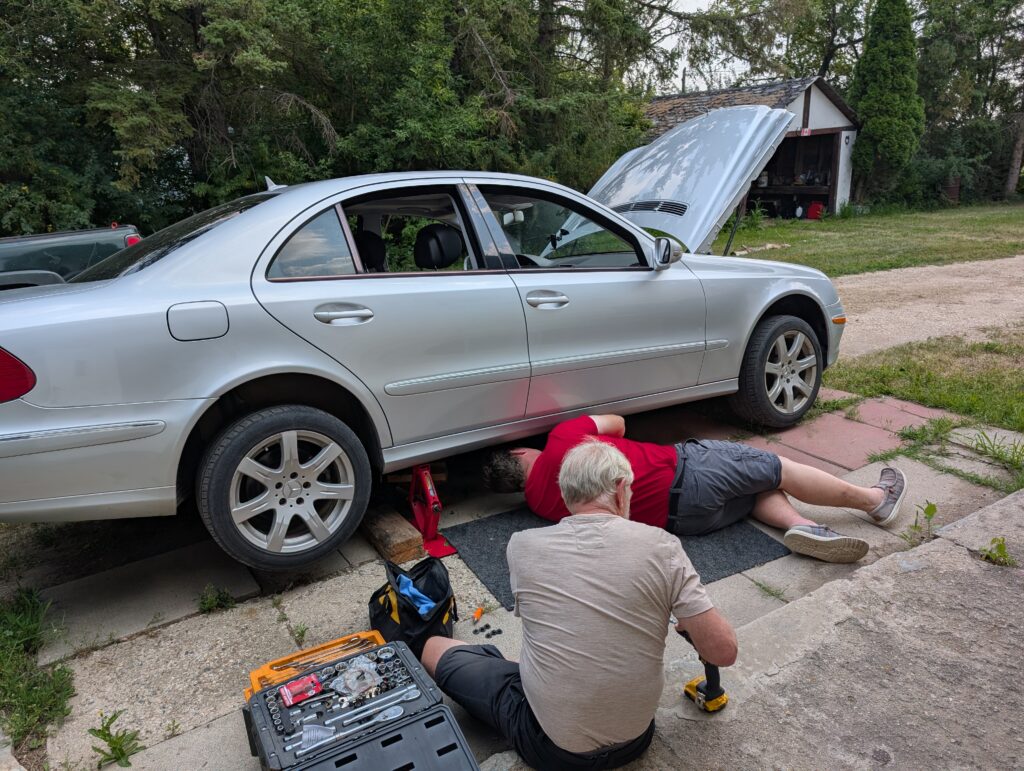
By tomorrow, the men had settled into the way of friends. They worked on Chris’ vehicle, sorting out a brake issue while gabbing about people and places and plans.
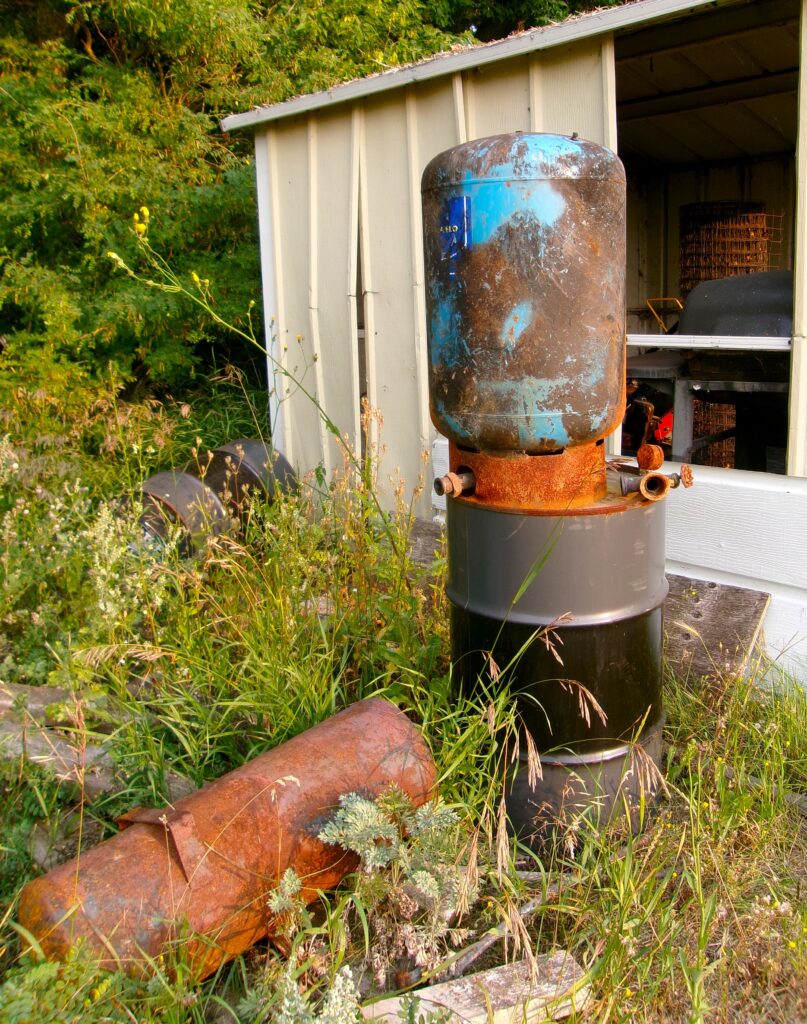
That left me to go out taking snapshots of the yard sculptures, those intriguing hunks of metal and machinery that so often decorate a farm yard. They had a use once, and with refurbishment could have a use again.
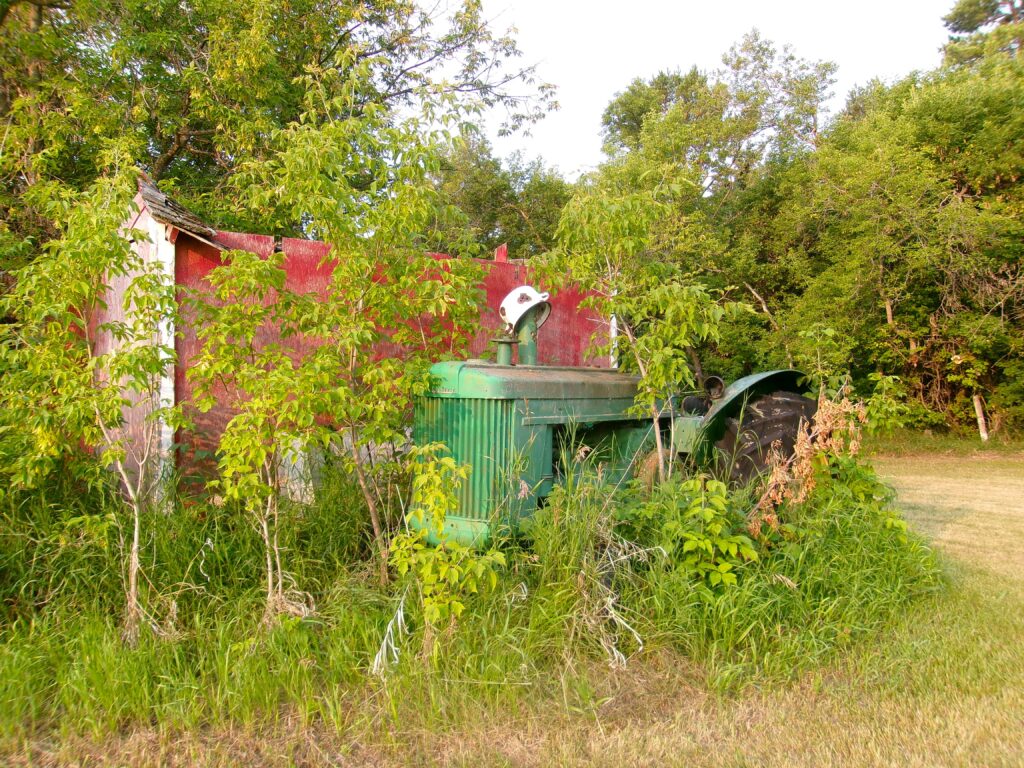
For now, like grotesque gargoyles, they stand around the yard slowly disintegrating as they succumb to the effects of weathering and neglect.
The area surrounding Chris’ home was an enticing mystery for humans and for Granville. She was out bouncing through the fields, finding animal paths to follow, and getting lost in the tall grains. Accustomed to running free in the yard in Smiths’ Cove, it was a welcome relief, I’m sure, from car confinement and leash restraint.

For us, this expanse of space, the rich colours, the vibrant sky, and the lovely reunion with a long-time friend gave us exactly the rest and relaxation we needed at this point. It also provided us with a down-right impressive and positive perspective on Saskatchewan. This is an often overlooked gem of a province.


Leave a Reply