
Initially chosen because we planned to meet a friend who stays in a cottage near here. That plan came apart, but we were already booked, and we assumed that it was a good idea to keep the booking. That was a correct assumption. We left Arrowhead Provincial Park in the afternoon, but due to travelling along a couple of secondary roads, our speed was much slower than initially planned.
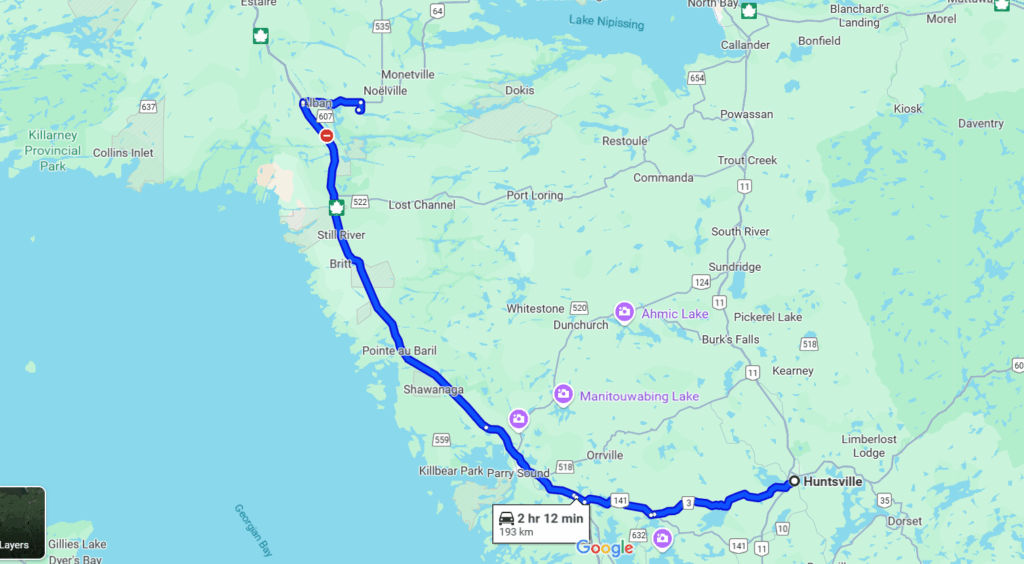
This was not a problem because the main road north, Highway 400 that became Highway 69, was smooth and wide. Bliss when towing a trailer.

Frequently, lakes appeared alongside the road. Always large, very blue, with rocky coastlines and tree-clad islands. This is the classic northern Ontario landscape, the scenes made famous by the Group of Seven and their colleagues in the early 20th century.

Just as often as a lake, the roadside featured a bit of marshy land, or a pond filled with vegetation. Rocks, those well documented Pre-Cambrian, igneous rocks poked their way out of the water to remind us that this is the Laurentian Shield.

Even the road had regular reminders about the rocky nature of this part of Canada, commonly called the Near North. It’s not quite far enough north to be considered ‘the North’, but it’s almost there, so it’s the ‘Near North’. It’s a part of Canada where we all live on rock.

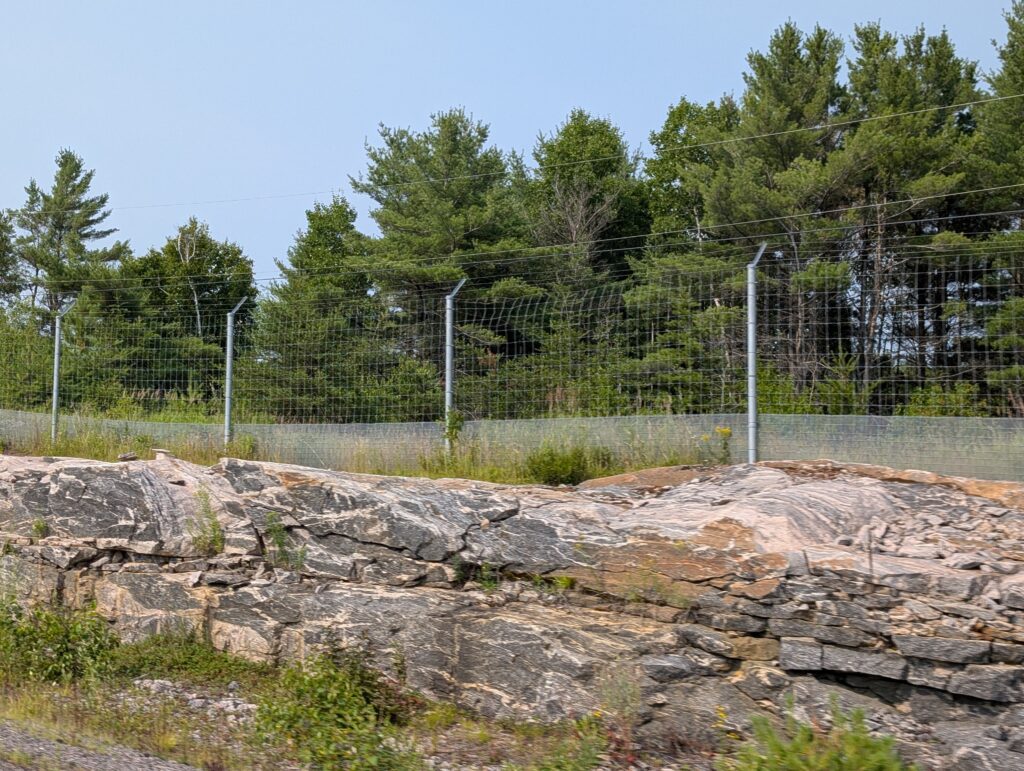
Contemporary technology has made smooth, more evenly graded roads possible. Drilling and blasting makes these large cuttings possible. The drill holes are sometimes visible – those vertical white stripes are evidence of drilling. Driving through kilometres of rock faces, the residual rock after the road was created, was an eye opener. This is not an easy area in which to build anything, especially a major road like this portion of the Trans Canada Highway.

Moose make their way onto the roads, posing a hazard. There are warning signs that had us chuckling. The moose seems full of rage, bent on destruction of the vehicles that cross its path.

A moose fence alongside the road is a precaution that we were glad to see. It’s not failsafe, but it does reduce the number of moose, and other creatures, that wander into the road. The extra fencing at the lower portion of the fence had us intrigued, debating what smaller animals could pose enough of a hazard to drivers that they require screening from the road. Wildcats? Bobcats? Cougars? Skunks?
We travelled down a dirt road to reach out campground.

There was the now common sight of a blasted out rock face just at the turn down the road into the campground.

Our campsite was at the outside edge of a row of permanent campers. In many of these RV campgrounds, people set up their large camping trailers in a permanent spot, build patios and outbuildings around it, and create a small camping community. This campsite features that trait, with only two campsites for overnight campers like us.
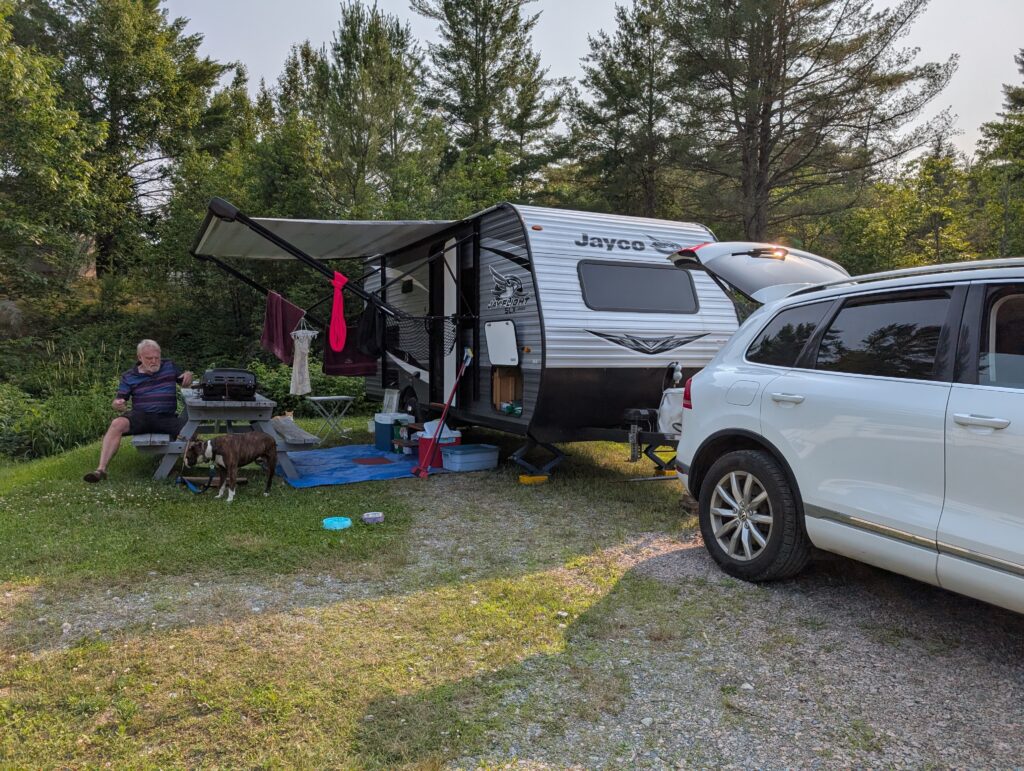
It was a wide-open site, but with three-way hook-up (power, water, sewer), and a restaurant, we were happy with the location. A tasty meal at the restaurant, which is much like a roadside trucker-diner, was a very welcome treat after a couple of what were essentially experimental camp-cooked meals.


Granville and OrangePekoe seemed to enjoy the spot. Granville free-ranged on the road during her morning walk; OrangePekoe remained leashed. Here is a classic animal picture in which bums are the feature.

It was a sultry day, so all of us lazed around the campsite. OrangePekoe tucked herself under the raspberry bushes at the edge of the campsite.

Granville sprawled on the grass at the picnic table.
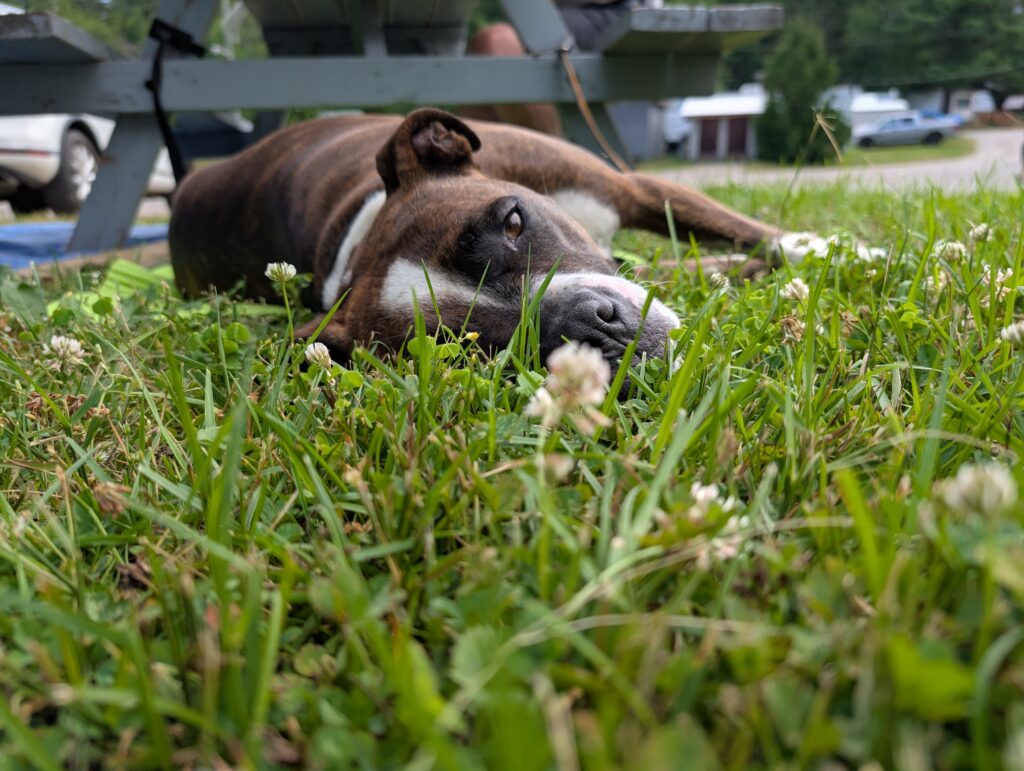
We read our books.
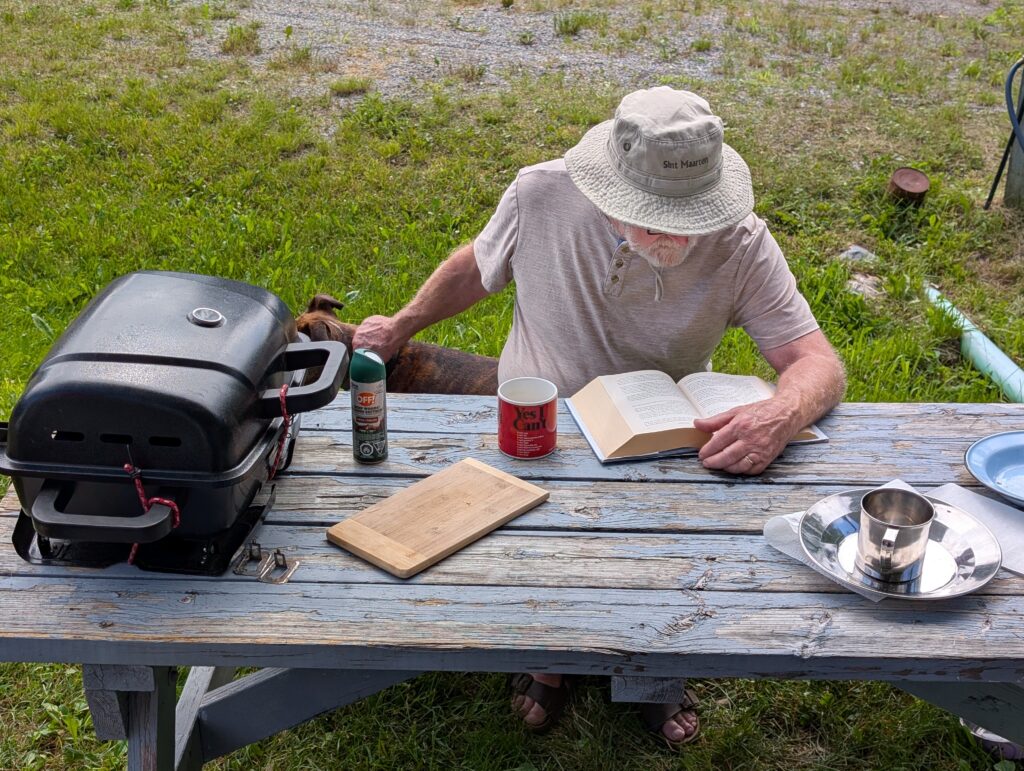
An suddenly, playing electronically-generated Christmas tunes, the bakery truck appeared.
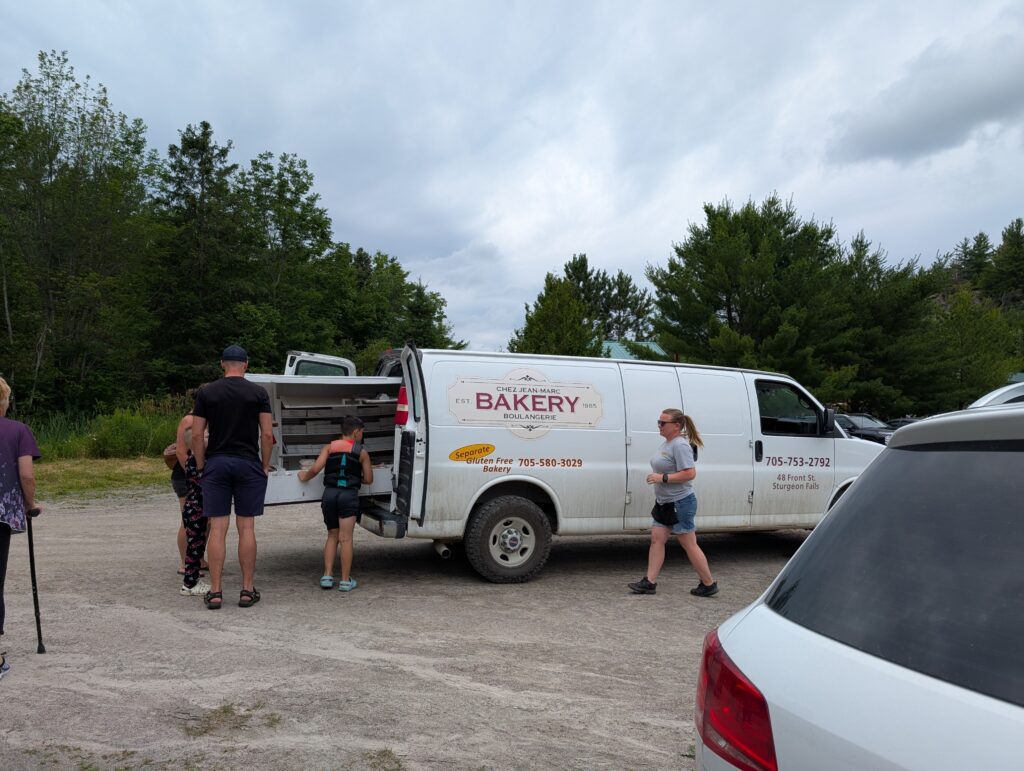
Then we roused ourselves to get some butter tarts, a classic Canadian sweet which is basically a sugar syrup cooked in pastry. Very tasty. Very tasty indeed. De rigeur for a cross-Canada trip.

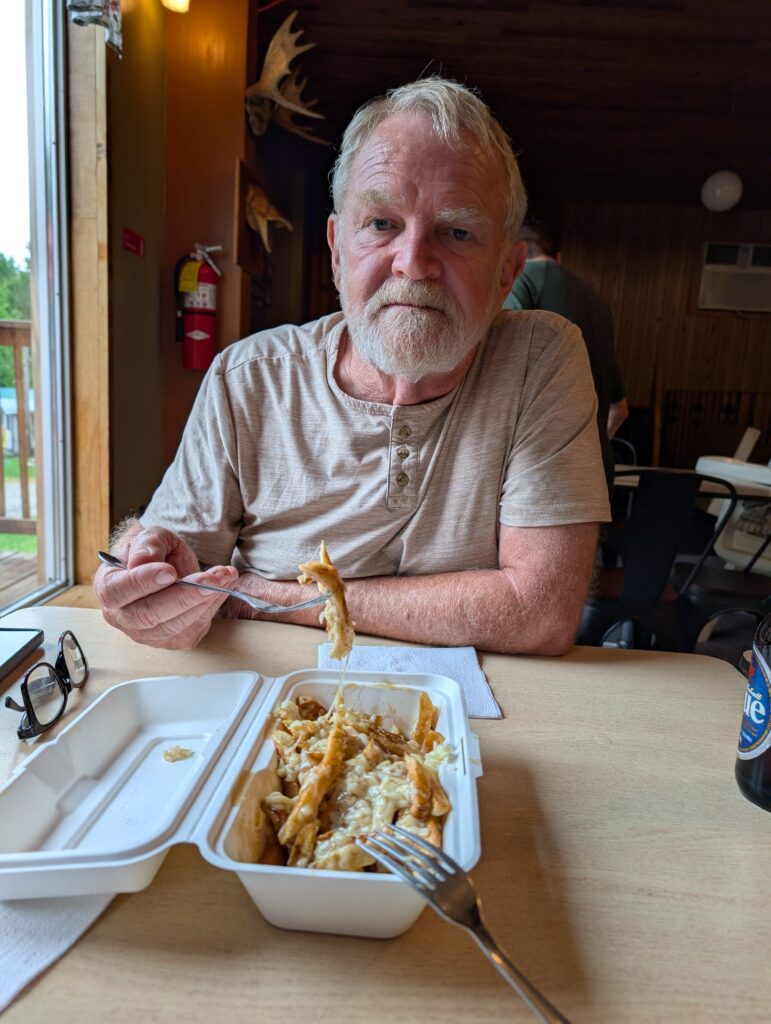
We also had a plate of poutine at the restaurant. We are having fun with classic, stereotypical Canadian food en route. It coalesced here, but likely there’ll be more opportunities for tasty food along the way.
Feeling classically Canadian, we decided to explore a nearby rough-bush area. With both animals in tow, we wandered along a classic logging road – a pitted, rutted road lined with trees and inhabited by millions of bugs. Typical Ontario bush.

Nigel braved the long grasses and potential crawly bugs to examine a large billboard in the woods. It was an old map, faded and jaded, indicating cross-country ski trails in the area.

Despite the buggy drawback, around any bend there is always a river or lake view to appeal to our aesthetic senses and that will capture our imagination.
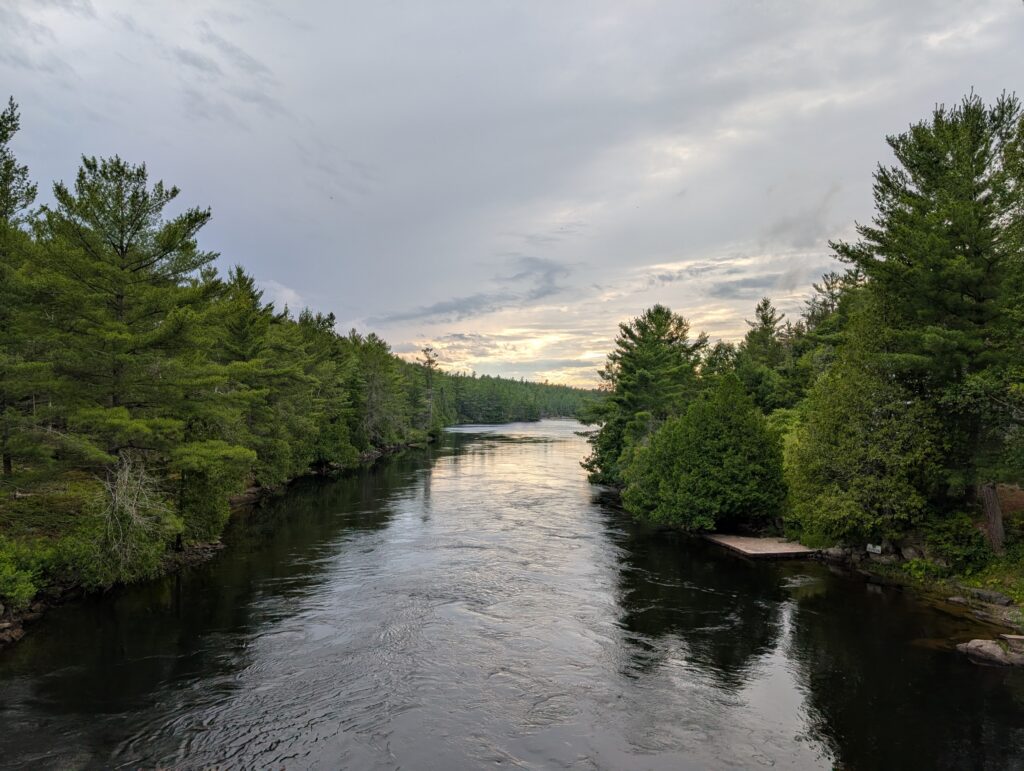
Green Bay Campground, because of its amenities – restaurant, swimming area, water toys – was a fine stop. We rested. We treated ourselves to diner food. We revelled in some short saunters around the campground and to adjacent areas of Canadian refined-wilderness.
Even though it seems like the whole trip has been relaxing, and it certainly has been, this was just the ticket at this pause in the journey west.


Leave a Reply