
Nigel had been hankering to get up on Owikeno Lake. He wanted to get the lay of the water before venturing forth with his boat. His wood-work-shop pals have been planning to look for logs to process at the local mill. They have been foiled by weather.
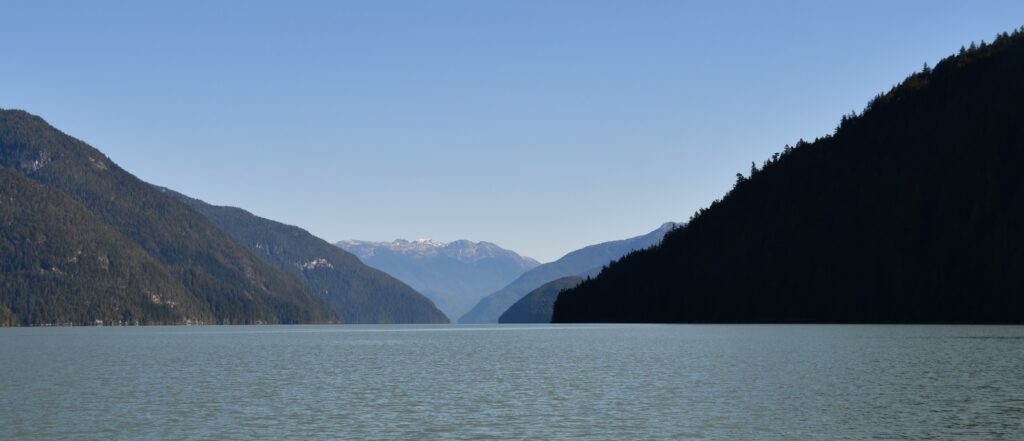
Nigel was feeling rather despondent about ever getting up on the lake before winter made such a trip impossible. And then, on a fine day, there was a distress call from a federal Fisheries camp up on the lake. Some of the Fisheries employees had become grounded on a sandbar. Two men from the Search & Rescue group picked up Nigel, and they set off on a rescue mission.
The seemingly simple start got a bit complex because the river access point was too low to launch the boat properly. The muddy shoreline prevented them from pushing their rescue boat further into the river.

Fortunately the Wuikinuxv Fish Hatchery boat, which had been out working in the lake, arrived and the manager generously passed over his boat for the men to use.
The lake was calm – flat calm. The only ripples and wavelets were created by their 150 HP outboard jet-boat engine. It’s a powerful, propeller-less engine that can take the boat into shallow water without damaging the engine. Ideal for fish-hatchery work, but suitable for this rescue mission, which because of the sandbar in the equation, would likely need the men to work in shallow water.
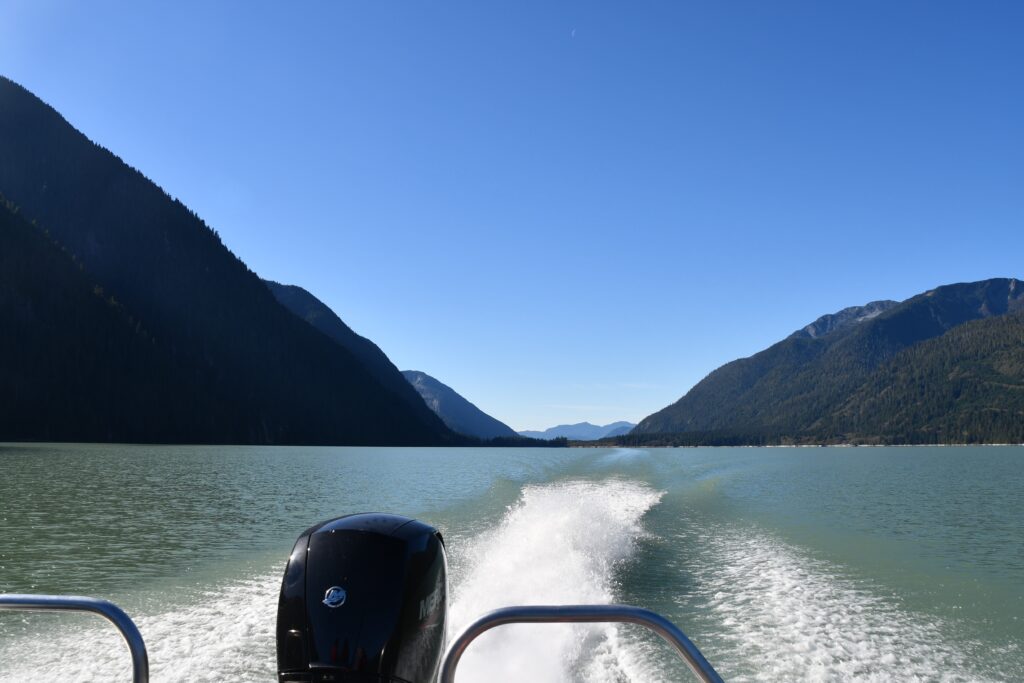
Because they are a water-based group, Search and Rescue in Wuikinuxv is a subsidiary of the Coast Guard. Nigel has experience with Ground Search and Rescue which works under the direction of the Royal Canadian Mounted Police. His groundwork background makes him a valuable volunteer here, but because of his different experience he needs some orientation to the way this group operates. He was invited along to be an extra hand, and to get a feel for how Search and Rescue works here. The two full members of Search and Rescue – William and Frank – were in charge.
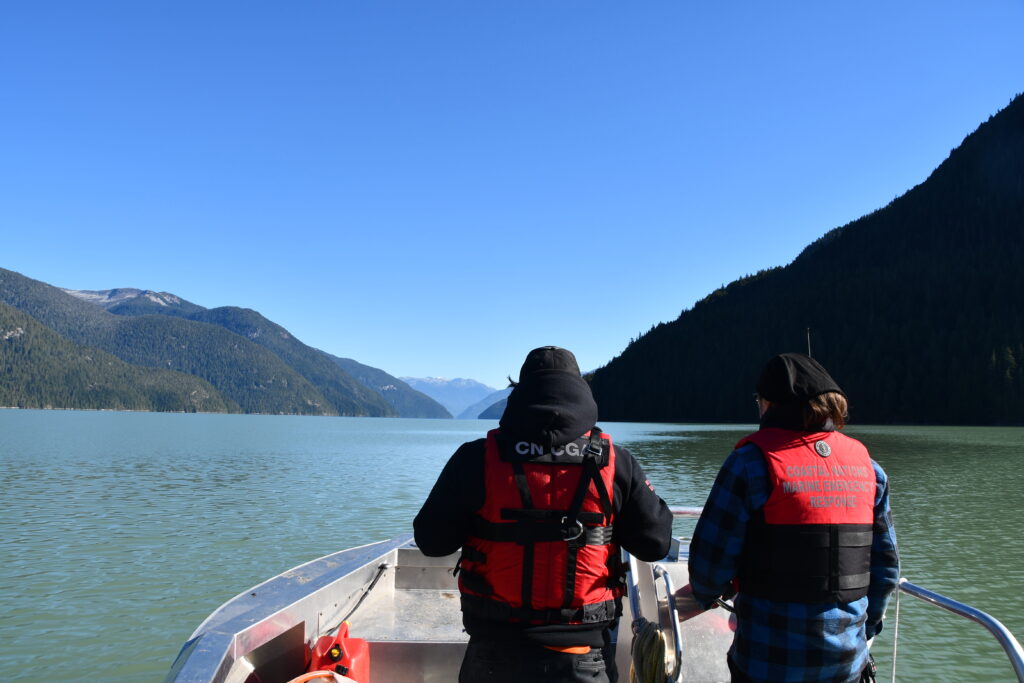
Nigel’s job was to keep his eyes peeled looking for debris in the water. He could almost relax long enough to take a few photographs of the beautiful scenery. One location has intrigued us since we first heard stories. There is a valley near Doos Creek with an angled hill on one side that is renown as a place where Sasquatch lives. Sasquatch is a large, hairy, human-ape-like creature that lives in the Pacific Northwest. Many residents have stories about encounters with Sasquatch in that area. There were no sightings on this trip.
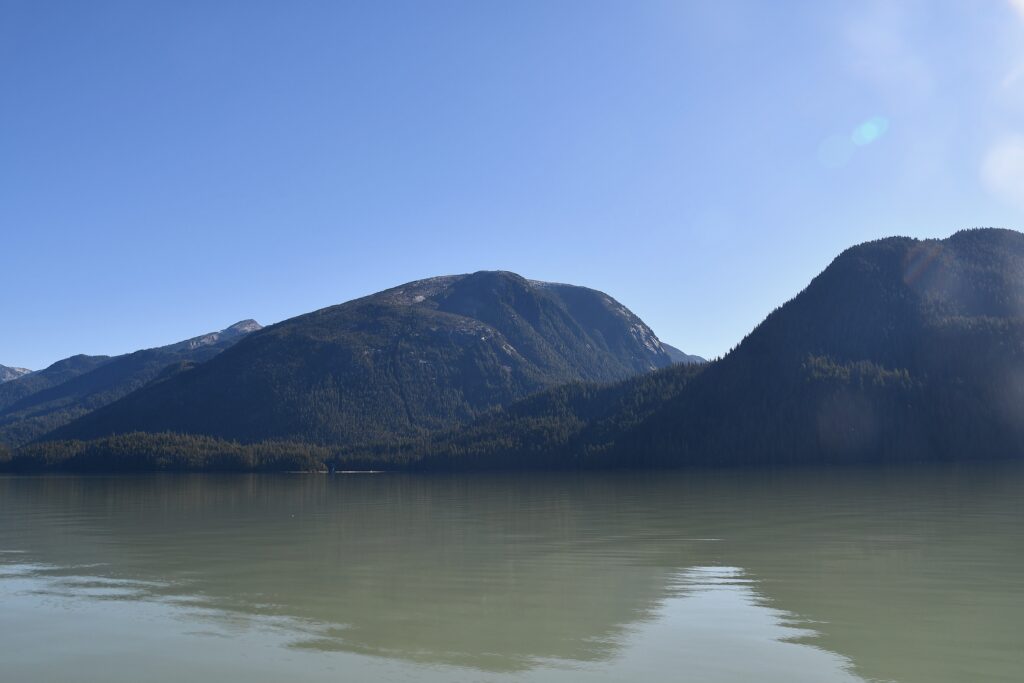
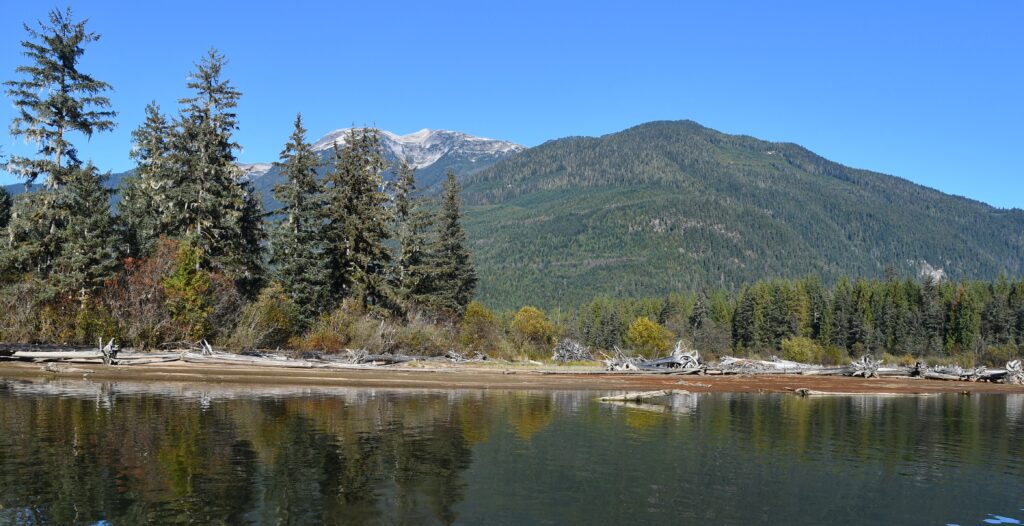
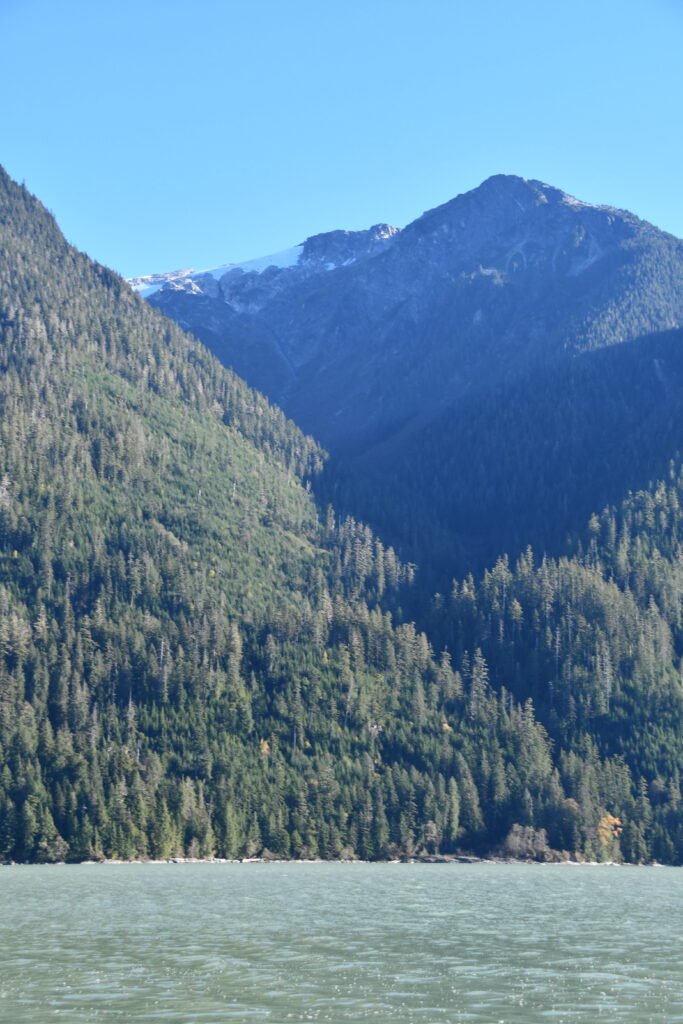
For a surveyor, a confluence is always a notable location. This spot is where the Neechenz and Machmell Rivers meet. The mountain in the background is likely Mt Somolenko, (2,658 m ) which is a mountain in the Ha-Iltzuk Icefield. It seems that this area has a permanent glacier covering. Coldly beautiful, and it explains the chilly wind from the east.
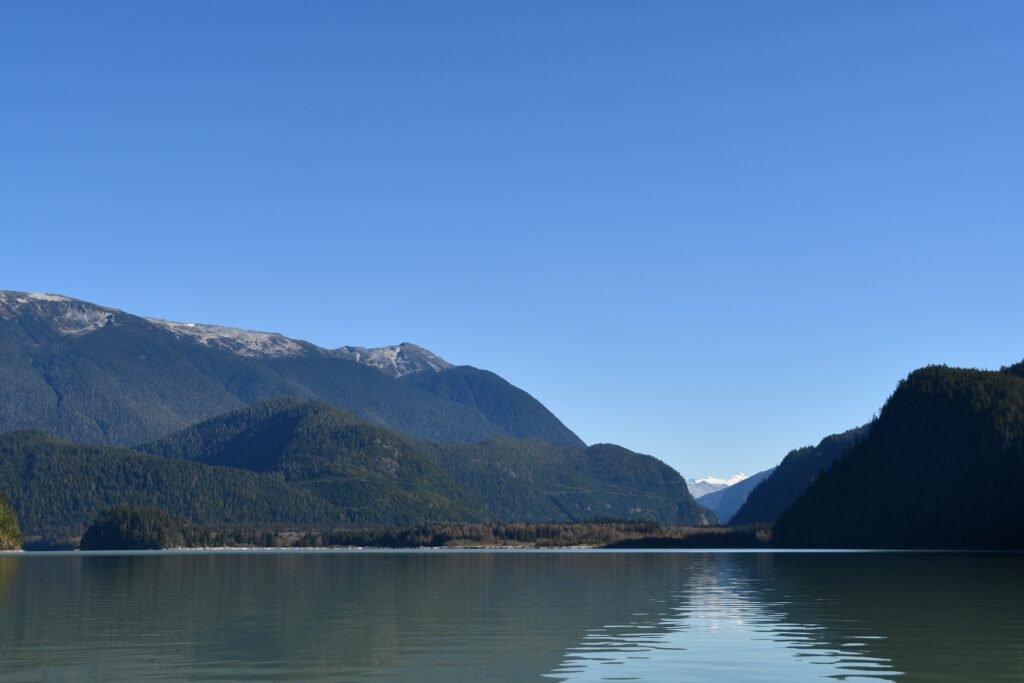
The Fisheries camp, dwarfed by its mountains backdrop, is just around the bend in the lake near the river confluence. Everything is built on pillions in the water. It looks rustic, but it is well established, with accommodation for about a dozen people, a kitchen, a communal area, a large office-workshop, and four boathouses. There are many solar panels on the roof, and they have a diesel generator. All mod-cons, and apparently warm and comfortable.
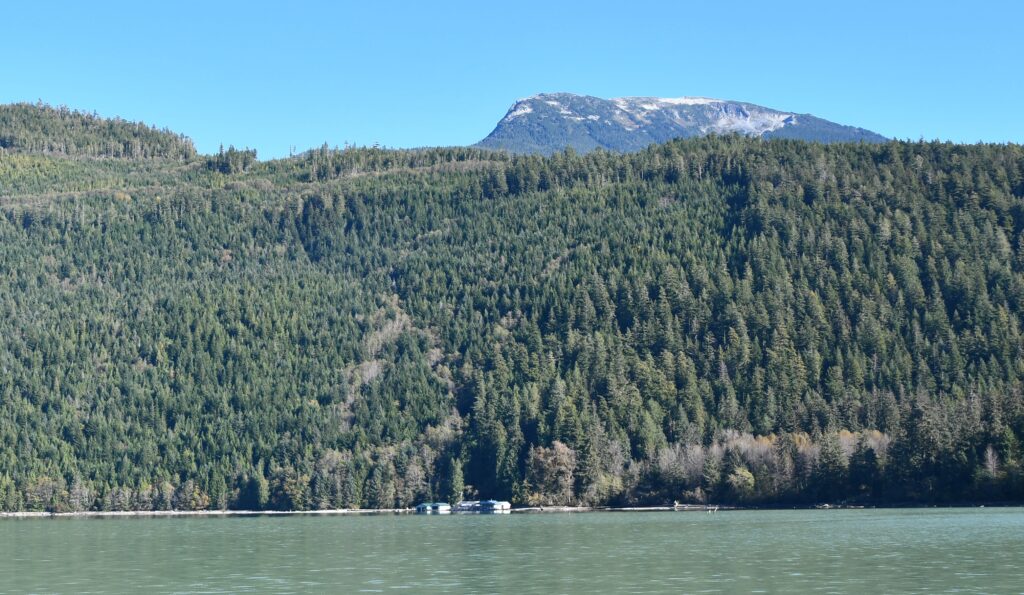
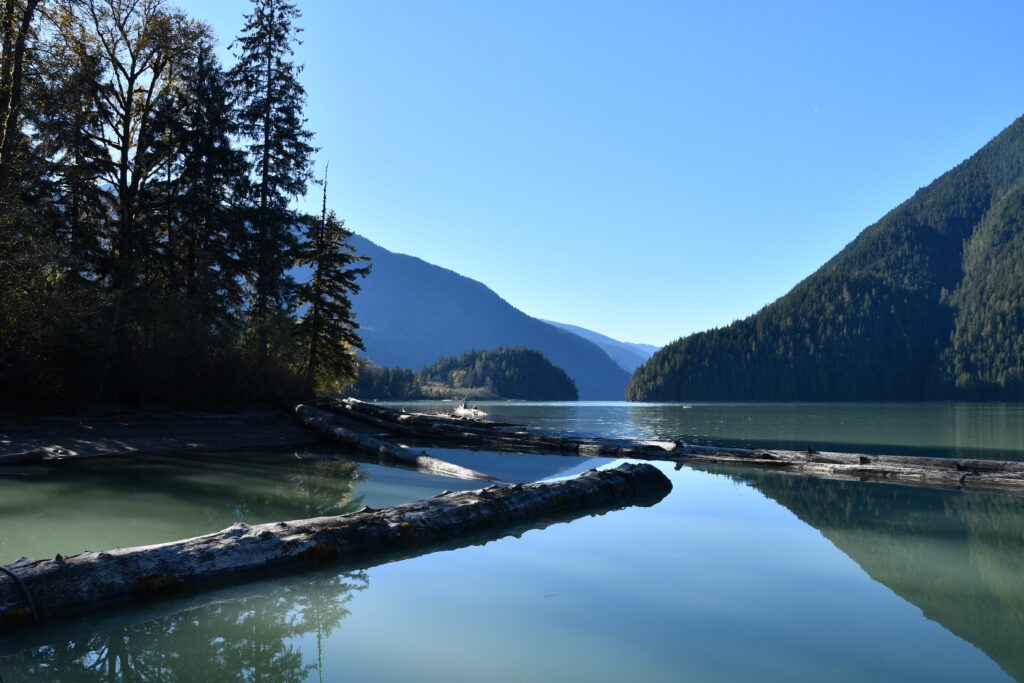
Logging operations in the area closed down about 30 years ago, but its residue remains. There are many logs floating in the water around the Fisheries camp. Huge logs. Imagine resting in the evening, after a hard day’s work, and looking out at this view. A beautiful and iconic Northwest coast view.
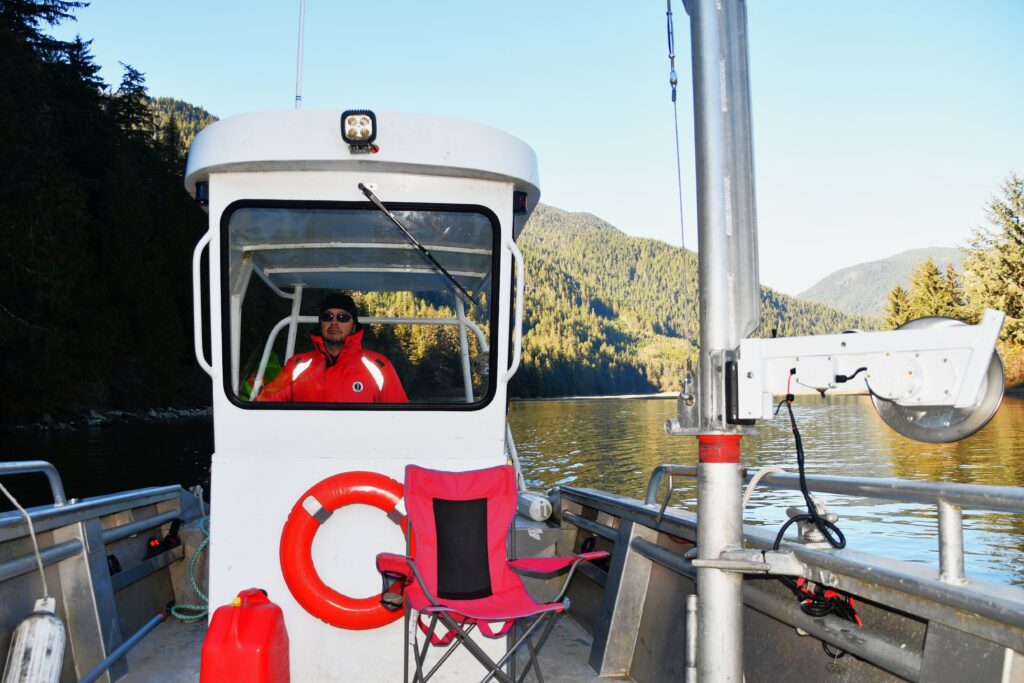
The men collected a boat from the Fisheries camp because they knew they had to pick up a group of people. The Fish Hatchery boat was too small to carry eight or nine people safely.
The Fisheries boat had a more shallow draft. William and Nigel waited at the narrows near the Sheemahant River while Frank went ahead past the next narrows to collect the marooned Fisheries employees.
They whiled away the time looking for logs to possibly retrieve for their woodworking projects. William’s comment was “We’ll never run out of cut logs here.” Apparently not. The shorelines all along the lake were replete with logs.
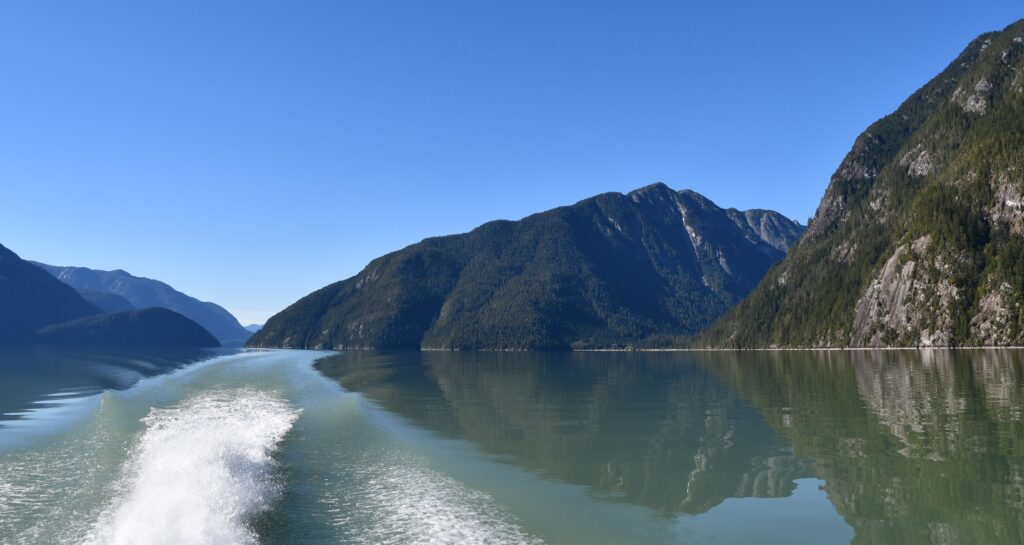
Soon enough Frank returned with a half-dozen relieved persons in the Fisheries boat. When you are driving boats with powerful engines, one of the joys is going fast. Because it was getting late in the afternoon, the men had every reason to zoom quickly down the river, back to the Fisheries camp.

The Fisheries employees and the camp boat were deposited at their camp. The plan was for the Fisheries people to go back up the lake to get their stranded (and anchored) boat after the next big rain when the water level would be higher. The Search and Rescue mission had been successful. Time to head back down the Owikeno Lake to the village. No relaxing yet – Nigel was needed as look-out for floating debris. There were plenty of floating logs, a danger to their boat.
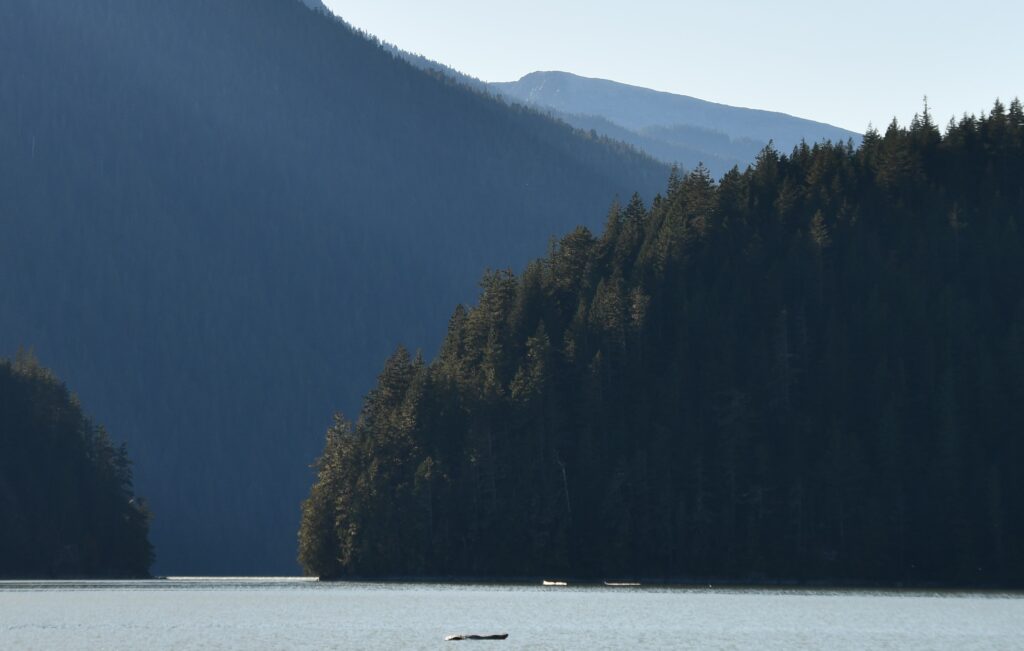
The wind came up, the water started to get choppy. By the time they were part way back along the lake, the water was very choppy, and the men concentrated on safely getting back to the boat access in the river.
It wasn’t quite the way in which Nigel thought he’d explore Lake Owikeno, but it certainly gave him a substantial perspective about what to expect when he starts taking his boat up to the lake. Plus, it gave him a decent introduction to the type of Search and Rescue work he will be involved with here after he completes his orientation and training.
This expedition was an example of how the various groups work cooperatively in small, remote communities across Canada. When Search and Rescue needed a fast boat, the Fish Hatchery immediately passed over the keys, and assured the men that there was plenty of fuel. The Fisheries camp made their second boat available without pause. Before the Search and Rescue team set off for home Fisheries filled fuel enough for the return trip. All the parts pulled together to ensure a successful and happy end to an emergency situation.
Leave a Reply