Category: BC Life

  • Meandering Thoughts 2

    Meandering Thoughts 2

    Friends and acquaintances are posing a few questions that seem to recur. Here are our responses.

    Are you enjoying yourself?

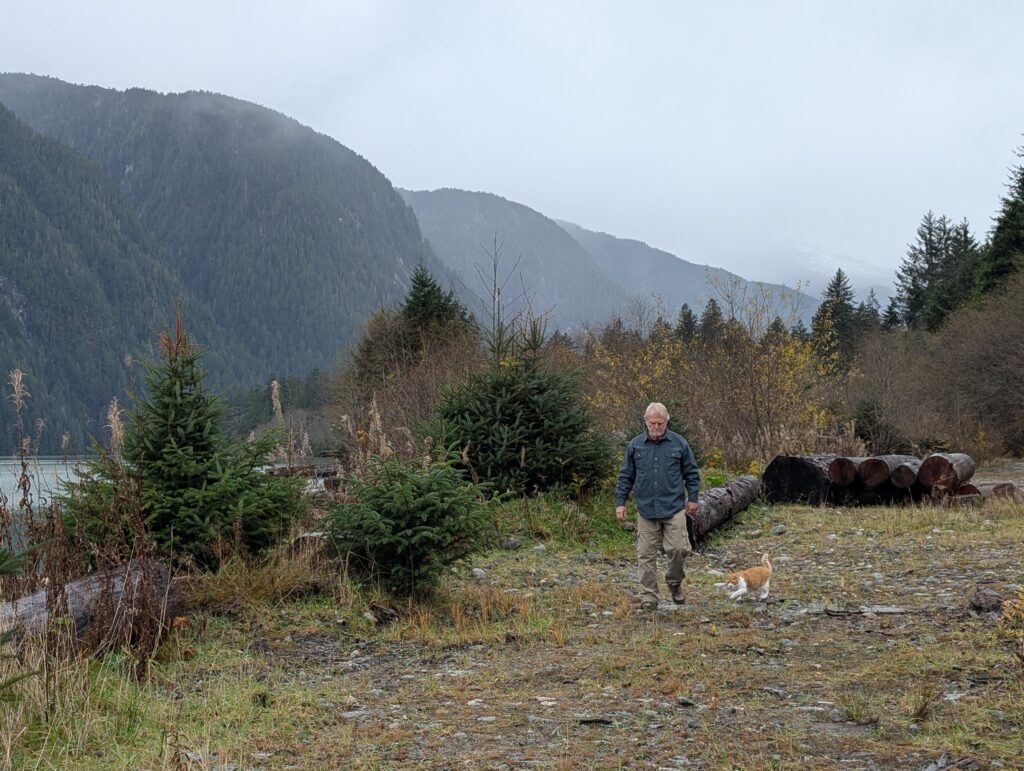
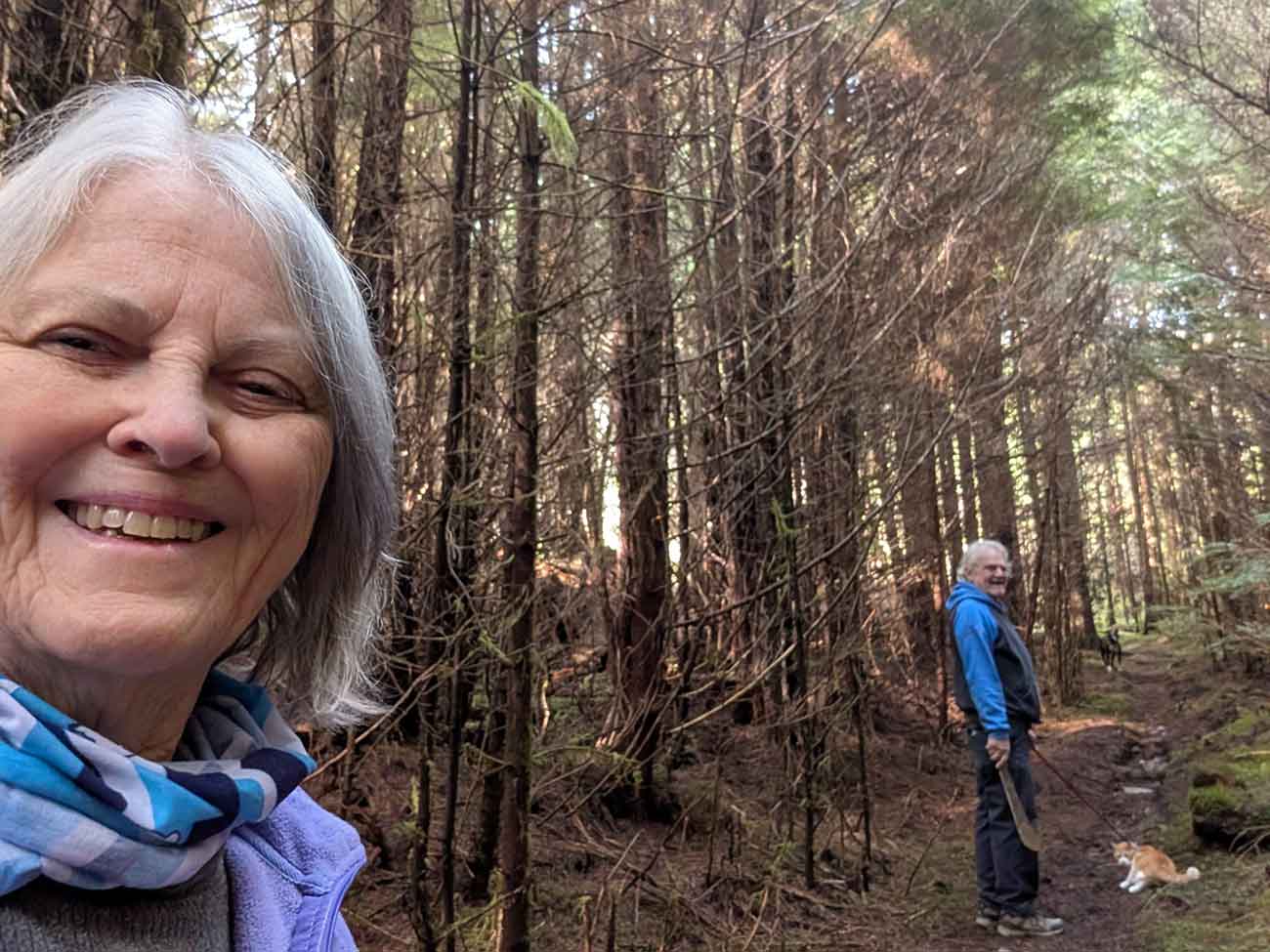
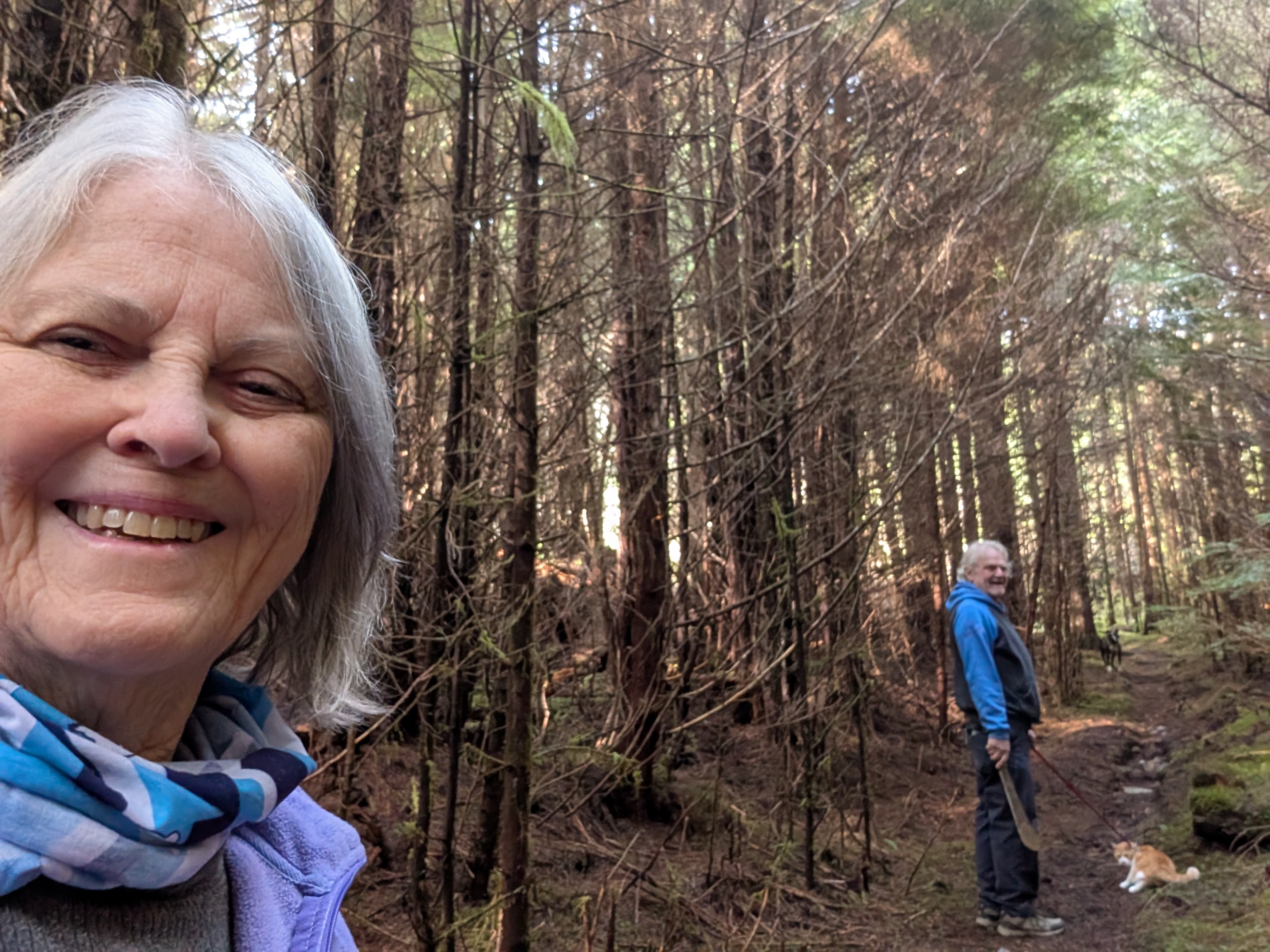
    We are surrounded by an Emily Carr landscape. (Emily Carr was an artist who painted the British Columbia landscapes a century ago.) We get out to enjoy the forest every week. We take Granville the dog, and OrangePekoe the cat on our outings. So, yes, we are enjoying ourselves.

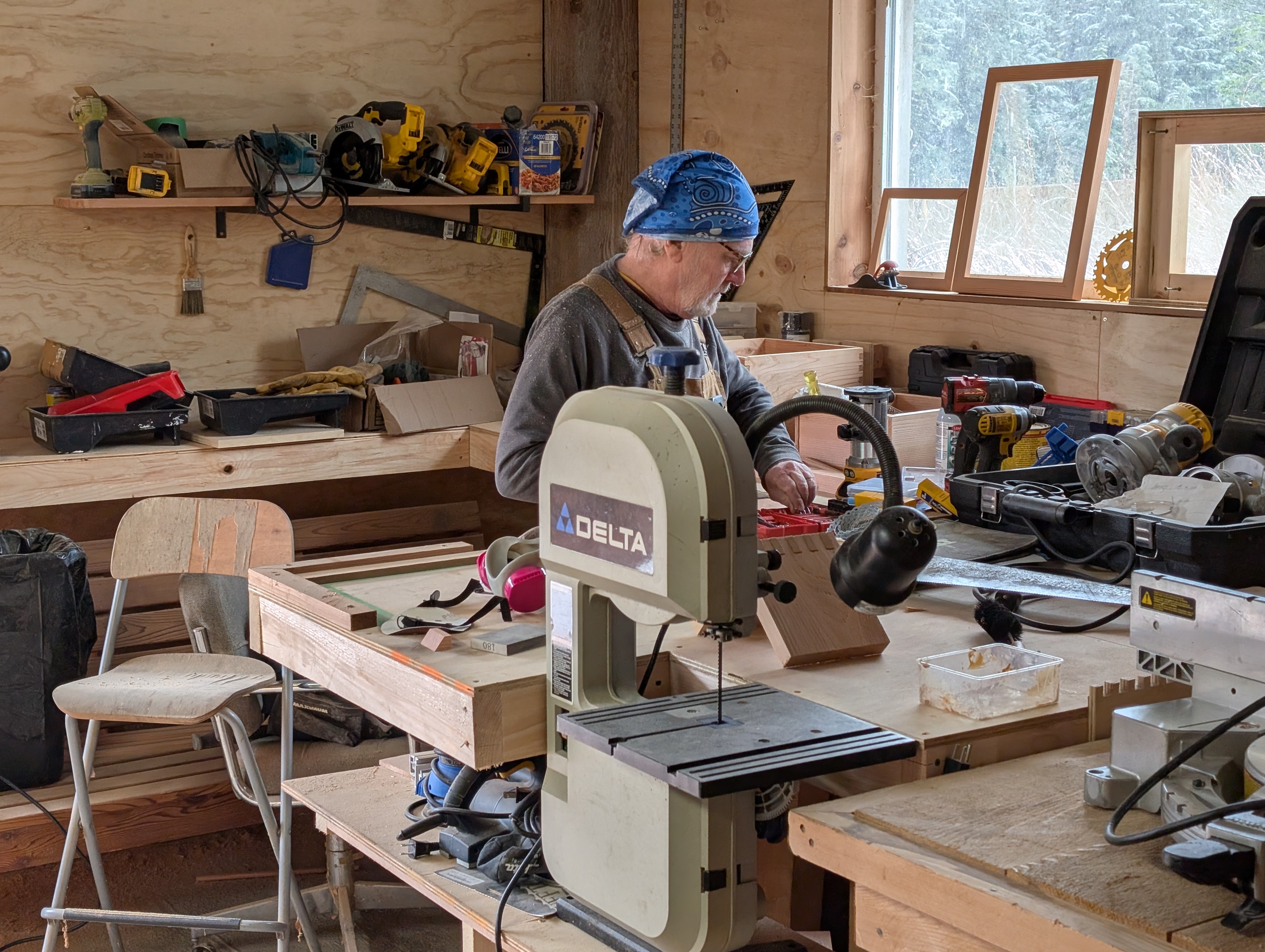
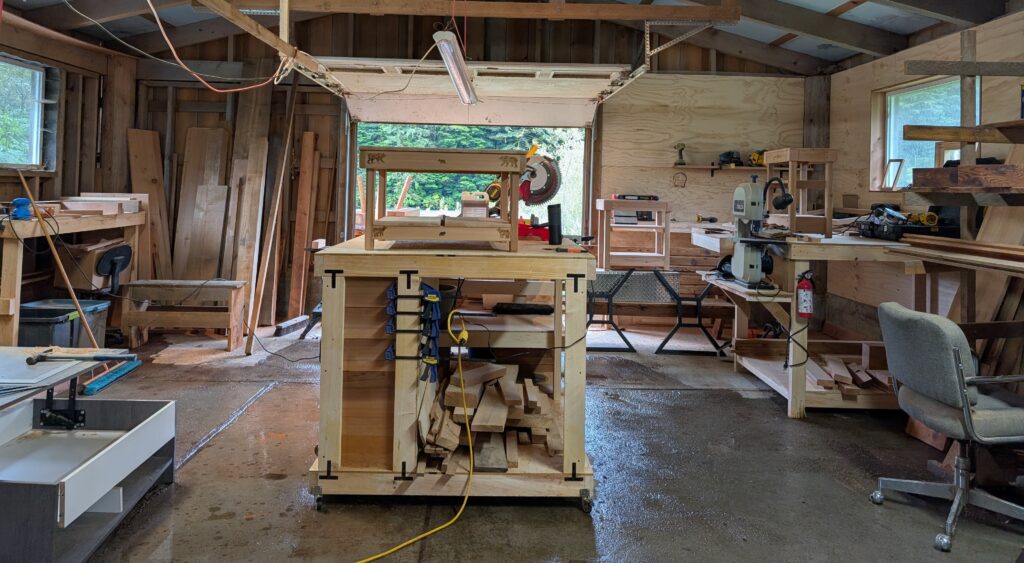
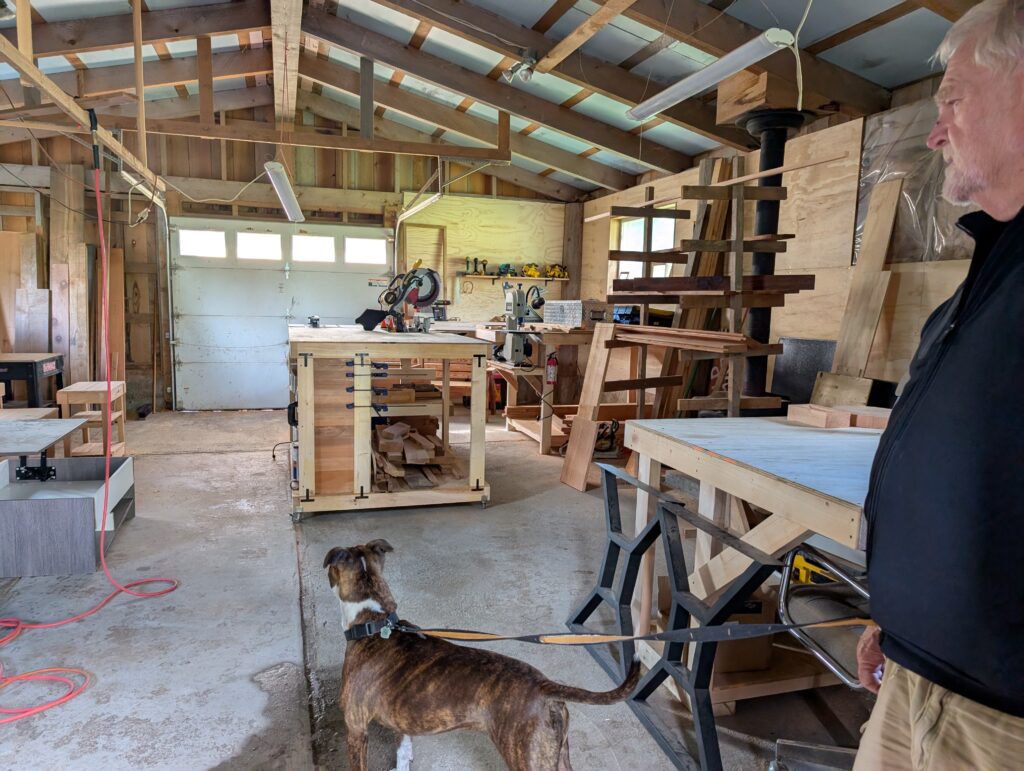
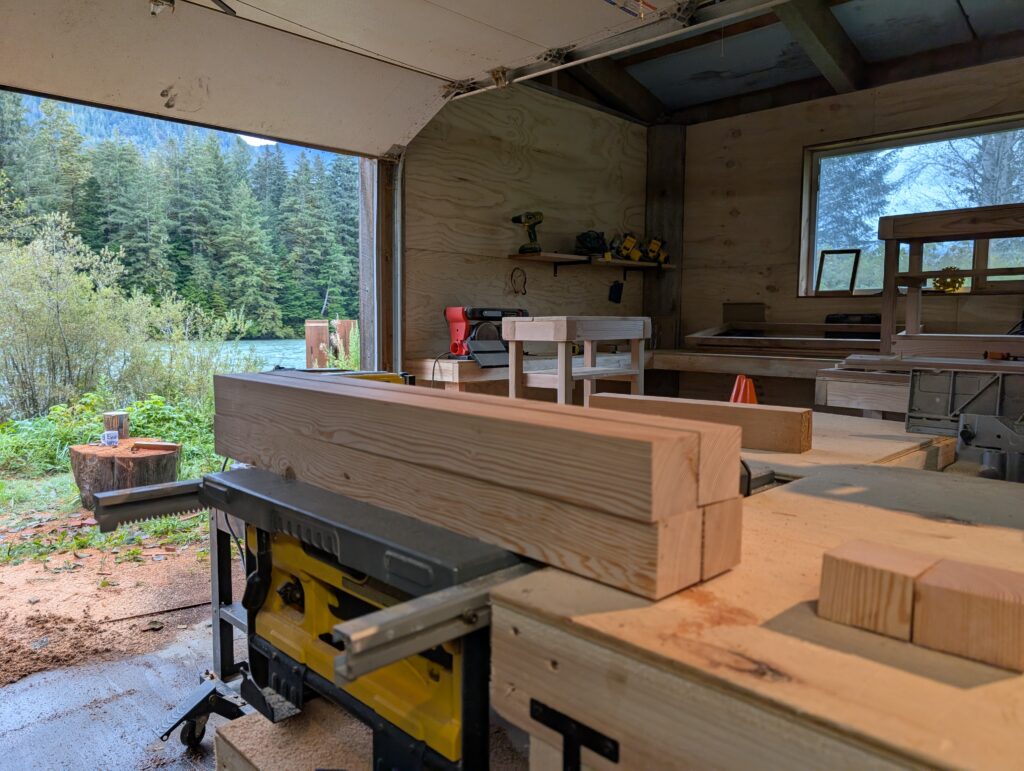
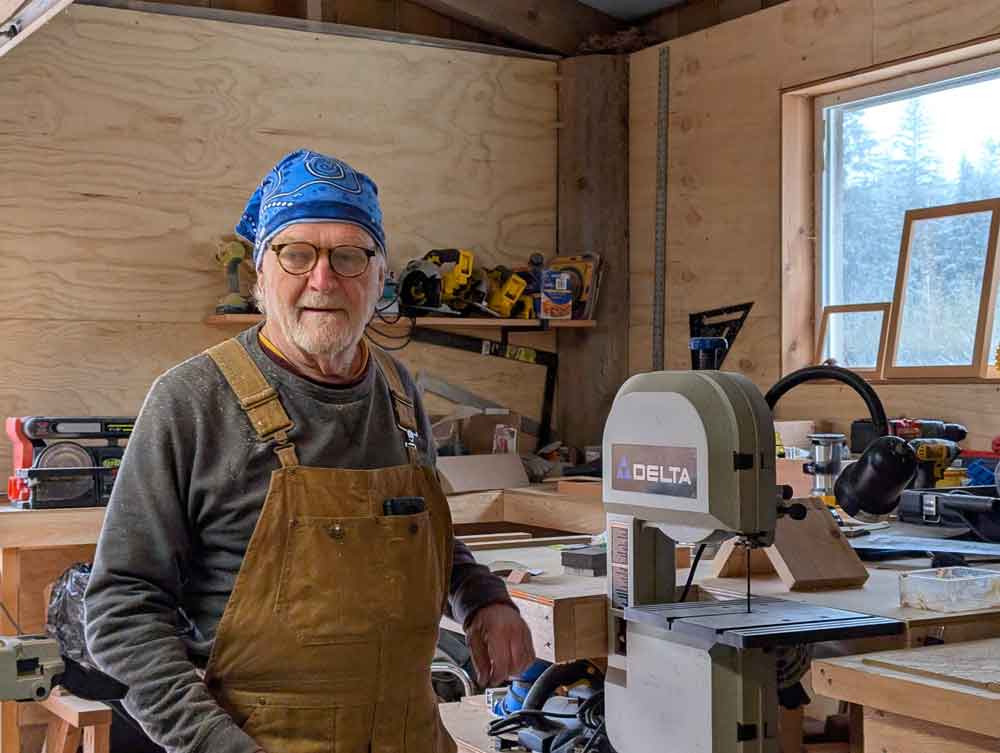
    In the village, Nigel has fitted in like a hand in a glove. Fortunately, he met his pal, Tubby, early in our arrival in the village. They have become good buddies, sharing the workspace at the wood-working shed, and working on common projects.
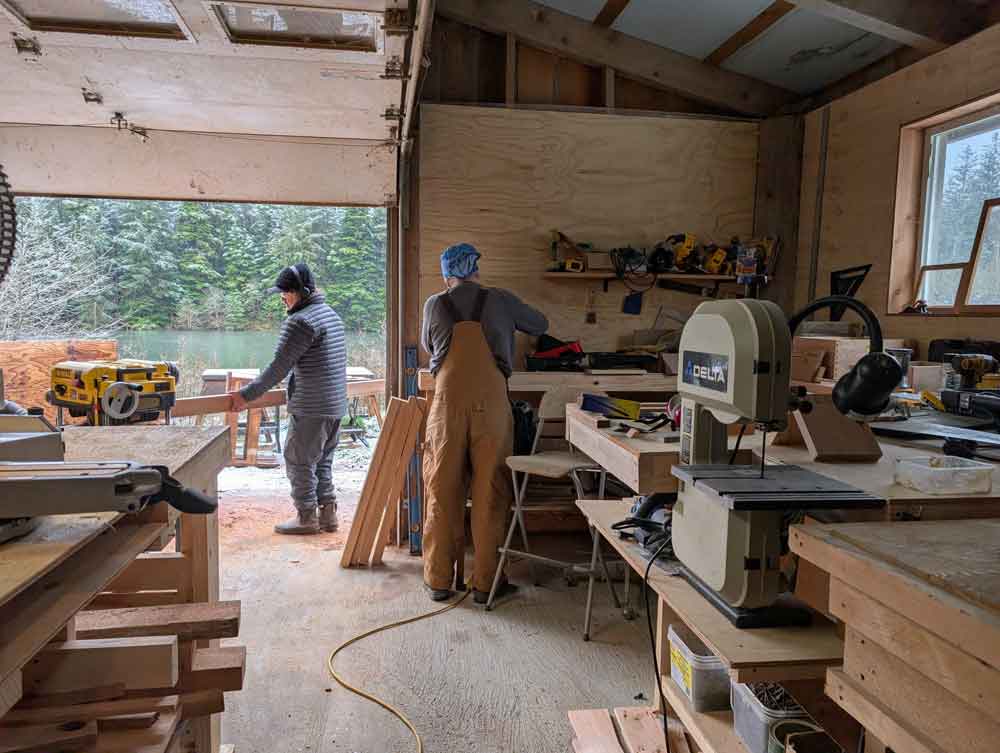
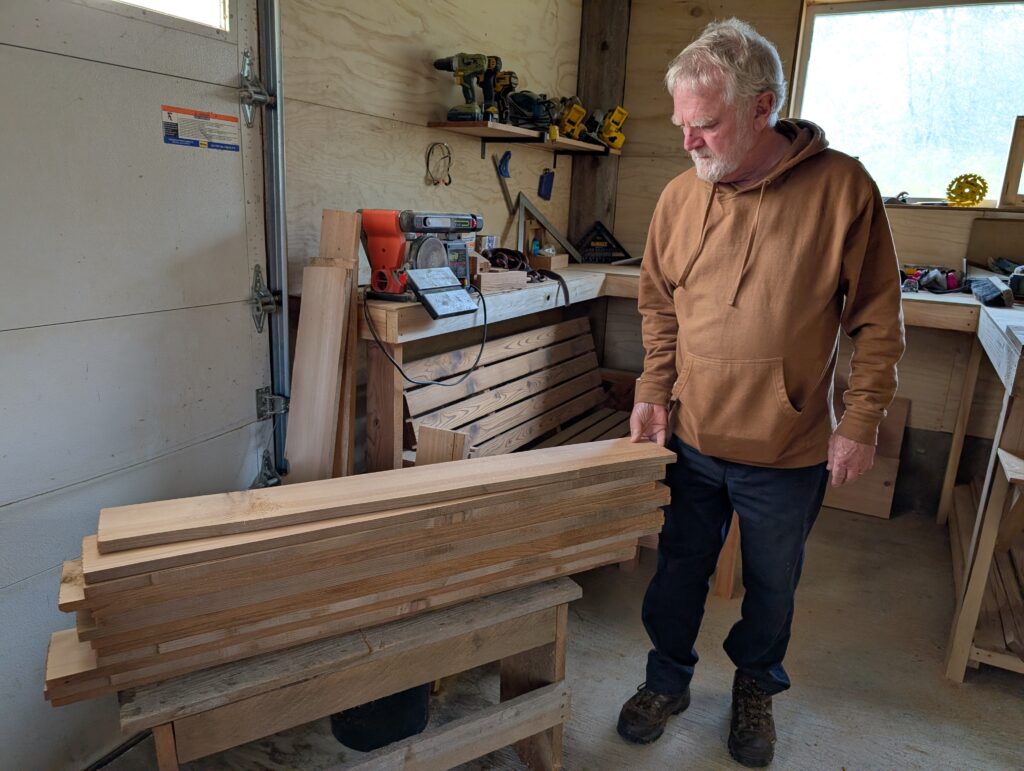
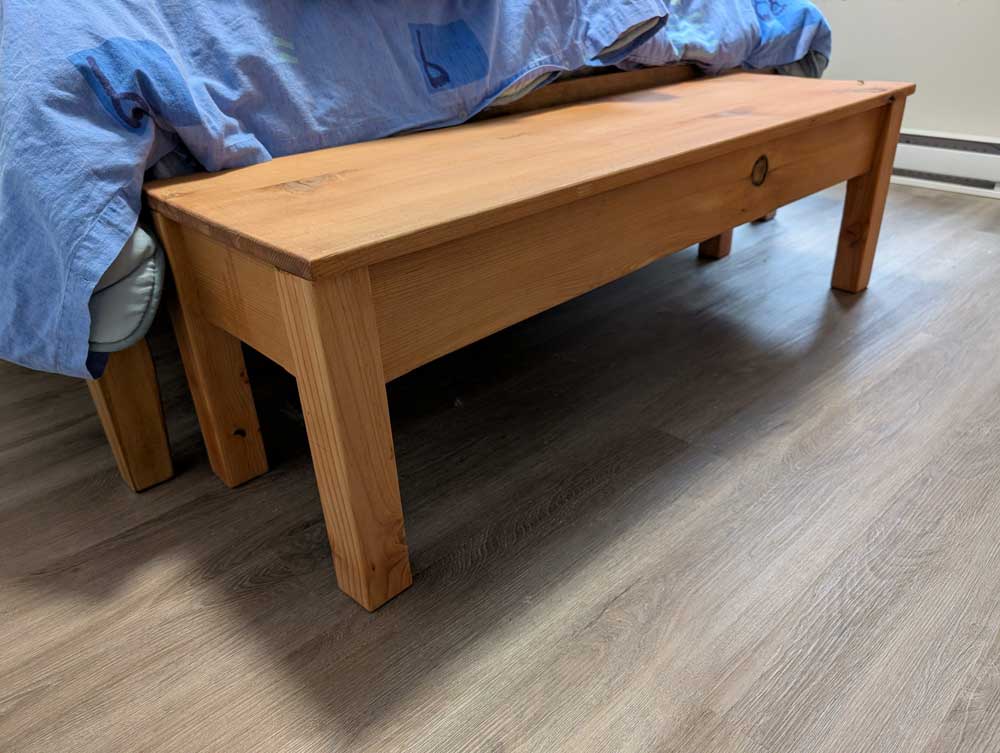
    Nigel is enjoying the wood-work. He helped make a security gate for the day-care centre. He’ll be working on the shelving for the culture centre. He has made furniture for our flat, including this lovely cedar bench.
    There have been three deaths during the past month, and Nigel has been involved with building the burial boxes for ashes, and the coffin for a body. He has also been teaching basic woodworking to the secondary students. It’s been quite variable work, and he enjoys every day at the wood working shed.

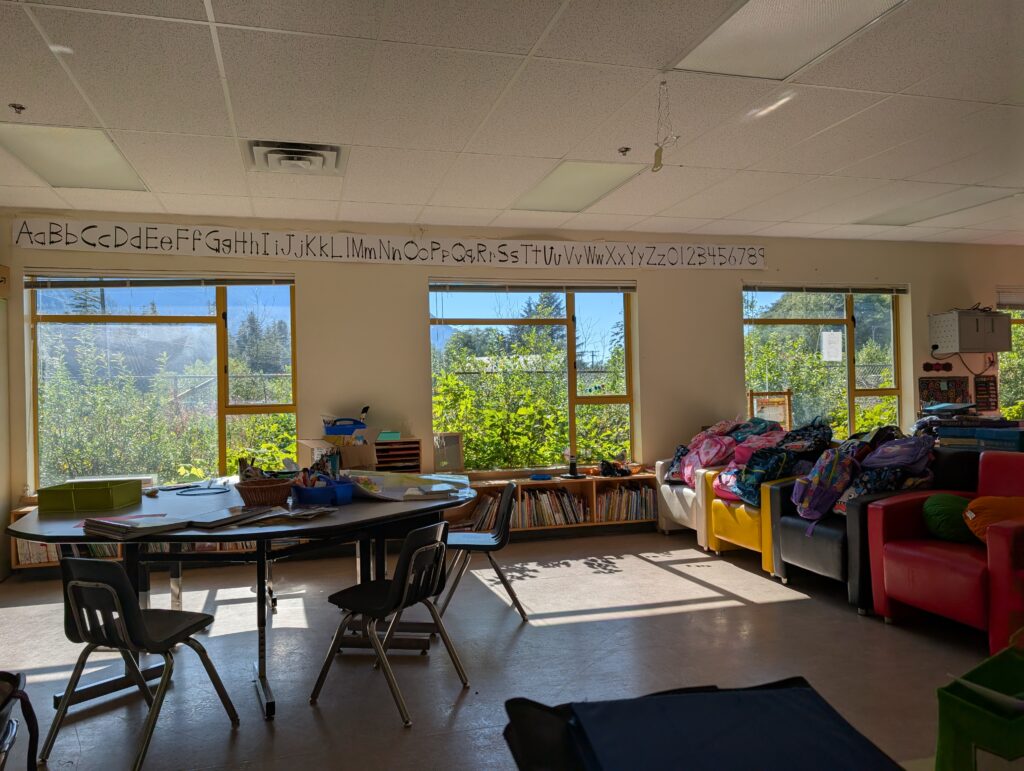
    I have been teaching elementary level pupils at Wanukv Qaquthaailas School. I have a group of Kindergarten and Grade 1 pupils, and a group of Grade 4 and 5 pupils. The gap in ages is awkward, because there is little overlap in skills and academics.
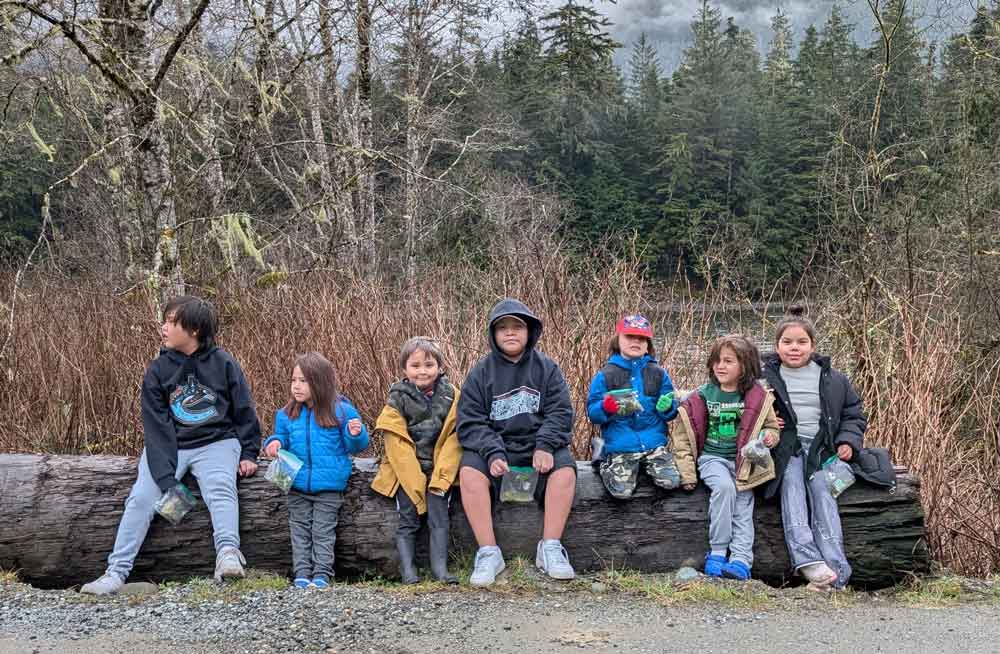
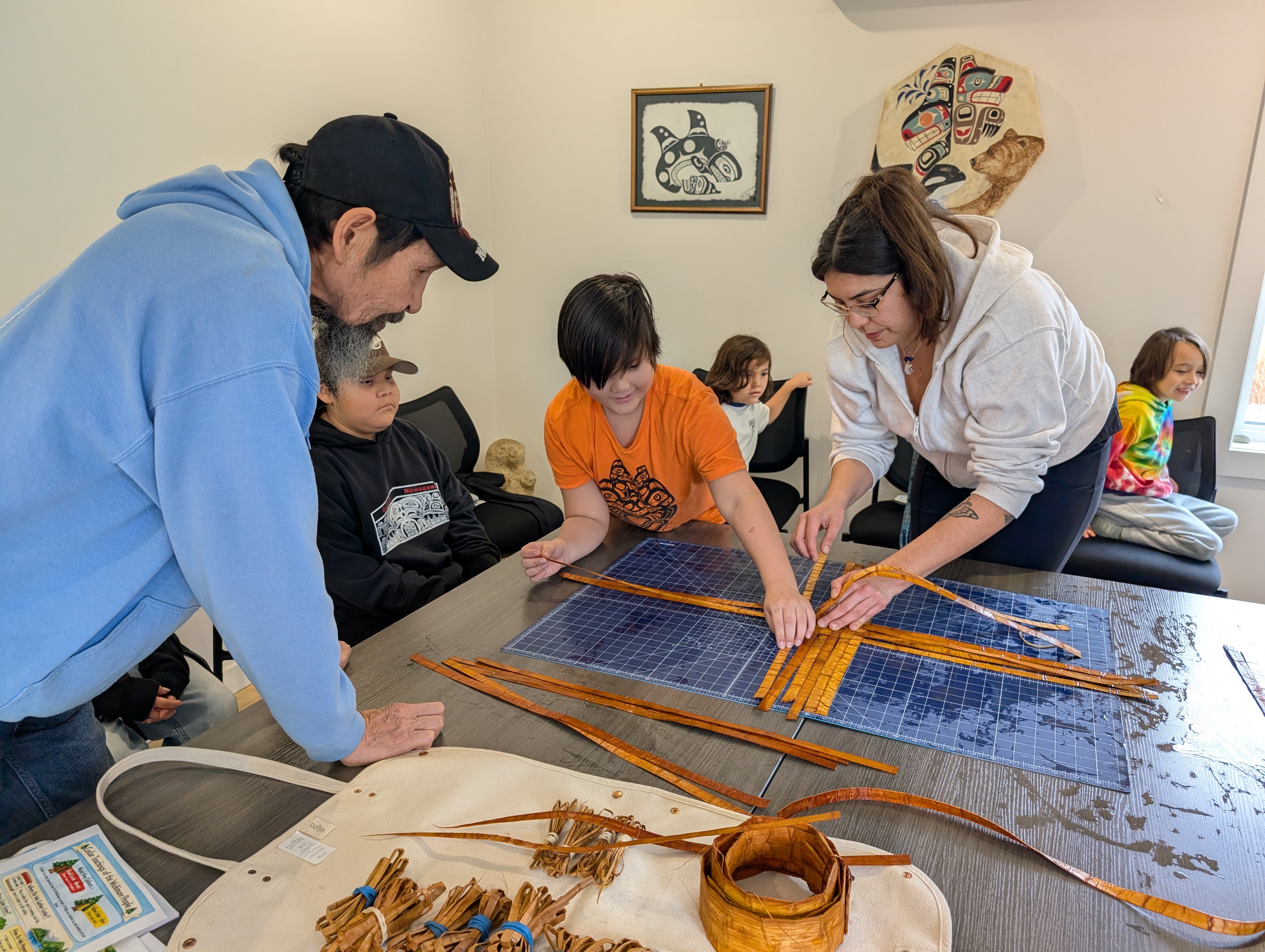
    However, I am fortunate to have a Learning Assistant who likes to teach. Consequently, I’m able to give her some of the Kindergarten level skill learning activities – basic printing skills, basic number and letter recognition and sequencing, basic addition and subtraction, and initial letter phonics. She encourages all the children to participate in the cultural activities that we arrange, and actively participates as an instructor.
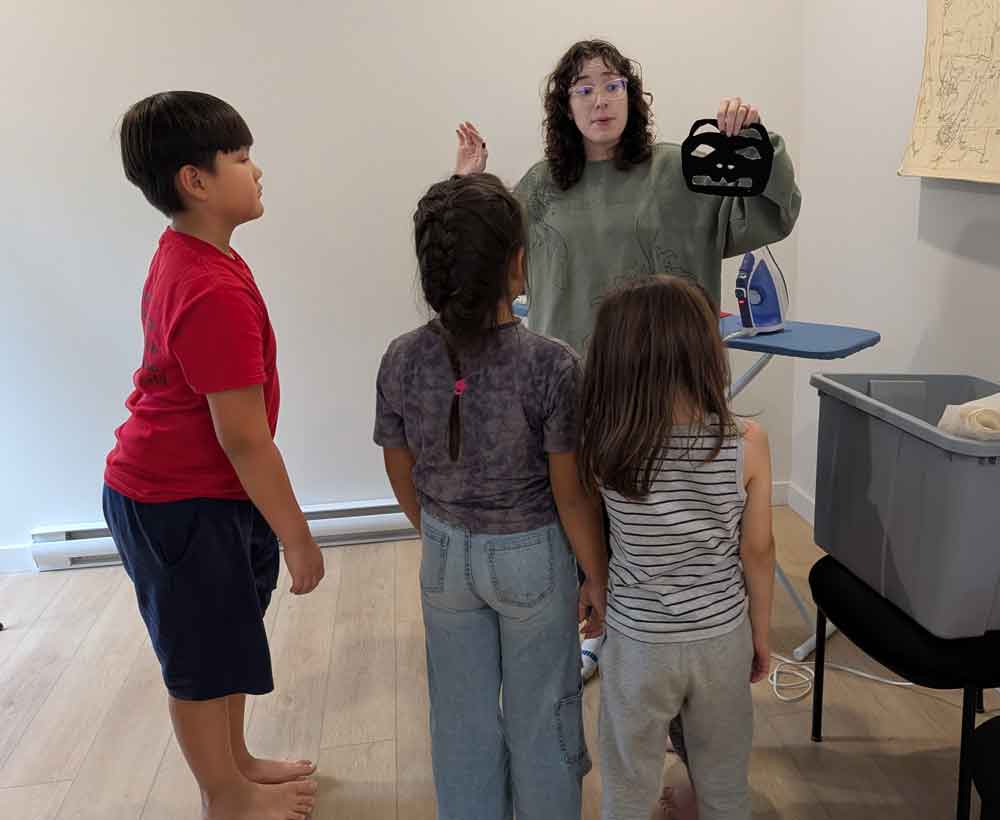
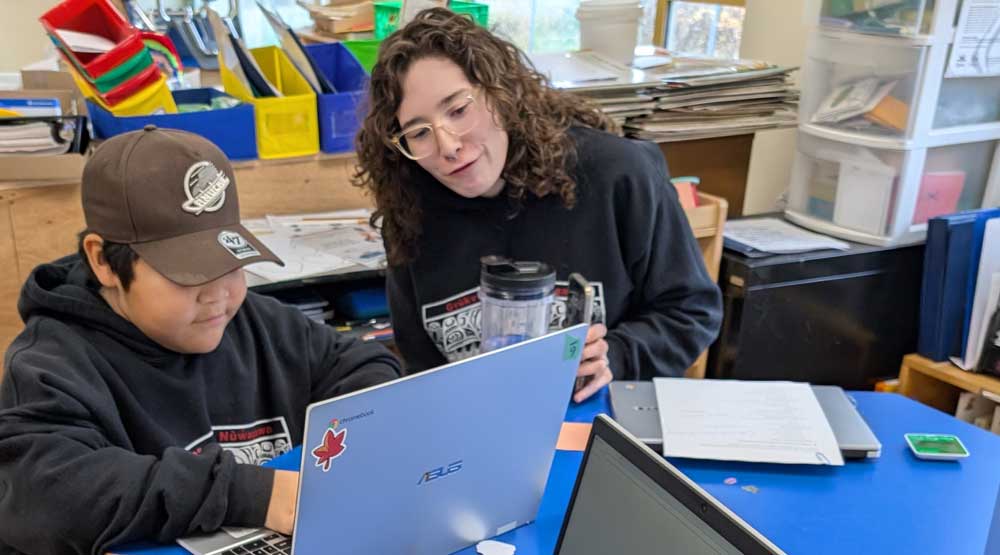
    She also likes to address the social-emotional requirements in the classroom. That works best with one person acting as the anchor, so I leave that to her. It’s a wonderful, symbiotic learning situation that works well for the two of us, and for the eight learners.
    KODAK Digital Still Camera

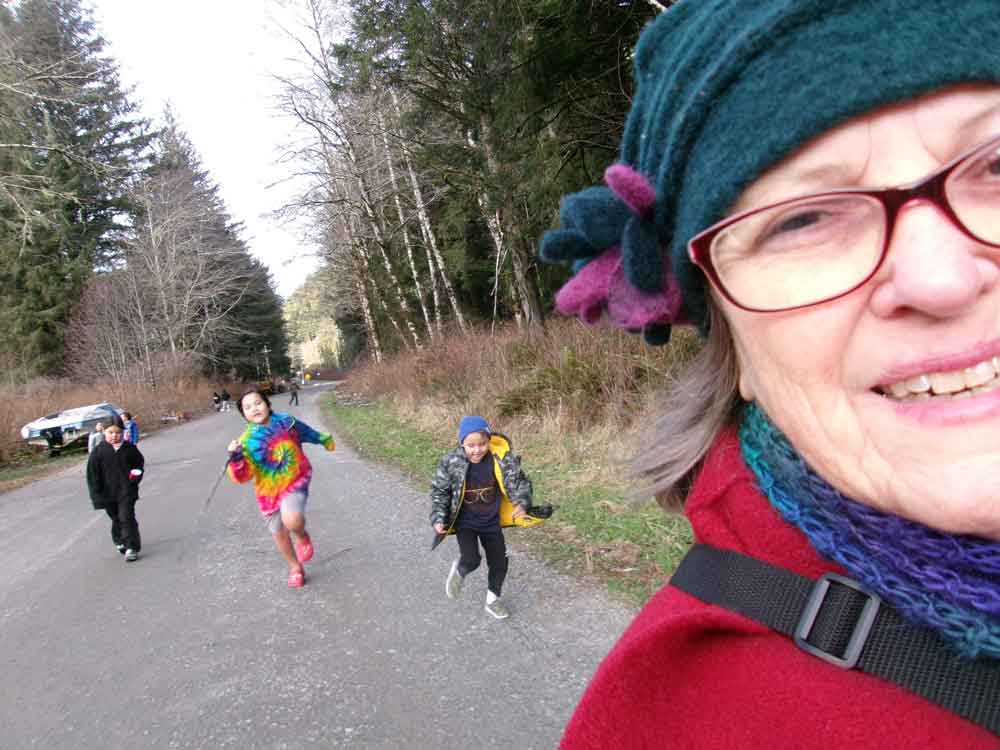
    There is an interesting program in BC that encourages physical education activity in these remote, indigenous schools. My Learning Assistant is trained in the approved approach, so she is developing a PE program for the elementary learners that includes preparation for a 5 km walk. It will extend to the secondary level as the children age up the levels. It’s all very thrilling.
    KODAK Digital Still Camera

    Meanwhile, I work with the Junior level pupils (grades 4 & 5), helping them develop their reading skills (decoding as well as comprehension), basic arithmetic skills, and basic writing skills.
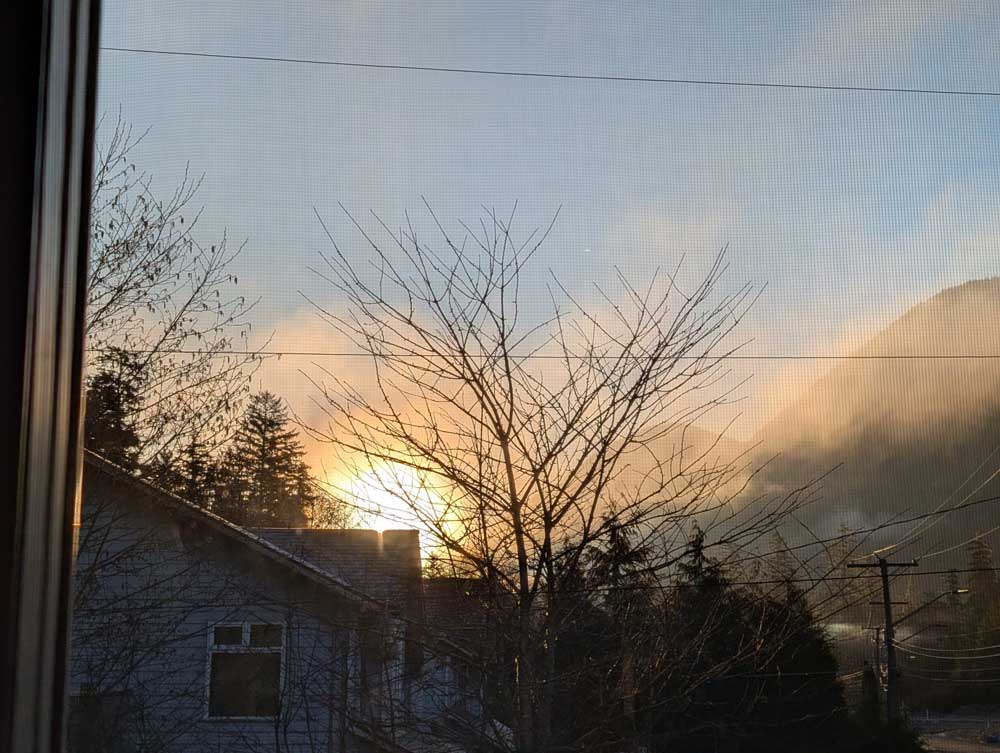
    Plenty of academic instruction time is, as much as possible, melded to other activities (1 hour a day to PE, 1 hour a day to local language and culture, 1-1/2 hours on Tuesdays and Thursdays to an on-line tutoring program or to outdoor education, 1-1/2 hours on Wednesdays to cultural activities). The other activities are very important, and I’m glad we have them in the schedule.
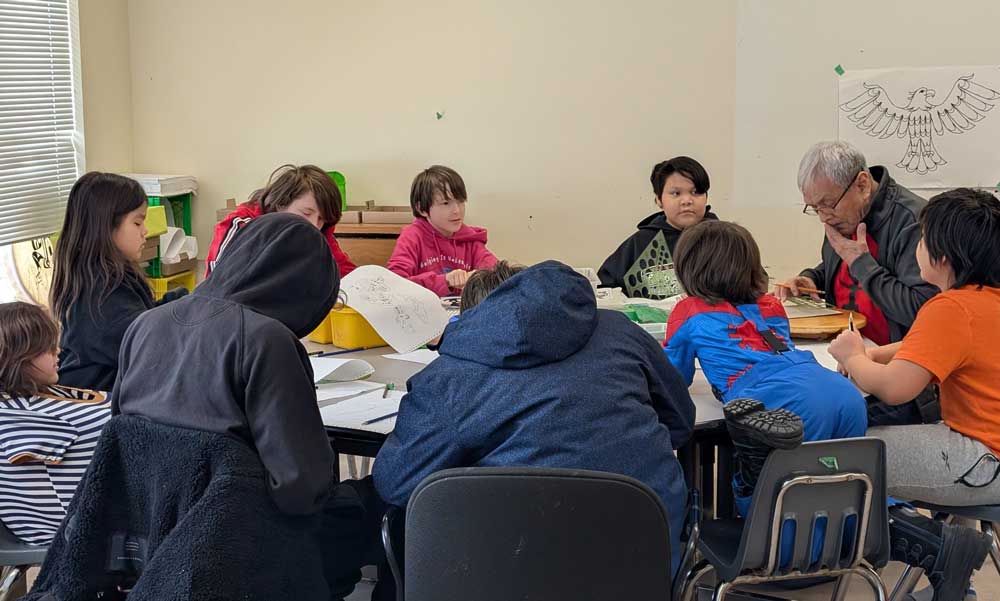

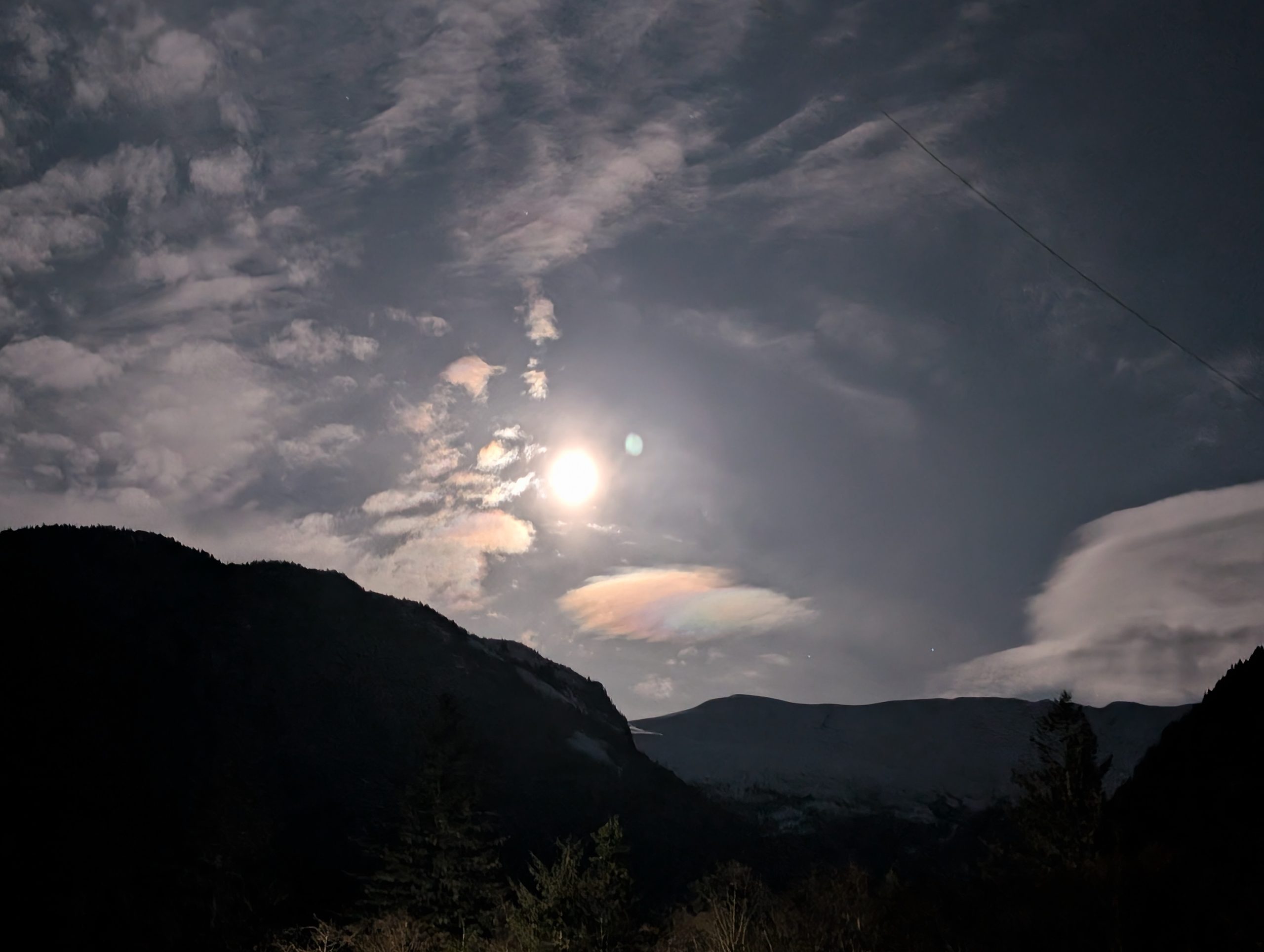
    Are we enjoying ourselves here? In a word, yes. Both Nigel and I are enjoying the climate, the sunrises,
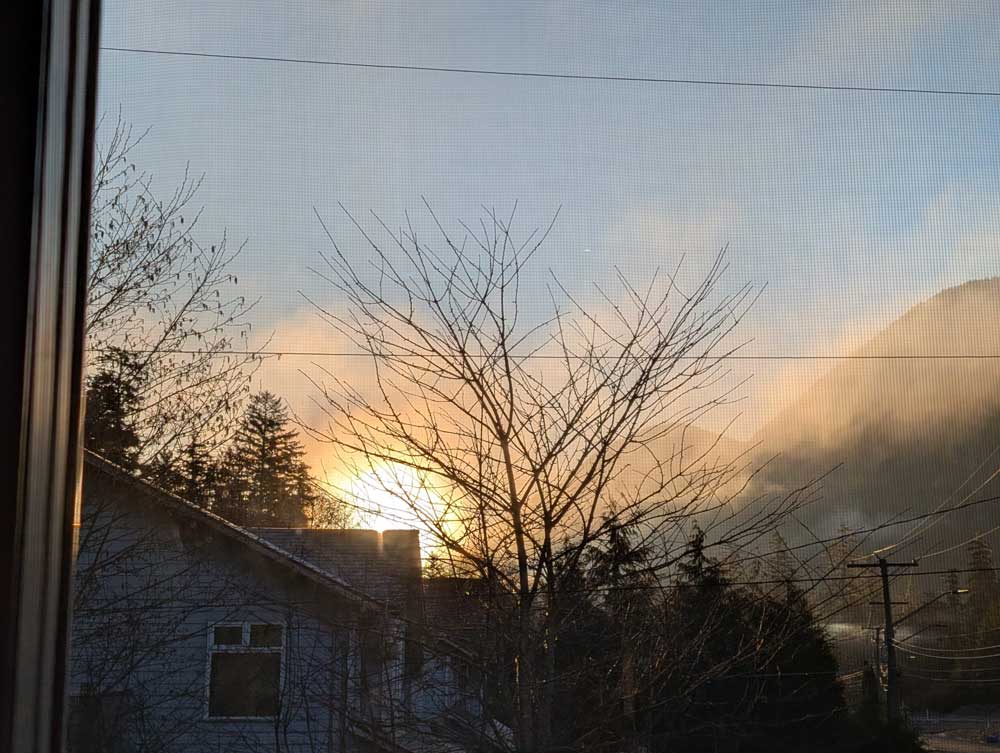
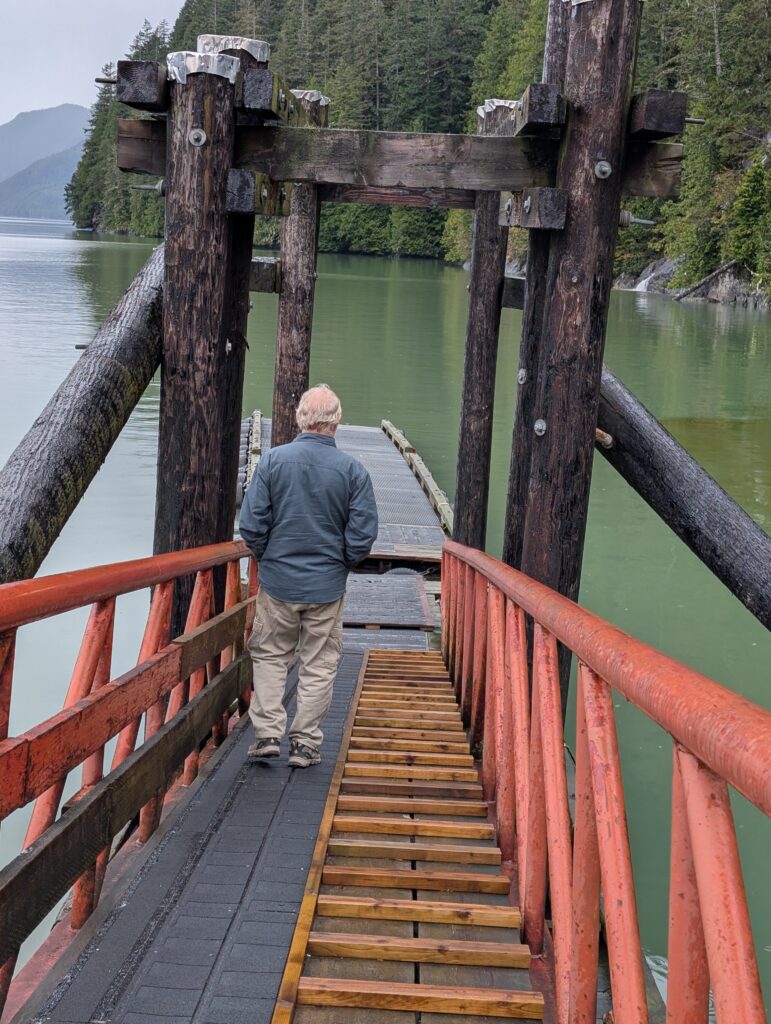
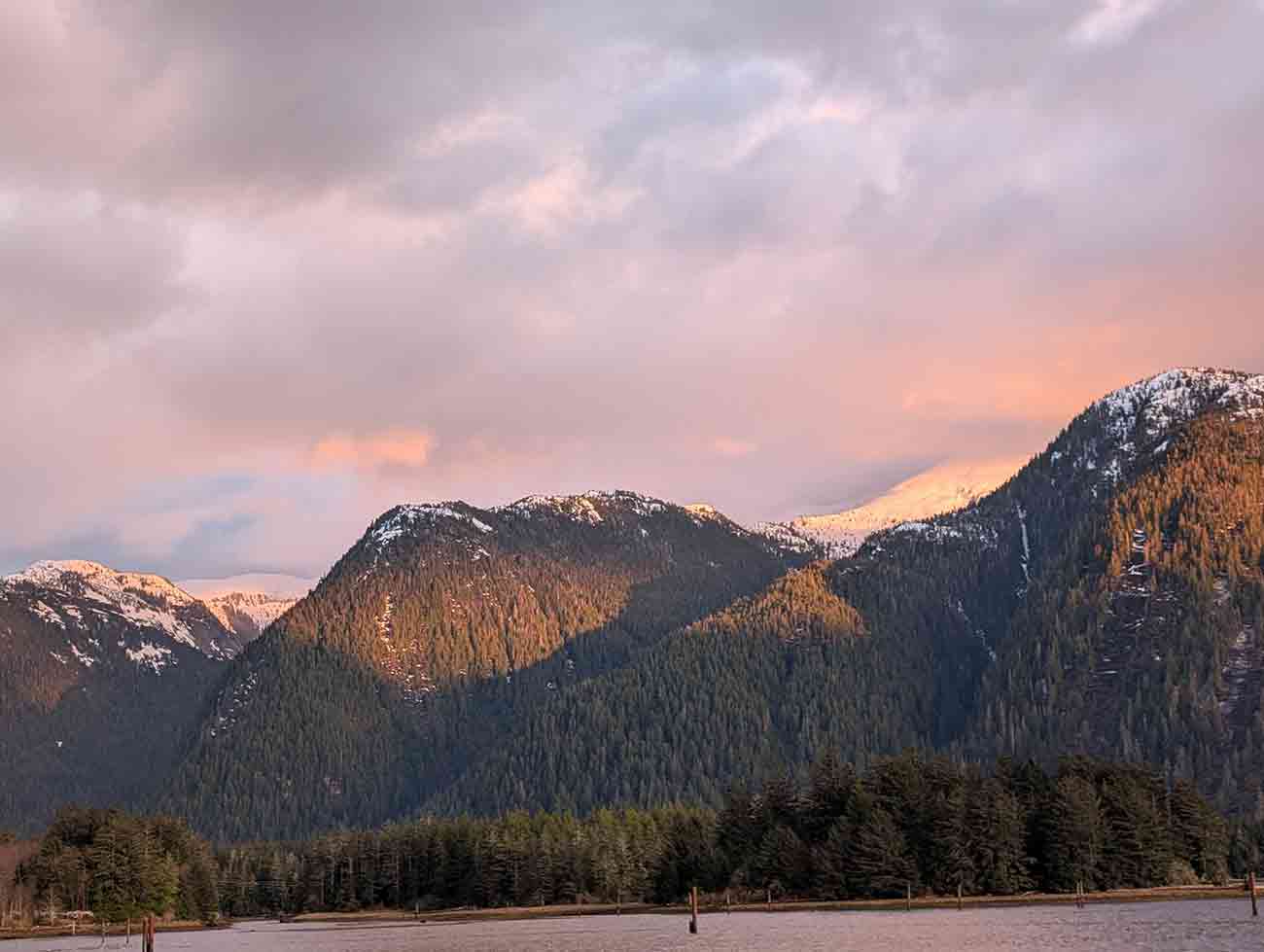
    and the sunsets, especially at the government wharf.
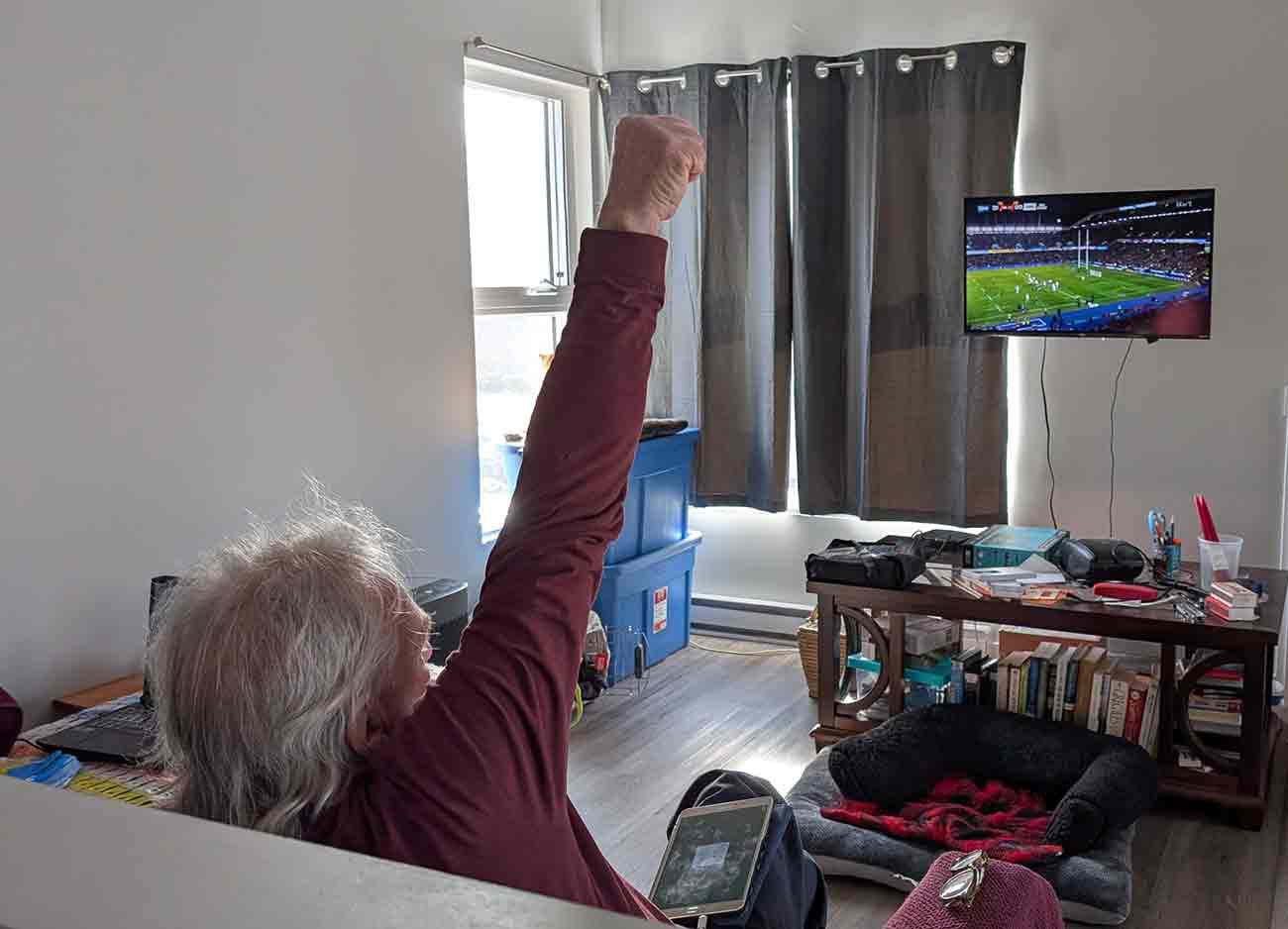
    We enjoy our relaxed evenings and weekends watching sports and dramas on television.
    I’m on a swinging pendulum that happens when we are nearing retirement from fulltime employment. I’ve gone from being busy all the time, to doing almost nothing. I think the pendulum will be swinging towards the middle of the arc, in which I’ll do bits and pieces, more recreational activities, and leave work at work until I leave outside employment entirely. Nigel has already reached that fine balance.
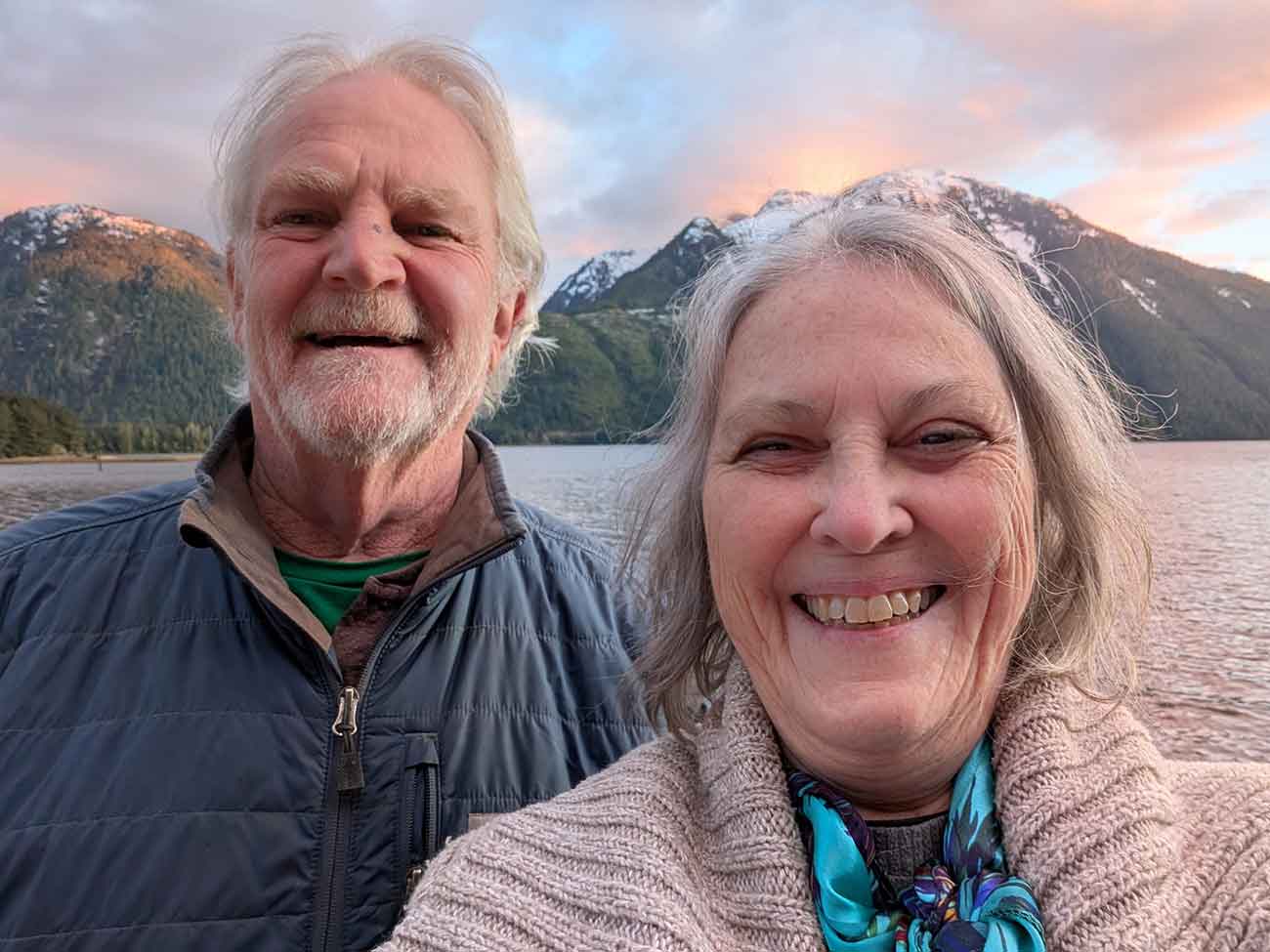
    So, the question was are we enjoying ourselves? It’s a small place, we are both relaxing, we are enjoying our work, we are enjoying the landscape. Most definitely yes, we are enjoying ourselves.
  • Meandering Thoughts 1

    Meandering Thoughts 1


    A couple of times recently I’ve been asked about living here. Some are questions specifically asking what it is like, or similar questions along the same lines. I think I’ve been asking myself the same questions. The answers vary, depending on the day and my mood, but essentially they are similar. Here’s today’s version.

    What does it feel like to have been there so long?

    We’ve been here for just over six months now. Half a year. Long, but not so long. We are, essentially, settling comfortably enough into our different lifestyle. Our days are full with work. Our lives are quiet – the two of us plus Granville the dog, and OrangePekoe the cat – amusing ourselves at home and in the nearby environment.


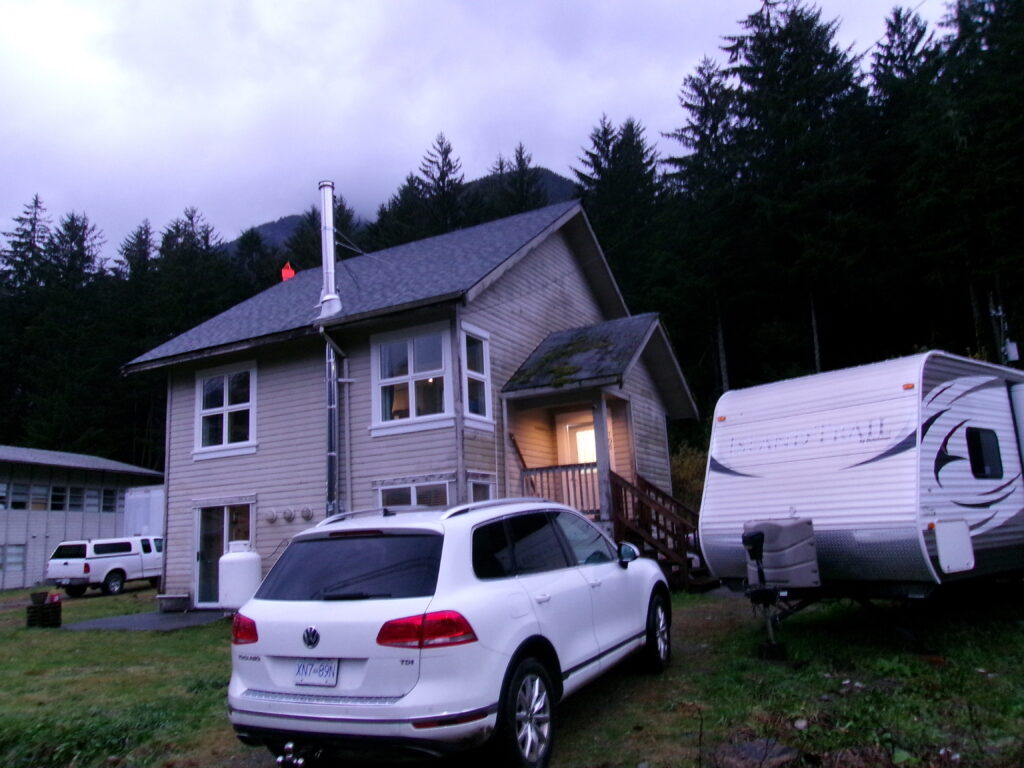
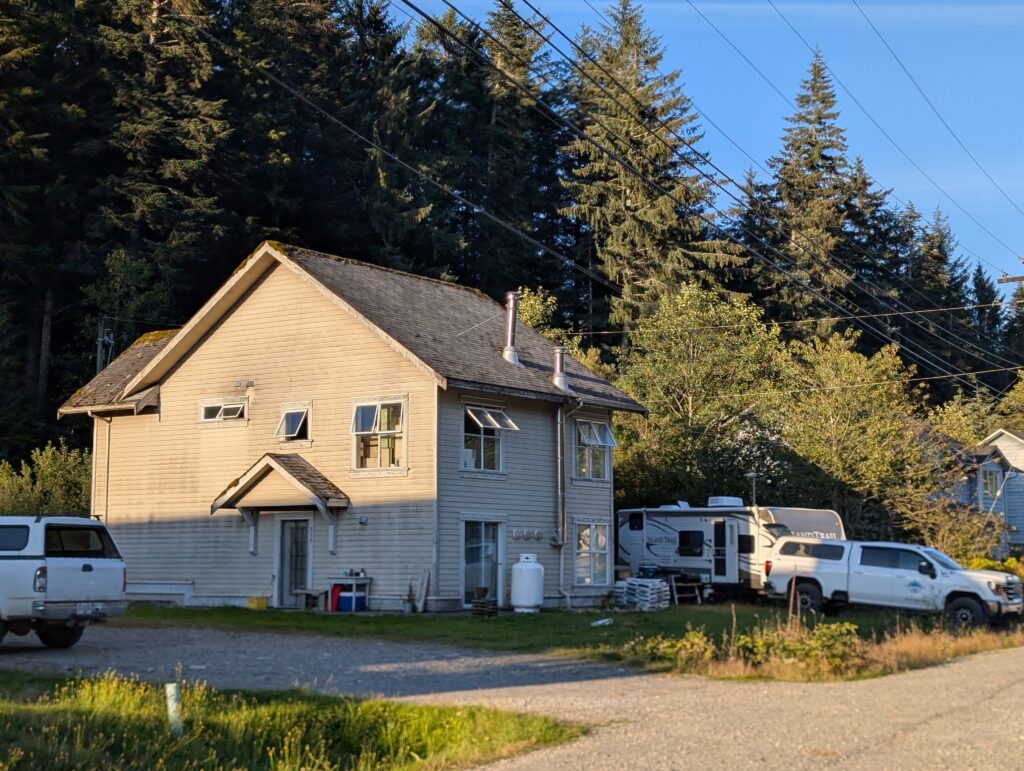
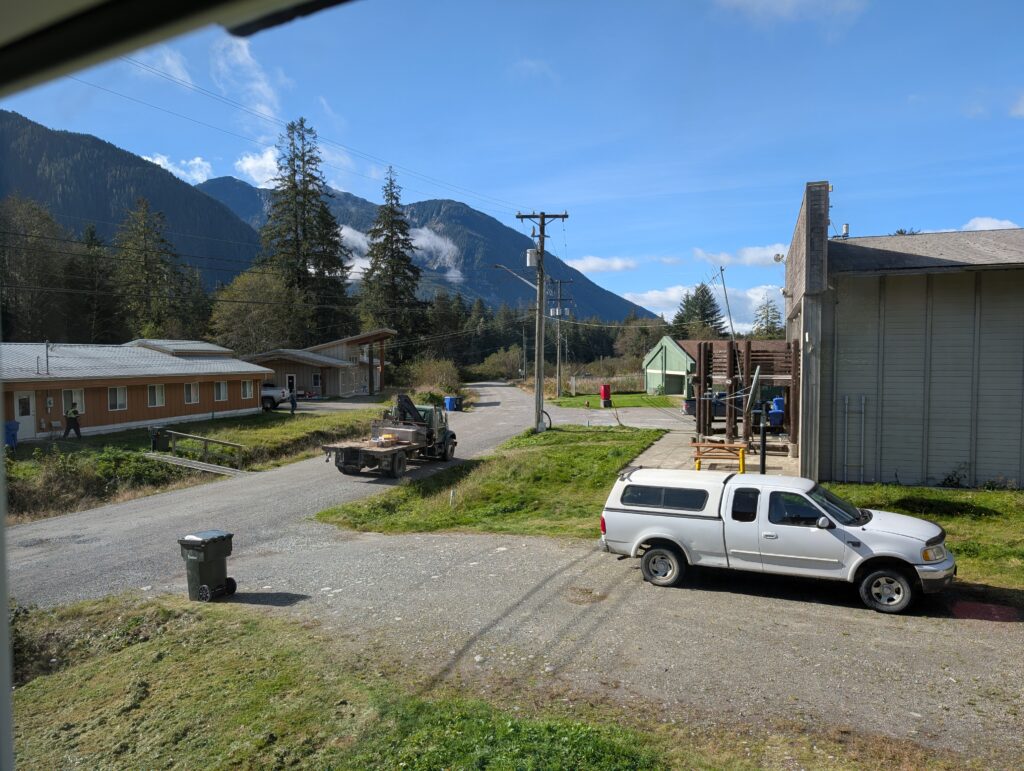
    It took longer than expected to settle into the community. There were some stumbling blocks, but I think we’ve surmounted them. We’ve made some acquaintances, some pals. Our flat is smack-dab in the middle of everything, handy to work, and the perfect spot to be nosy-parkers. (not that we are, but….) We live on the top floor of this house.

    KODAK Digital Still Camera


    That being said, both Nigel and I have developed routines. I go to work daily, come home for lunch (a pleasure to have that break), and spend the evenings reading and watching programs on TV.

    Nigel follows a similar routine. Our work is different – I work with the elementary children at the school, he works in the wood-working shed making furniture and teaching the secondary children how to make simple items in a program similar to what in my youth was called “shop”. It is now called ‘woodworking’.


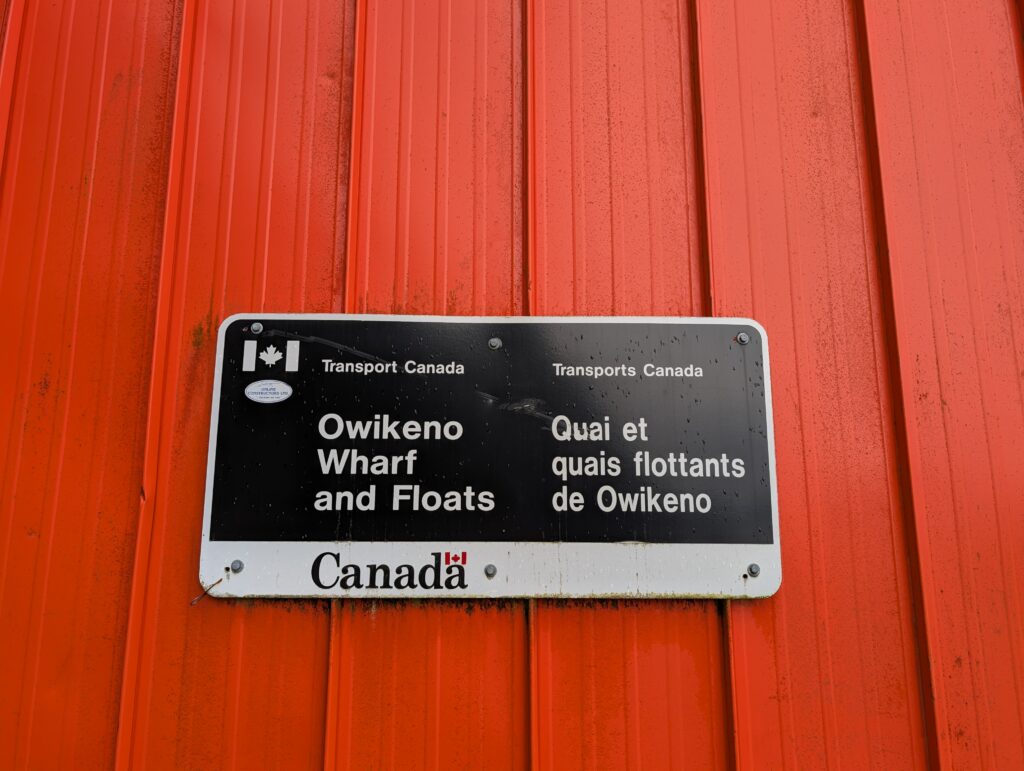
    Our routine also includes a weekend outing to Oweekeno Lake, or R.I.C. which is the local term for the government wharf.

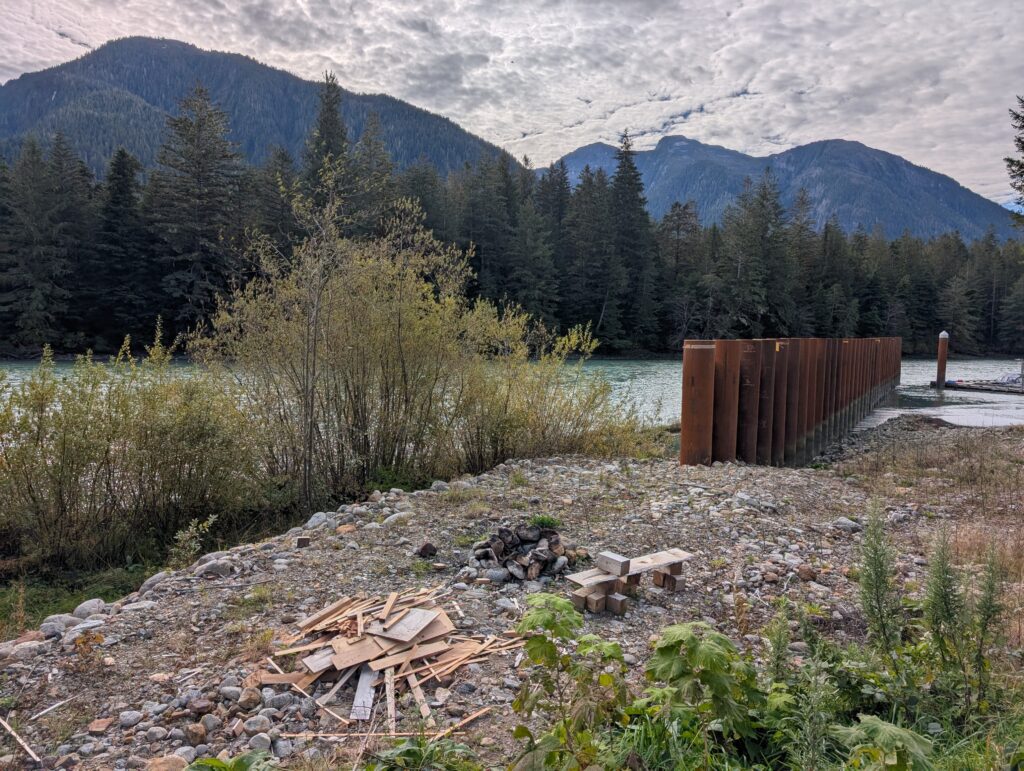
    R.I.C. is Rivers Inlet Cannery, named for the large cannery that once was at that location. Pylons in the water are all that remain from those days.


    Locations for outings are limited. The village, Oweekeno, is only about 3 km from one end to the other, and the accessible area around the village is possibly 10 km from one end to the other. There is a badly pot-holed, unmaintained road between the village and Oweekeno Lake.

    Apparently it belongs to the logging company that built it, so no-one seems to take responsibility for upkeep. It is a necessary road, because it leads to what is called the Reload, which is where the logging company dropped logs and loaded them onto trucks to portage them around the rapids in the river.

    There are many free-floating, washed-up logs along the shore.

    These are cut into smaller chunks, the familiar split log shape that we Canadians know and use for home heating in wood stoves. We are the lucky recipients of a regular load of logs to help keep our house toasty warm.

    Have I experienced culture shock?

    Yes, indeed. There are many different routines here, with no explanations forthcoming. I’ve made many mistakes. It has not been a welcoming community, for the most part. I’ve lived in many different places, often feeling warmth in the welcome. I’ve not felt that here. It’s unfortunate, from my perspective, because, after six months, I remain wary, whereas otherwise I’d be getting involved in many community activities. I am involved with all of the activities that include the elementary school children. That’s a start. I’m sure it will continue and expand over the coming months.

    That being said, there are a couple of people who have spoken warmly to us, and from whom we have felt a warm welcome. One is Alvina, who unfortunately has been unavailable for the past three or four months because they were in and out of the community getting medical care for her husband. When she returns, I think we’ll become much more friendly. We are of an age, and we have common interests.

    Another is George, our Language and Culture instructor. He is always happy to advise about cultural practices and procedures, and to generally chat about this and that. We are also of an age, so we have some common life experiences, having lived through the same decades.

    We also have a friend in the village. Peter. When he is in Oweekeno, he invites us over for a meal about once a week. Peter is a Red Seal Chef (the interprovincial standard for skilled trades in Canada). He spent several years working in logging camps, including one of the large camps at the top end of Oweekeno Lake. His meals are very tasty, and include logger-size helpings. We come home stuffed, often with a take-away portion for tomorrow.


    The feeling “I’m living here” is very slowly starting to come into place. Another year will perhaps solidify it. Meanwhile, we’ll continue going to work, joining community events, and increasingly visiting others in the community as we all get more comfortable with each other.

  • OWIKENO LAKE

    OWIKENO LAKE


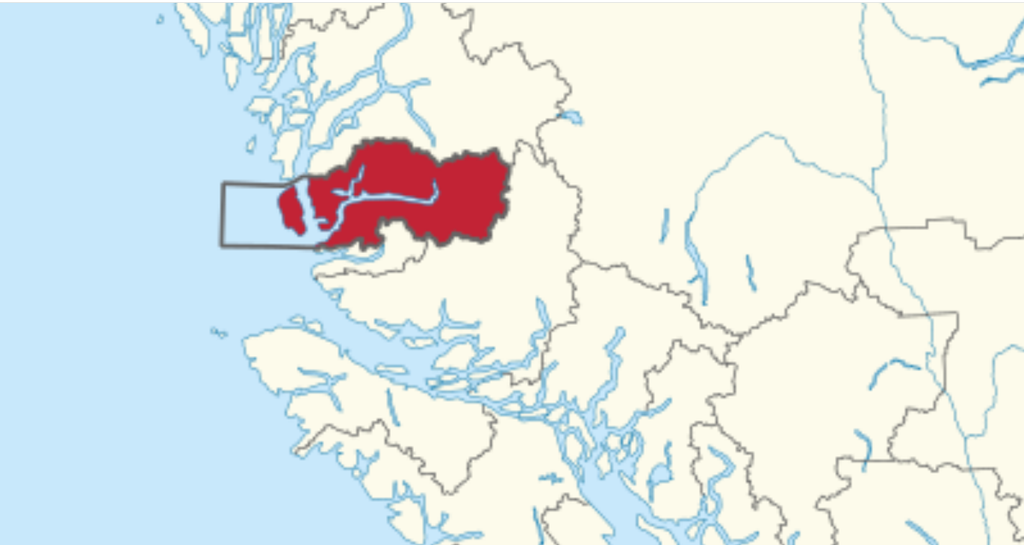
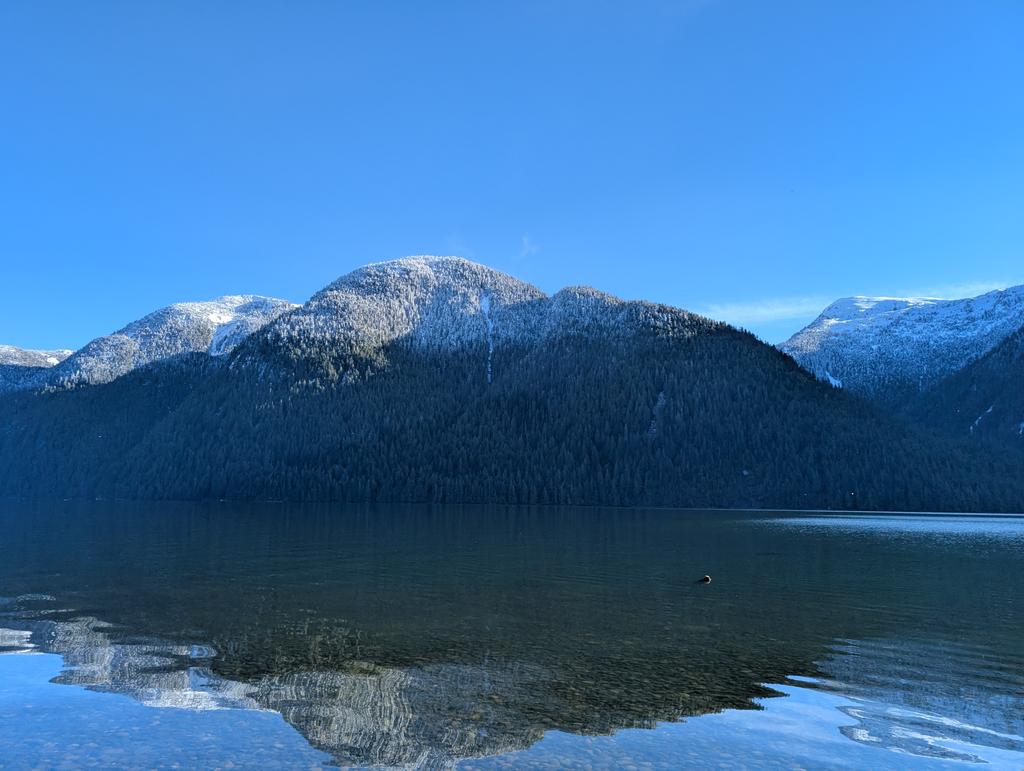
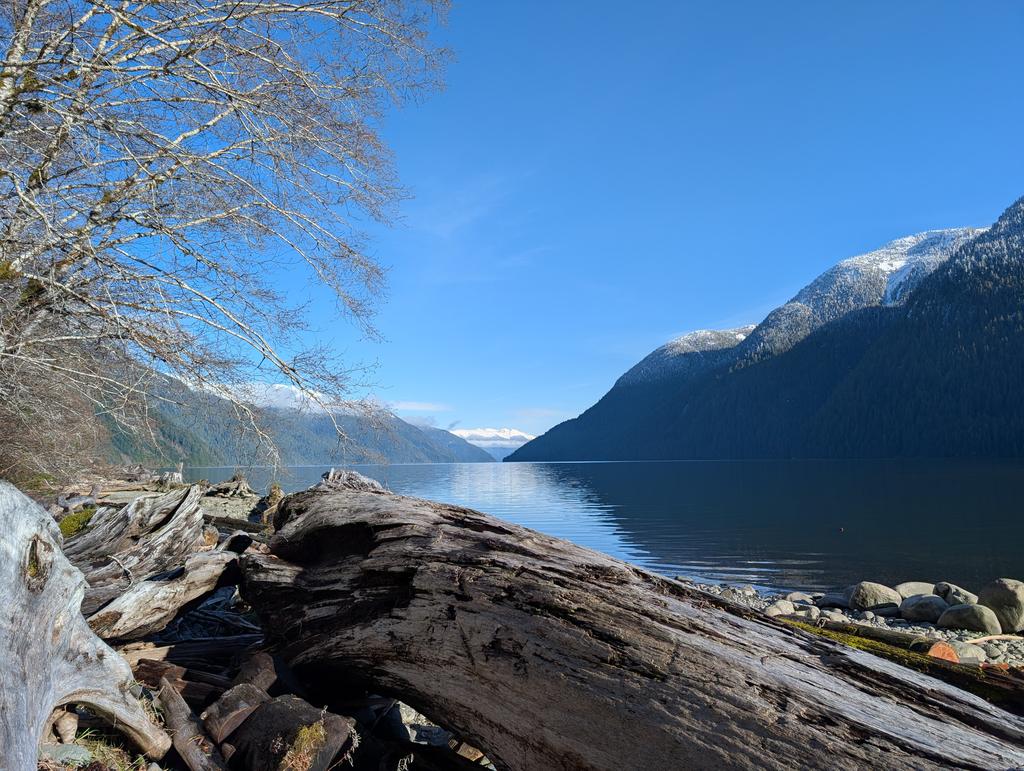
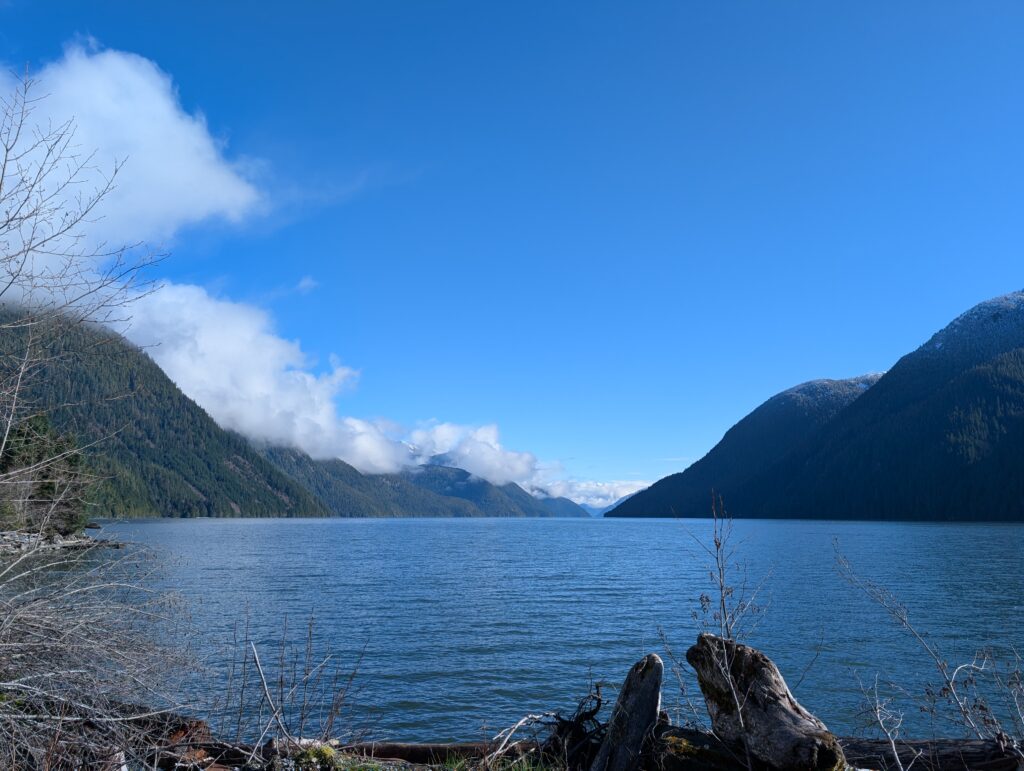
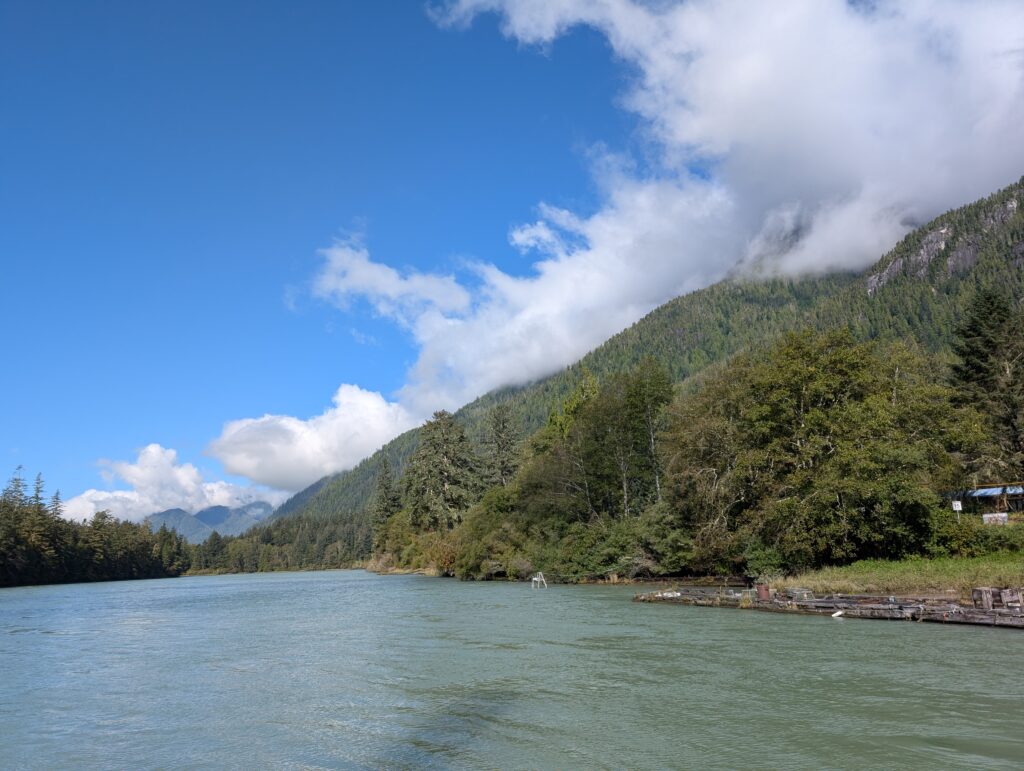
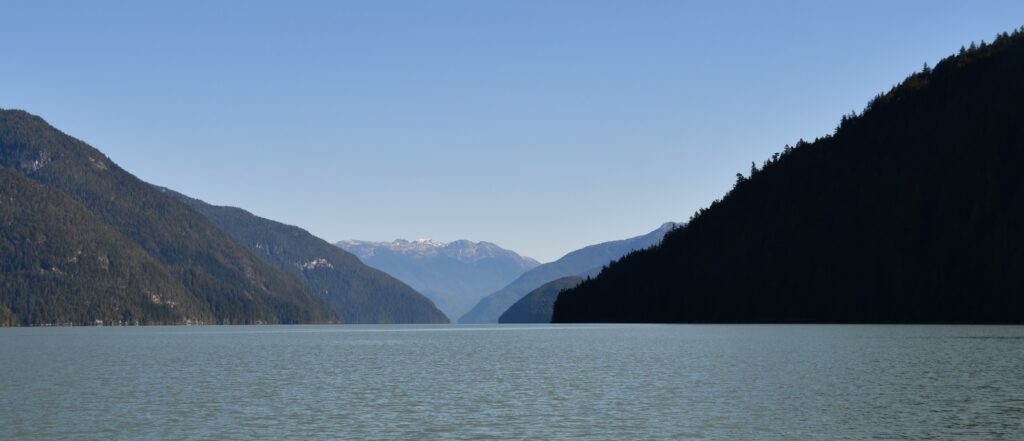
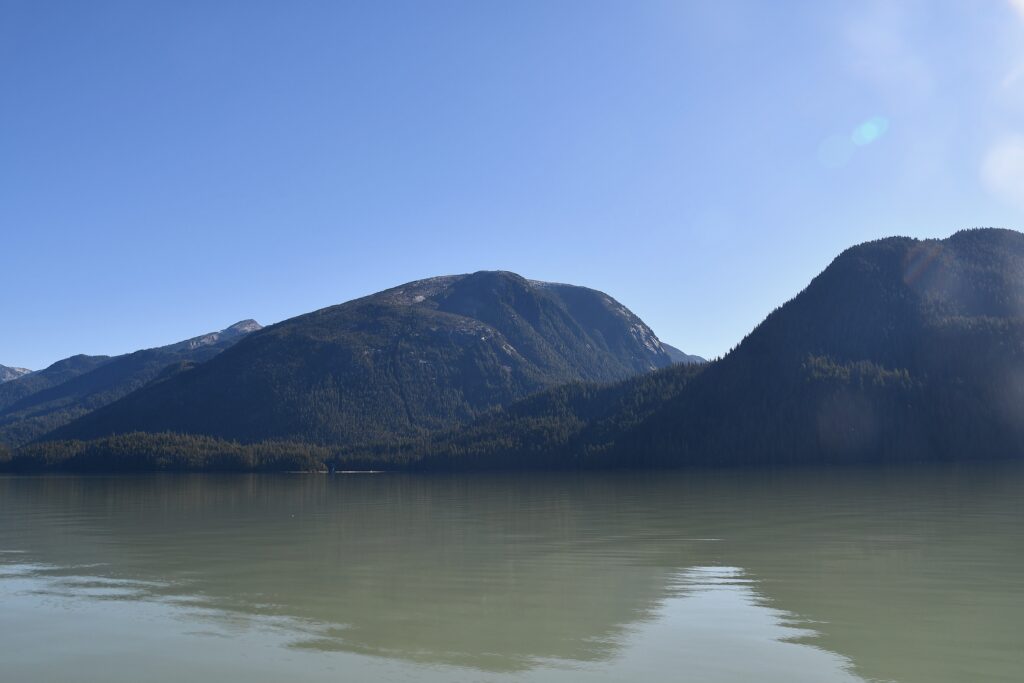
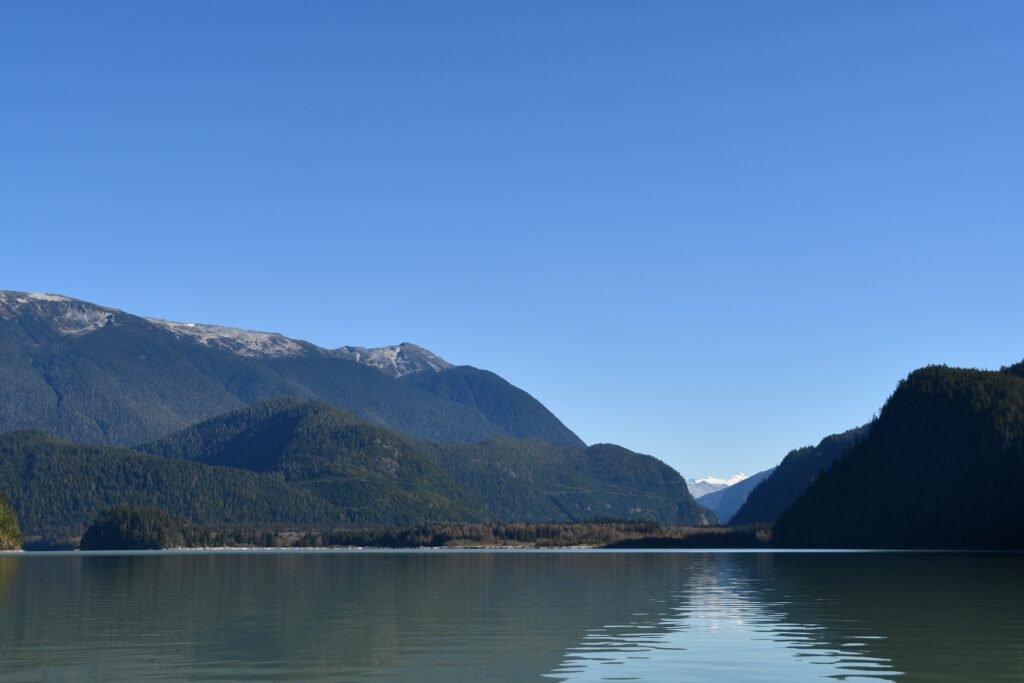
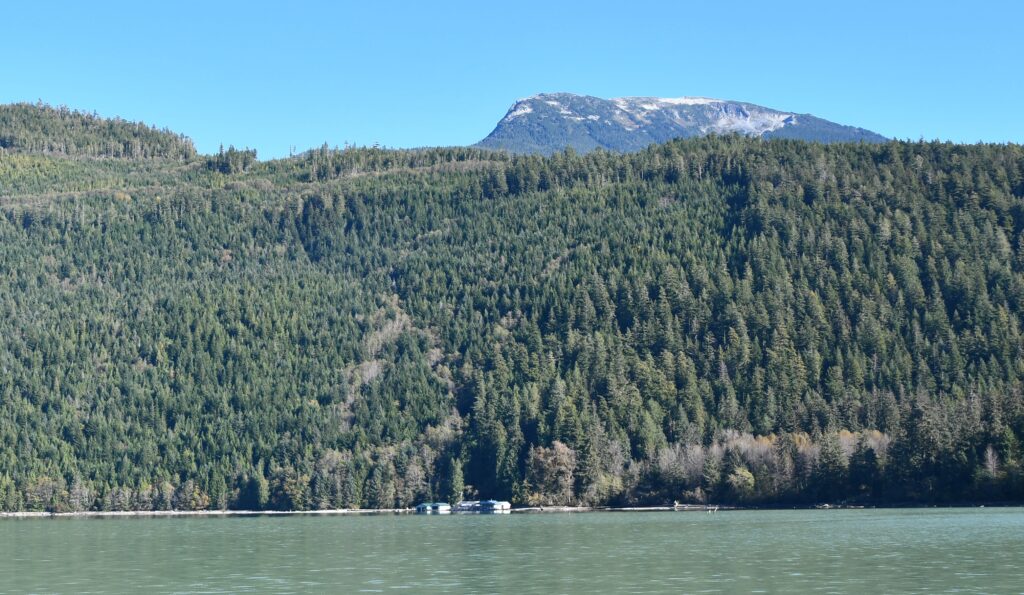
    Owikeno Lake is part of the meandering fjord and its contributing watersheds that defines the boundaries of Wuikinuxv Nation.


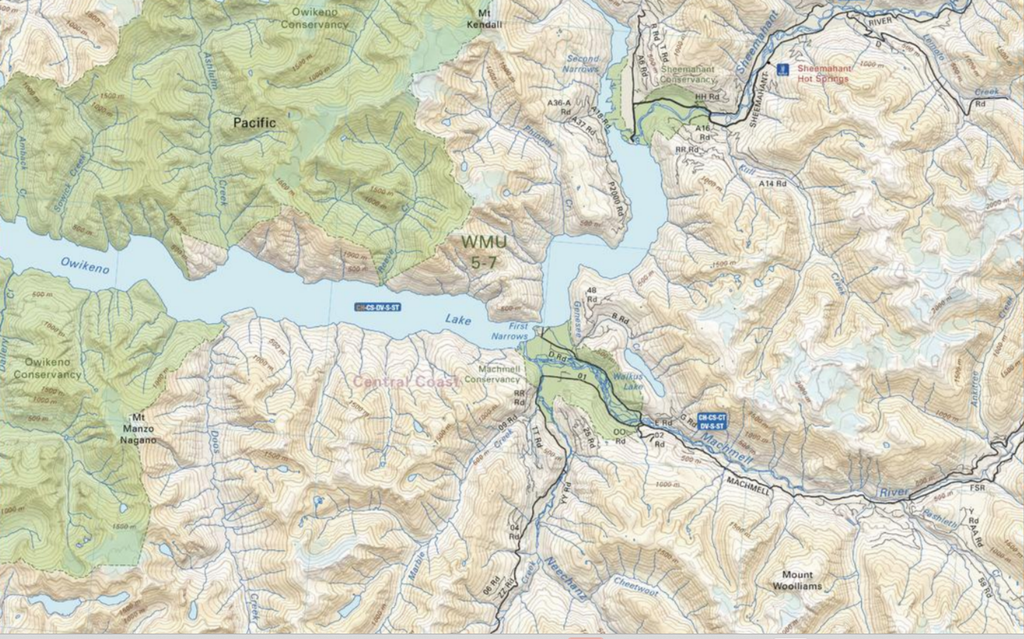
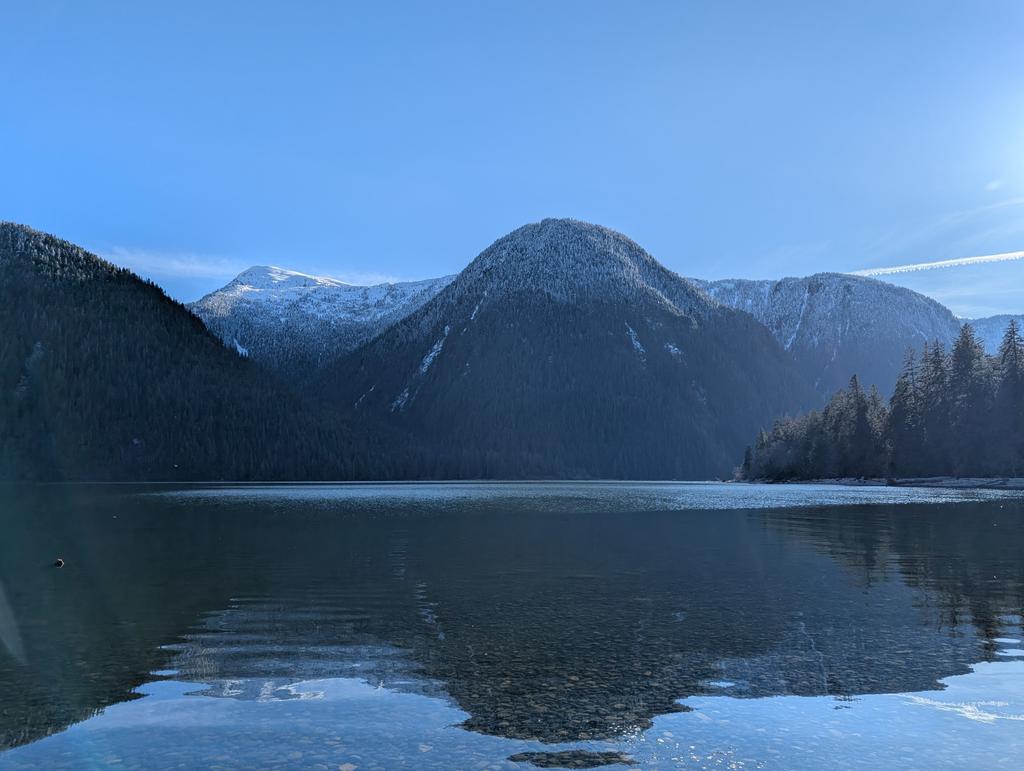
    This is a classic fjord lake – long, narrow, surrounded by steep-sided mountains. Fjords are formed when glaciers carve a narrow path between the mountains. The contour lines on a topographic map are close together, indicating the steepness of the inclines.


    Owikeno Lake is approximately 70 km long. It’s about 2 km wide at the widest point. Three sets of narrows divide the length into four basins. The basins are fed by four main rivers – the Tzeo, Sheemahant, Inziana, and Machmell.

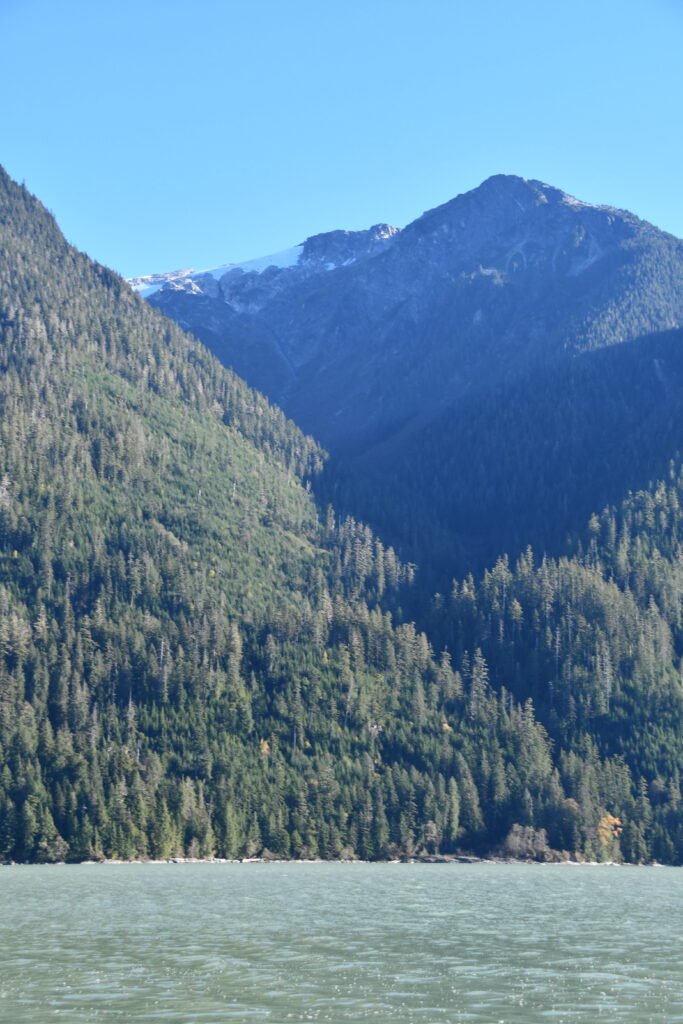
    The rivers drain from the Ha-Iltzuk Icefield, the largest icefield in the Coast Mountains. I am presuming that the glacier we see at the first narrow is part of that icefield. That is the point at which the Machmell River enters Owikeno Lake.

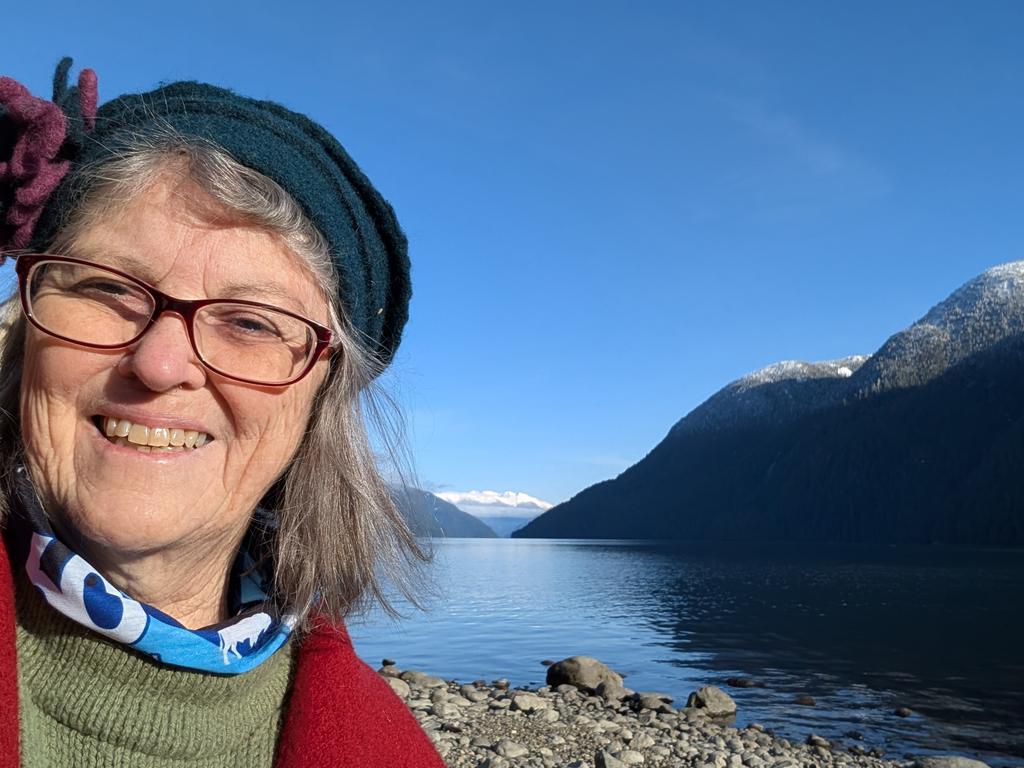
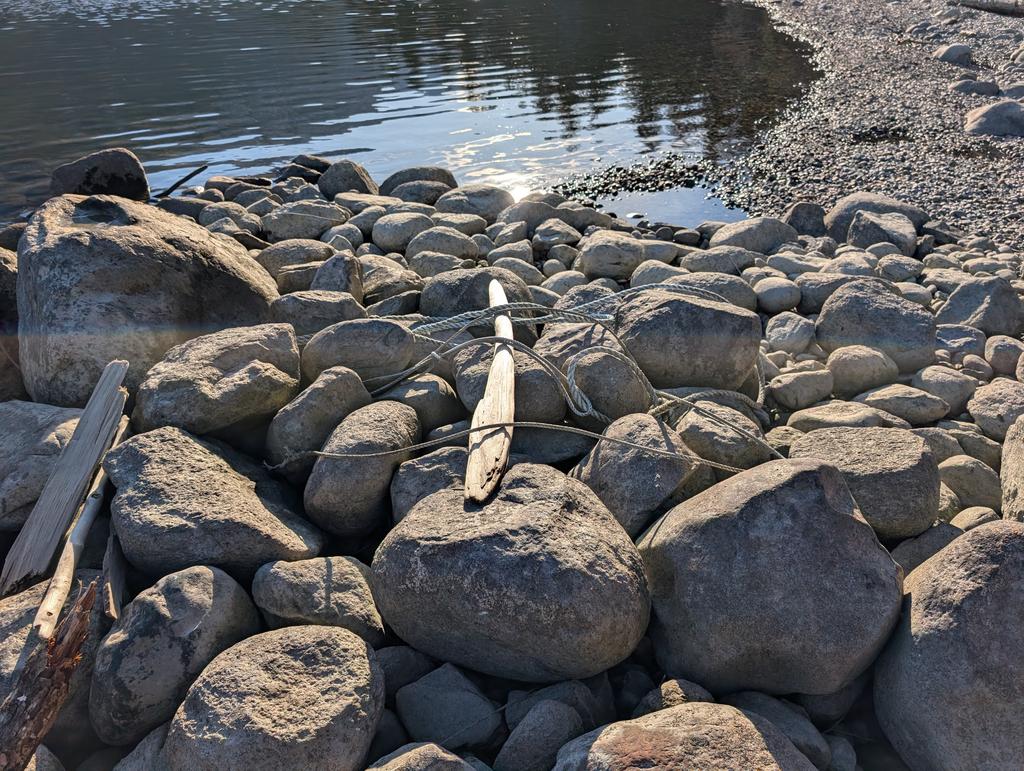
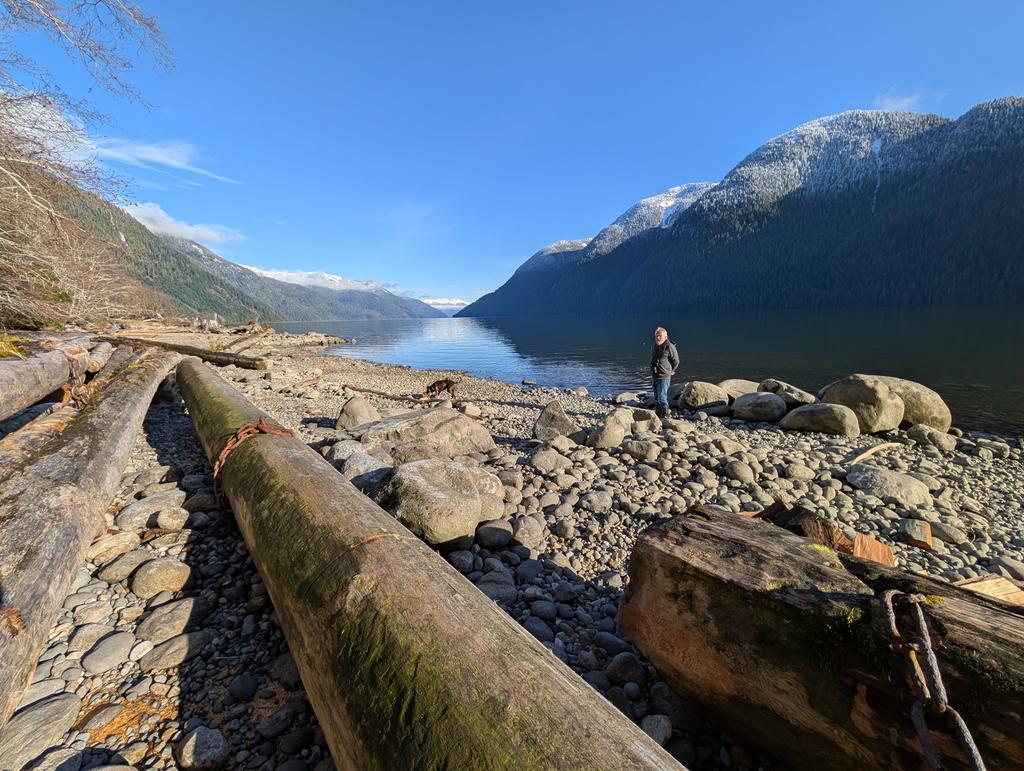
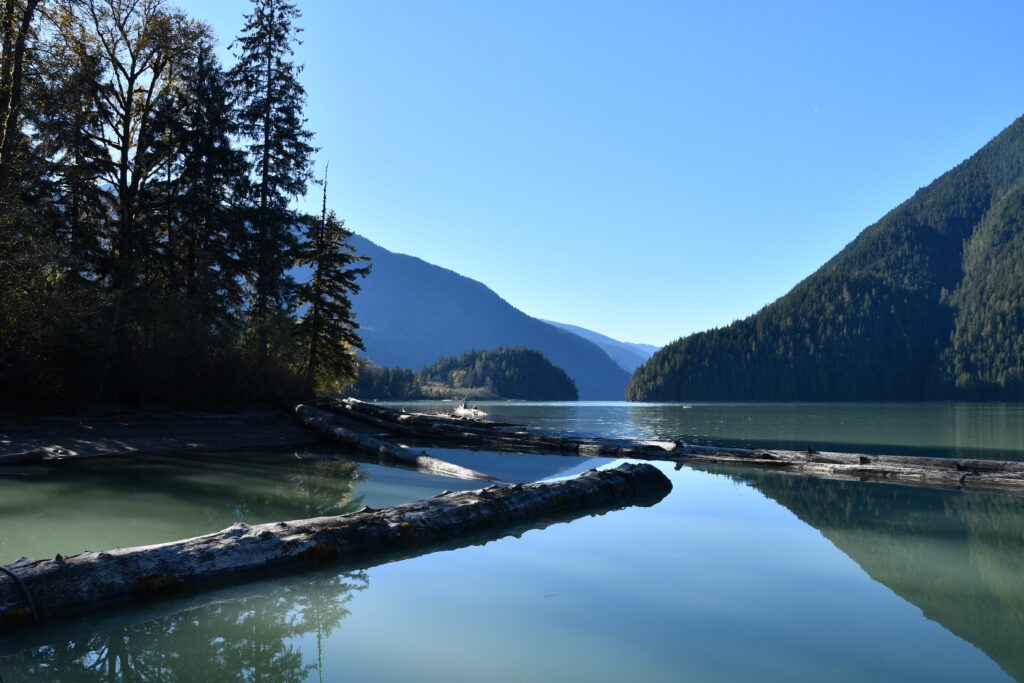
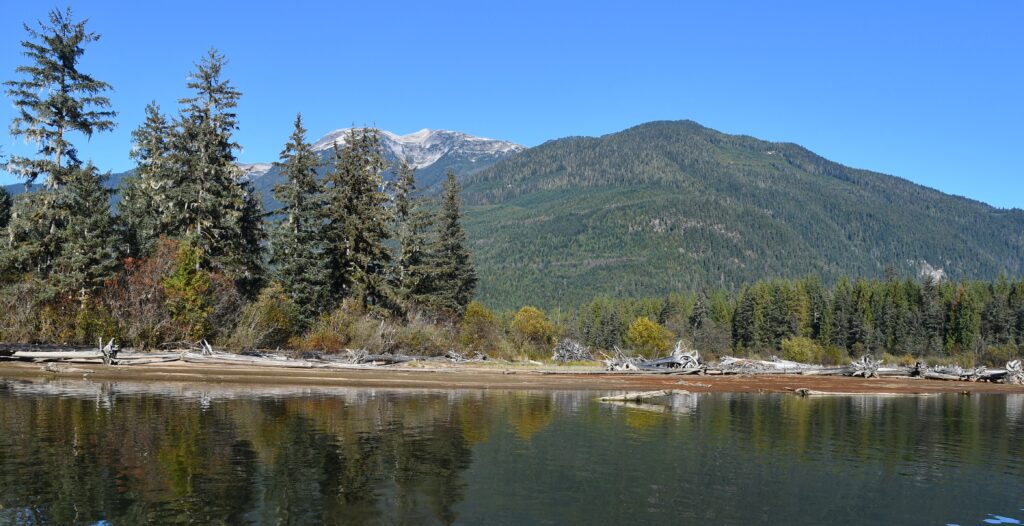
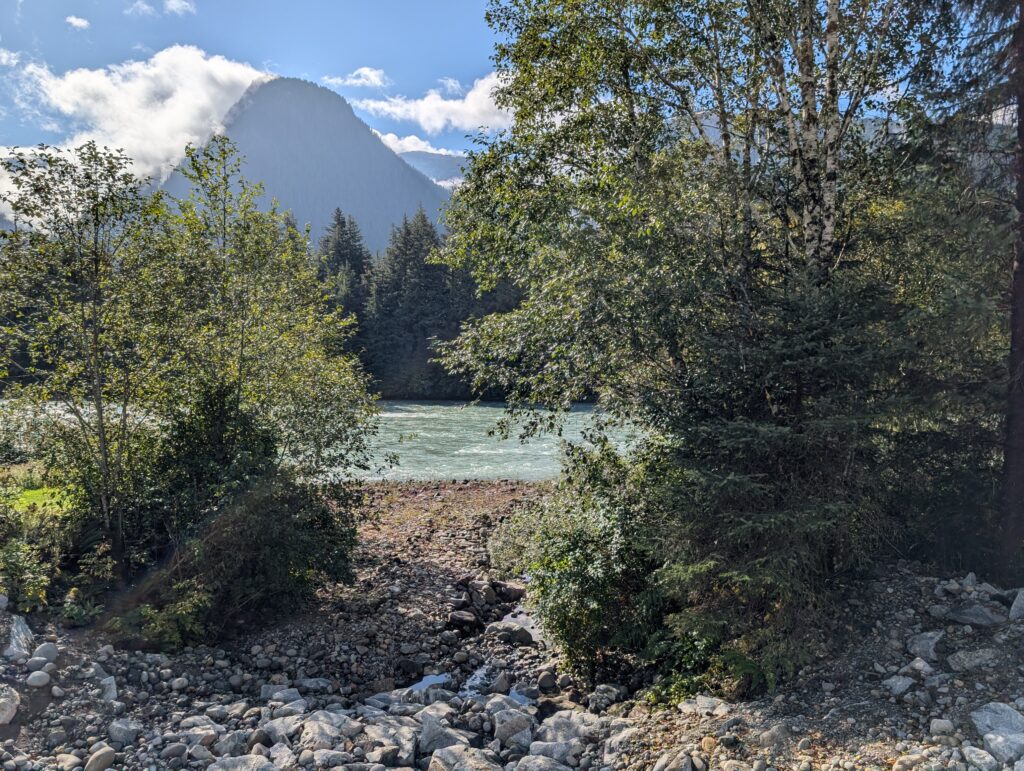
    Fjord lakes are often filled with the rubble left behind when the glaciers melted back. The pebbles, some very large, on this beach are typical of the rounded cobbles that were weathered into smooth shapes by the glacier’s back and forth movement.


    Glaciers are remarkably powerful. They scour the rocks and dirt from the mountains, leaving crevices and near vertical cliffs, which now add shape and contours to the terrain.


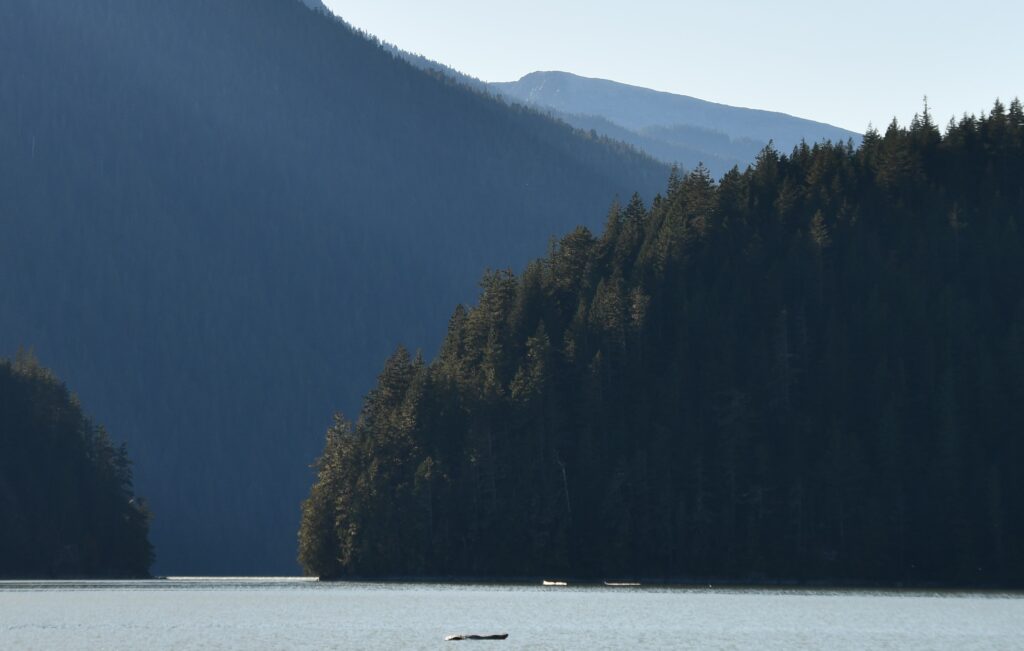
    From where we were standing we could see the ravines that house some smaller rivers, but not the rivers themselves. Looking west towards the lake outlet into the Wannock River, the Medowse Creek. flows through ravine we can see.
    Looking east, I suspect the indents that we can see on the south side of the lake (to the right in the picture) are the entrances of Dallery Creek, and possibly Loquaist Creek.

    The larger in-gap, just at the bend on the north side might be the outlet of Amback Creek. Without full reckoning, on site with a topographic map, the specifics remain speculation at this time.


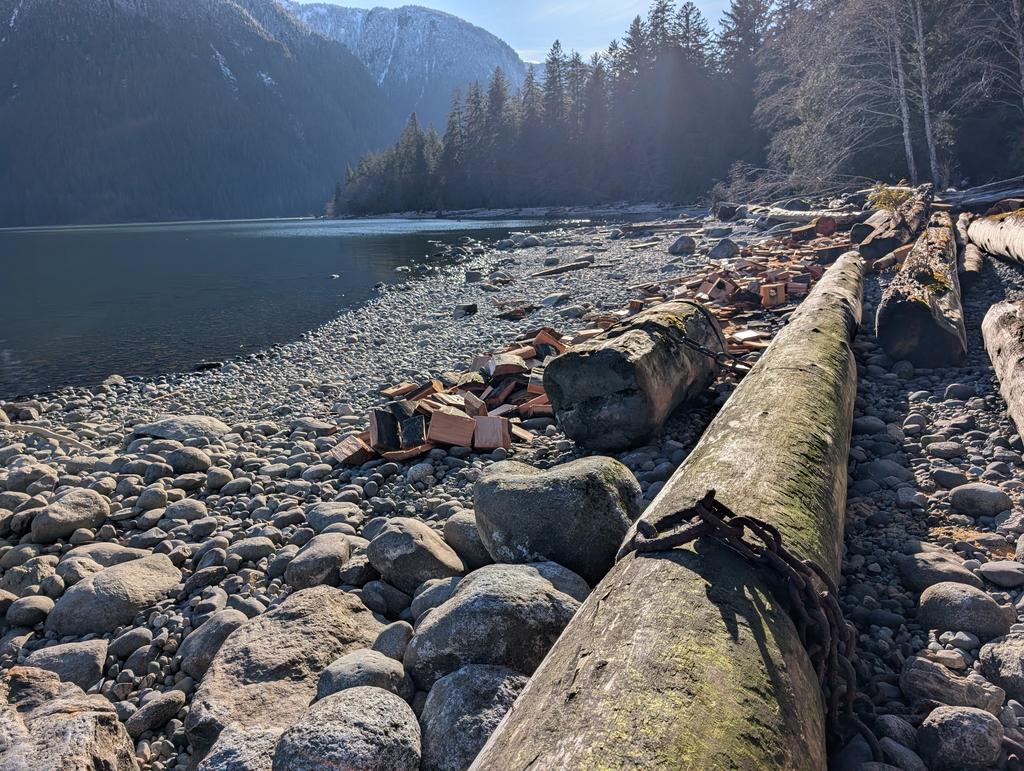
    Decades ago major logging operations happened up at the top of Owikeno Lake. The logs were floated down the lake and off loaded here because the Wannock River has unpredictable currents and irregular depth. The narrow beaches are littered with huge logs, remnants of the logging industry.


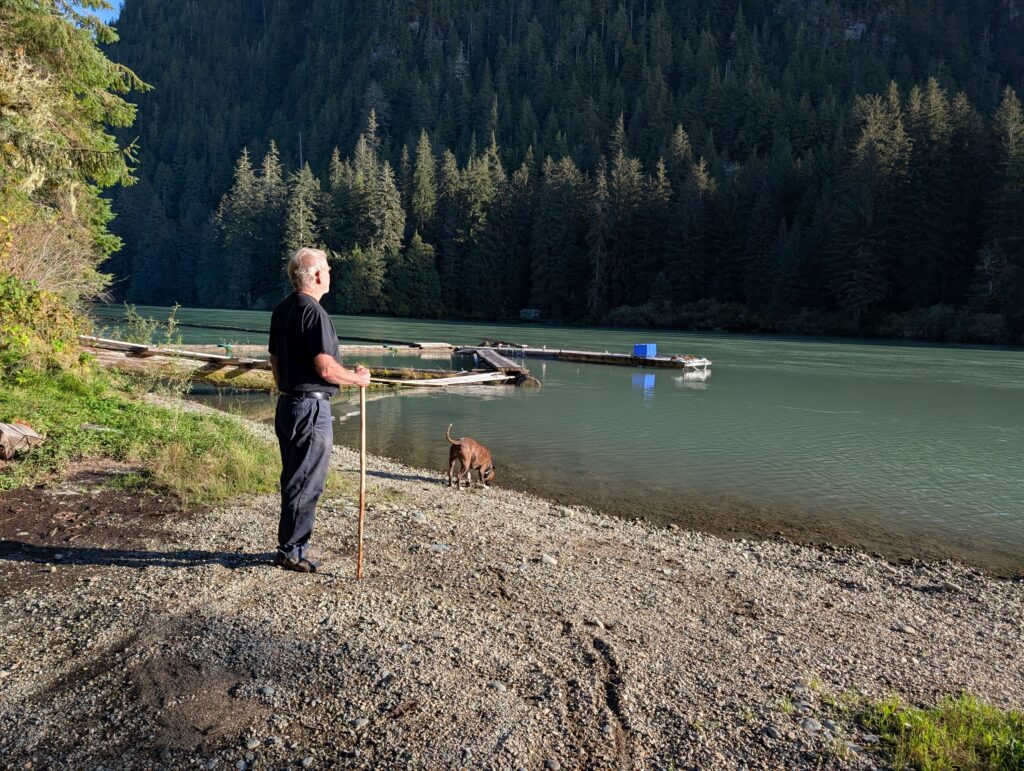
    For us, Owikeno Lake is our casual recreation area. We regularly take the extremely energetic dog, Granville,

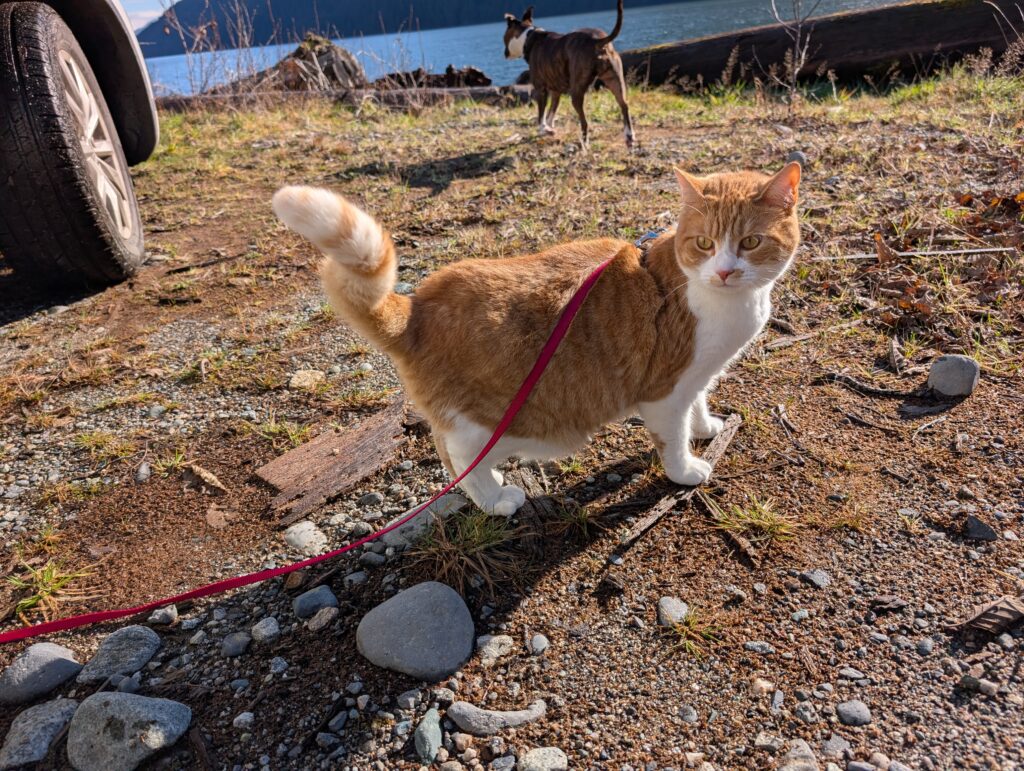
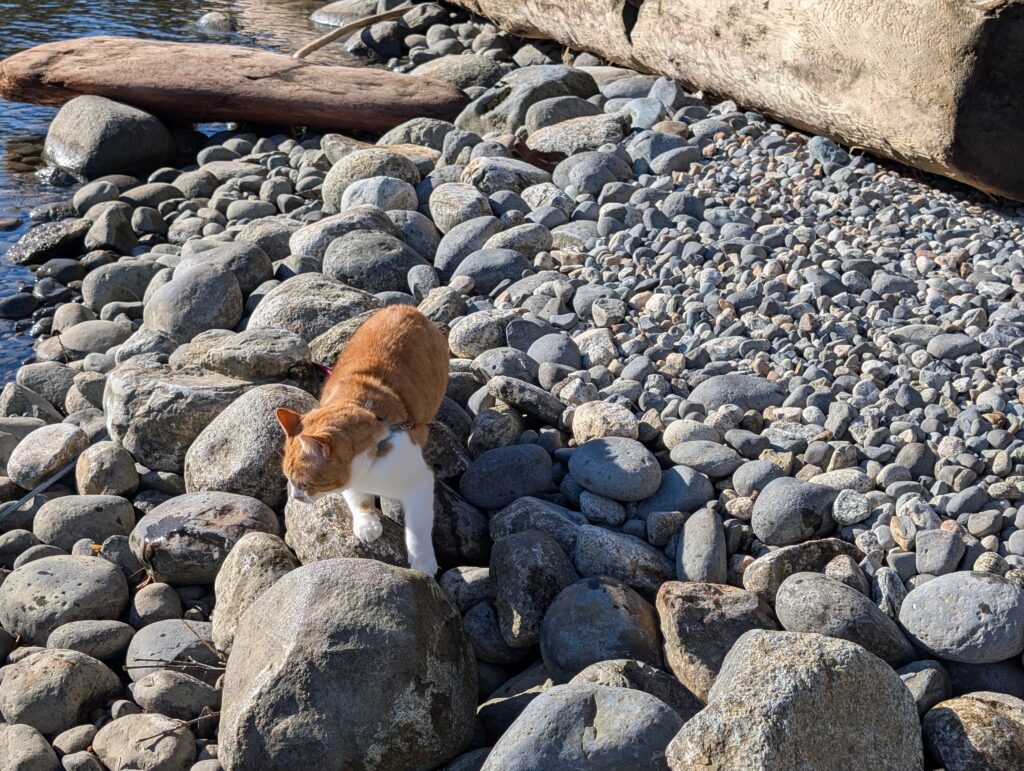
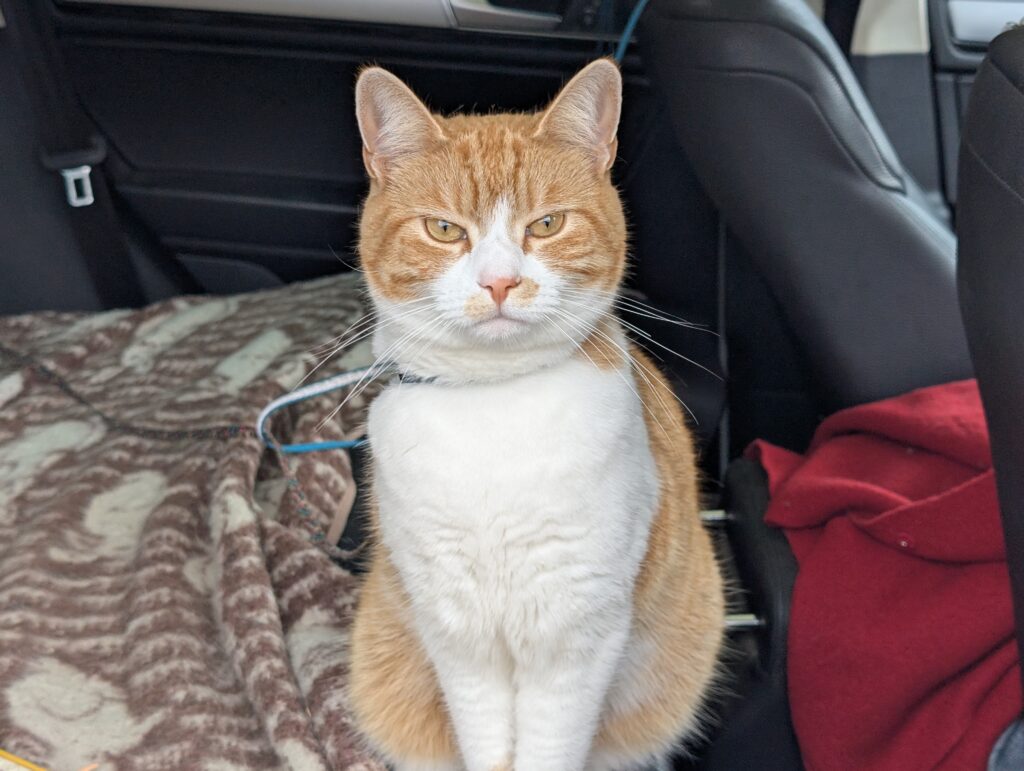
    and OrangePekoe the cat for a romp on the beach. Well, maybe OrangePekoe doesn’t romp; she quietly explores as much as possible stretching her leash to its limits.

    While it is always a delightful outing, being a geographer and a teacher, plus a surveyor and a woodworker, we look at the landscape with more than casual eyes, adding another dimension to our day-trips here.

    Despite our slight tendency to make it a bit of a busman’s holiday, we mainly come up to Owikeno Lake to enjoy the beauty of this glacial lake, and the ever changing atmosphere of the area.

  • A Couple of Hours Outside

    A Couple of Hours Outside

    A picnic lunch, an hour of casual beachcombing, and some outside playtime for the four of us today.

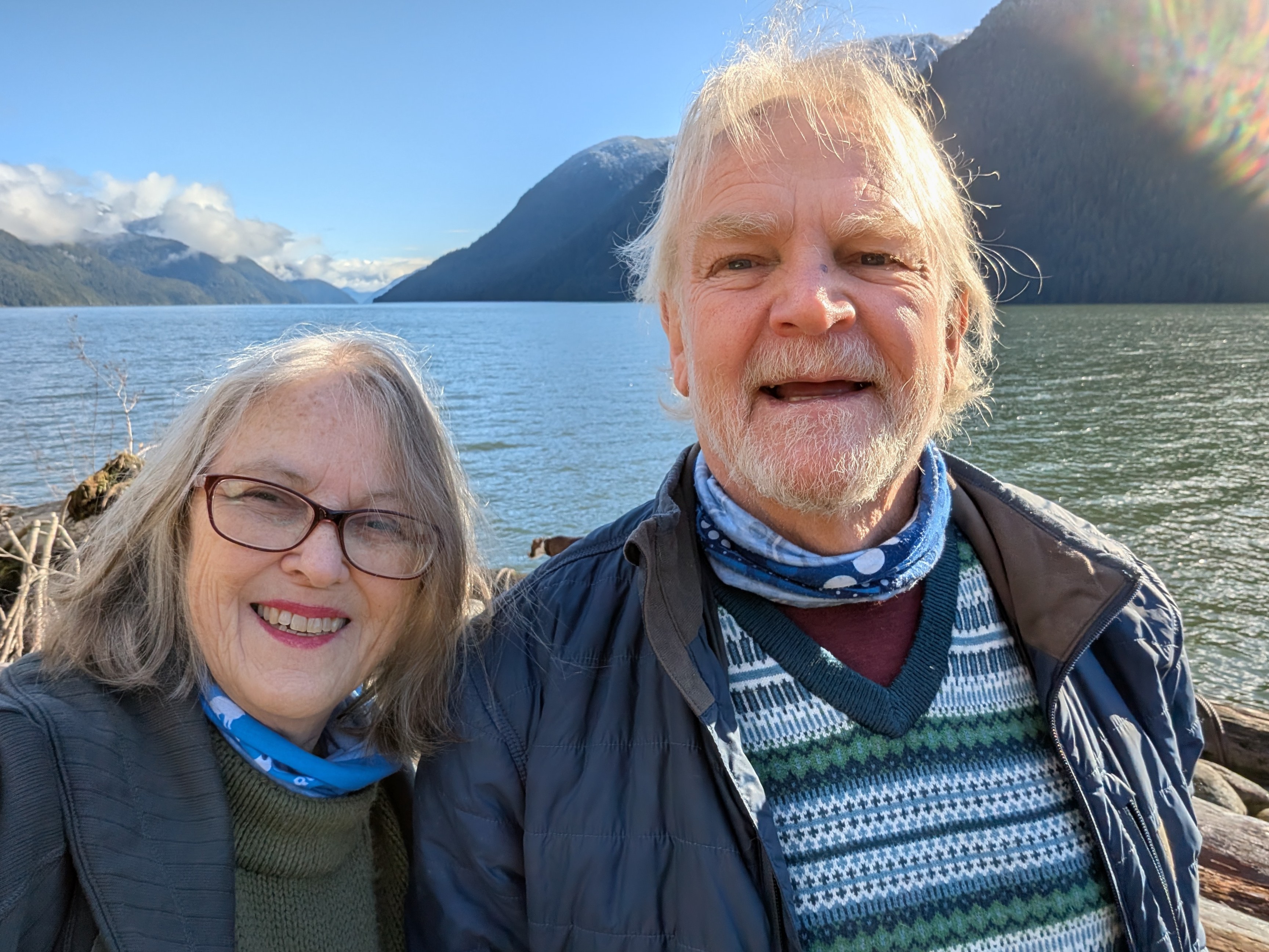
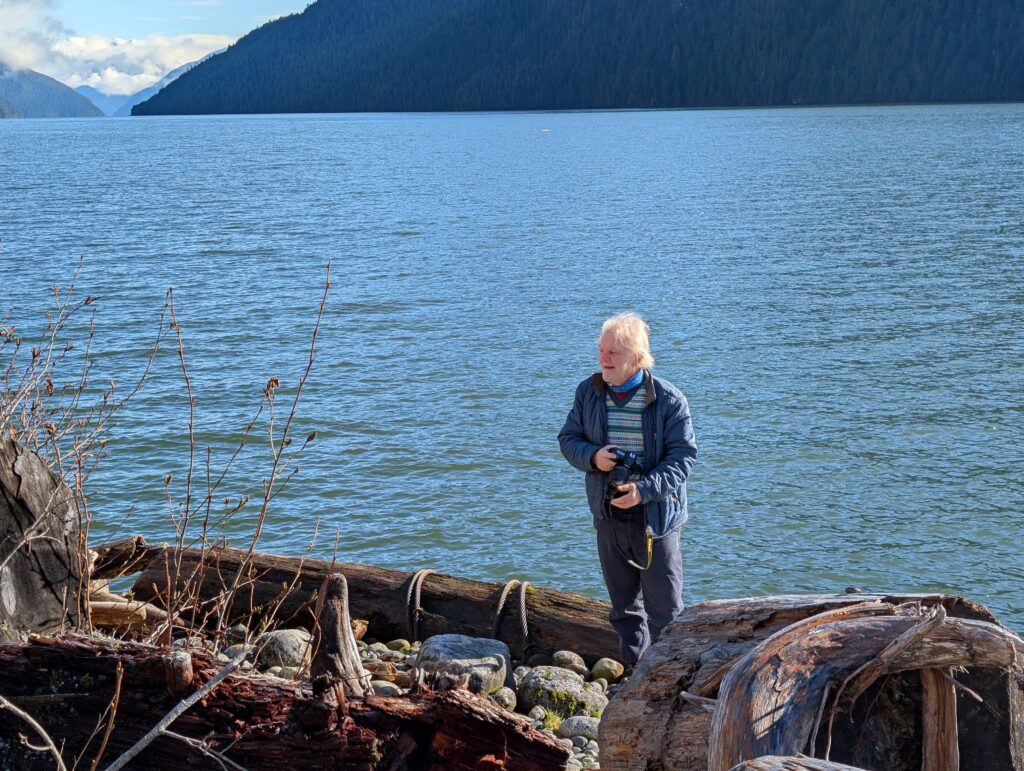
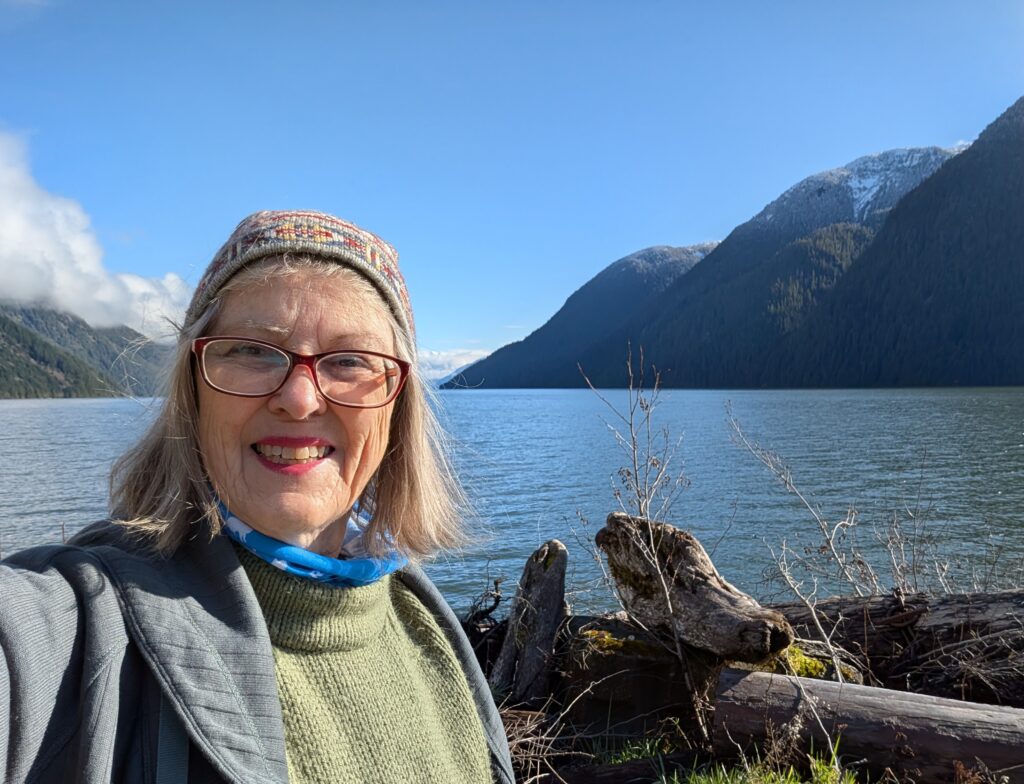
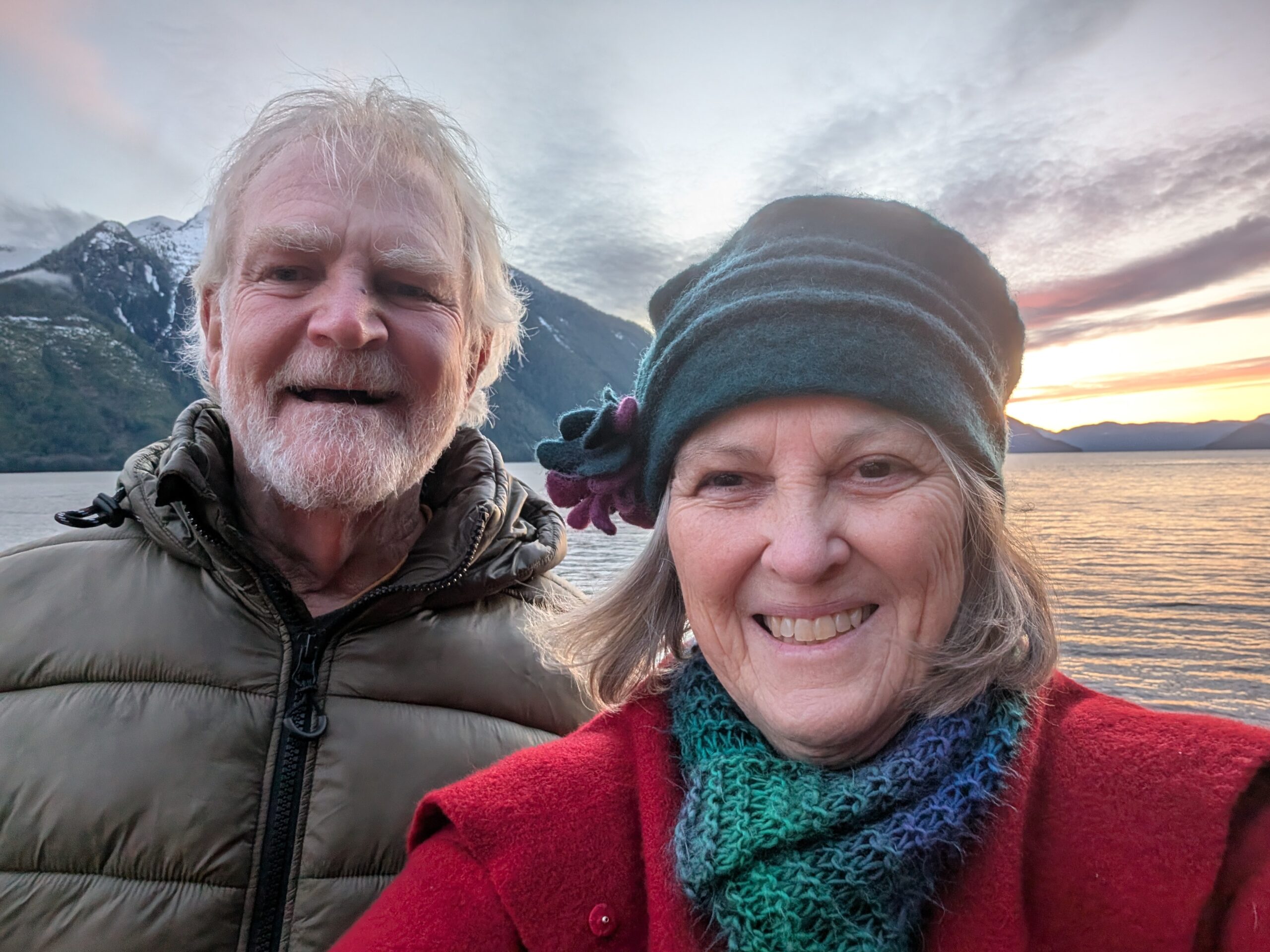
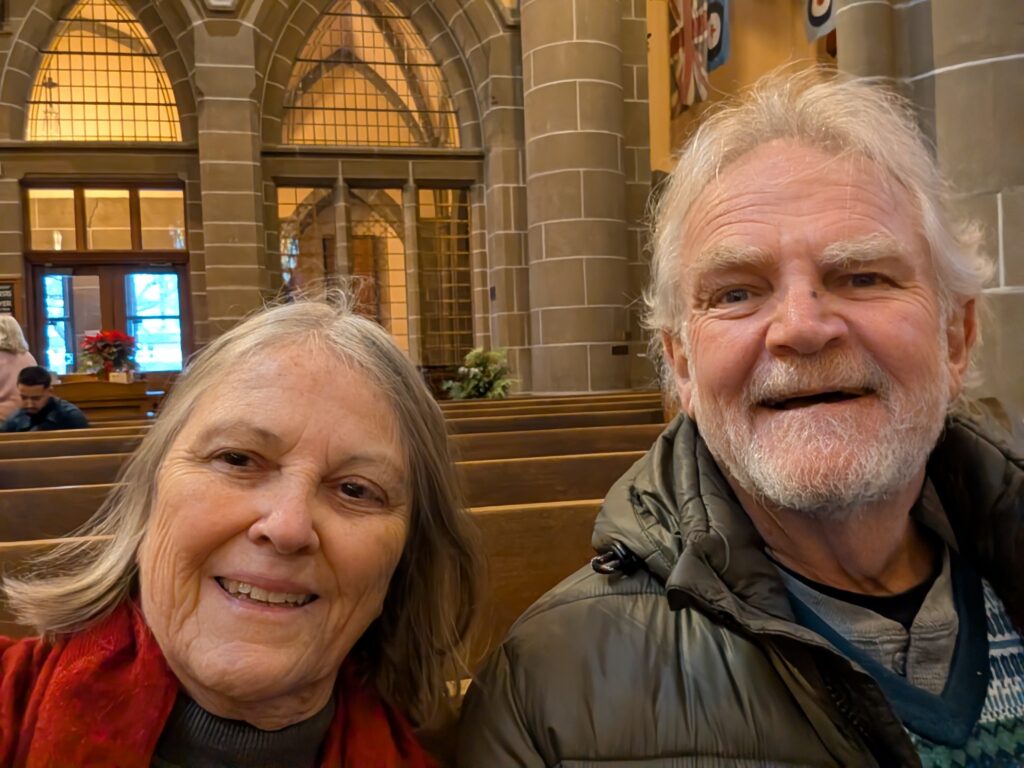
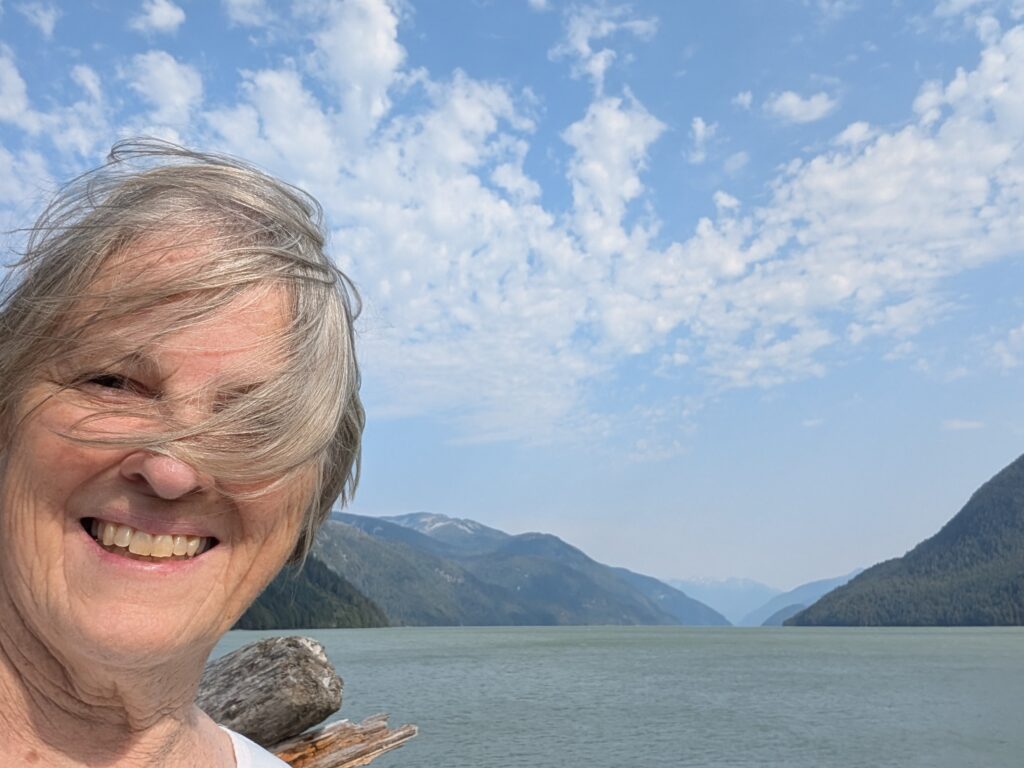
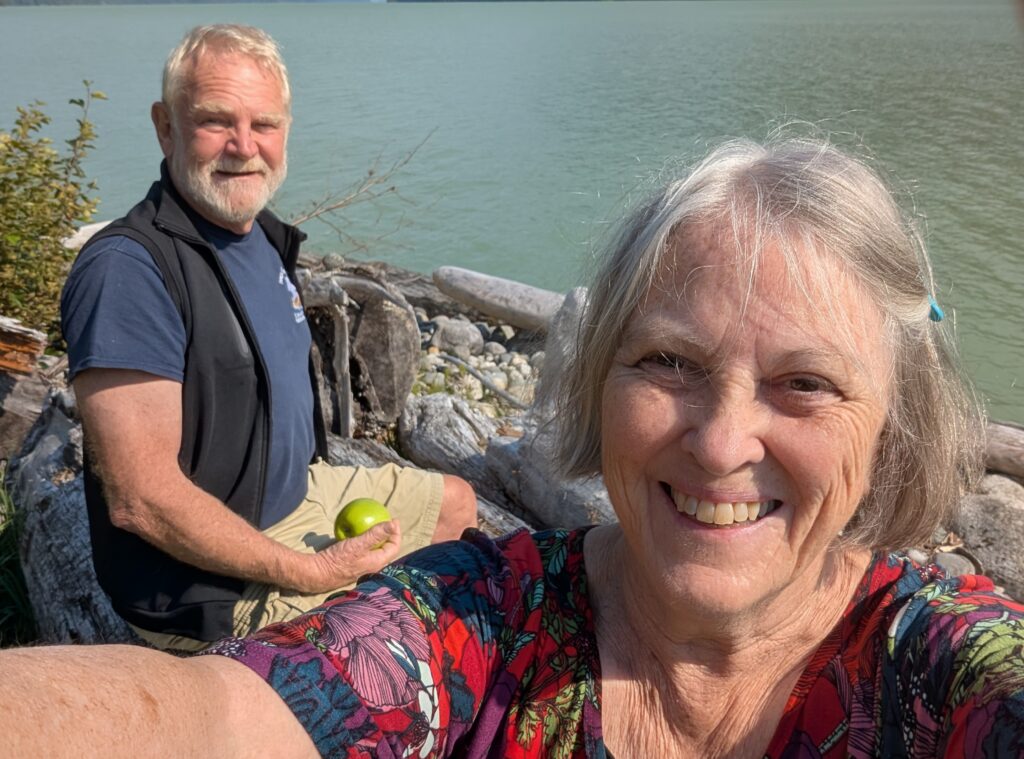
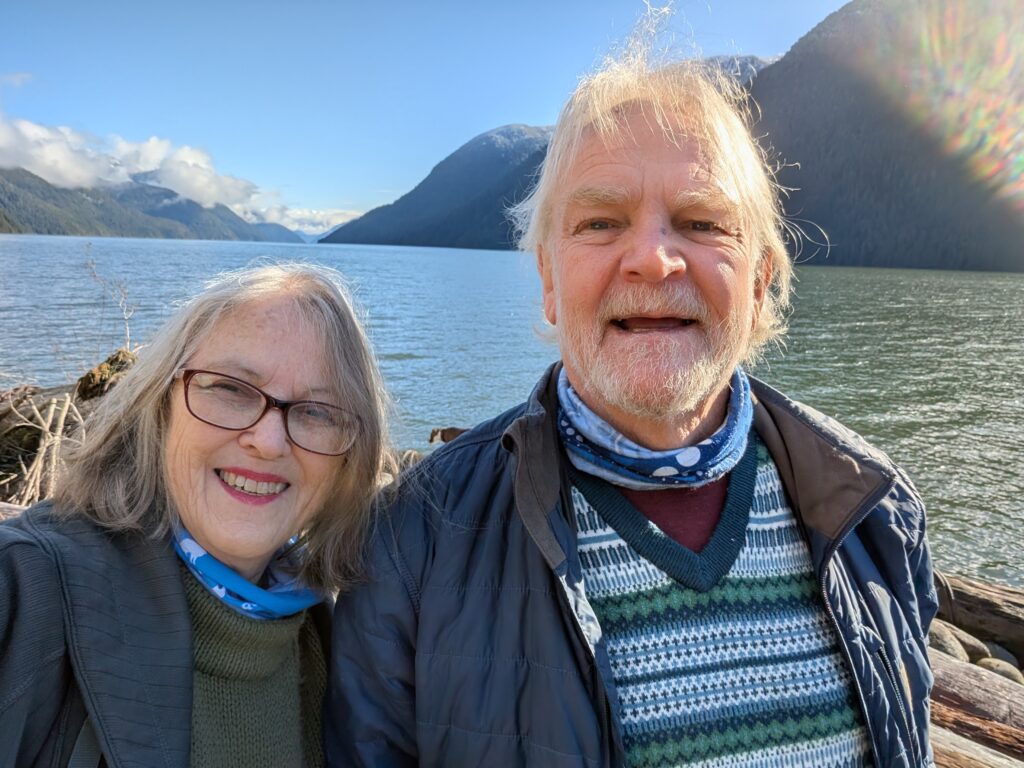
    The two of us, looking a tad like former long-haired hippie people.
    Maybe we were. Maybe we are.

    OrangePekoe and Granville stretched their legs as well. We kept OrangePekoe on a leash because cats do not come when called. Granville, on the other hand, had a lively time off-leash.

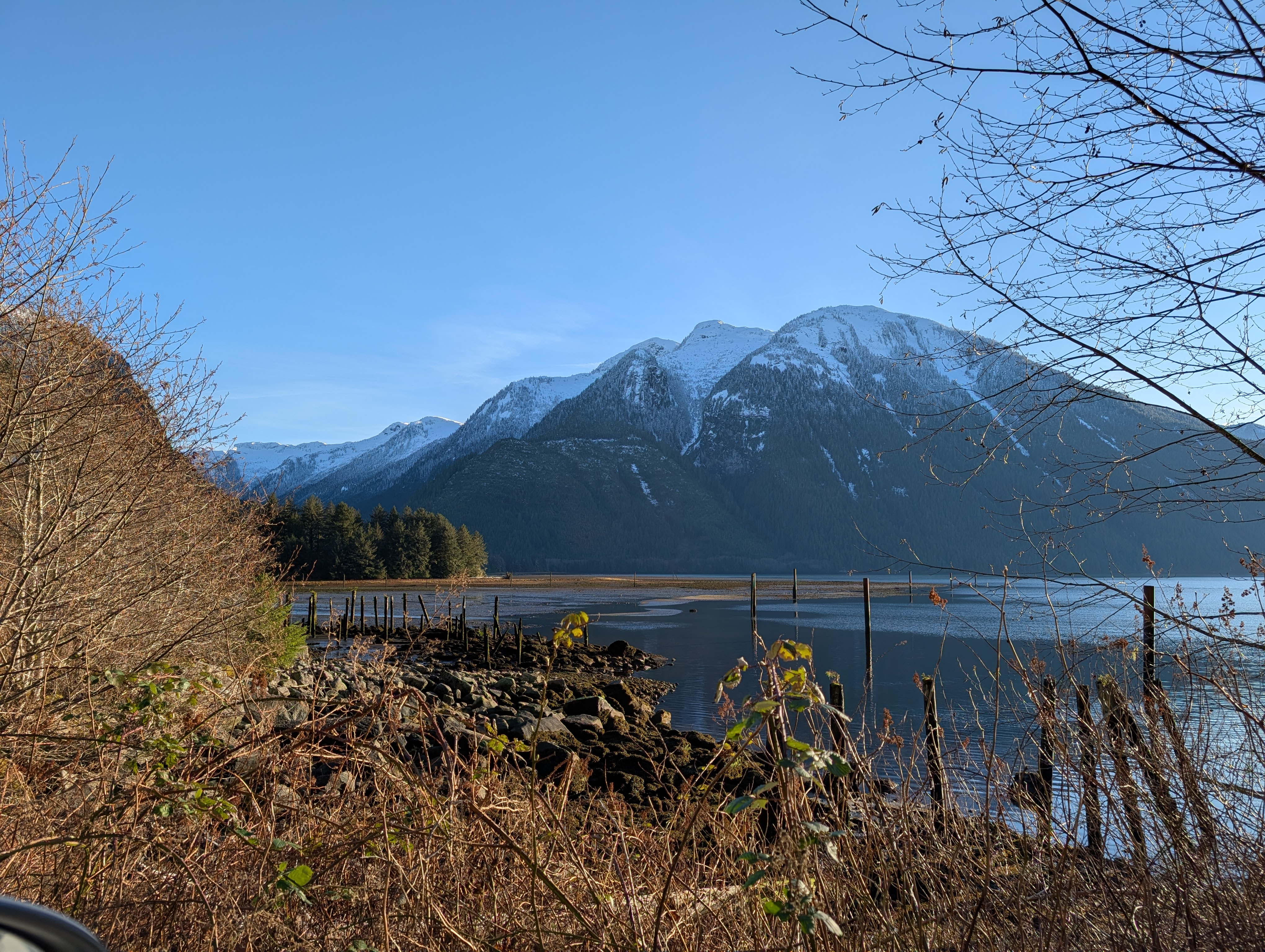
    We love this view at Owikeno Lake. We are parked on the north shore of the lake. We had our picnic lunch near the end of the road, an area called The Reload. That’s where, historically, the logs were loaded onto a truck, and taken to the other end of the village before being transported out of the fjord. The river between the lake and the top of the fjord does not accommodate the huge logs that were harvested in this area.

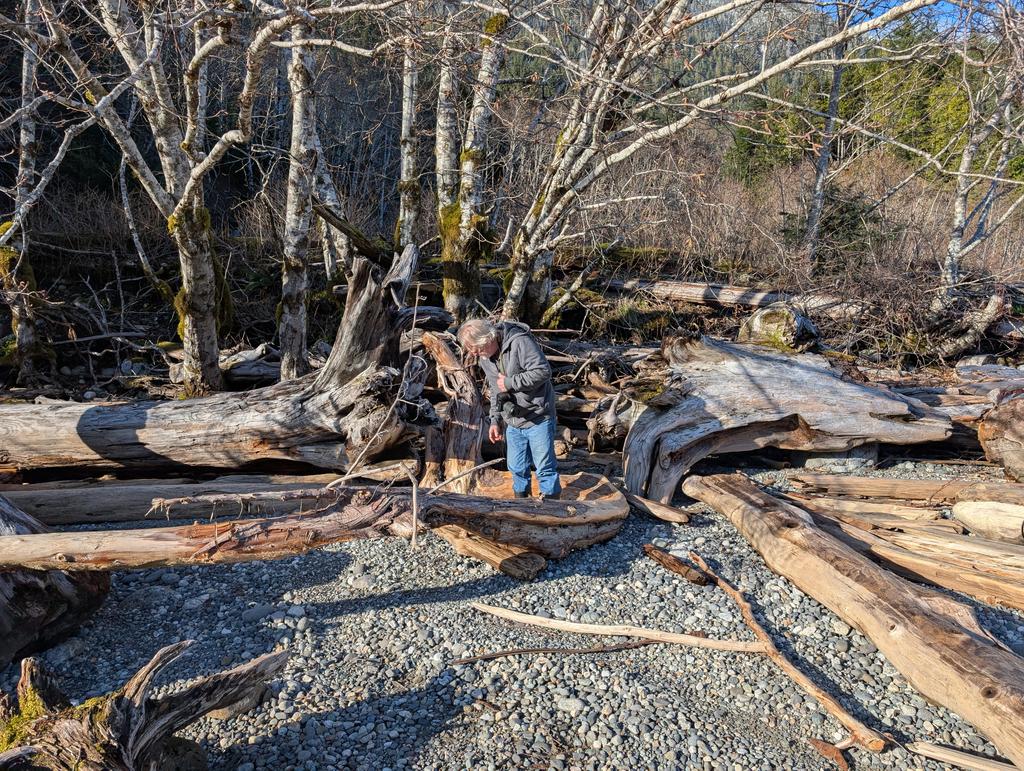
    Nigel and OrangePekoe wandered in the midst of some of the rogue logs that, decades ago, escaped from the barges at the Reload. There’s plenty of good wood piled up on the pebble beaches around the lake.

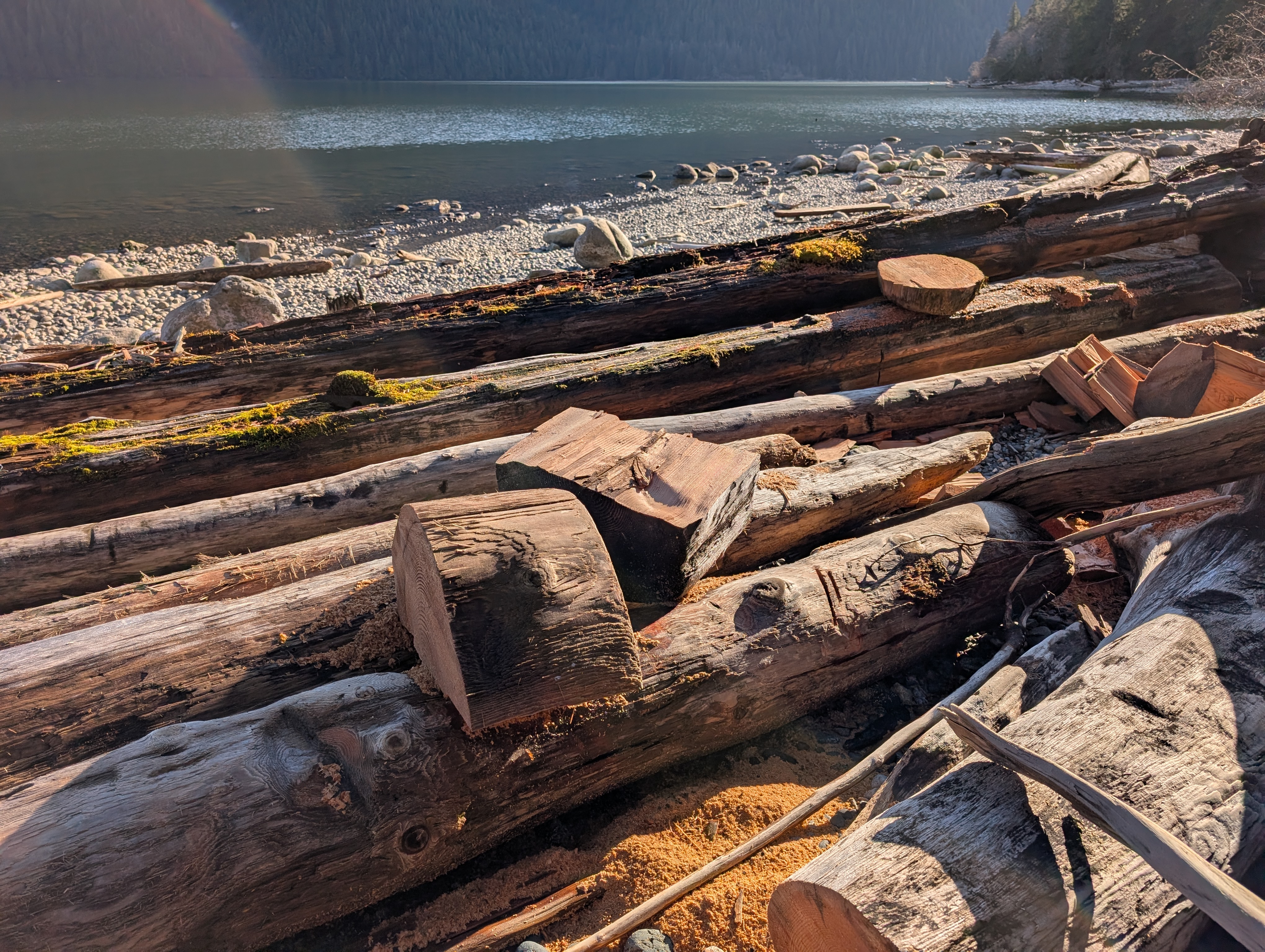
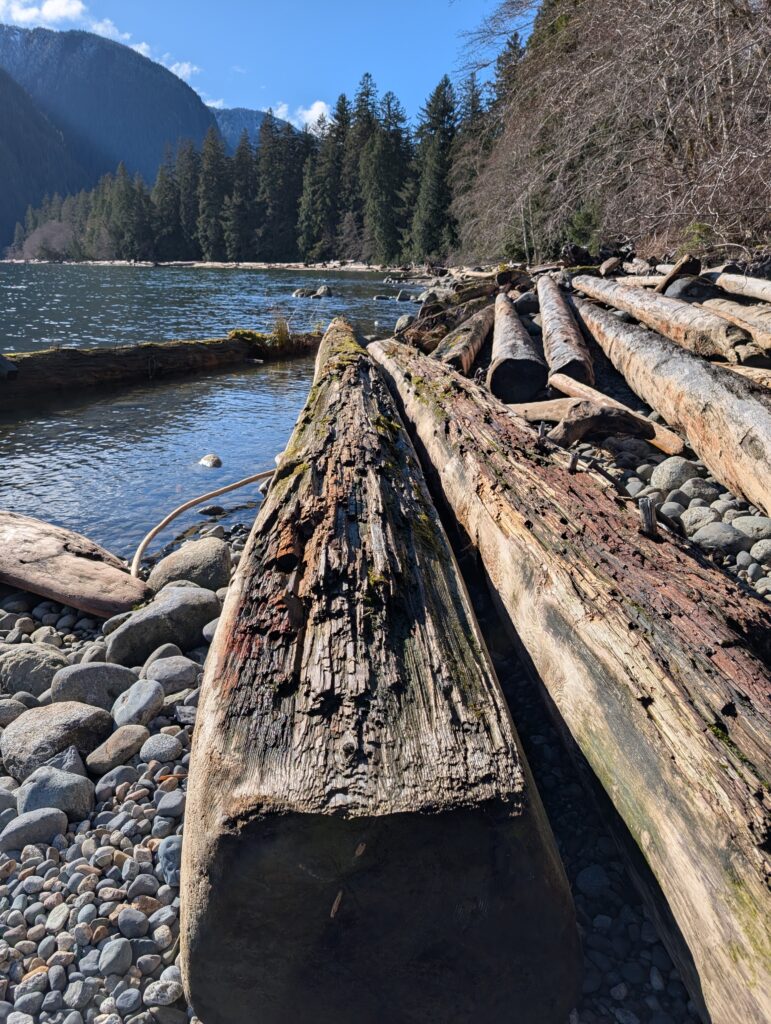
    A closer view of a handful of logs. They are nearly a metre wide, and more than ten metres long (at least that size, says Nigel, who is a dab hand at estimating length). Massive Douglas Fir, Sitka Spruce, and Red Cedar lounge on the pebble beach.

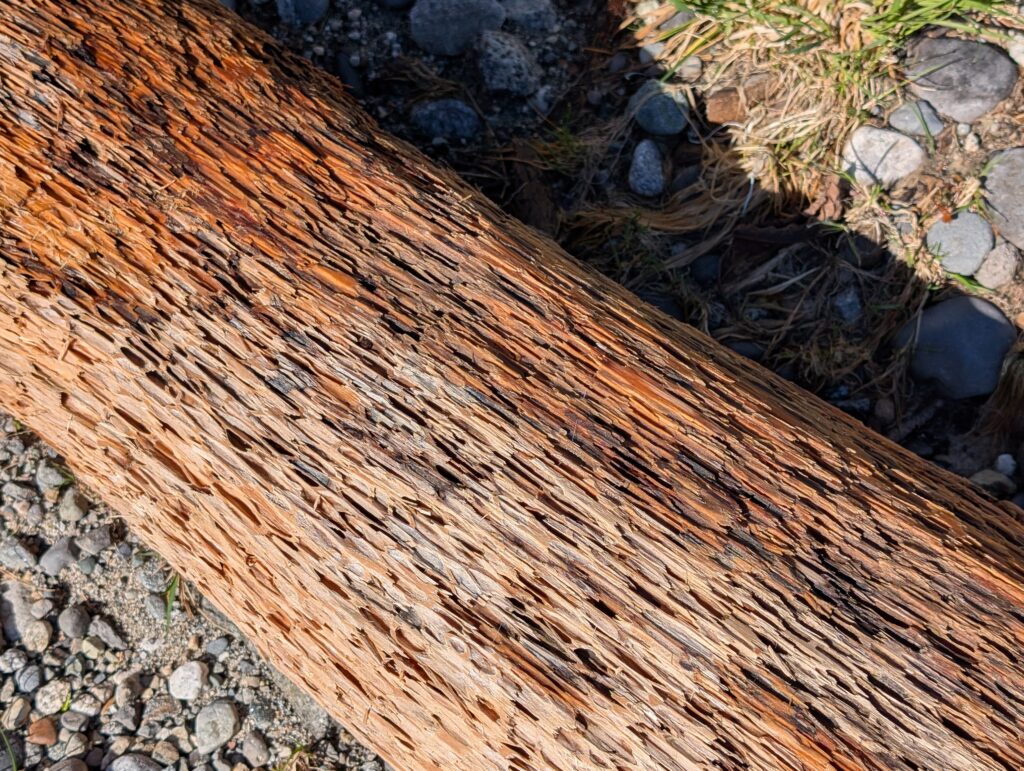
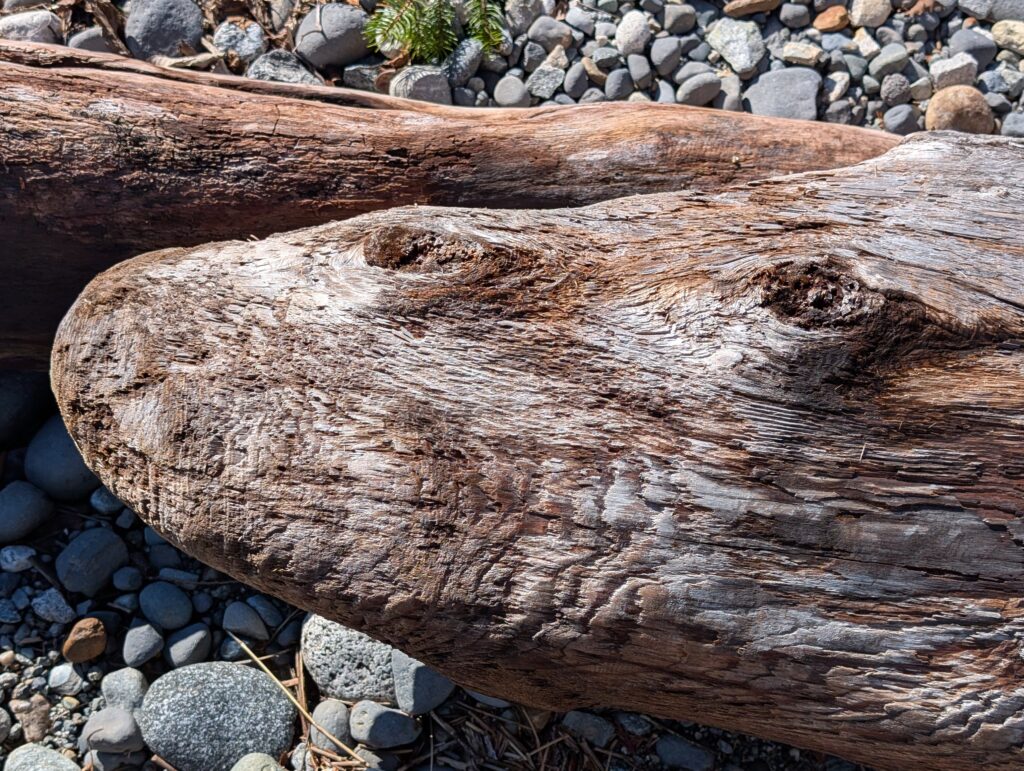
    Some logs have been in the water for a long time. They have weathered into interesting textures and patina.

    And some shapes intrigue our imagination, leading to favourite games like “what do you see?”

    The smooth rocks and pebbles on this beach have been tossed and tumbled in the water for yonks. They make for a bit of tricky walking because they roll around underfoot. It adds to the adventure.

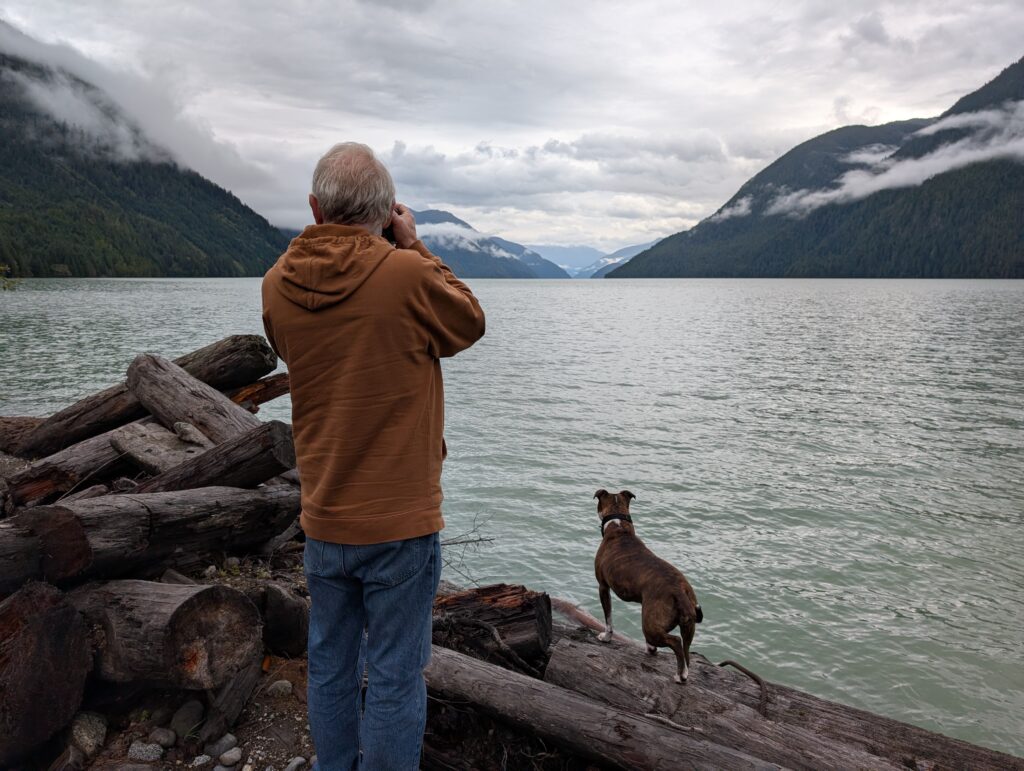
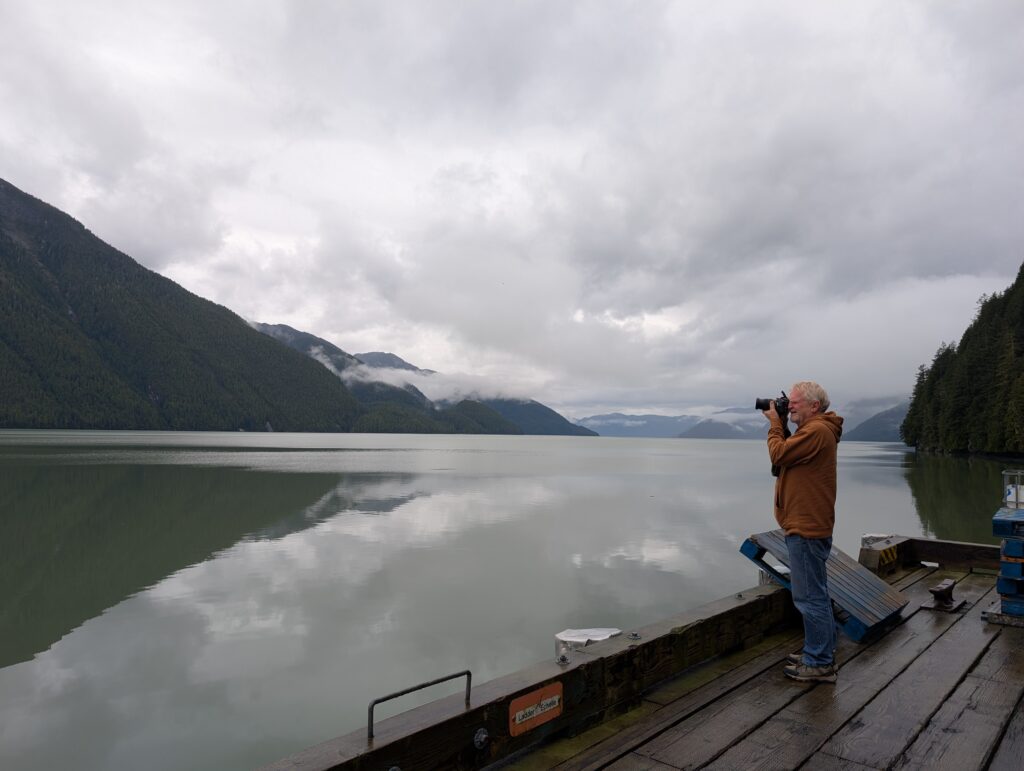
    Nigel clambered around on the boulders and logs at water’s edge while taking photos. I guess it is reminiscent of his surveying days. Now-a-days he looks through a camera lens instead of a theodolite lens. Still looking for horizontal and vertical angles though.

    OrangePekoe paid no attention to the photo opportunities. She scrambled among the rocks and logs, surefooted on the rounded surfaces. She is an explorer at heart.

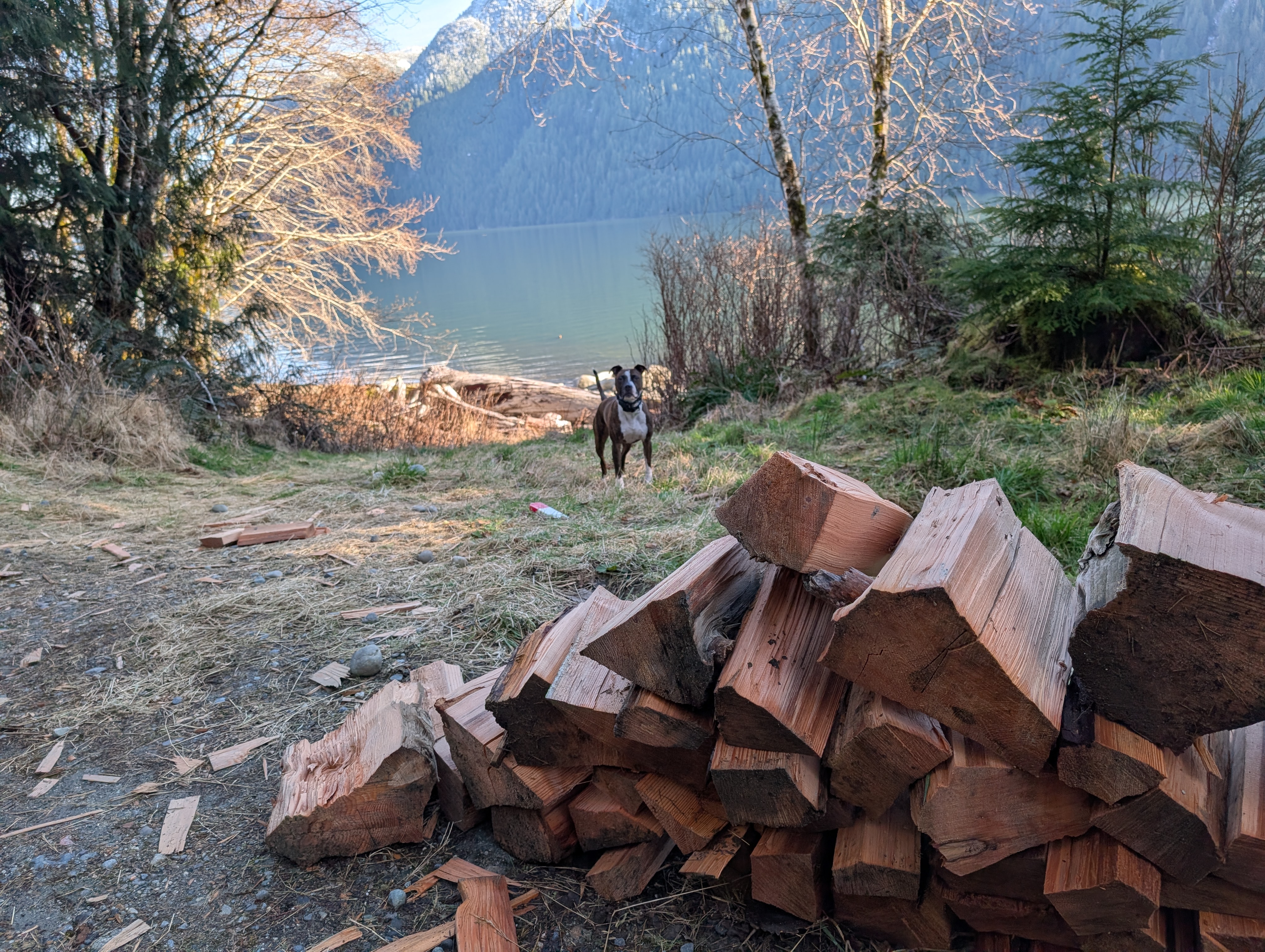
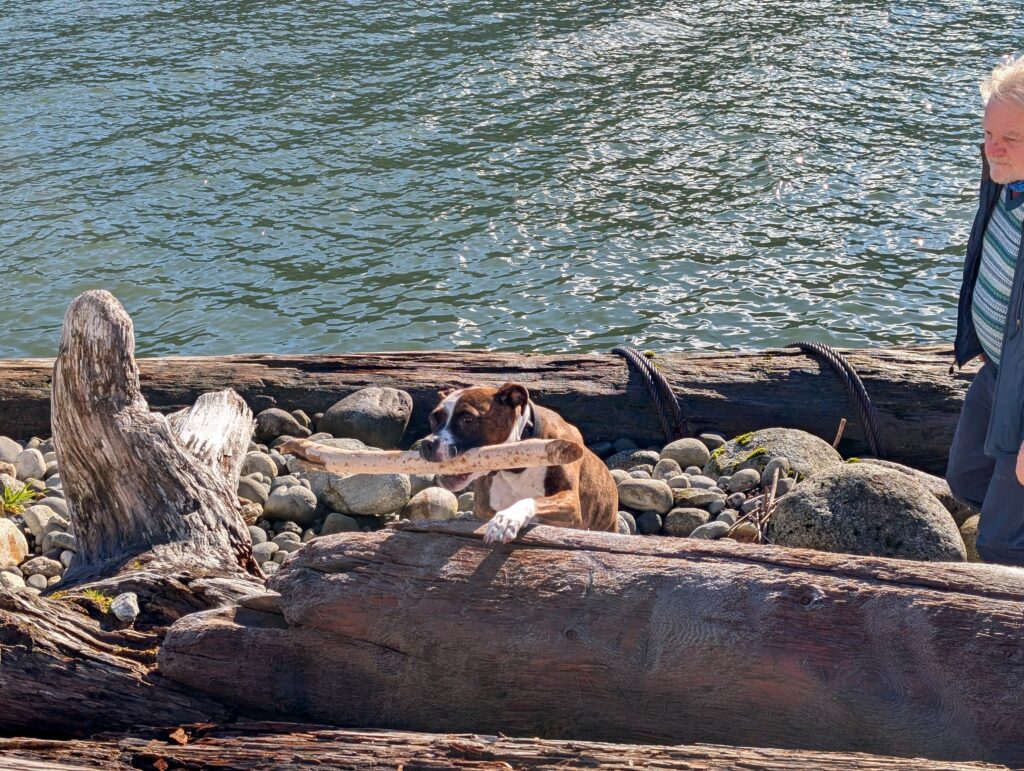
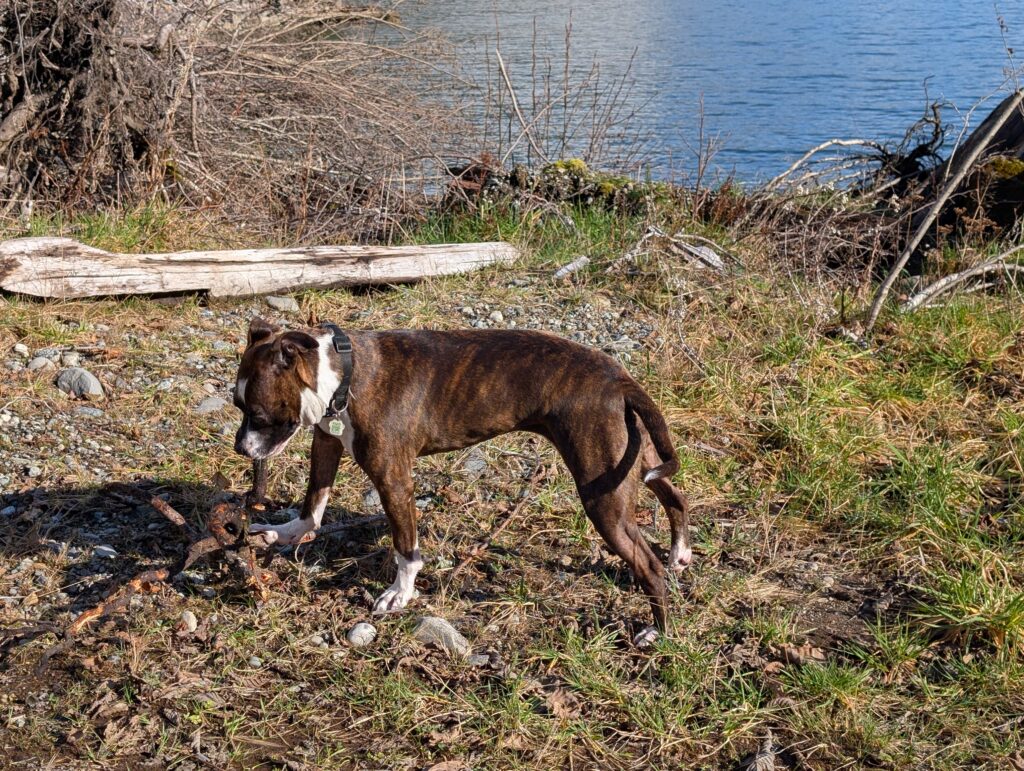
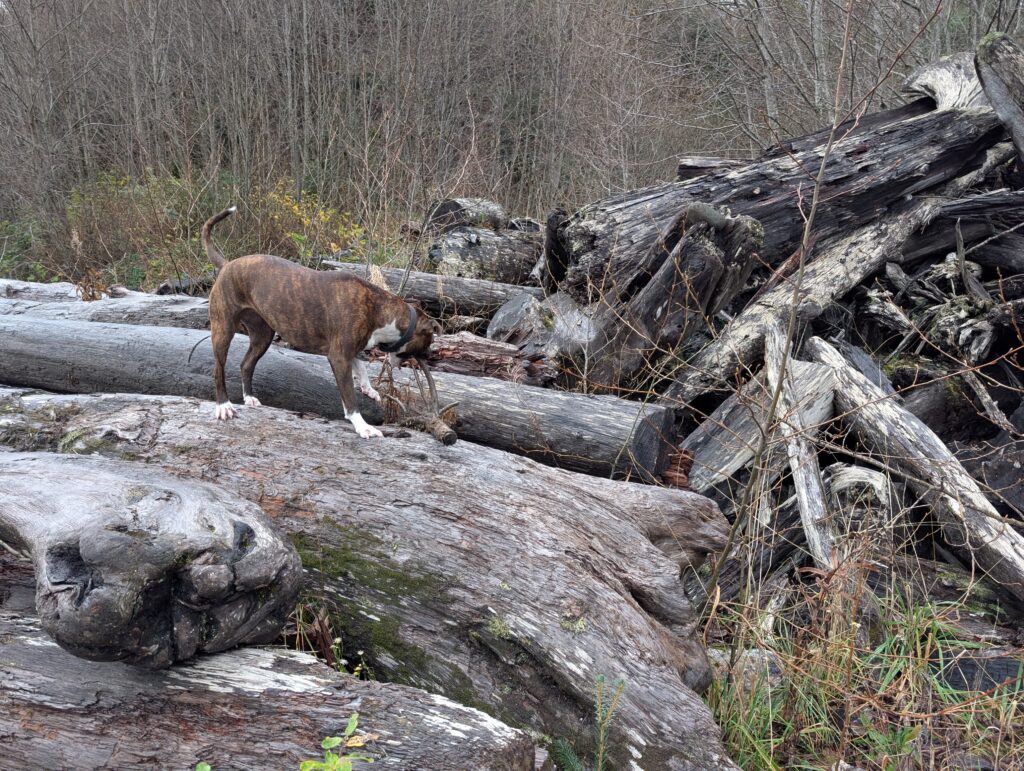
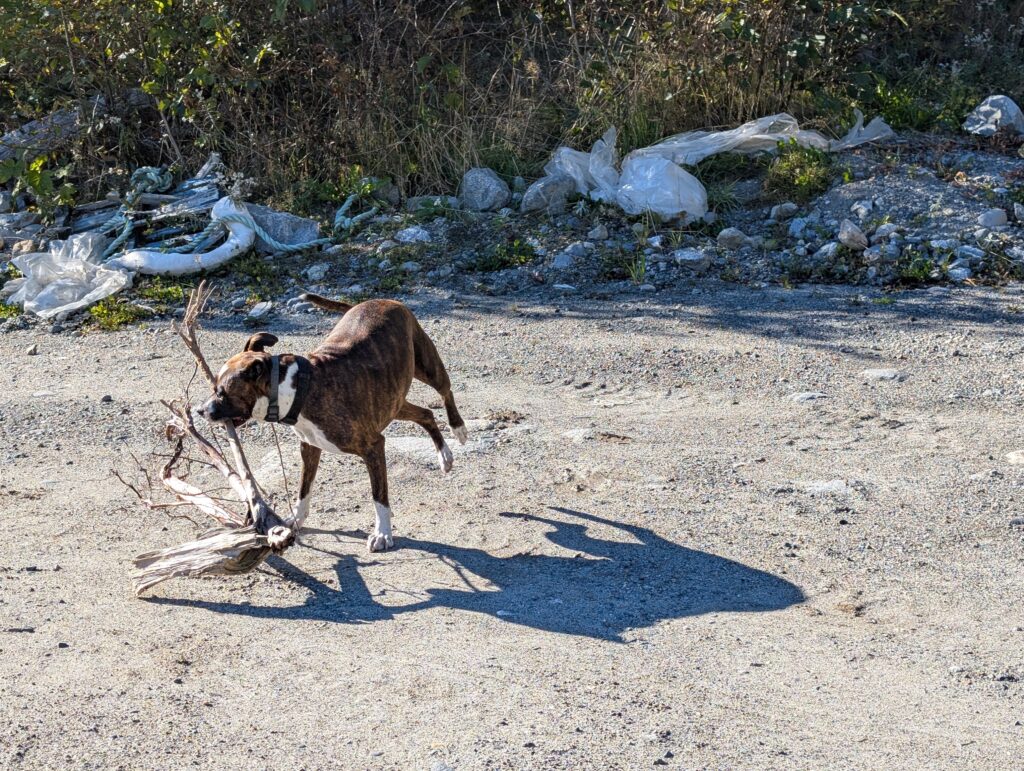
    Granville is a simpler being. Sticks of various shapes and sizes kept her entertained. She’s not shy of a foray over the logs to get the ideal stick from the rocks below.

    She’ll also find and toss around twisted and multi-pronged sticks on the grassy bank.

    A naturalist at heart, coupled with beachcombing, are favourite activities. They were my amusements.

    There was not much unique flora, but spotting the usual items is a joy in itself.

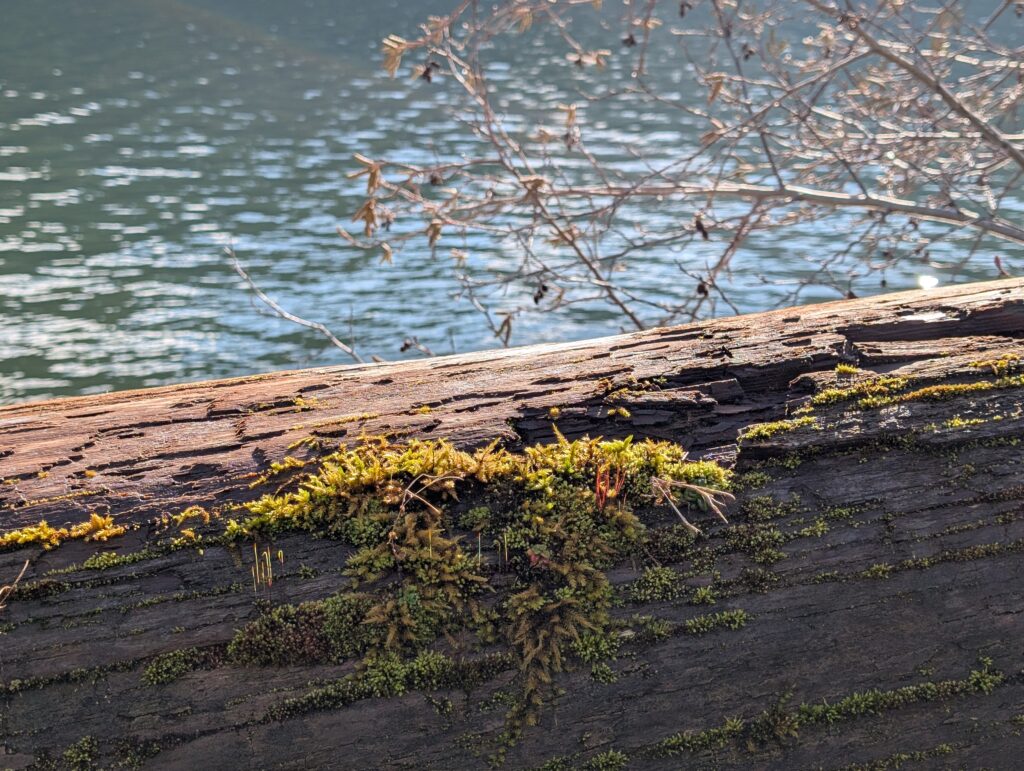
    A display of moss on a log at the water’s edge. Moss are flowerless plants that often grow in thick clumps on logs or in damp areas.

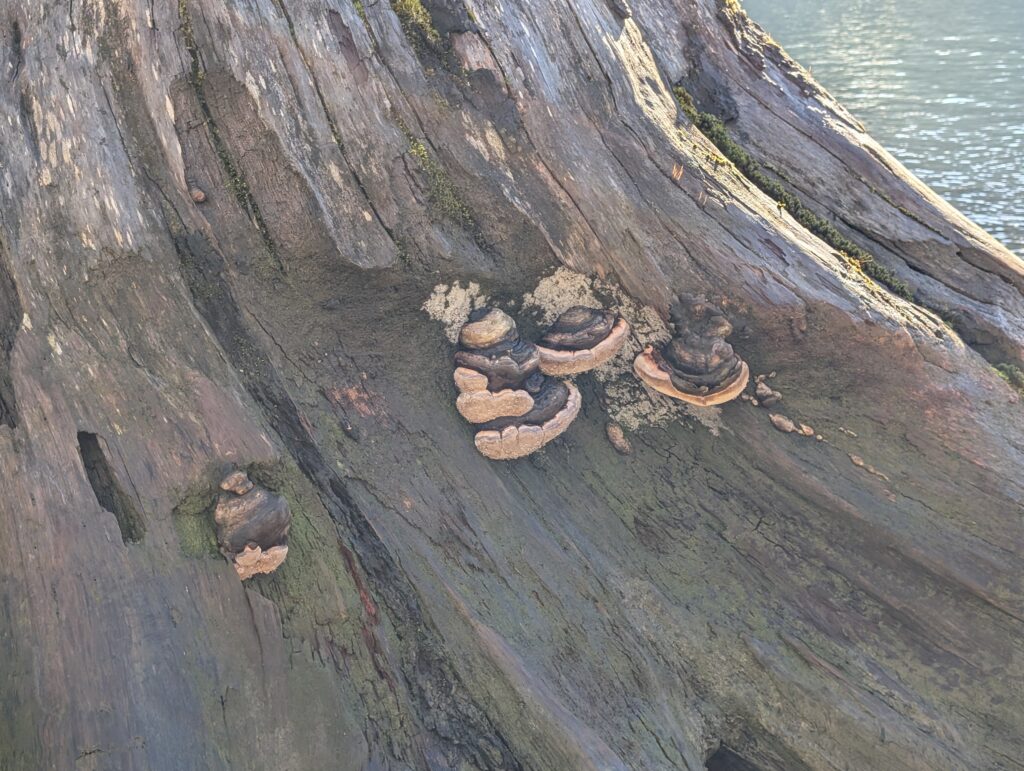
    A type of bracket fungus on the large stump in the water. These fungus are woody perennials, growing larger every year. They are not edible.

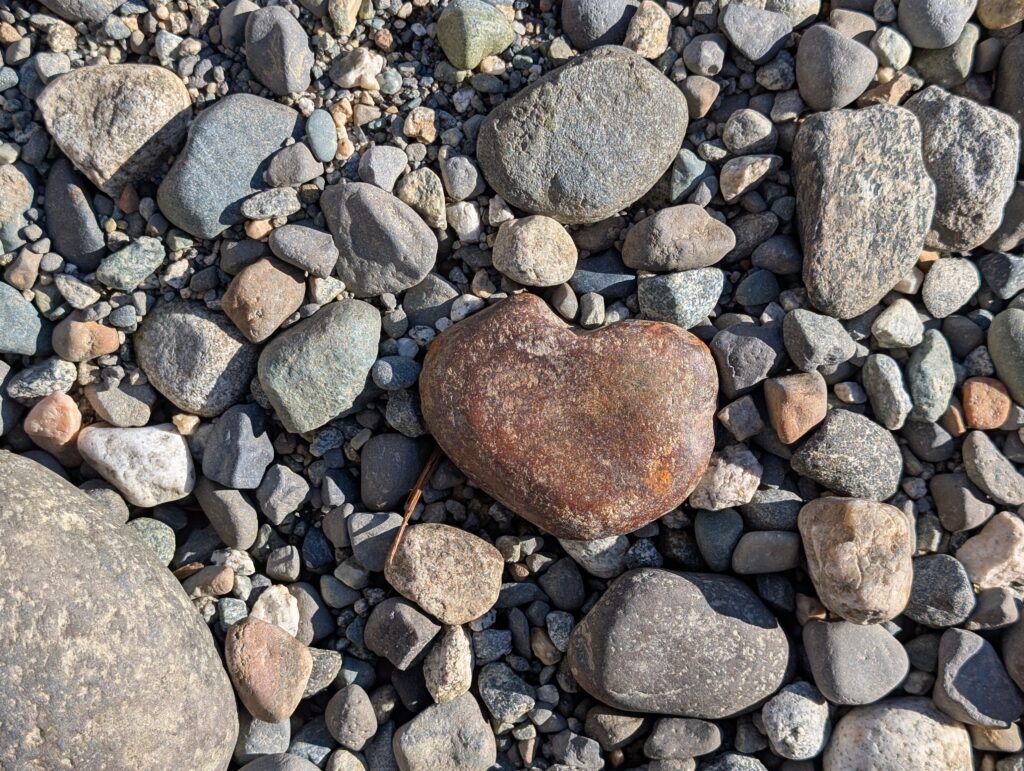
    This was an appropriate find for this Valentine’s Day’s outing.
    All in all, a very enjoyable outing for the four of us.

  • Observing Sunsets

    Observing Sunsets

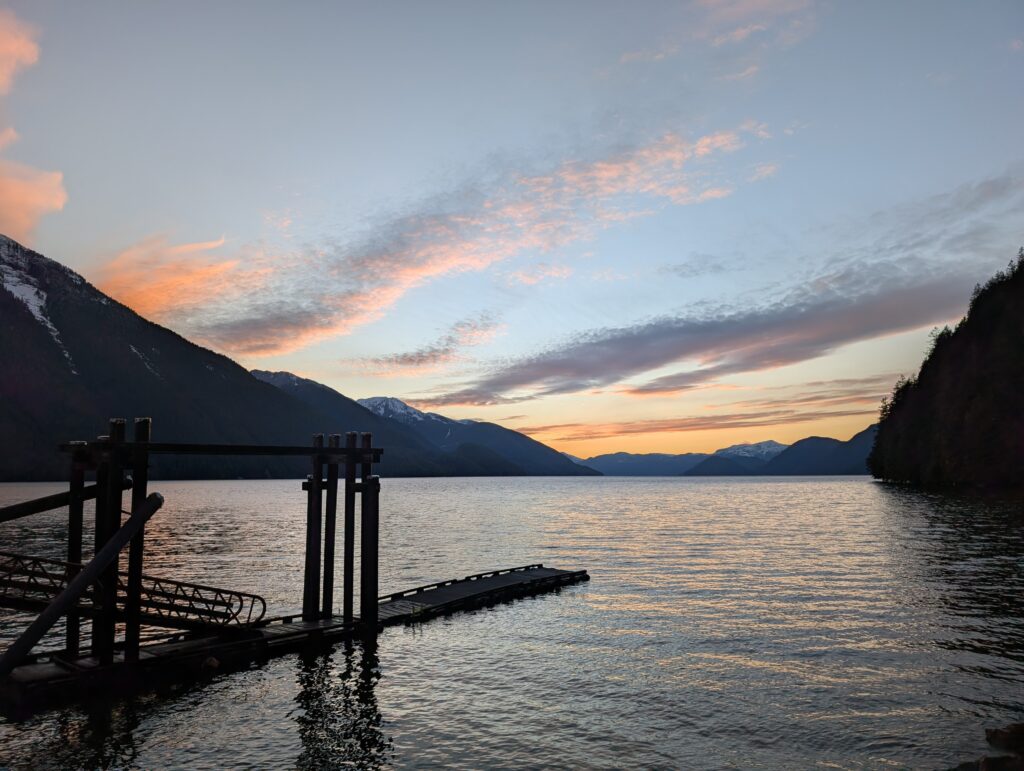
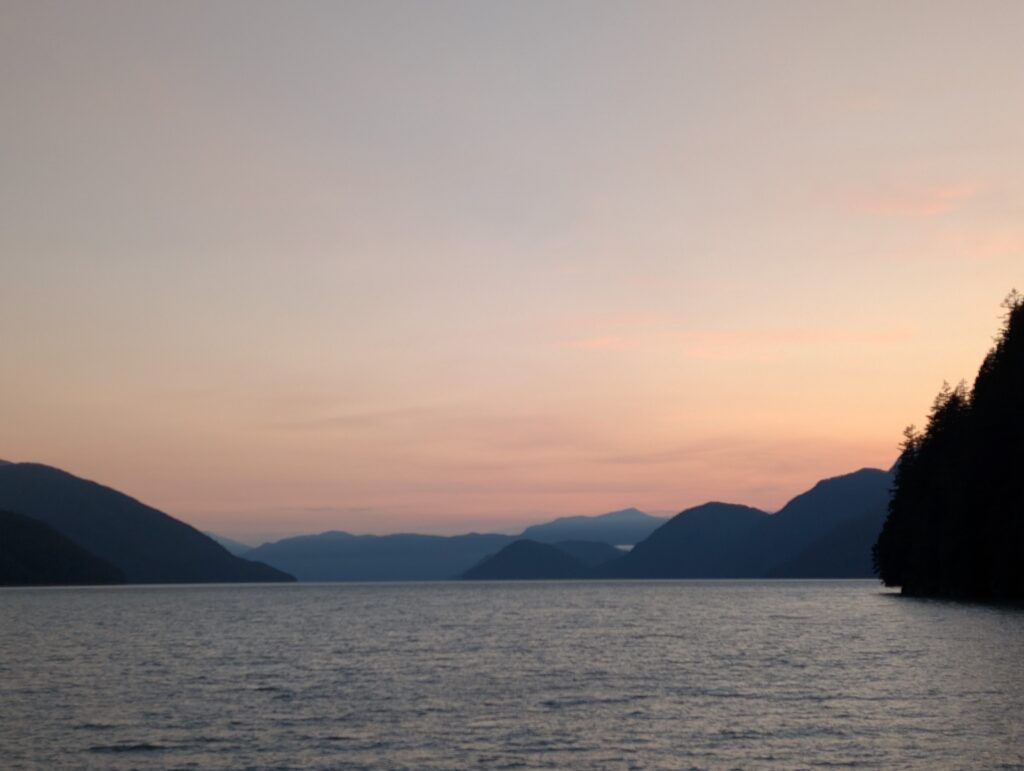
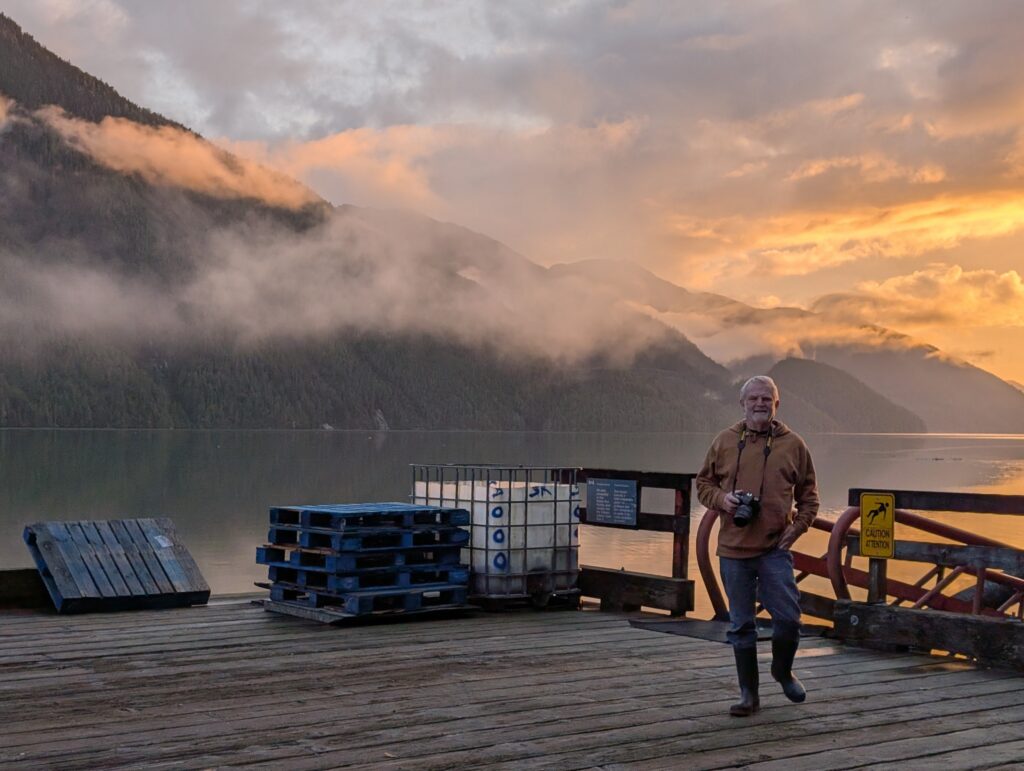
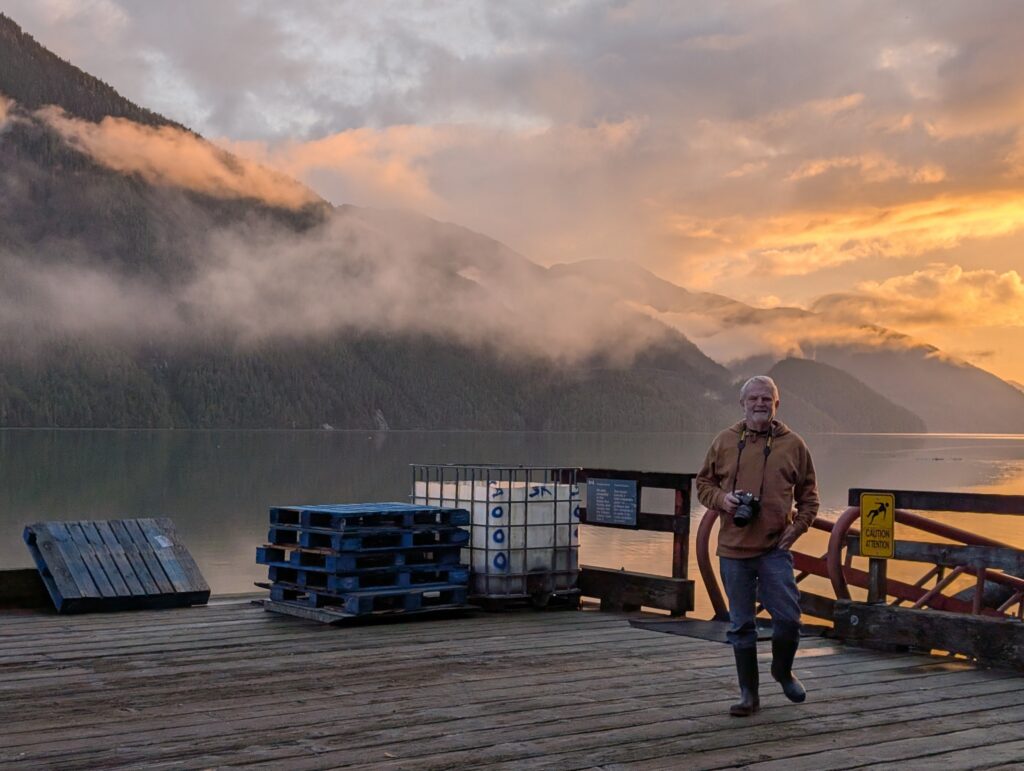
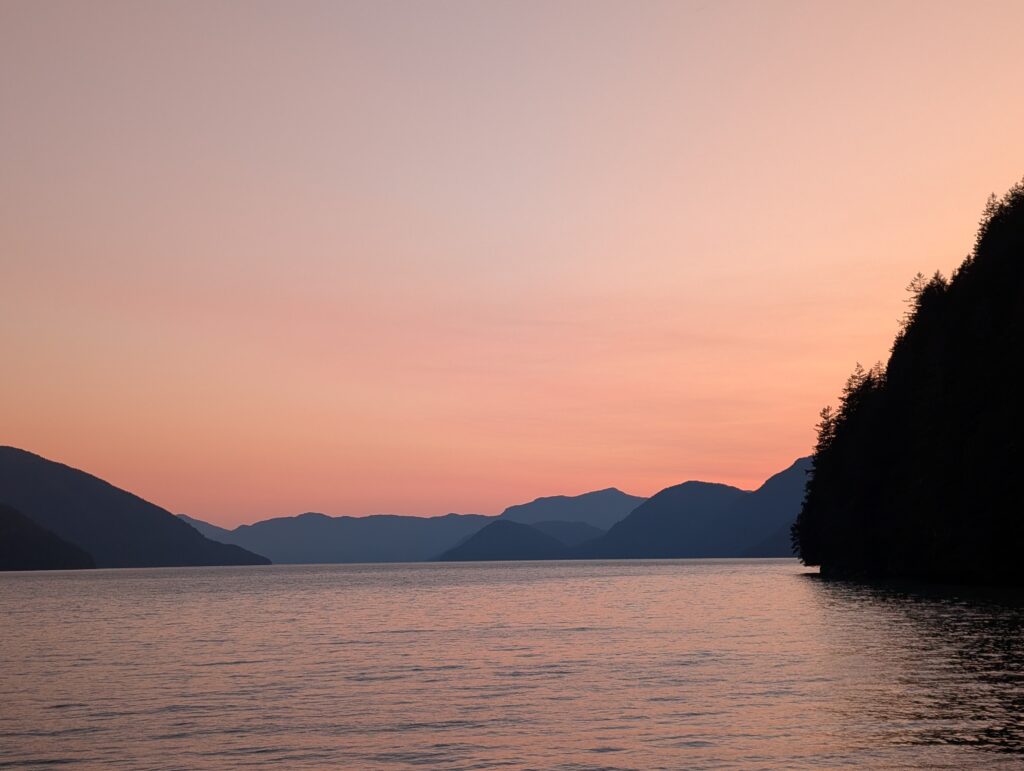
    There is something delightful about watching the sun set over a string of mountains, reflected in the sea. We often go to the west end of Oweekeno village to watch that very sight.


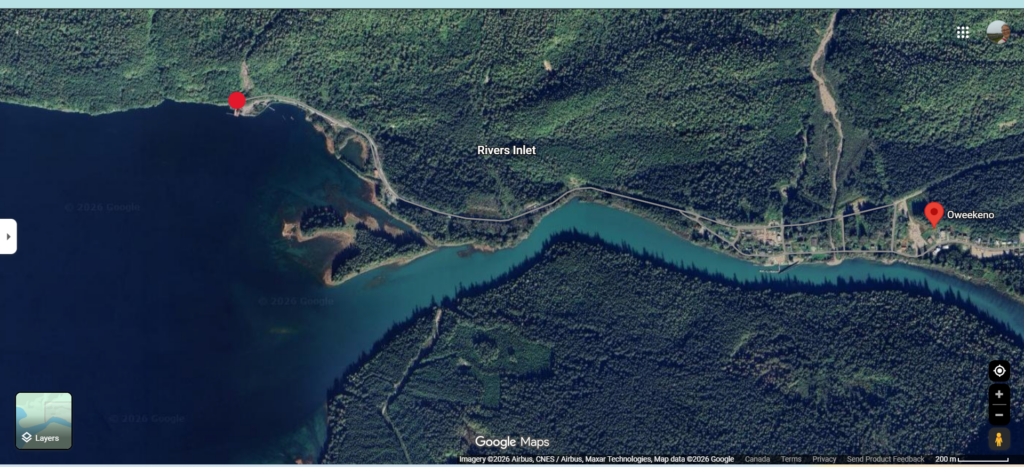
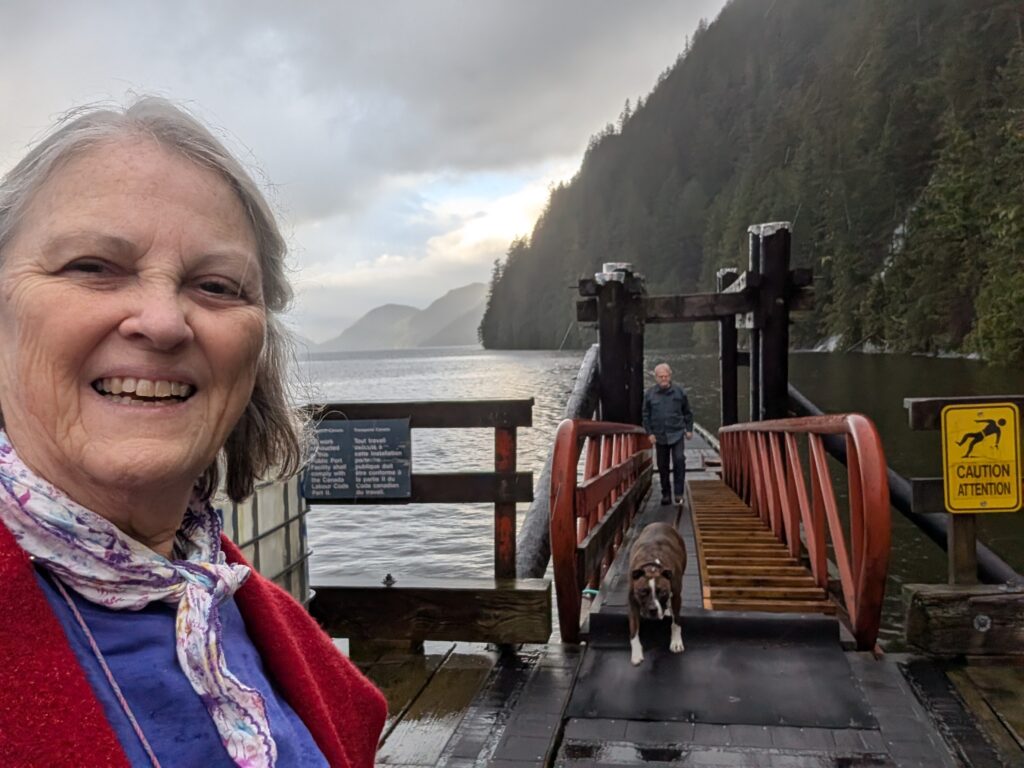
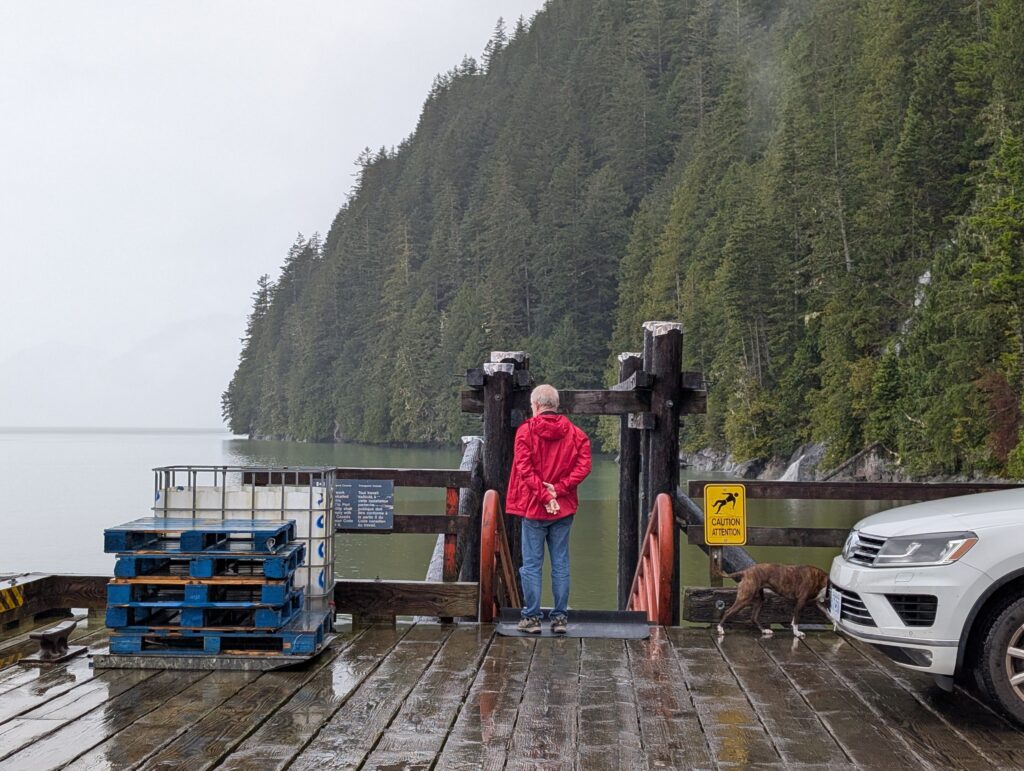
    The government wharf is at the west end of the village.


    This is where the plane lands when it cannot land at the airstrip.

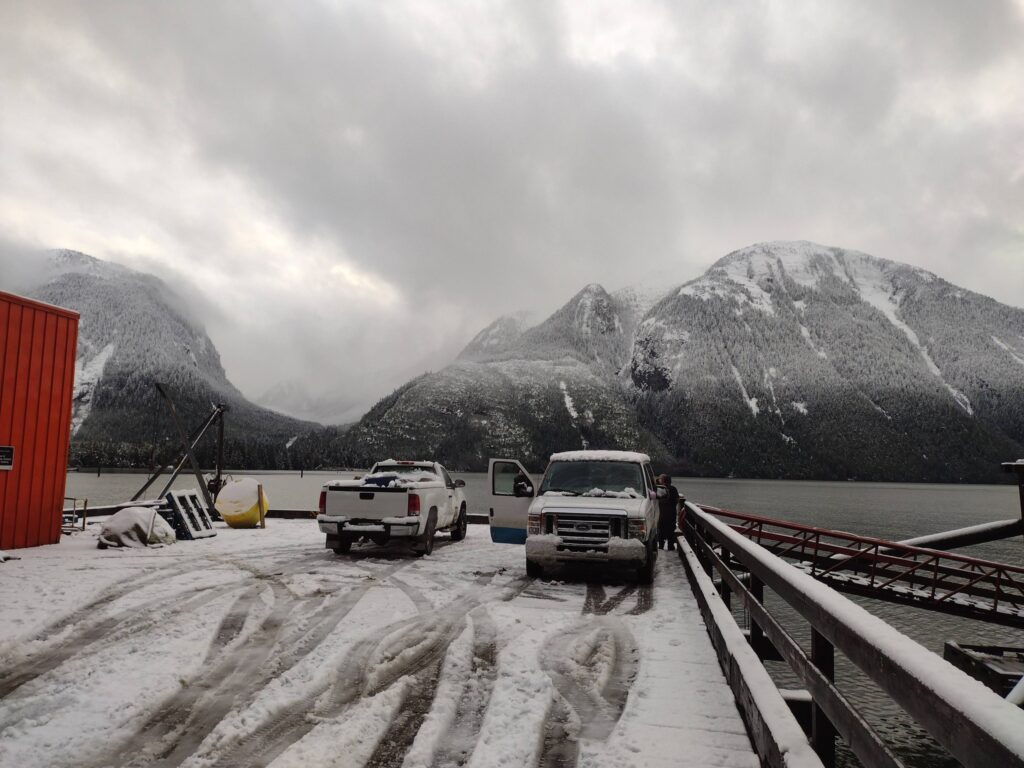
    An airplane landing at a snowy dock is always a welcome sight. But an even more delightful sight is the changing evening sky, when we relax after a day at work.


    From here, we can look several kilometres down the Rivers Inlet fjord, towards where it makes a slight bend before leading out to the Pacific Ocean.


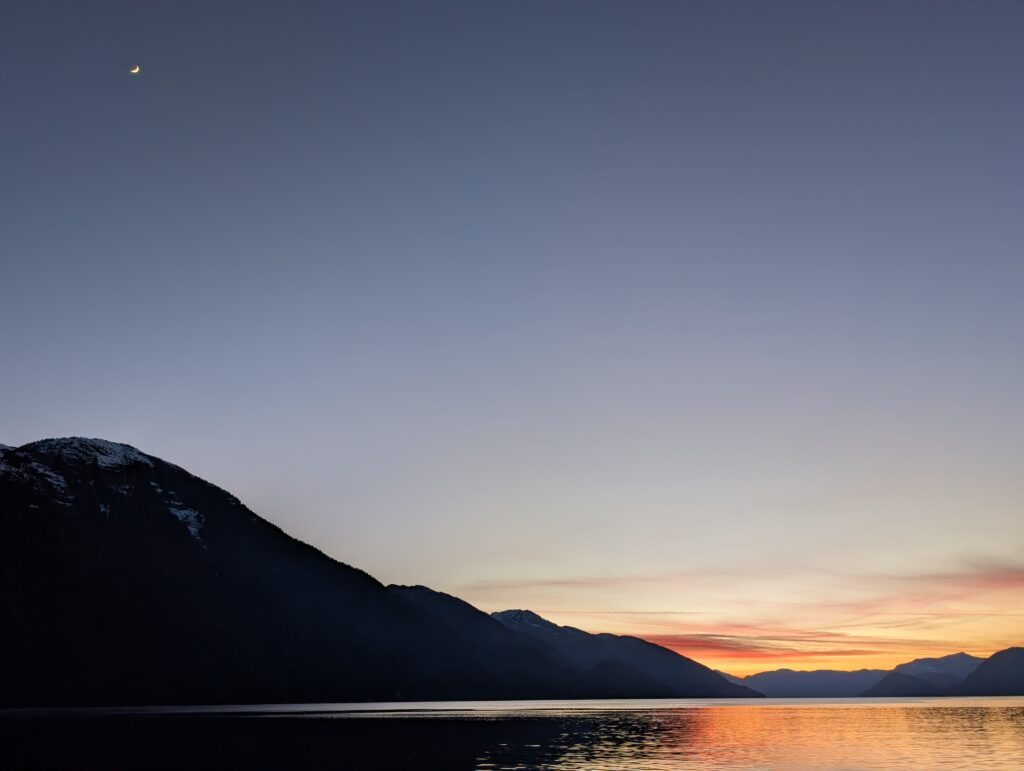
    Sometimes we are lucky enough to see the moon rising as the sunset is fading, both within the same frame.


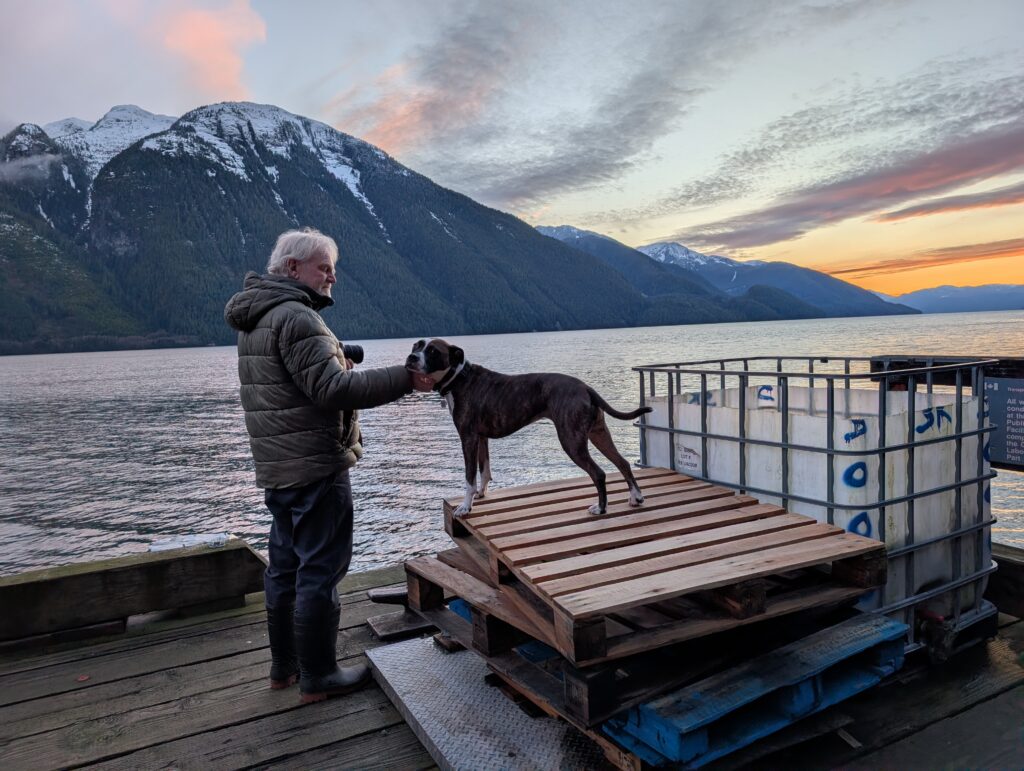
    Often enough we find ourselves alone at the dock. Well, not quite alone. Granville always comes along for the ride, and a bit of a fun at the dock.


    Facing west, we have an open view from the dock. This ensures a beautiful sunset colouring the sky above the mountains, with the plane dock silhouetted in the foreground.


    Despite the small area in which we wander, we are finding plenty of beauty. It is especially wonderful to revisit places, like the government wharf, to enjoy and extend Wuikinuxv’s many-varied presentations.

  • Holiday – Victoria

    Holiday – Victoria


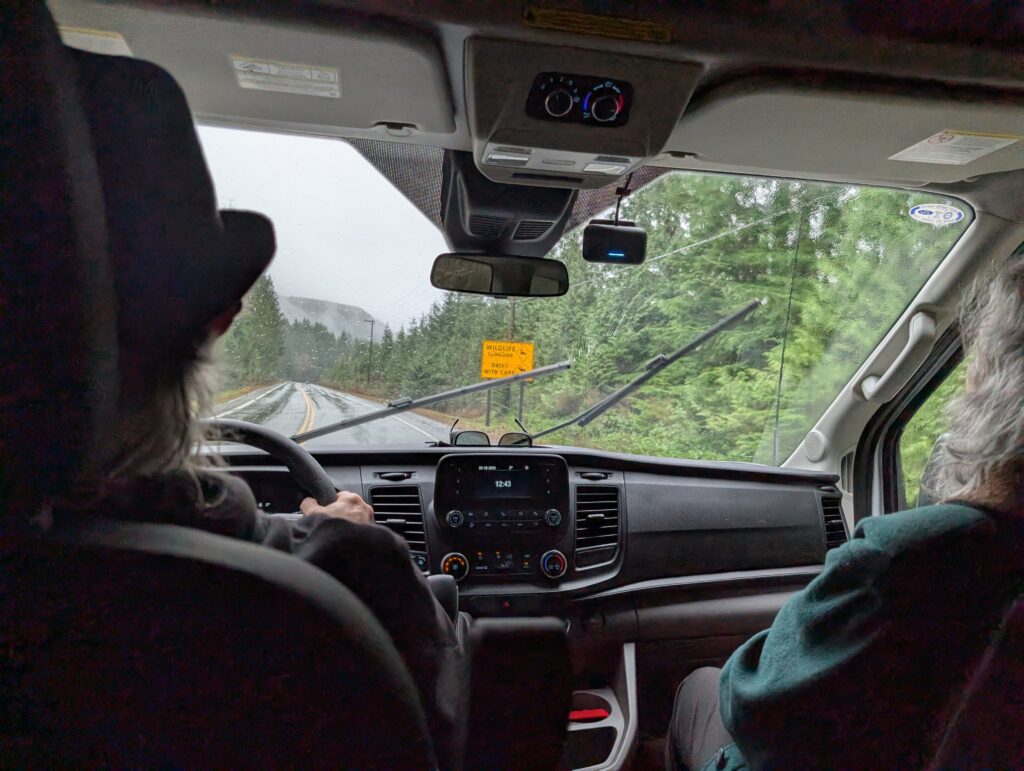
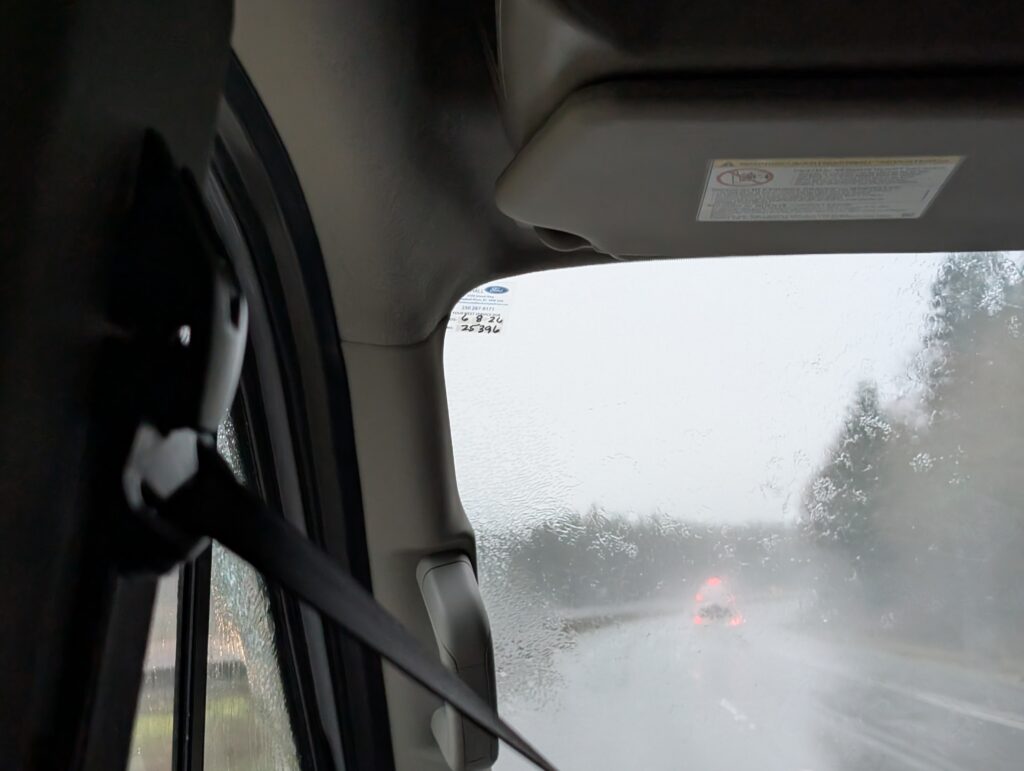
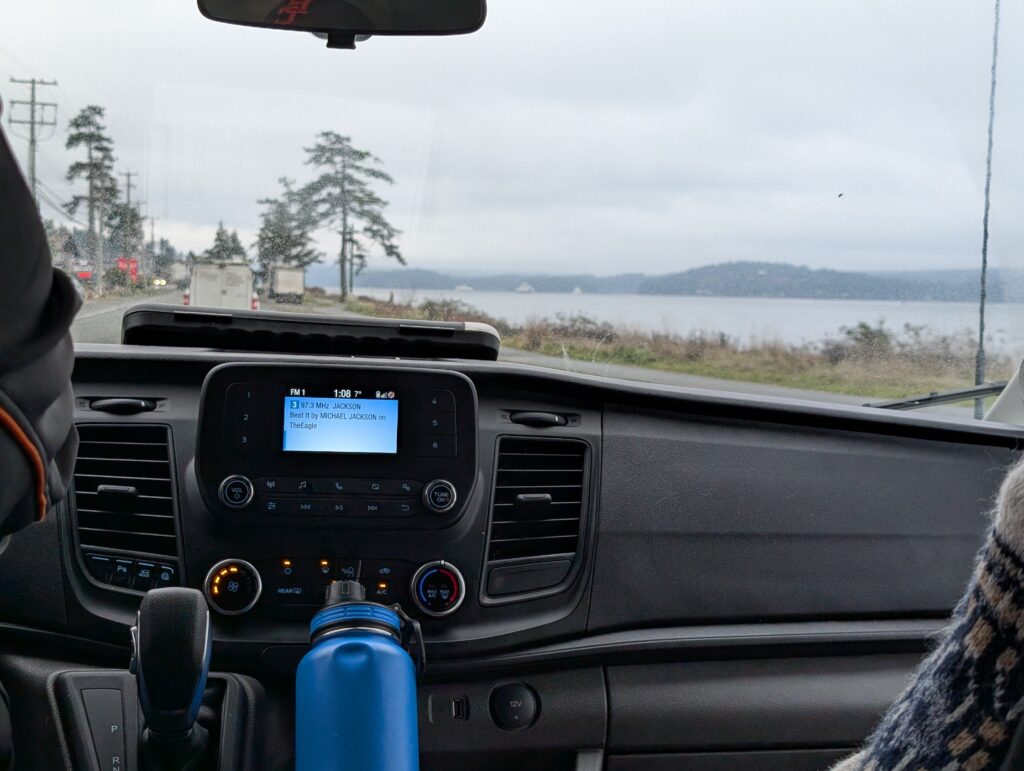
    Our drive to Victoria was rather tense with inclement weather, but not all holiday challenges are negative. Challenges can have positive effects. The road to Victoria presented some difficult challenges – rain, snow, more rain.

    We arrived in the dark, booked in to our hotel, and woke up to a new continuum.


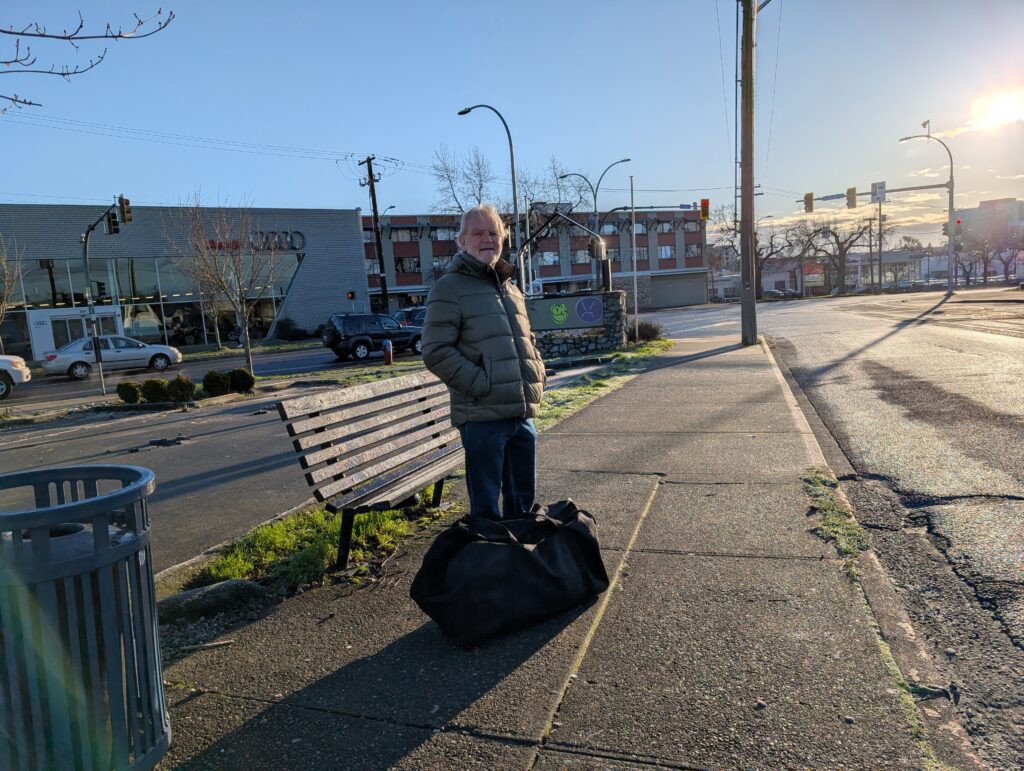
    We had a few items on our ‘to-do’ list, but mainly we were on holiday, exploring a new location. We are not generally city people, but Victoria is a tourist friendly city. Our hotel was located at a deceptively desolate looking junction but it’s where several buses pass, making tourist transportation easy.

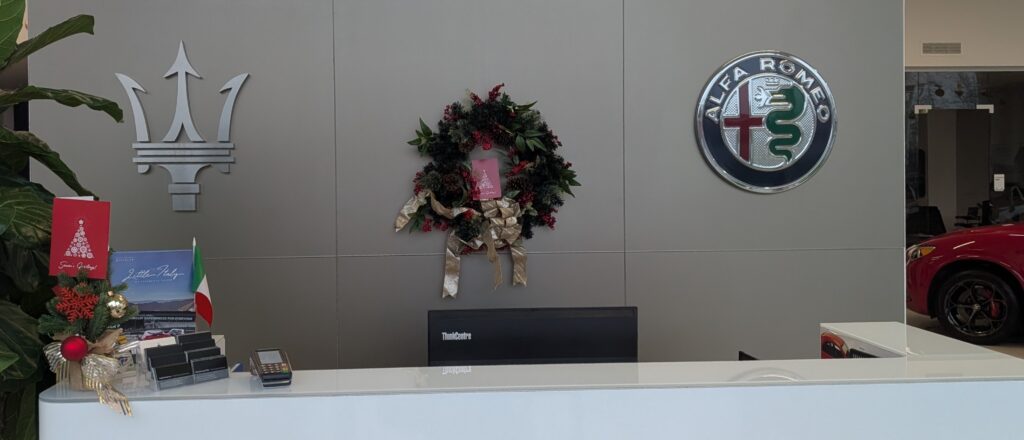
    And for our amusement, we could Christmas shop at the local car dealer, just across the street.


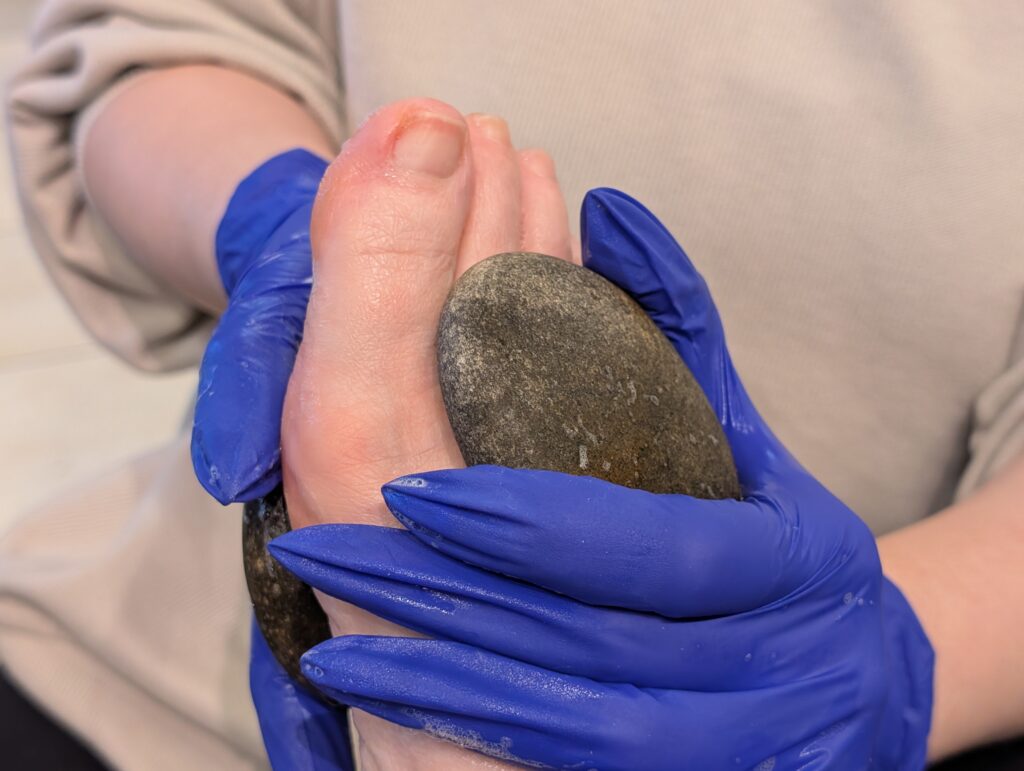
    Down the road, less than ten minutes walk, was a large shopping mall, Mayfair Mall. We went there one day, and that was enough for us. We are not accustomed to these large shopping malls, and it did not feel comfortable to us. We did, however, find new boots. We also had a mani-pedi each, so we could put ‘new’ feet into those boots. That, with a hot stone massage, was a pleasure.


    We had booked some activities. First up was panto presented by a community theatre, We had been very involved with community theatre in Gaborone, many years ago now. We met on stage at a panto, actually, so that type of production is a favourite of ours for nostalgic reasons. This specific panto was new to us, and it was a fine production.

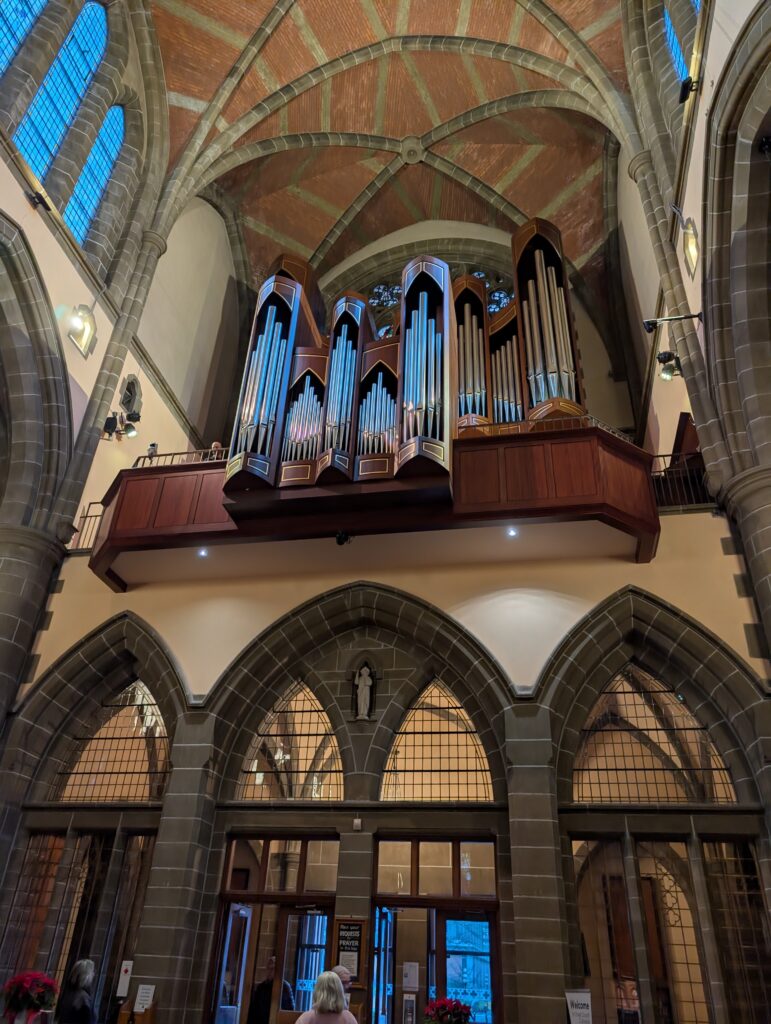
    We attended an organ concert at Christ Church Cathedral. The organ is famous – Hellmuth Wolff, Opus 47, 2005. It has a magnificent sound. The concert: La Nativité du Seigneur by Olivier Messiaen. Nine movements with accompanying Biblical texts. It was not easy listening, like Nine Lessons and Carols, but it was wonderful.

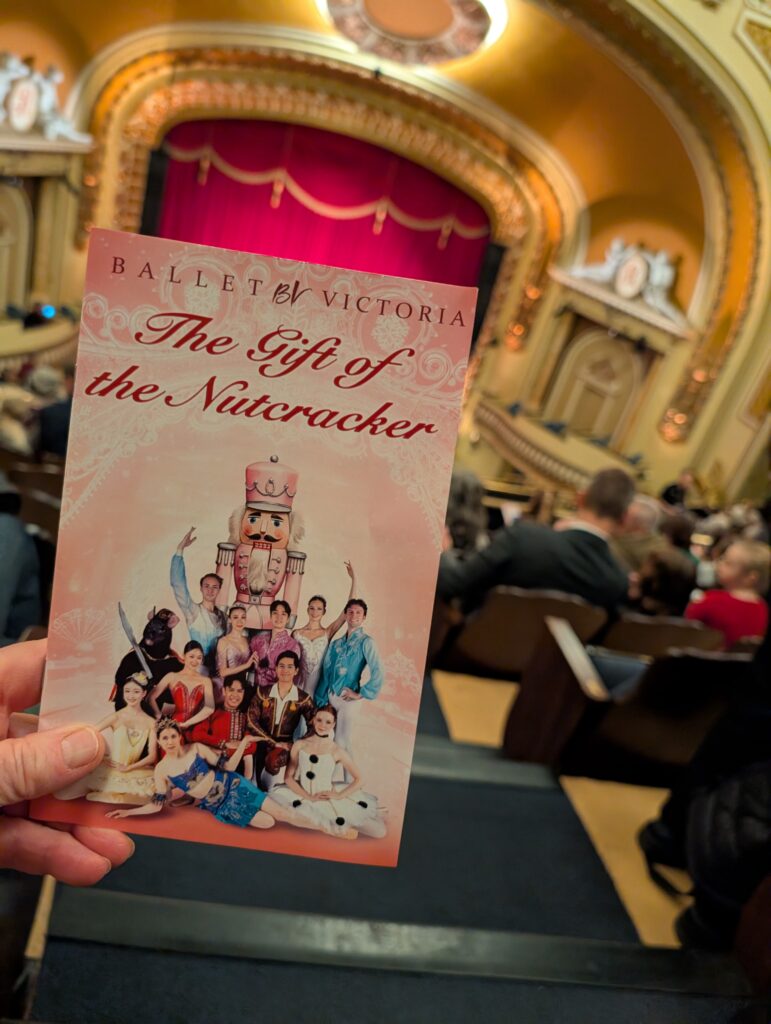
    Of course we booked tickets for The Nutcracker at the Royal Theatre. What a theatre! Gilded décor, velvet curtains, opulence galore. The Nutcracker is a classic Winter Holiday season ballet. This interpretation was a delight. The set was sparse because the backdrop provided all the atmosphere needed for the production. We loved it!

    Ah, those are the joyous aspects of a city-based holiday. Somehow, small villages do not seem to have the wherewithall to produce stage productions. Our city holidays always include at least one concert or stage performance. Lucky us, we had three events during this holiday.

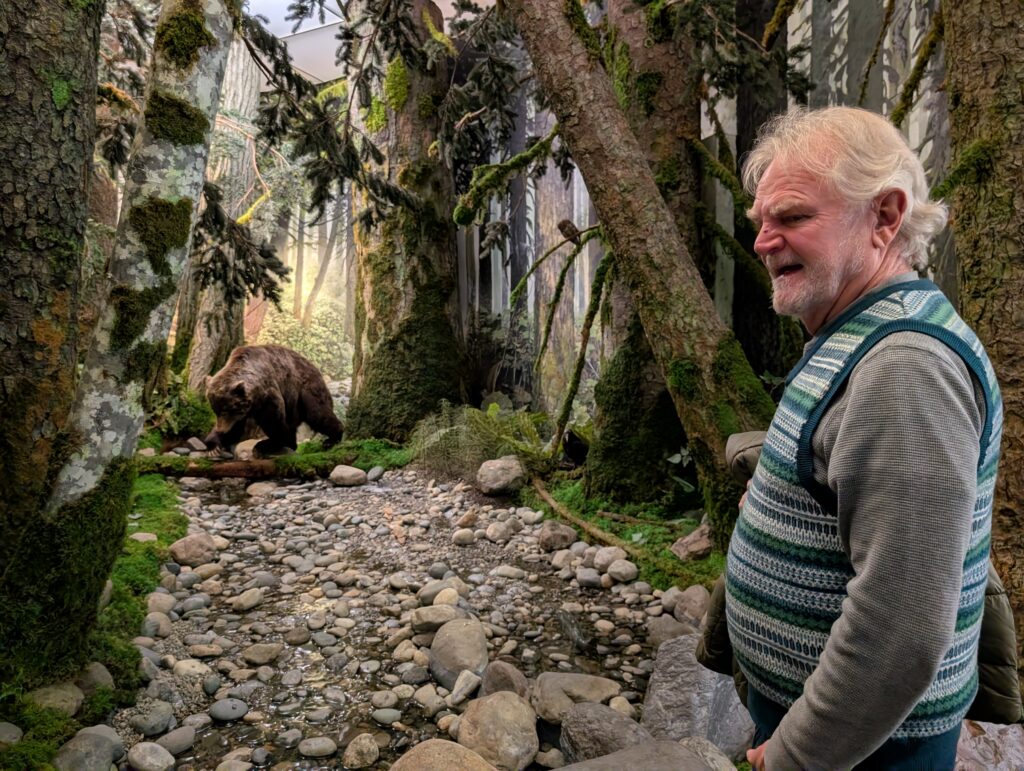
    Of course we did other tourist activities. We spent a day at the museum – some wonderful, realistic dioramas there.

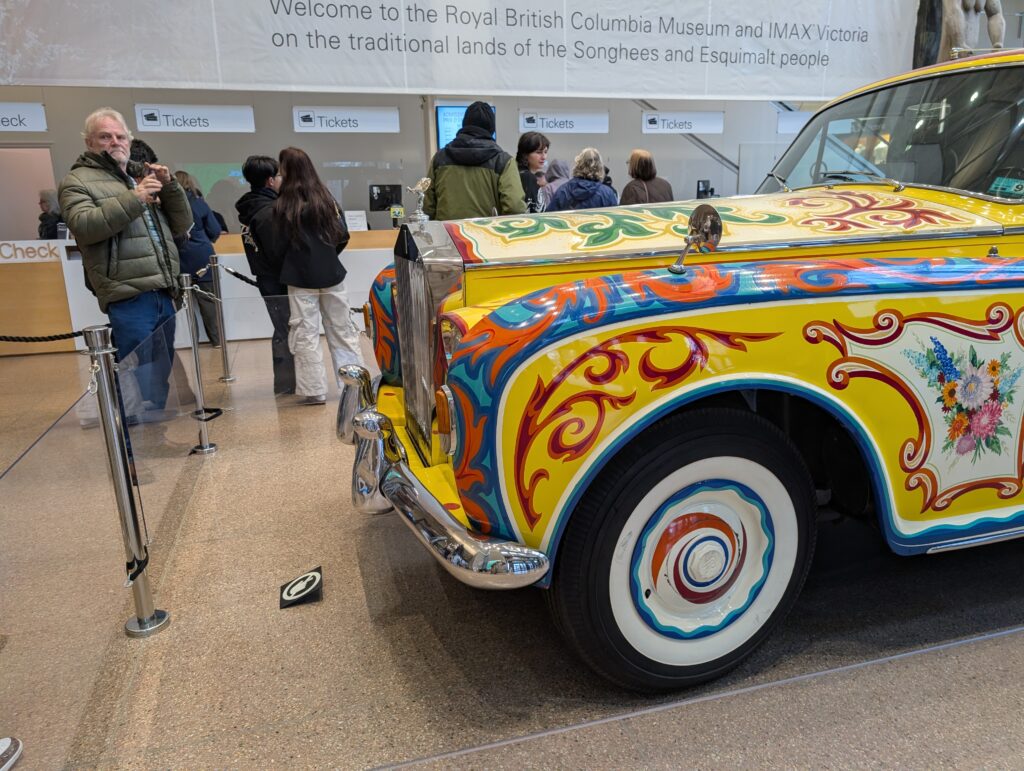
    And John Lennon’s car.

    Of course we went to Chinatown. It was much more compact than expected, but there were the usual open stalls at the shops,

    and very narrow streets that opened to sky-lit courtyards.

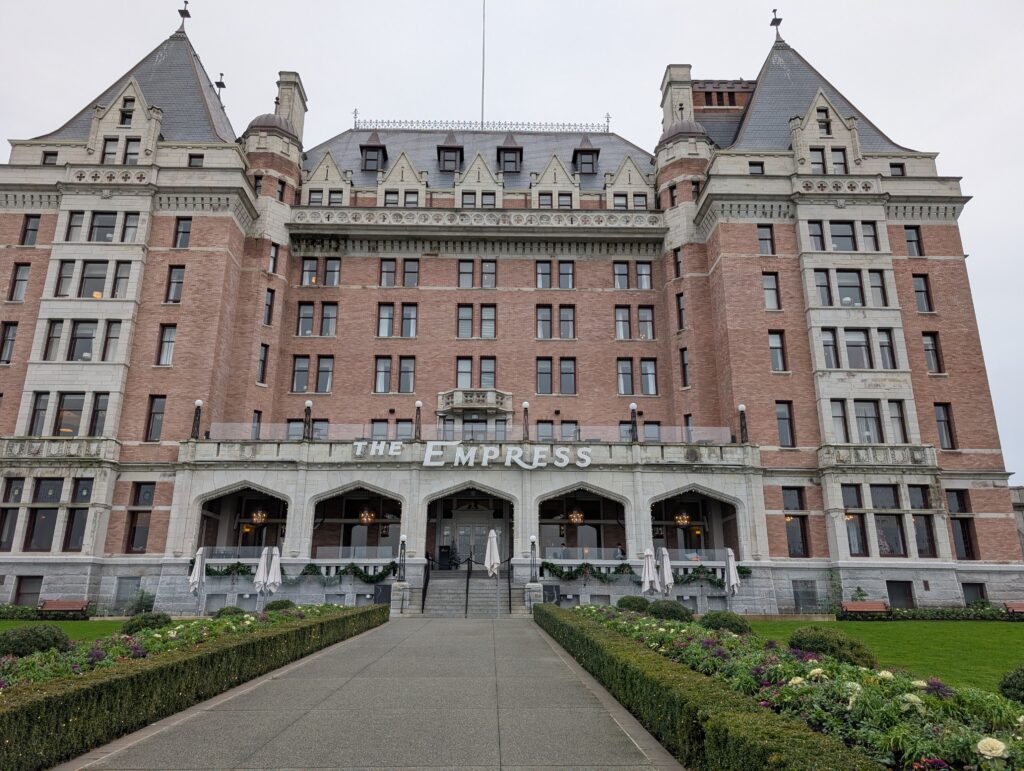
    We had a look at the famous Empress Hotel. We did not take tea in the vestibule. Years ago I did that, but it has now become rather overpriced we reckoned.

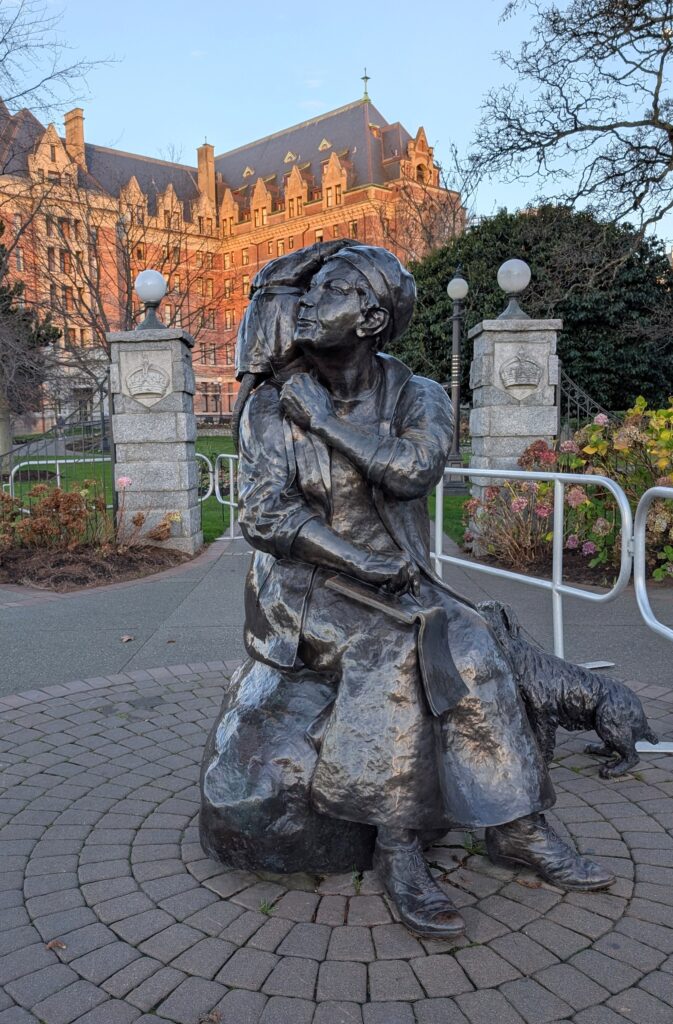
    Nearby we saw a statue of Emily Carr, a renown local artist from Victoria during the last century. She is one of my favourite of the Group-of-Seven era artists. This was fun for me. I like it when artists are commemorated.

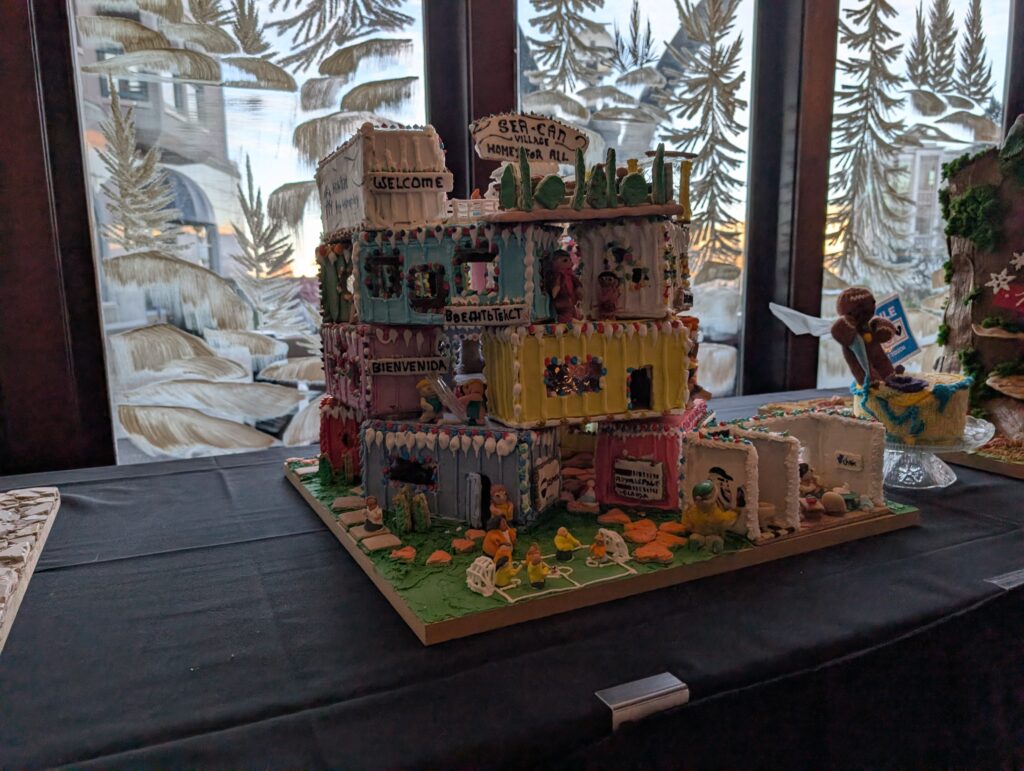
    We examined the entries in a gingerbread house competition. Both of us liked this unusual construction – containers making a housing complex. Very contemporary. Potentially the housing of the near future.

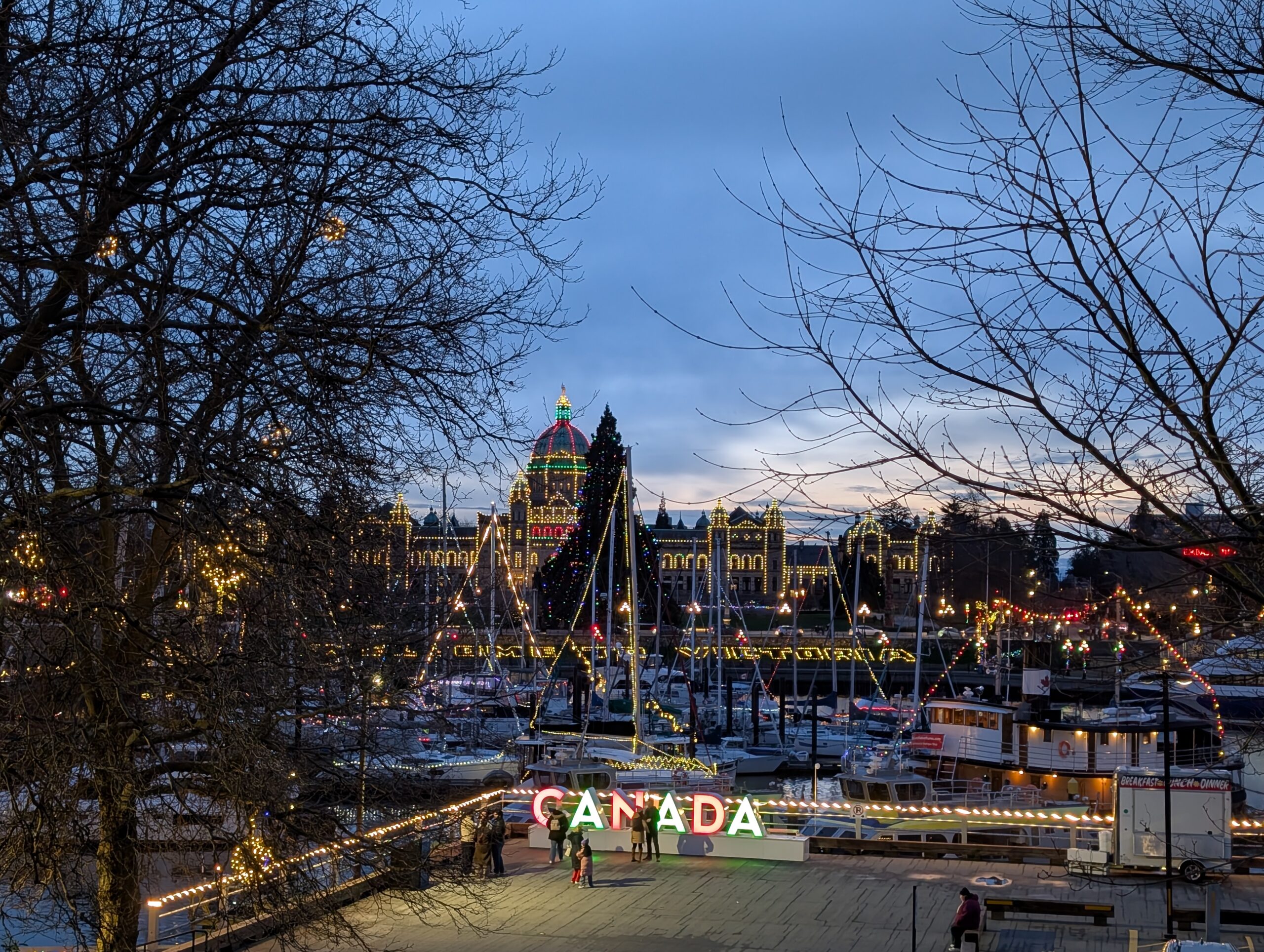
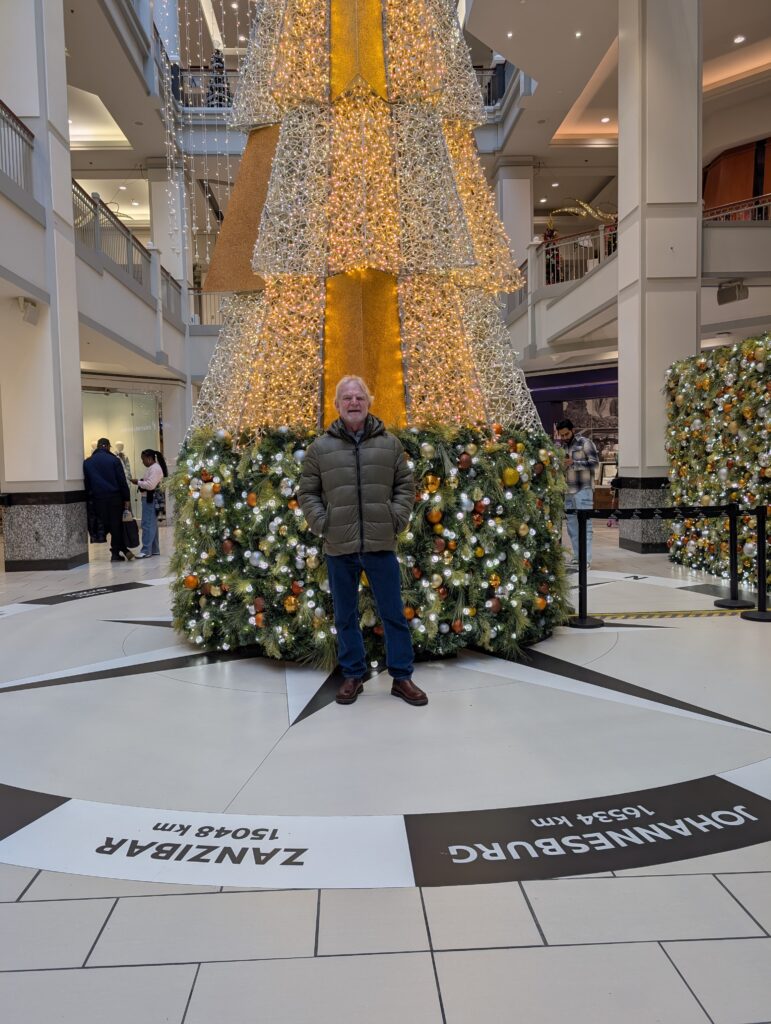
    Of course we enjoyed the Christmas lights everywhere. They are always jolly and bright, and add to the festive atmosphere during this season. At one location, there was a large, extravagantly decorated tree, cited atop one of those compasses that points directions and distances to well known cities around the world. Nigel stood looking towards the southern hemisphere, to a place where he lived and worked for several years. Johannesburg is near enough to where we met, and lived for several years.


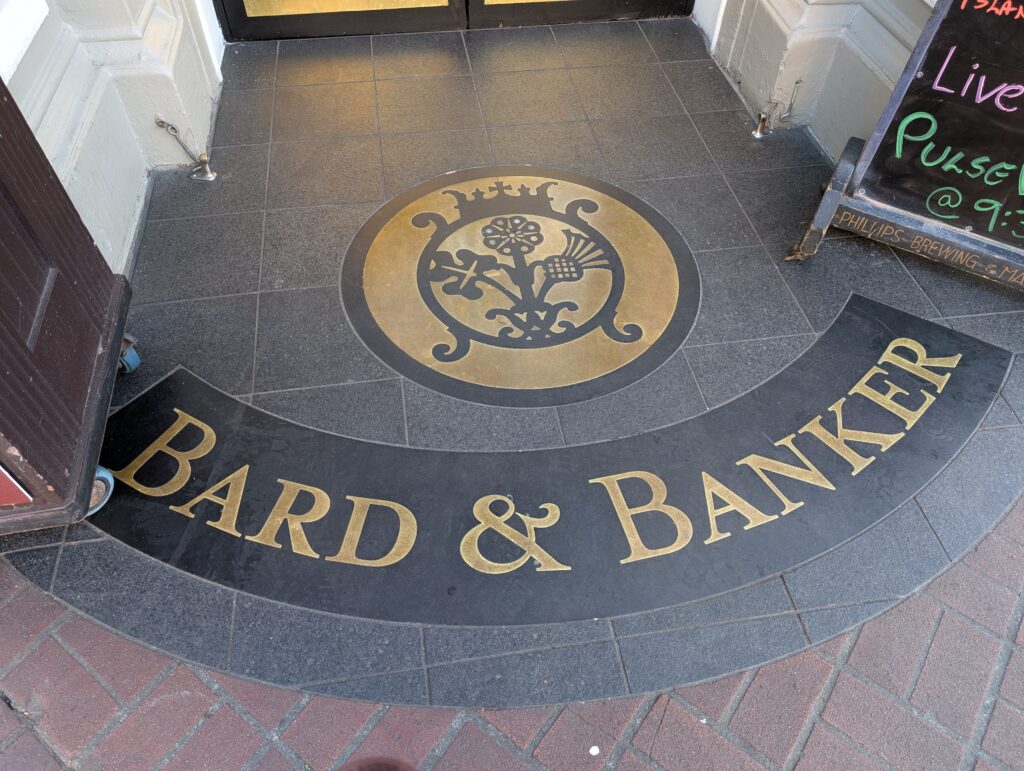
    One highlight – we connected with our cousin. He is not actually a related cousin, but he is the step-brother of my first cousin, so in a greater sense he is also our cousin. We enjoyed a tasty lunch, and fabulous conversation with him one afternoon. We were at the Bard and Banker, a former bank turned into a pub in downtown Victoria. The Bard is Robert Service, one of my favourites. He is known for his poems about the Yukon, where he was a banker. He was also a banker at this place, when it was a CIBC (Canadian Imperial Bank of Commerce).

    Remember when banks had a granite entrance festooned with their name and emblem. In keeping with that, the pub has a similar grand entrance.

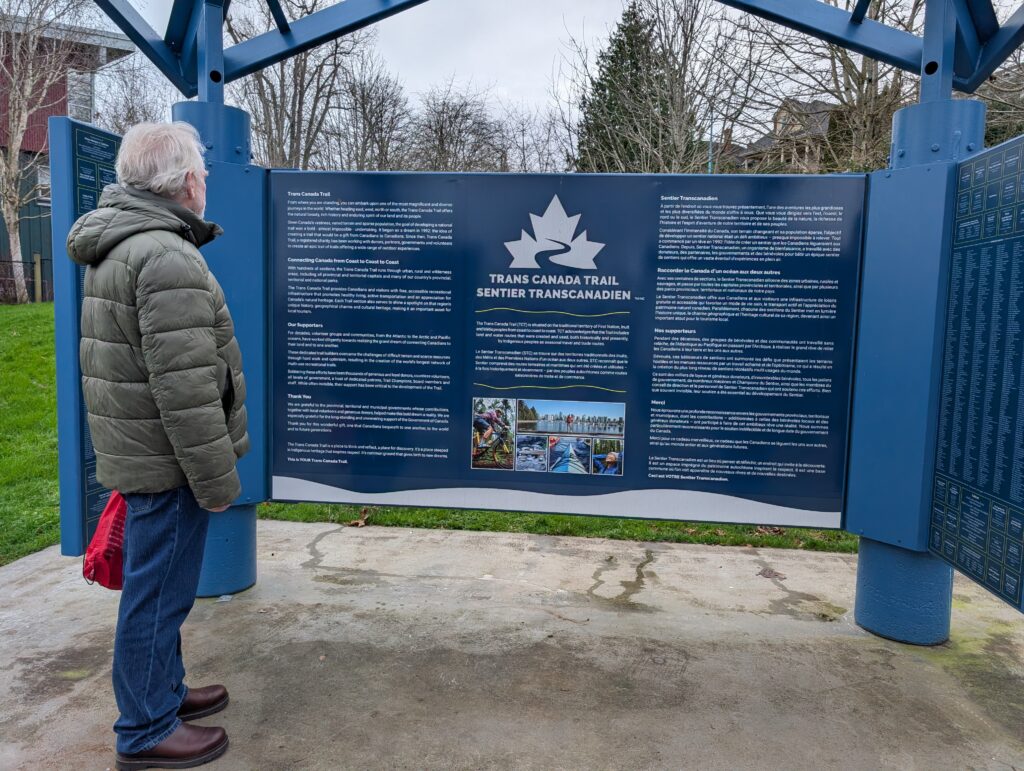
    Victoria is walkable. We walked here and there. At one point we found ourselves at the beginning of the Trans-Canada Trail. Or the end, depending on where you start walking. We’ve both walked along sections of the Trail, so this large placard was rather amusing, and interesting to us.

    That well groomed walking trail is a recent-ish walking route in Canada. The early explorers, and the fur traders walked or paddled canoes everywhere .

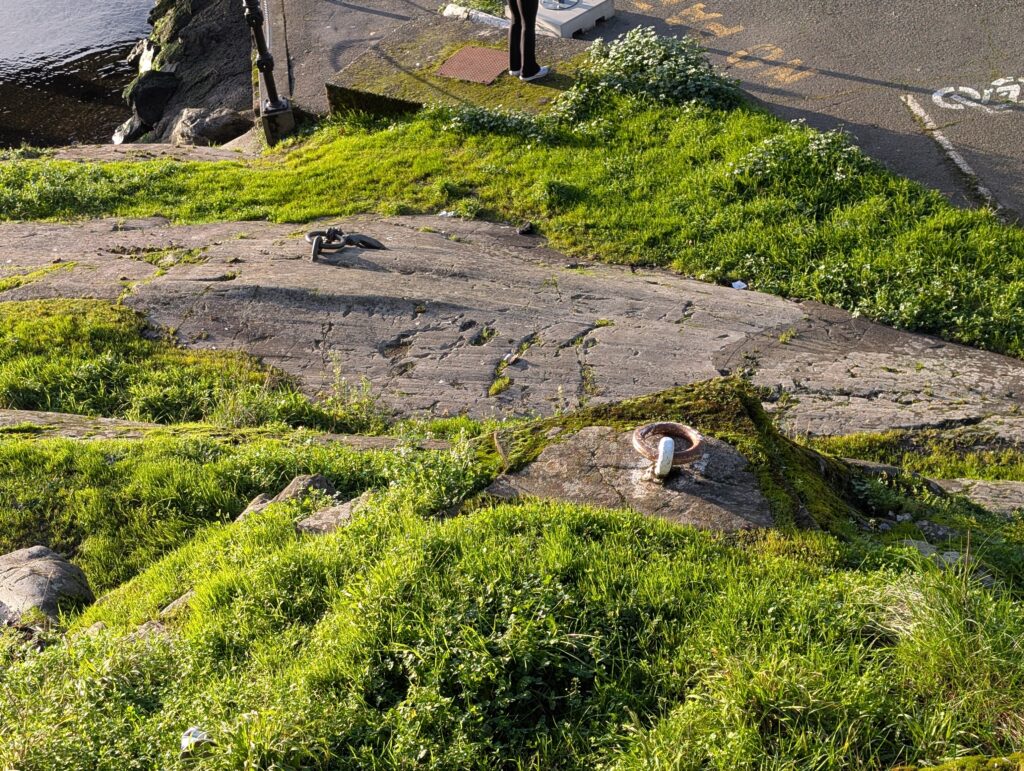
    In downtown Victoria, there are remnants of Fort Victoria, the Hudson’s Bay Company trading post that was built in 1843. Two solitary mooring rings are all that remain of the fort that once was a main depot for the Pacific fur trade. Those dates are recent considering the longevity of the fur trade European settlement of Canada.

    One of my great-uncles came to BC with the Hudson’s Bay Company, and the family story is that he was in Victoria for awhile. He was not likely at Fort Victoria because it was dismantled in 1864, but I wonder if I walked where he walked?

    Although we touched on some typical city activities, ours was not the usual tourist gambit in Victoria. We walked hither and yon, and generally enjoyed a relaxing time in the capital city of British Columbia.

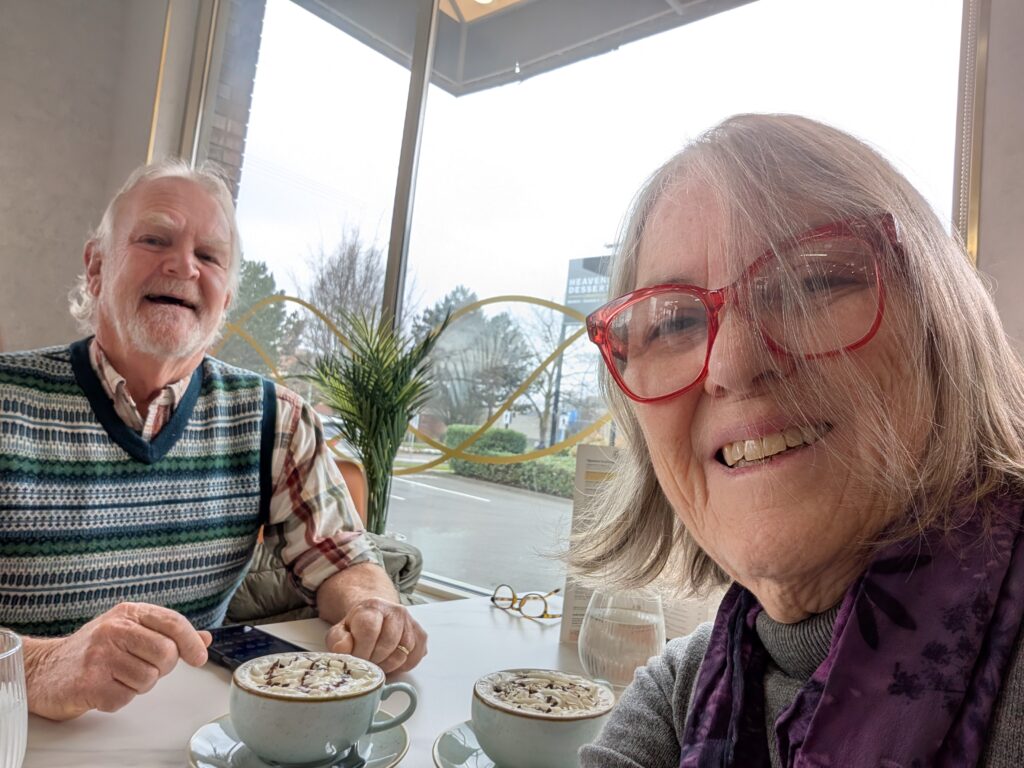
    We enjoyed excellent cappuccinos at a small, colourful restaurant.

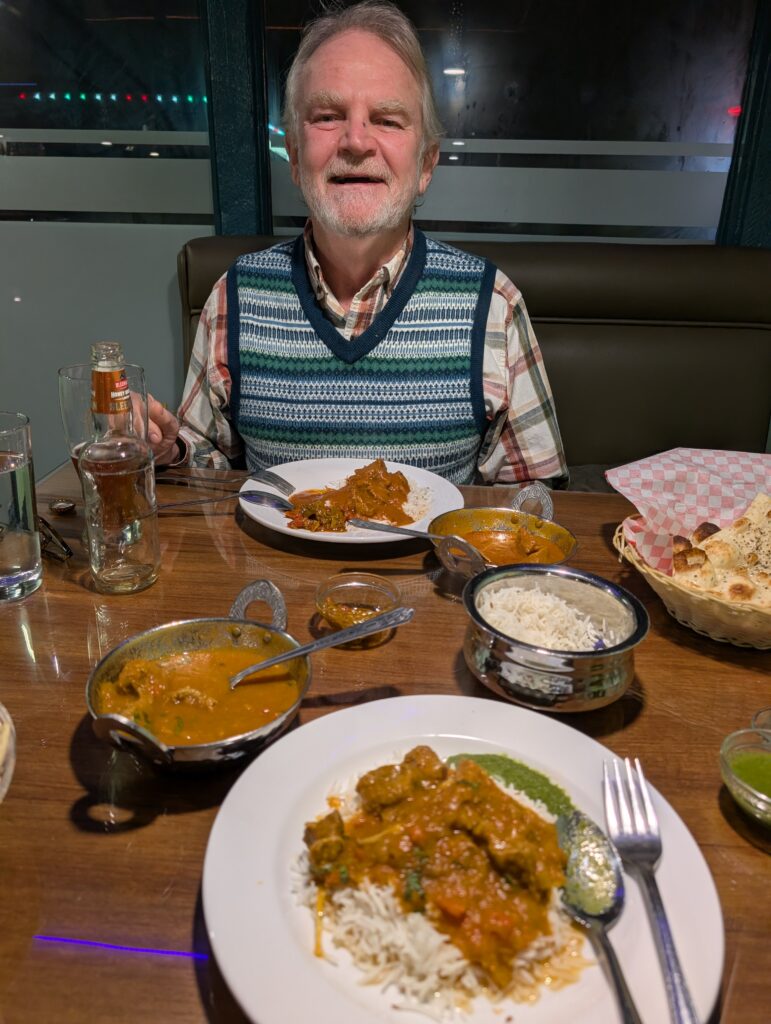
    Very tasty Indian curry at a local restaurant.

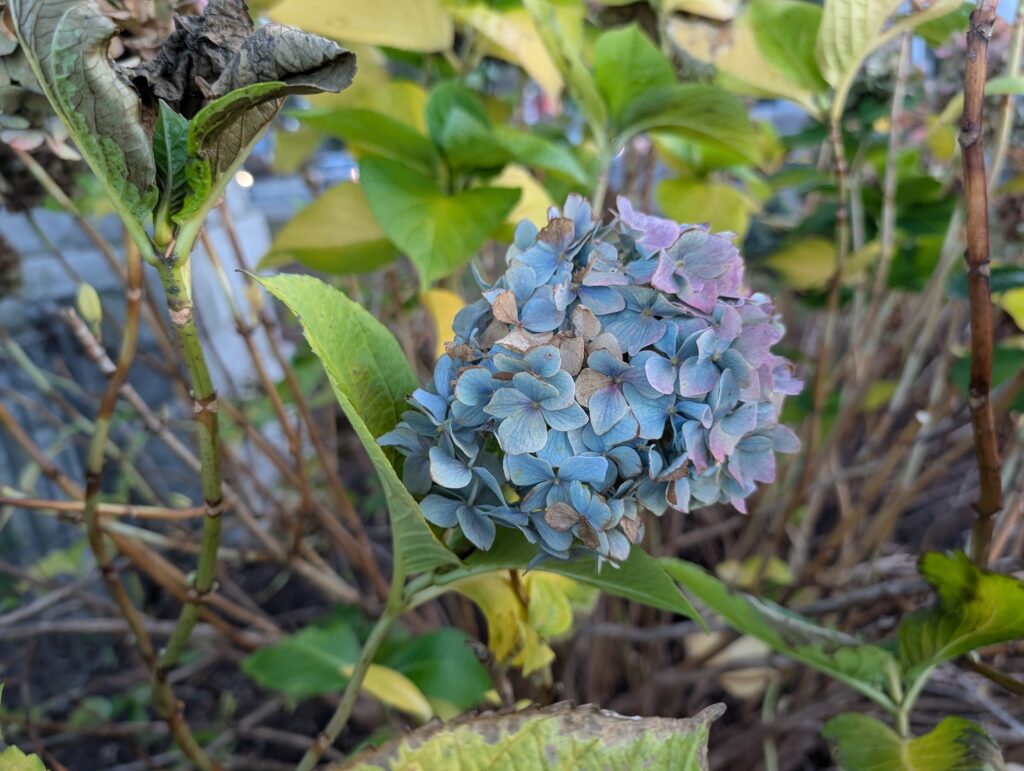
    We two plant lovers enjoyed the gardens that even in winter retained their colour, especially the hydrangeas.

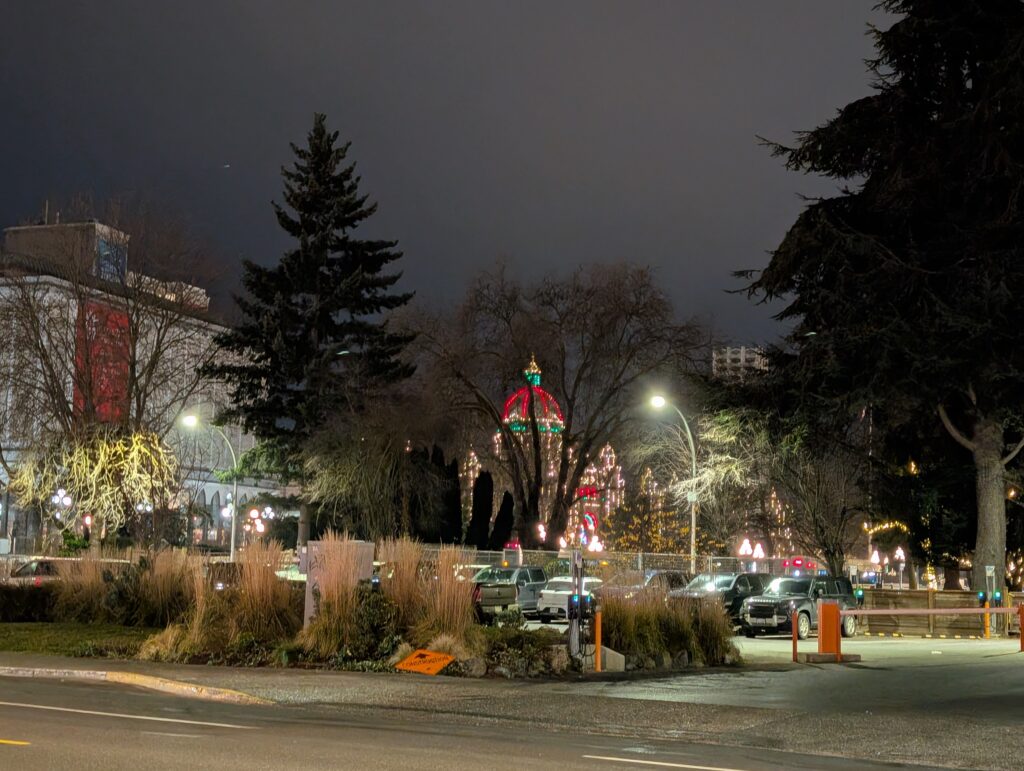
    We never tired of the bright lights that outlined the Provincial Legislature. We enjoyed every brightly lit spectacle and garden that we saw.

    Our 500 km but trip back to Port Hardy was uneventful.

    As was our flight into Wuikinuxv Nation.

    A calm and relaxing end to a calm and relaxing holiday. A perfect ending, one could say.

  • Holiday Challenges – leaving Wuikinuxv

    Holiday Challenges – leaving Wuikinuxv

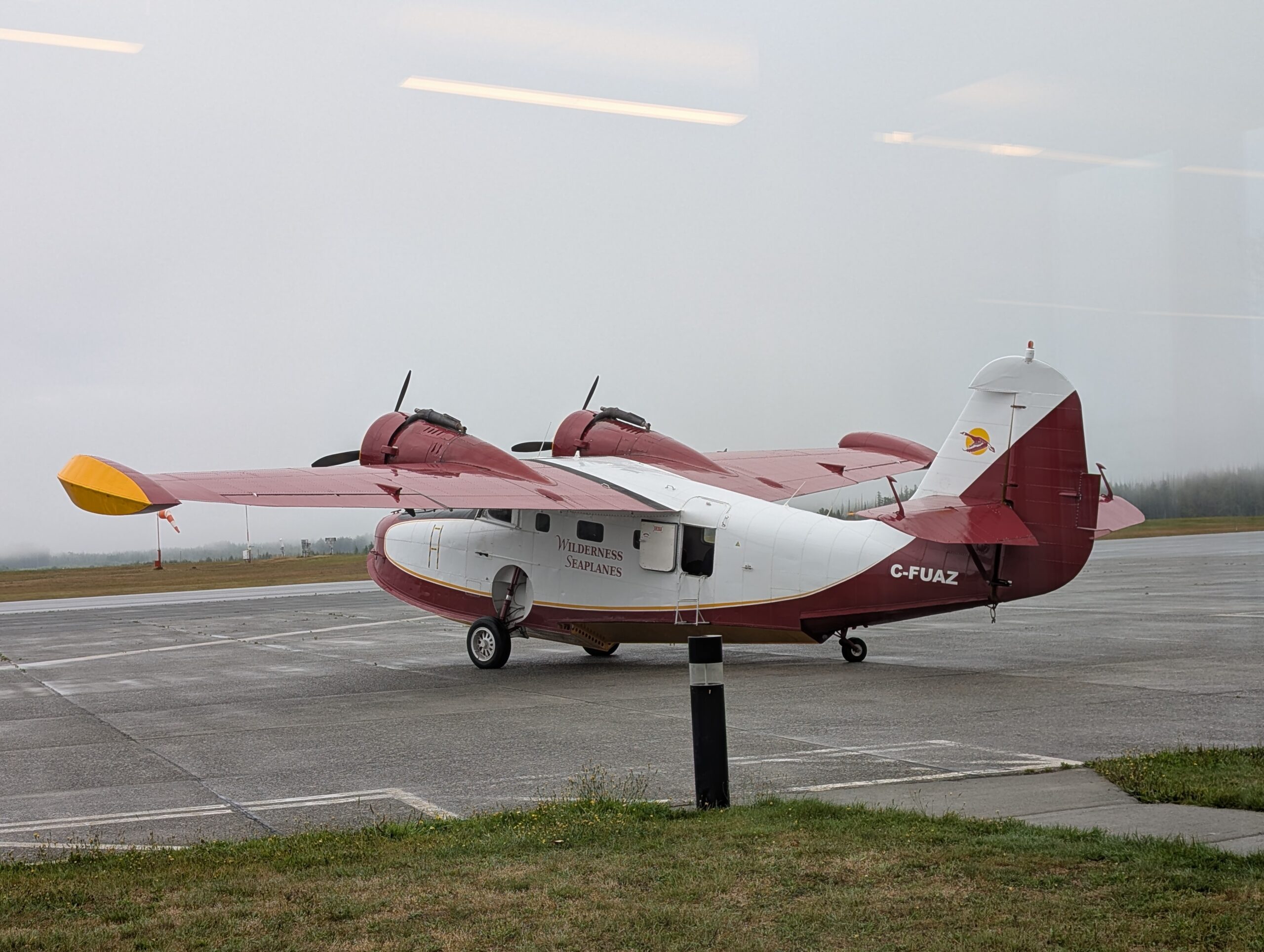
    Wuikinuxv is a fly-in community. That means we must take a plane to fly in or out. There is no other public transportation available. We rely on Wilderness Seaplanes to move people to and from Wuikinuxv.

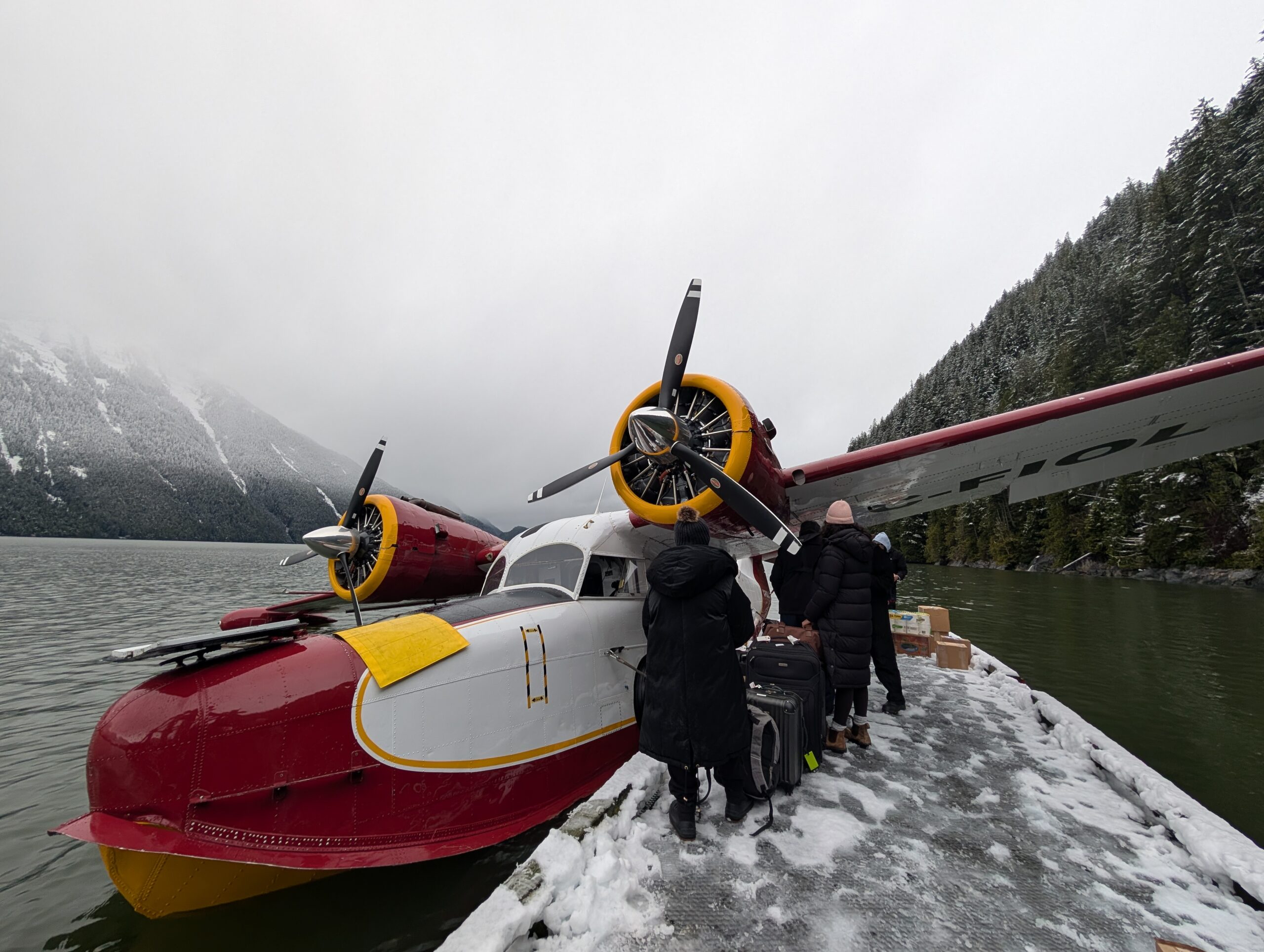
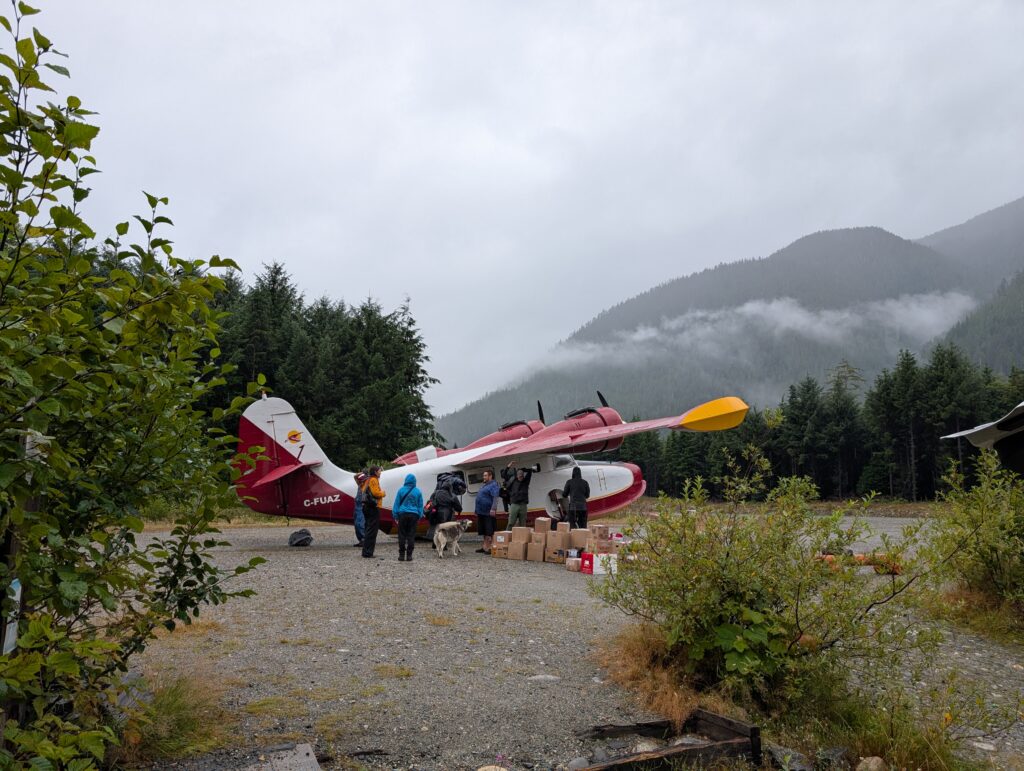
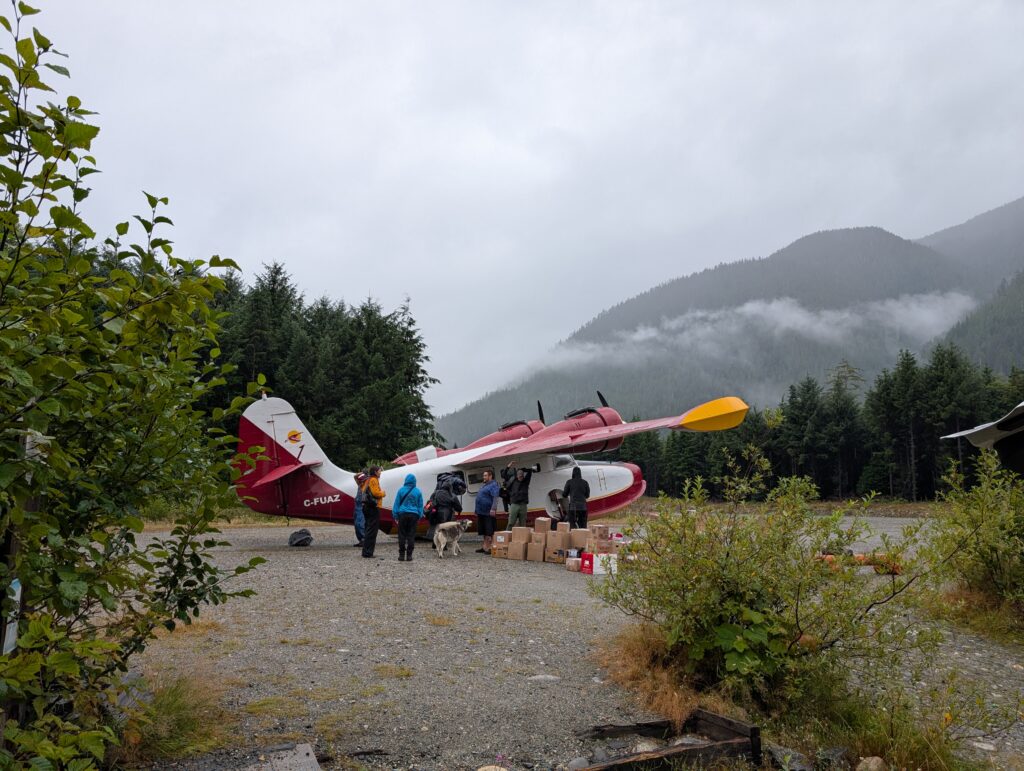
    That being said, the plane is intriguing. It’s a Grumman Goose. This is an amphibious aircraft, able to land with equal ease on water or on land. This is a useful trait in Coastal BC where weather may require a water landing in lieu of landing on the airstrip, and vice-versa.

    Five of us were scheduled to fly out on Saturday 20 December. Six if we count Granville as a passenger, although technically she was cargo.


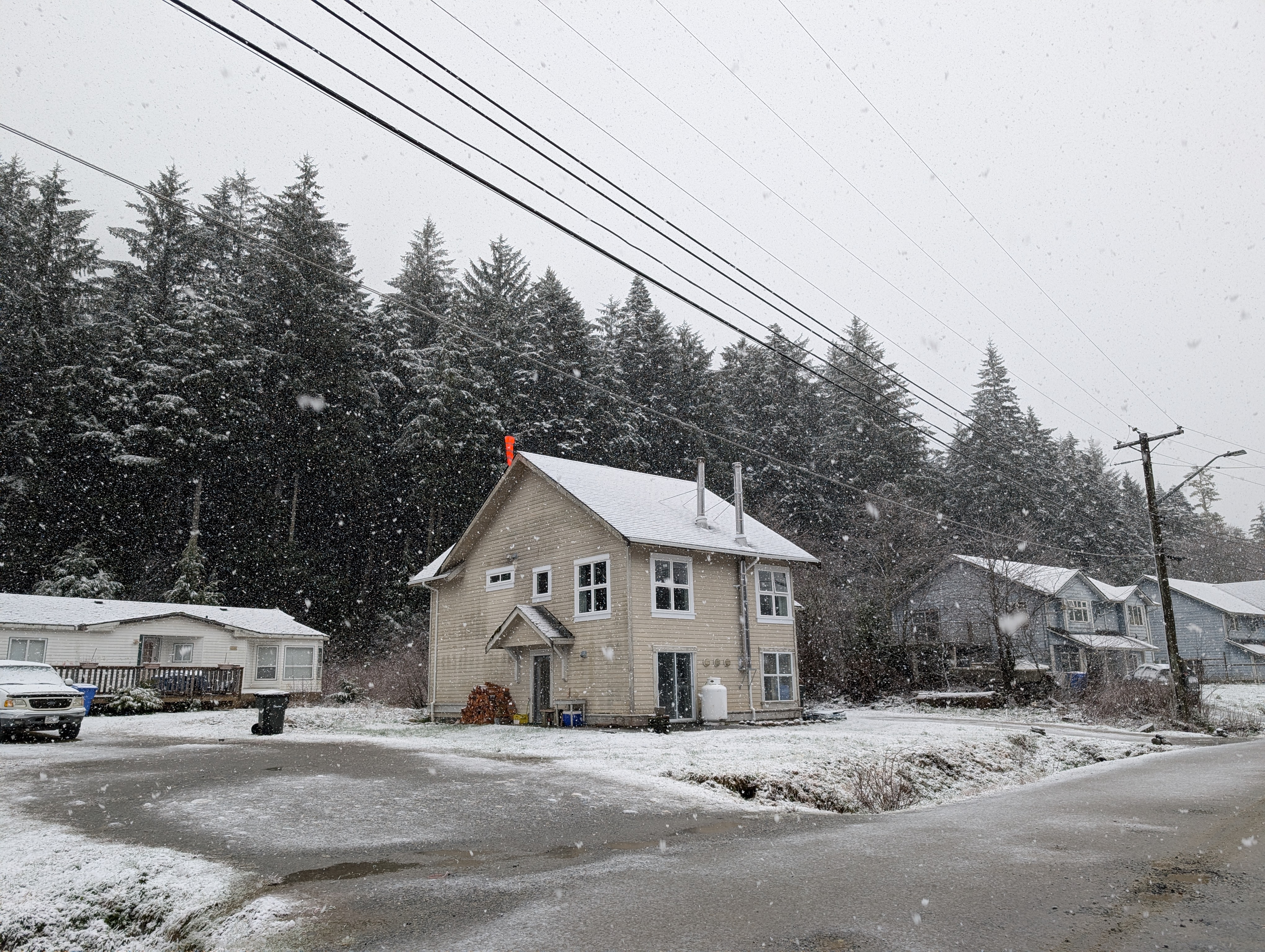
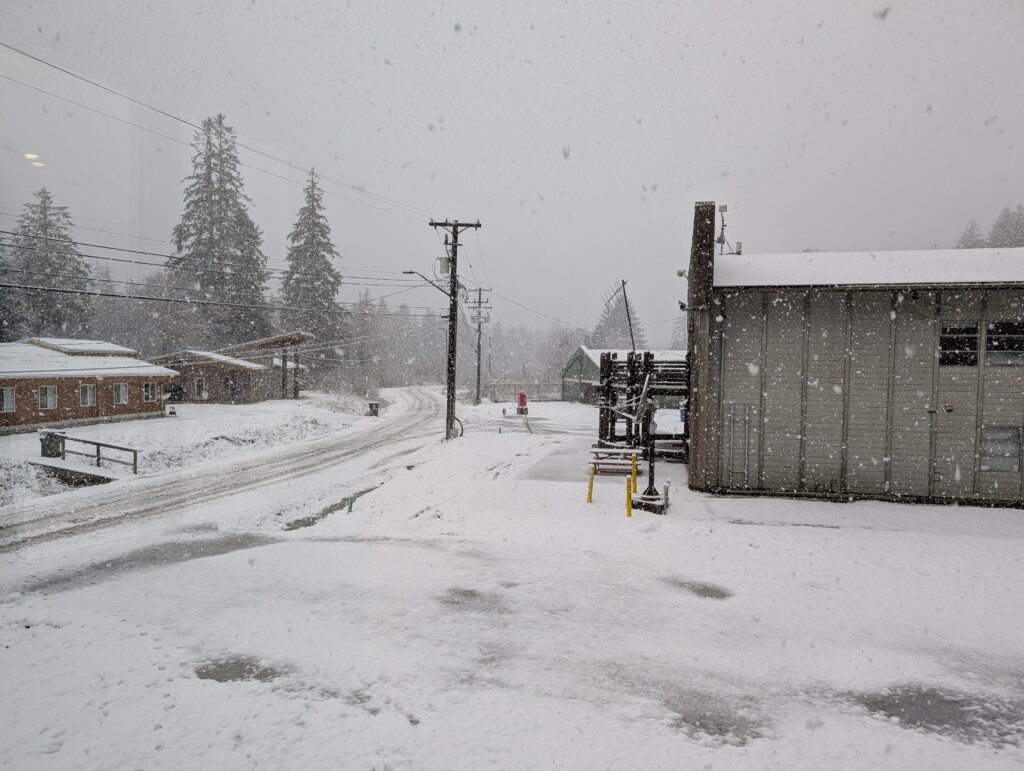
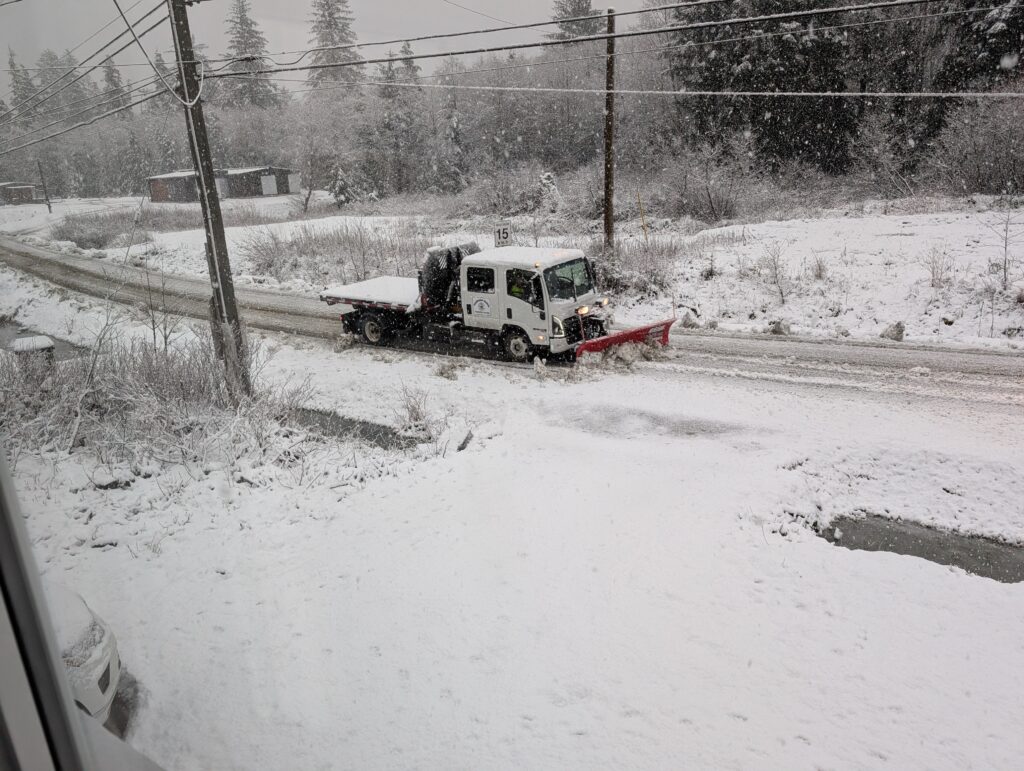
    The day dawned with about 10 cm of slushy snow on the ground. It did not look optimistic for a flight. At about noon, someone was asked to go to the government wharf to take a snapshot. This would give Wilderness Seaplanes some information to decide whether to cancel or keep the flight. When Frankie took the photo the sky was overcast but clear. He emailed the picture. Within 30 minutes it was snowing again. The snowplough made another run along the road, clearing snow. Oh well, that’s that, we thought.


    Suddenly, within minutes, Frankie, who was driving the Band Van as a shuttle to the plane, was beeping at the door. He phoned up. “Let’s go. The plane is flying.” He zoomed around collecting the passengers, and someone to help with Peter, who needs mobility assistance. We were at the government wharf in plenty of time, waiting for the plane.


    After a few auditory illusions, what to our wondering eyes should appear but a sight we were glad to see – the Wilderness Seaplanes’ Grumman Goose smoothly landed at R.I.C. (the term we use for the government wharf) on its scheduled flight today. It was delayed due to weather, but the clear weather window was big enough to complete this flight. The plane arrived despite the overcast sky accompanied by the threat of snow and reduced visibility.


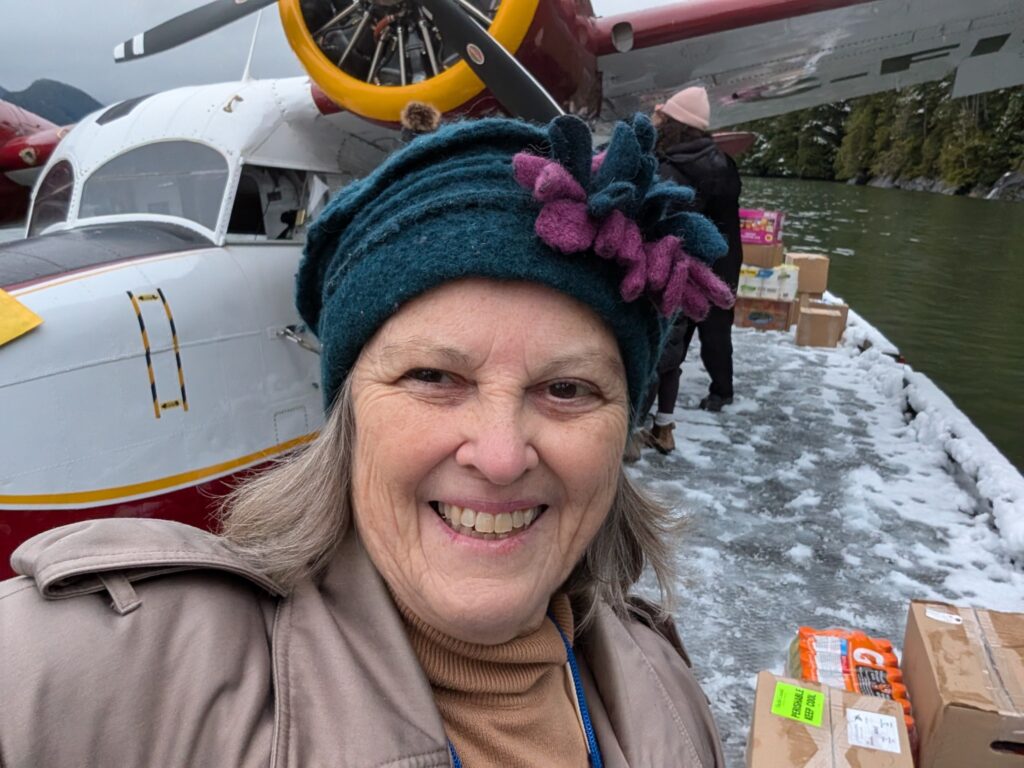
    Although we were in a rush, there was time to take a quick snapshot just before boarding the plane.


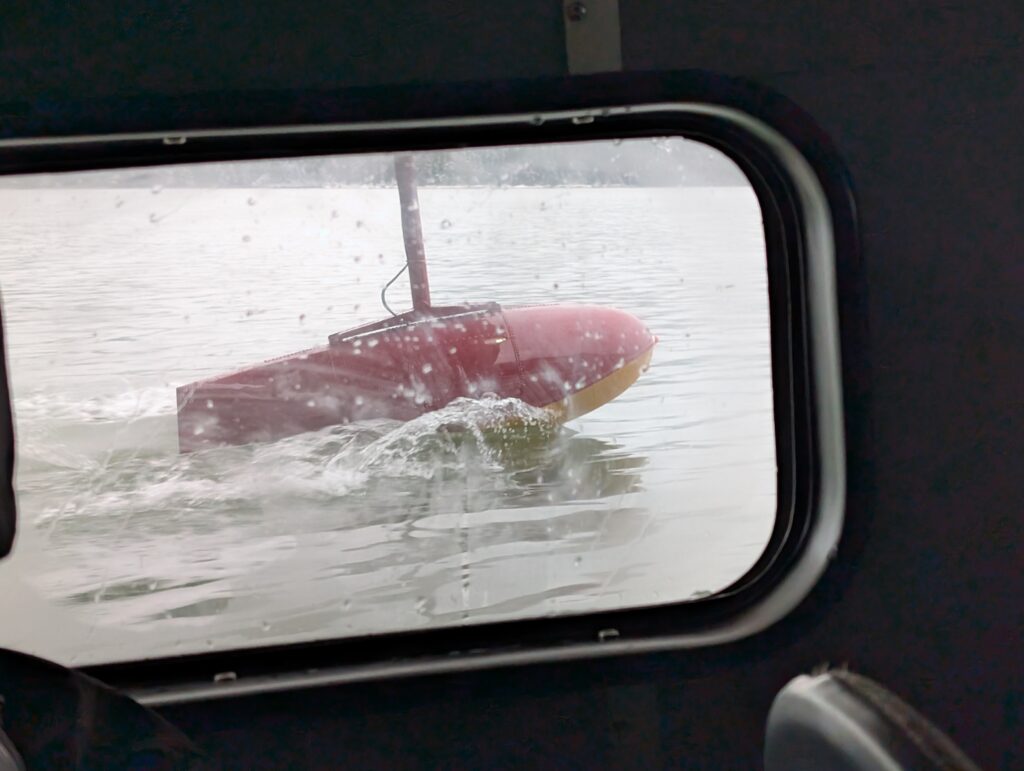
    We loaded selves and baggage within minutes, and off we flew. The wake created by the floats under the wings is always a thrill to see.


    On board, Granville was busy looking everywhere. It was a tad noisy for her, I expect. Granville came out to stay in the kennels at the vet (great kennels) while we were in Victoria for appointments.


    Nigel was in the first seat, so he could see out the front window as well as the side windows. A prime seat.


    Visibility was surprisingly good, considering the weather conditions. Good for the pilot, since on these trips the pilot flies by sight, generally.


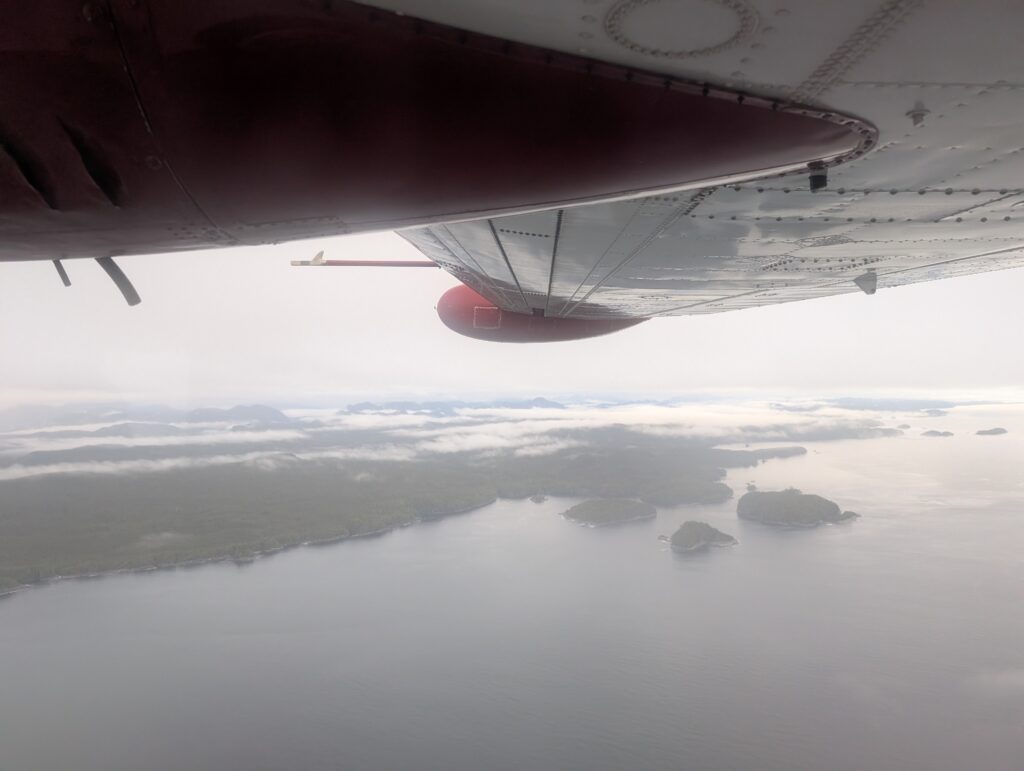
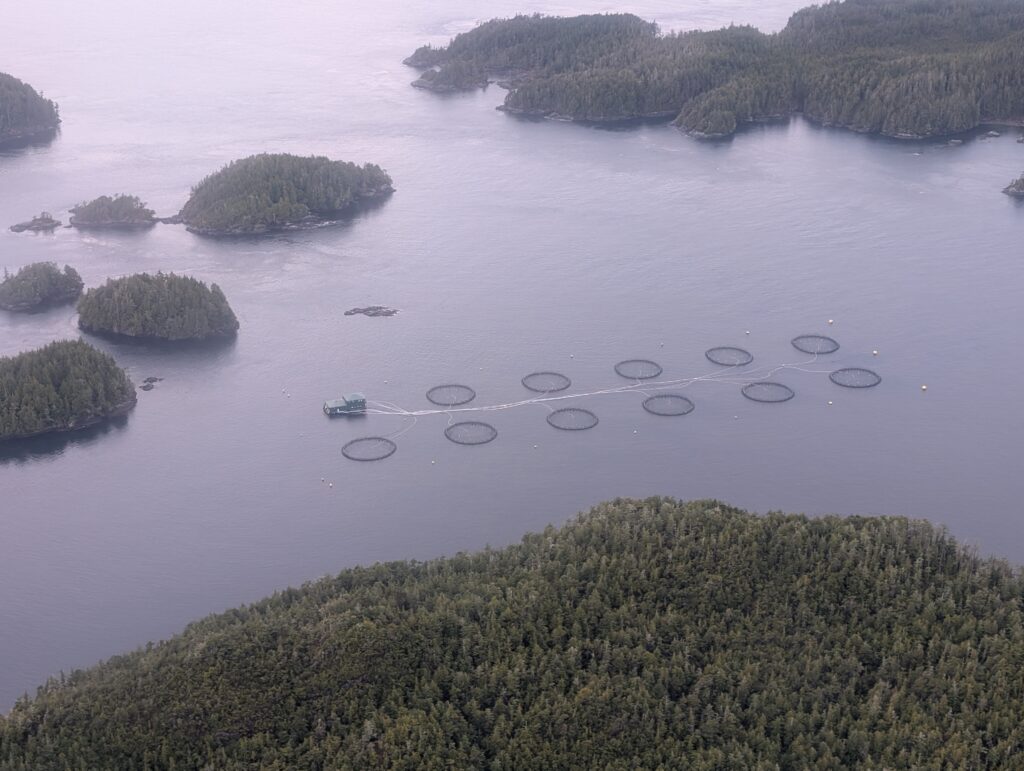
    On my side of the plane, the fish farm cages were clearly visible.


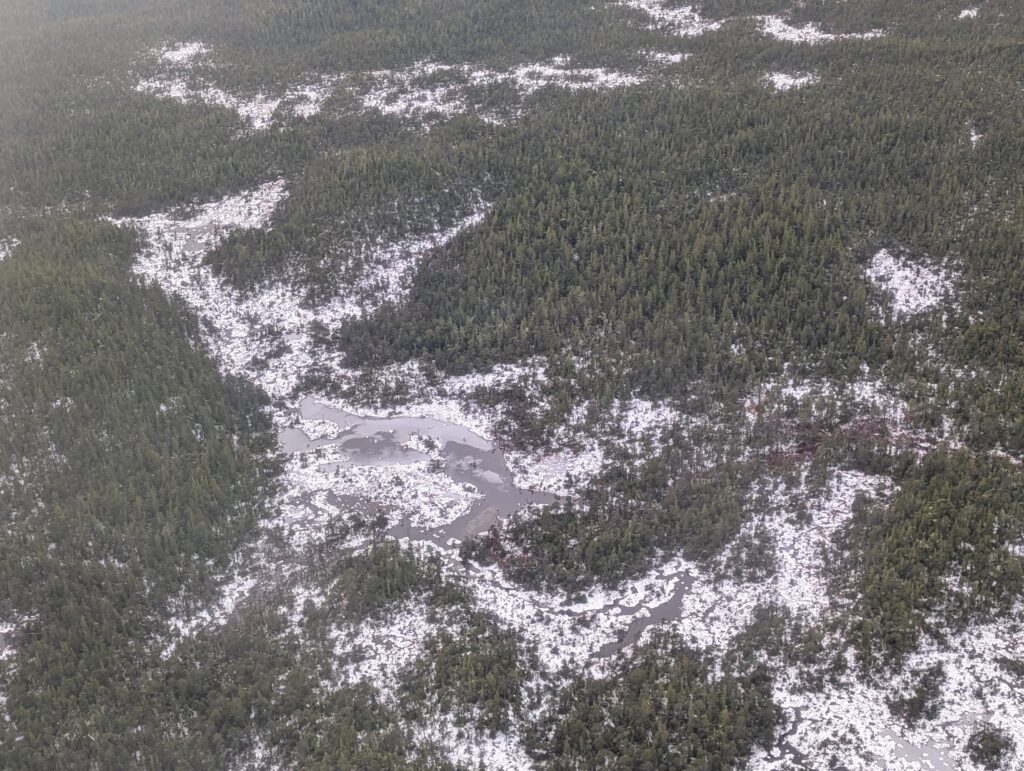
    As was the ice on the ponds on the islands.


    By the time we reached Port Hardy, it was raining heavily. Our landing was smooth. We got ourselves and Granville to our respective accommodations.


    Travelling – always something lateral that makes us smile, sometimes even laugh aloud. We stayed at Kwa’lilas Hotel in Port Hardy for a couple of nights. Our evening meal at the Ha’me’ Restaurant in the hotel, was pricey but tasty. Nigel’s meal, beef tenderloin, well presented, and well cooked. The smile of appreciation says it all. He accompanied it with a glass of Telegraph Cove IPA, the proceeds of which are used to refurbish a fire-damaged historic site in Telegraph Cove, BC. Nigel said he’d have that beer again. He’d have the tenderloin again too.

    Best part of our stay in Port Hardy – and unfortunately there are no photos for this part – much to our pleasure, we bumped into several Wuikinuxv friends while we were in Port Hardy. They certainly seemed glad to see us as well. Perhaps that’s an indication that we are settling well into the community.

  • Changeable Skies


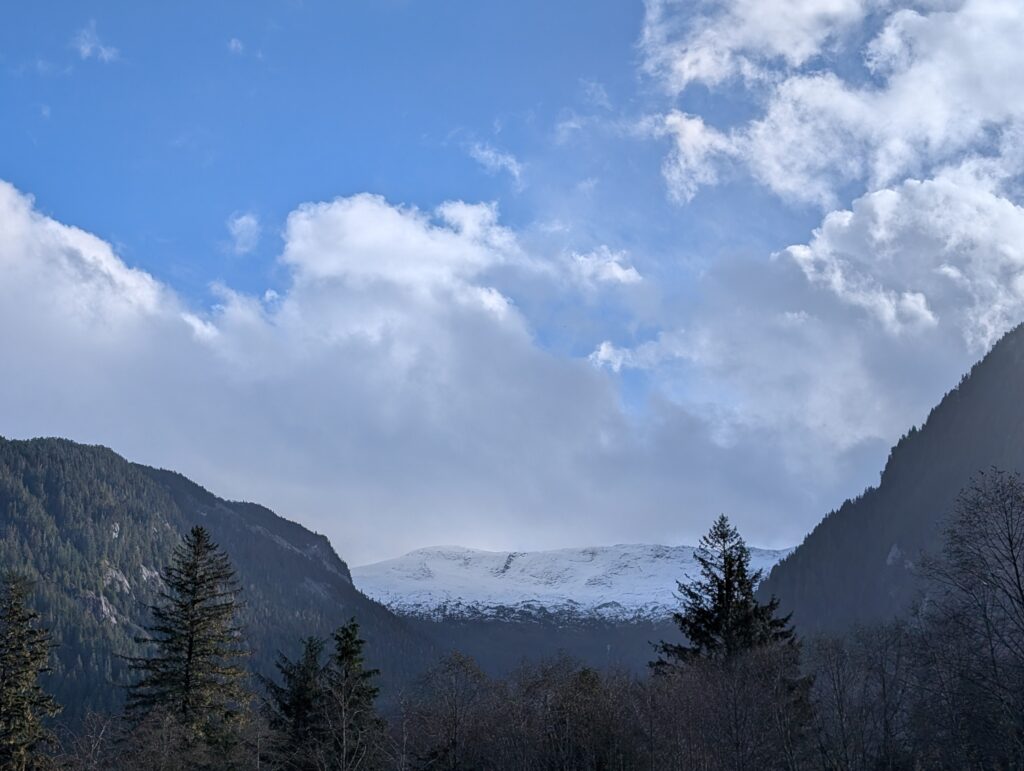
    I love big skies – the sky arching over us like an upturned bowl. Living here we’re seeing a very different sky. The mountains tower around us, reducing the sky to a slice of itself.


    It’s an even thinner, sliver of a slice along the road between the trees.


    To see a wider expanse of sky, we drive about 5 km east to Oweekeno Lake.


    Alternatively, we drive not quite 5 km west to the government wharf. It’s a splendid location to see the colours of the sunset.


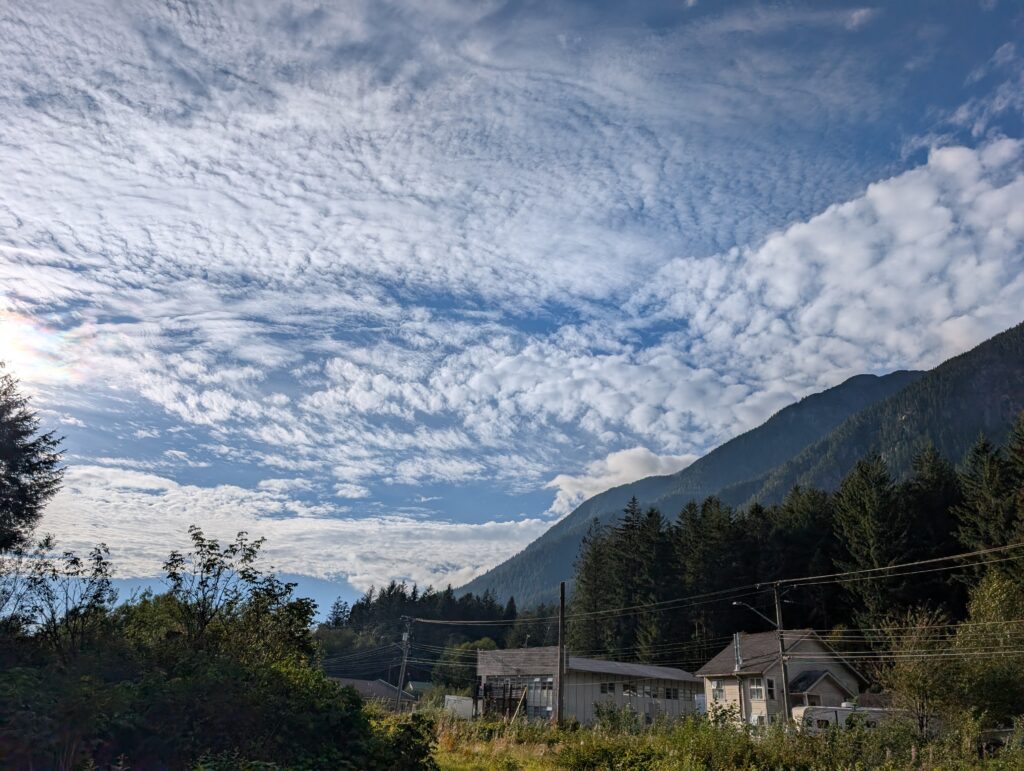
    What do we do when we get to the slightly wider spaces on the lake or in the fjord? We take photos because it’s all so different, and unusual for us. Neither of us are cloud-identification experts, but we do try to determine what we are seeing.


    We are filled with awe at the variations in the sky. Most of the clouds are stratus clouds, low and grey, often covering the entire sky and frequently associated with drizzle. When they hang low enough we call it fog.


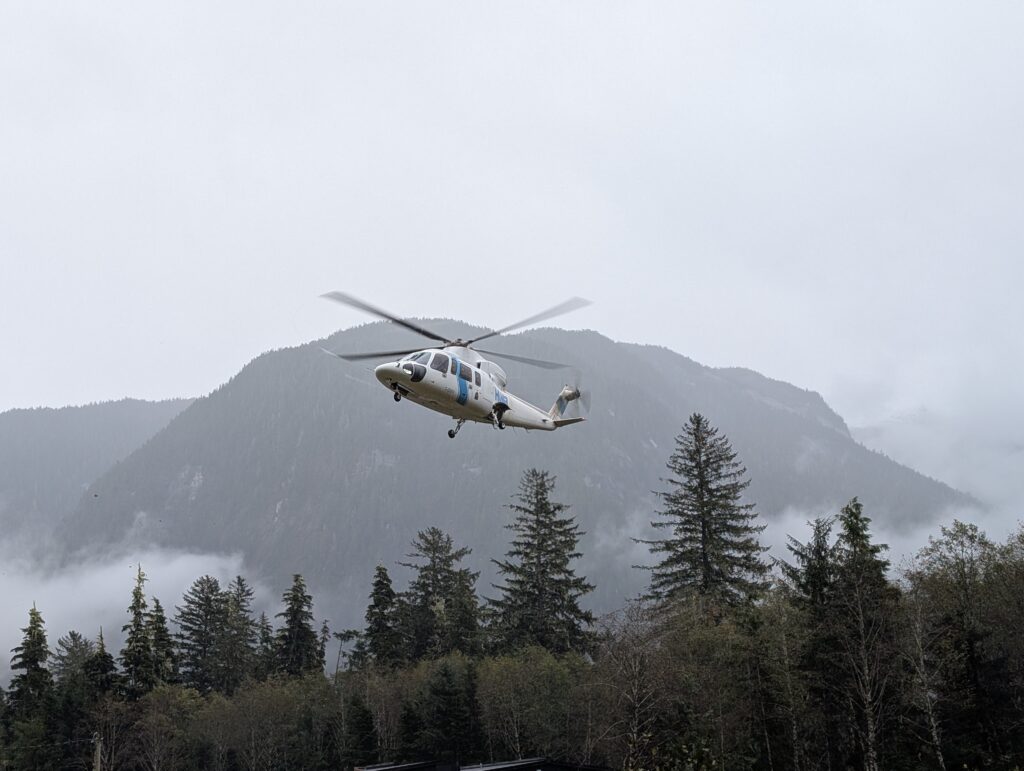
    Despite the low cloud cover, Helicopters Without Borders may still arrive with medical personnel for routine visits to the community. Just as often, the helicopter does not arrive when it seems that there is similar weather. There are obviously other factors in the equation.


    We have other cloud covers. Those low, puffy stratocumulus clouds also fill the sky, frequently but not always obscuring the blue above. Generally benevolent, these clouds blanket the sky, creating little wetness below. They dramatically enhance our view of the mountains.


    There is a cloud called alto-cumulus. I think it is the cloud that produces what I call a mackerel sky. We’ve seen a few variations of these beautiful cloud formations.


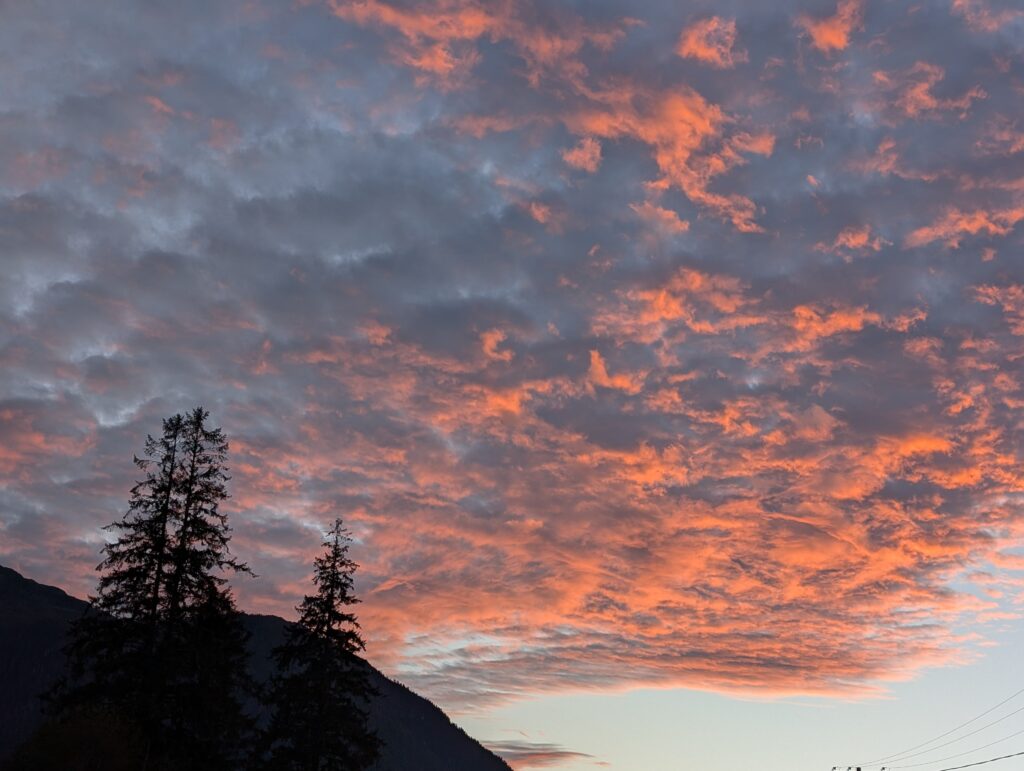
    It might also be alto-cumulus clouds that produced this beautiful sunset sky.


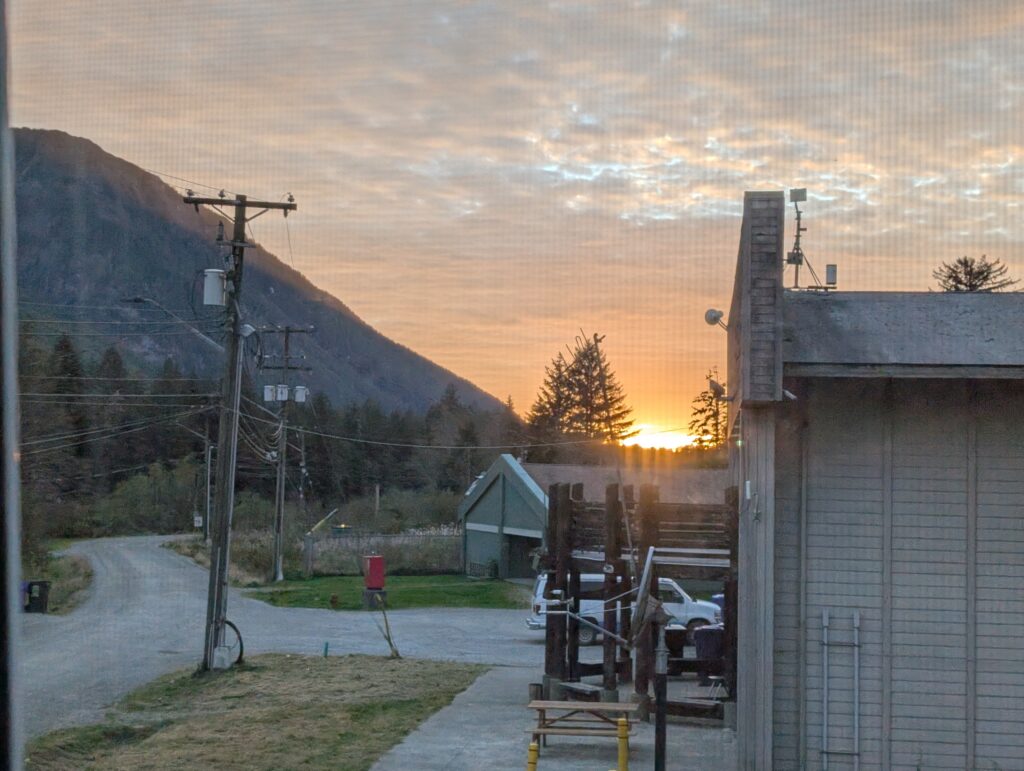
    On the brighter, more cloudless nights we catch the glimmer of the sunset at the western end of the village. We ignore all the urban paraphernalia in the foreground, and concentrate on the colours of the sunset in the background.


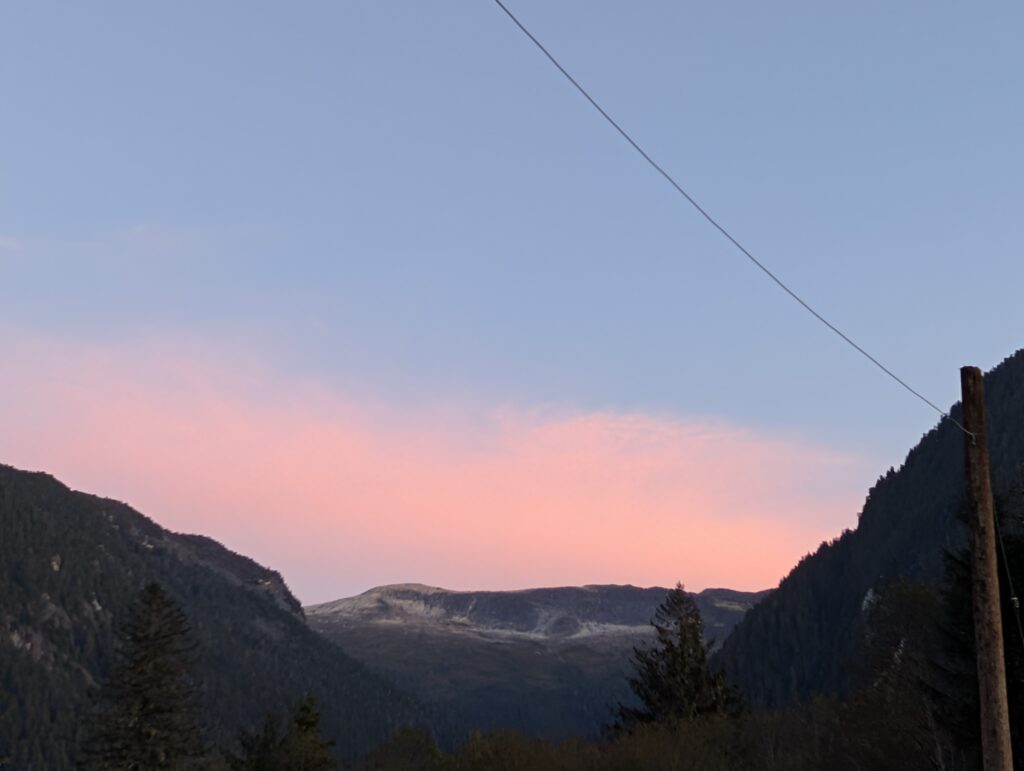
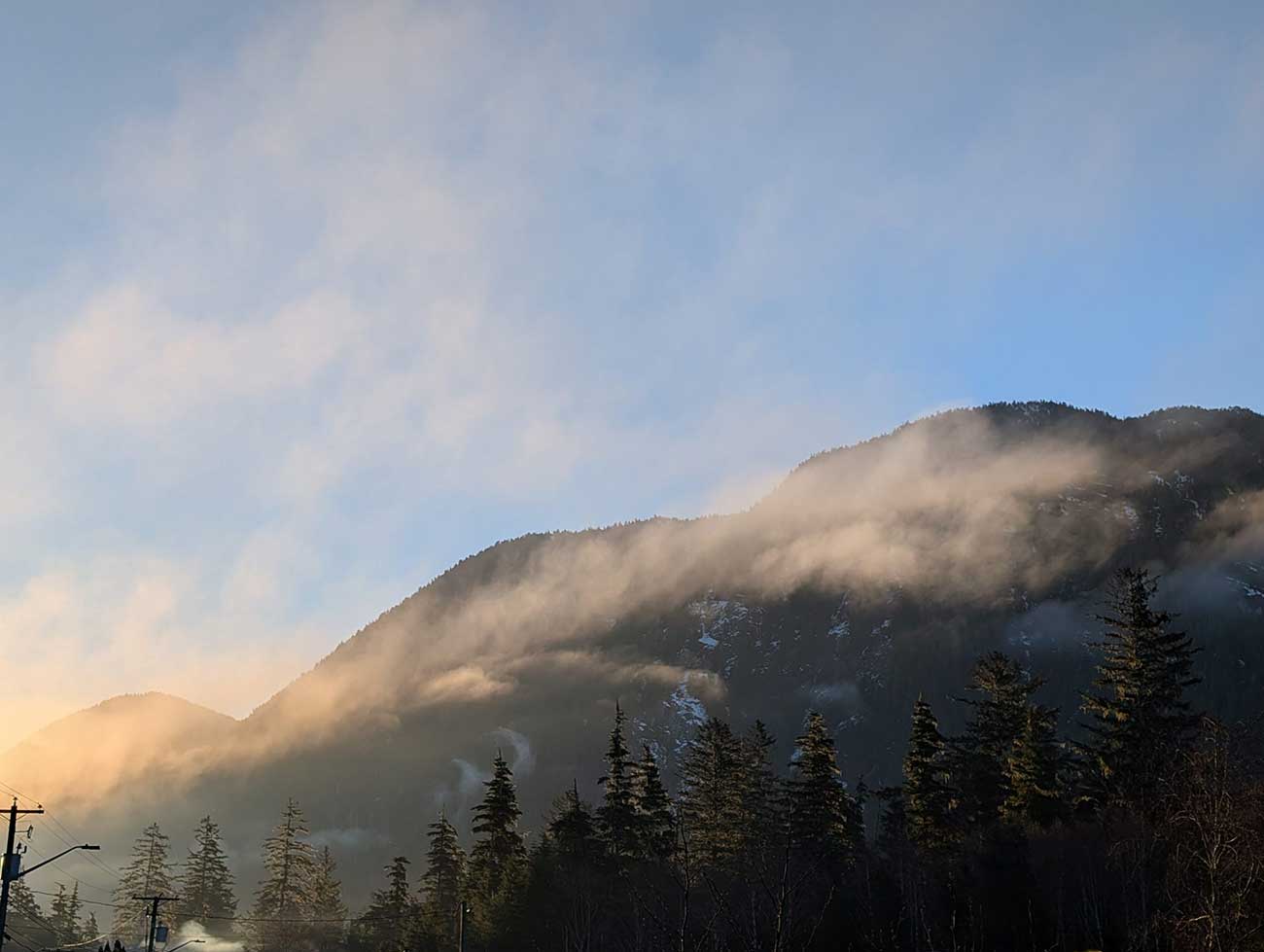
    On a clear evening, the mountain opposite our house catches the refracted light from the sunset.

    We enjoy it all.

    The bright skies, emphasised with a variety of different cloud formations – possibly cumulonimbus or stratonimbus on this day.


    The expressive overcast skies, often accompanied by drizzle or rain. We go out anyway.

    We especially enjoy the glorious, fleeting sunsets. We try to get to the government wharf on the weekend for sights like this.


    Our magnificent, ever-changing view from the house keeps us mesmerised when we don’t get out and about.


    Possibly, over the next couple of years, we’ll learn to recognise and name the various cloud formations, and the weather that they suggest.

  • Animal Shenanigans


    Who would have thought that the two pets – OrangePekoe the cat and Granville the dog -would provide so much amusement. Here we are, three months into a possible year or maybe two in this location, and we’ve been amused.

    Or not, as the case may be.


    There are three spots where we take the cat and dog – Owekeeno Lake at the east end of the village,

    the access (where small boats can be launched to get to the lake),

    and the government wharf, also called R.I.C (because it was the site of the Rivers Inlet Cannery decades ago).


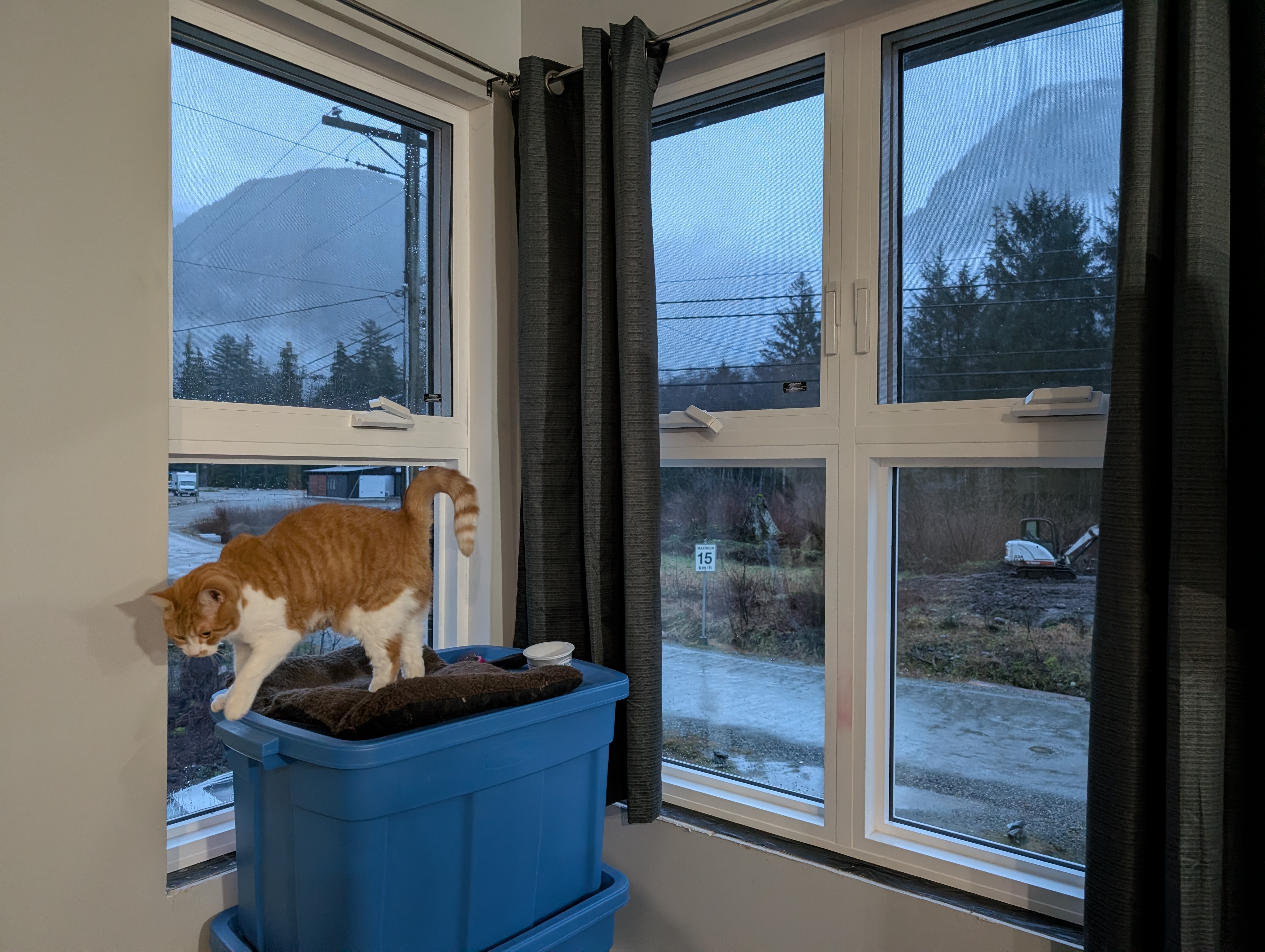
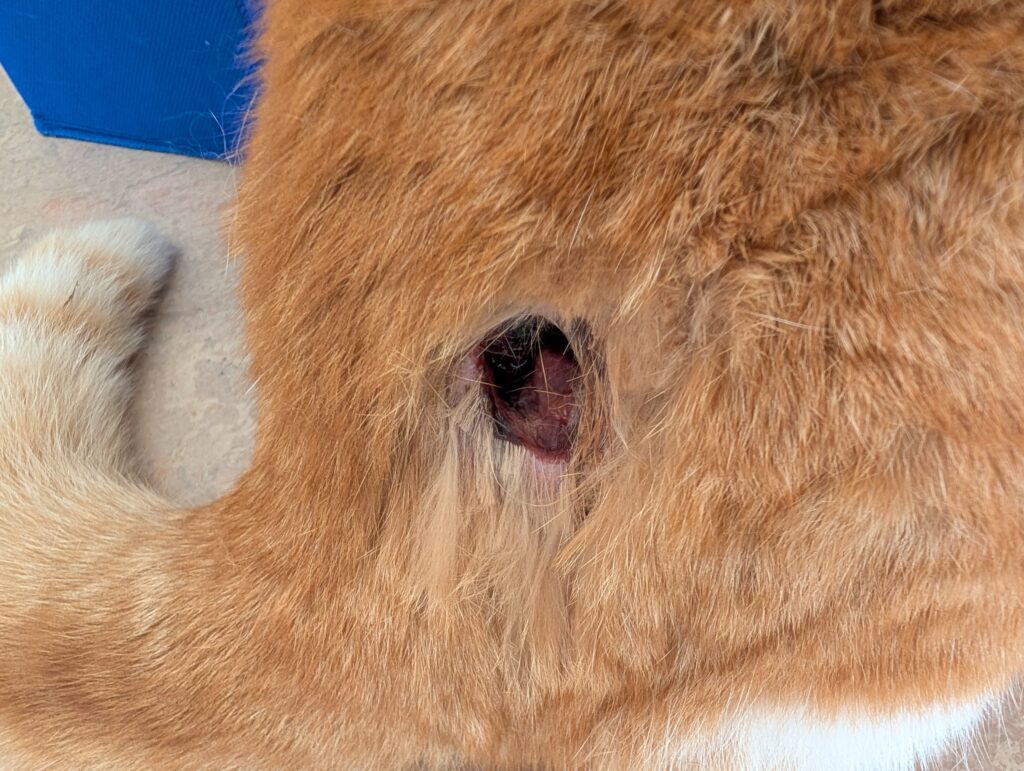
    The cat, formerly an outdoors cat, cannot leave the house because most of the dogs in the village torment and attack any cats. Orange Pekoe dislikes inside life, but she had an unfortunate encounter early during our stay in Wuikinuxv, and was chomped rather badly.

    She has healed well, with a permanently tender spot on her haunch. This does not cripple her. She leaps and bounds with the energy that she always had.

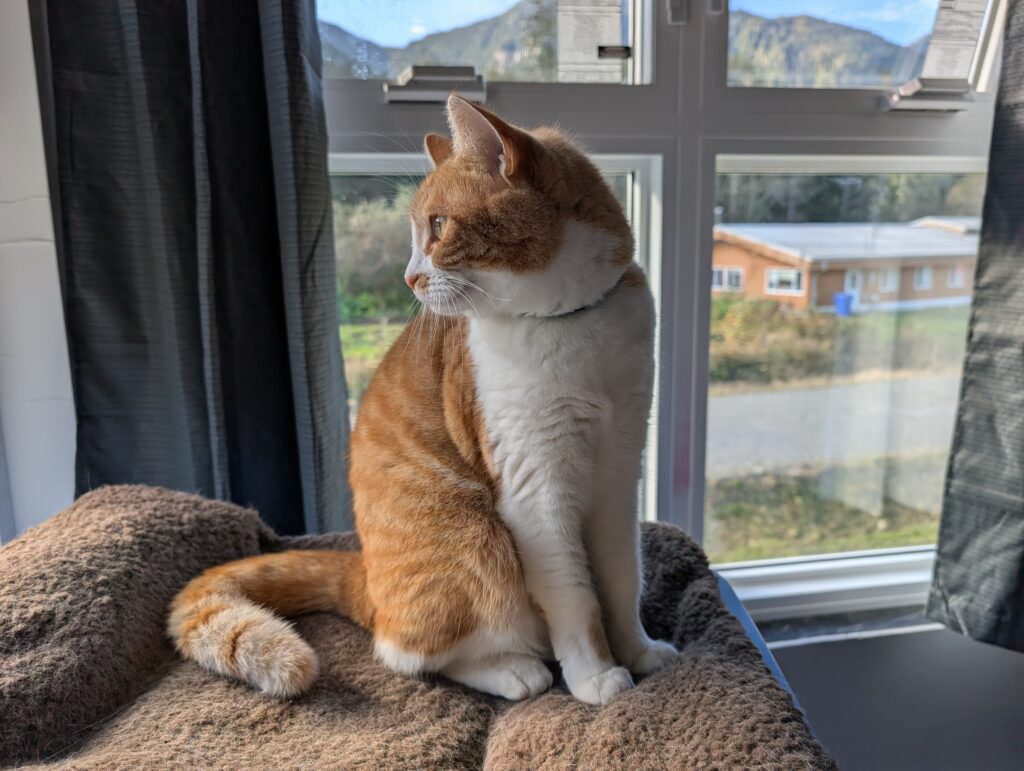
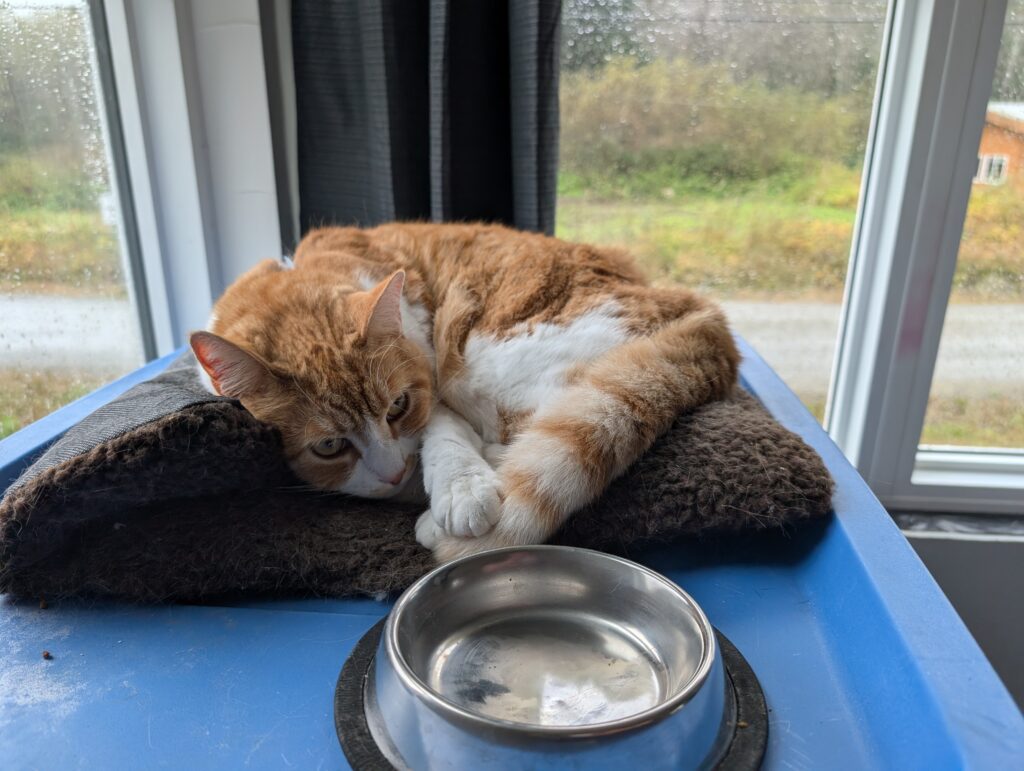
    She has a favourite spot – the corner viewpoint on top of two packing-crates. From there she looks out the front windows watching all the action in the road below.


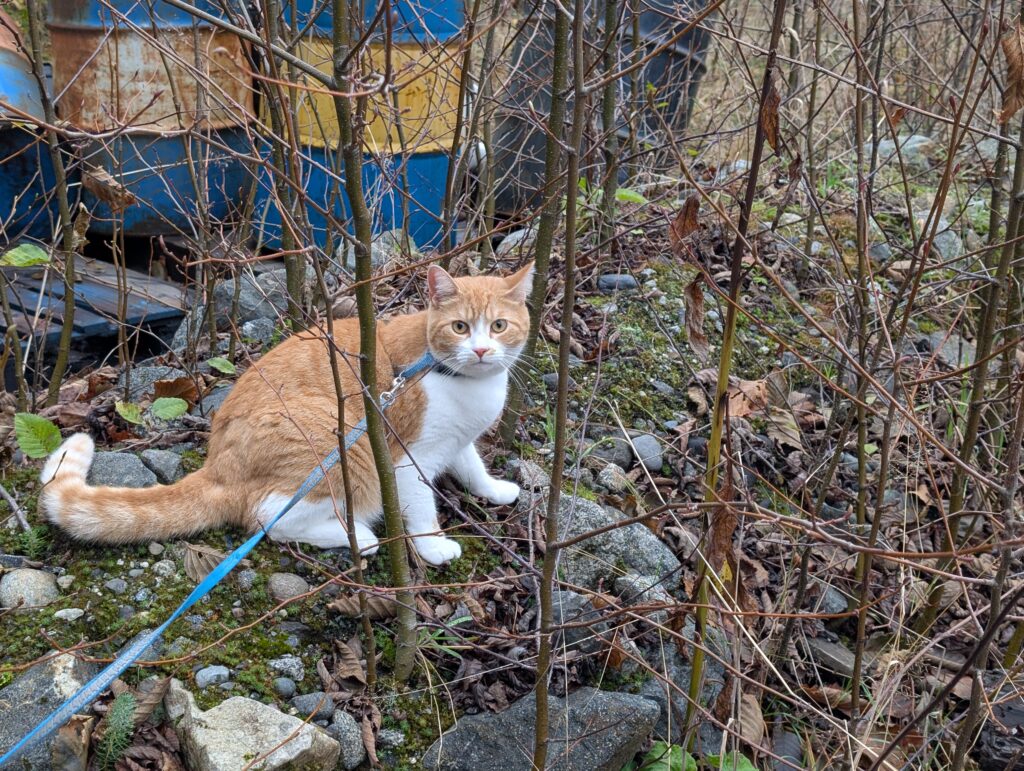
    Her curious and adventurous spirit is often on show when we take her for an outing. Log walking is a favourite activity, at the lake and at the access.


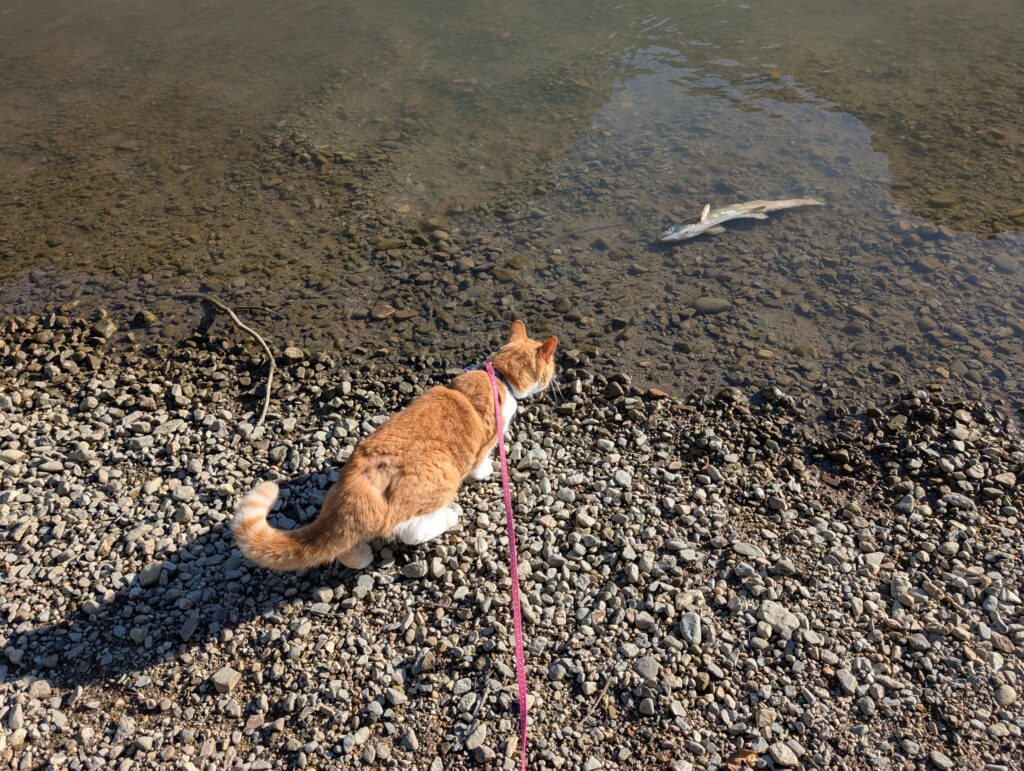
    Fish gazing is a favourite pastime, especially at the access, where the salmon that had spawned floated belly up.


    Walking along the fence or the curb is what she does at the wharf.


    She’ll often look over the side of the wharf, checking what’s on the next layer (usually crab shells left there by seagulls)


    We keep her on a leash, because she likes to run into the woods.

    Cats, for some reason, do not come when called. The leash keeps her attached to us.


    Dogs, on the other hand, do generally come when called. Granville runs around without a leash at the lake,

    the access,

    and R.I.C.

    Favourite activities include log walking,

    grappling with large sticks and small branches,

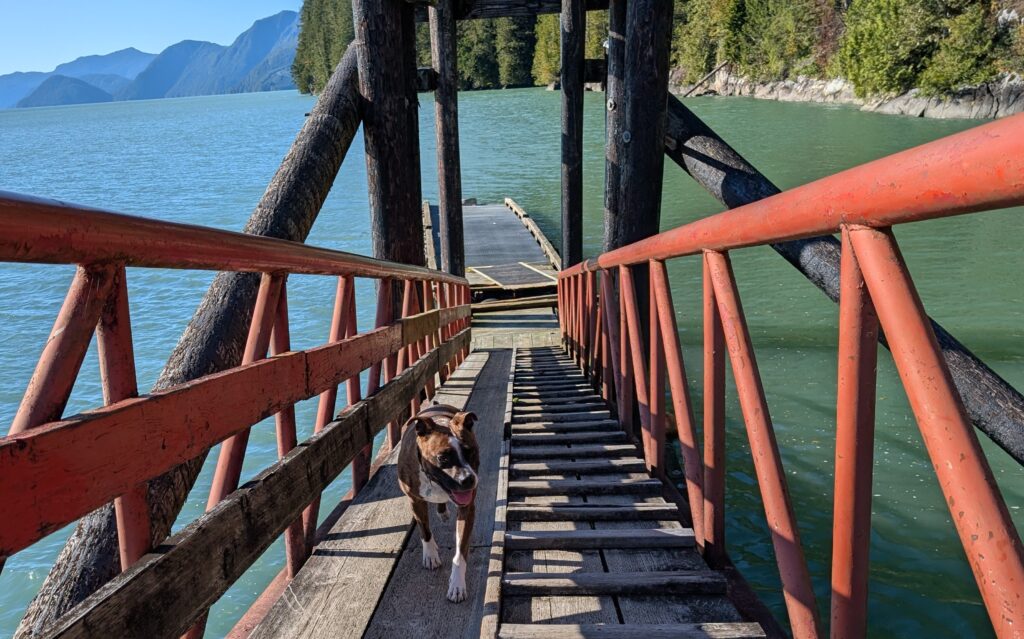
    climbing whatever she can scramble up, and wandering around on the dock checking what’s in the water.

    Nigel takes Granville to the wood-shop when he goes there to work on his projects. This is a favourite outing, we think, because she spends hours waiting for the resident squirrel to appear; one of the few times she is motionless.

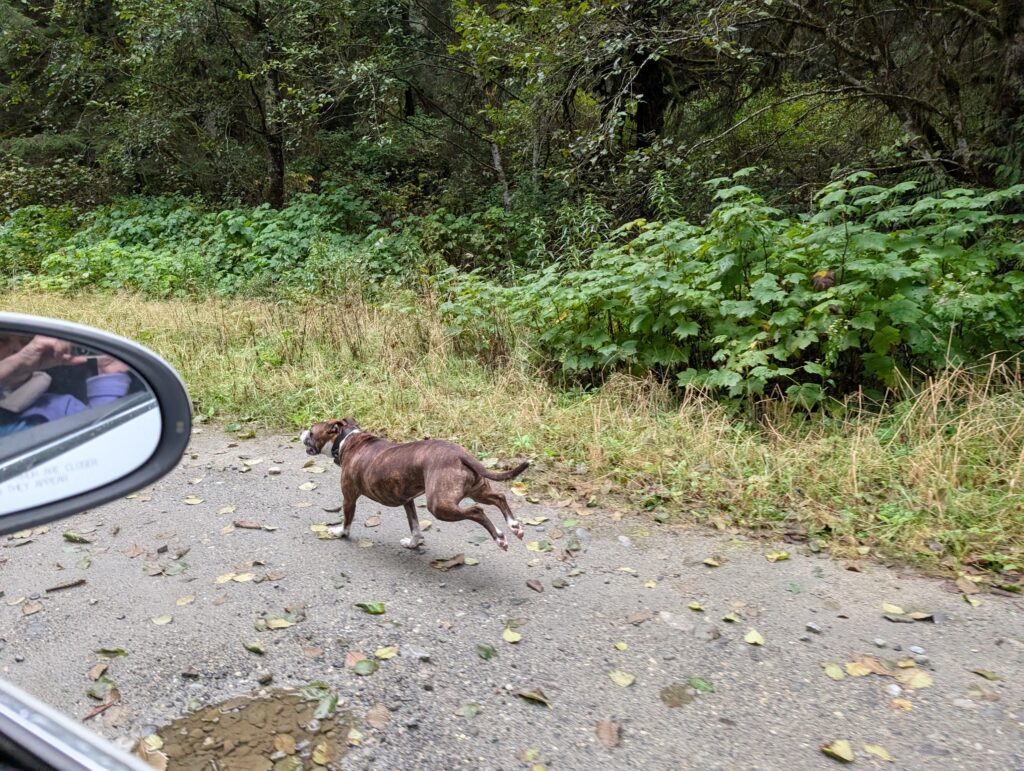
    Most of the time, Granville is in motion. A favourite for us, as well as her, is letting her run alongside the vehicle when we drive out towards the lake or R.I.C. There are no houses along these roads, so she does not distress people. This dog loves to run. She can move at speed for a couple of kilometres. Nigel has clocked her at 30 kph, but she lopes along comfortably at 20 kph. It’s quite impressive.

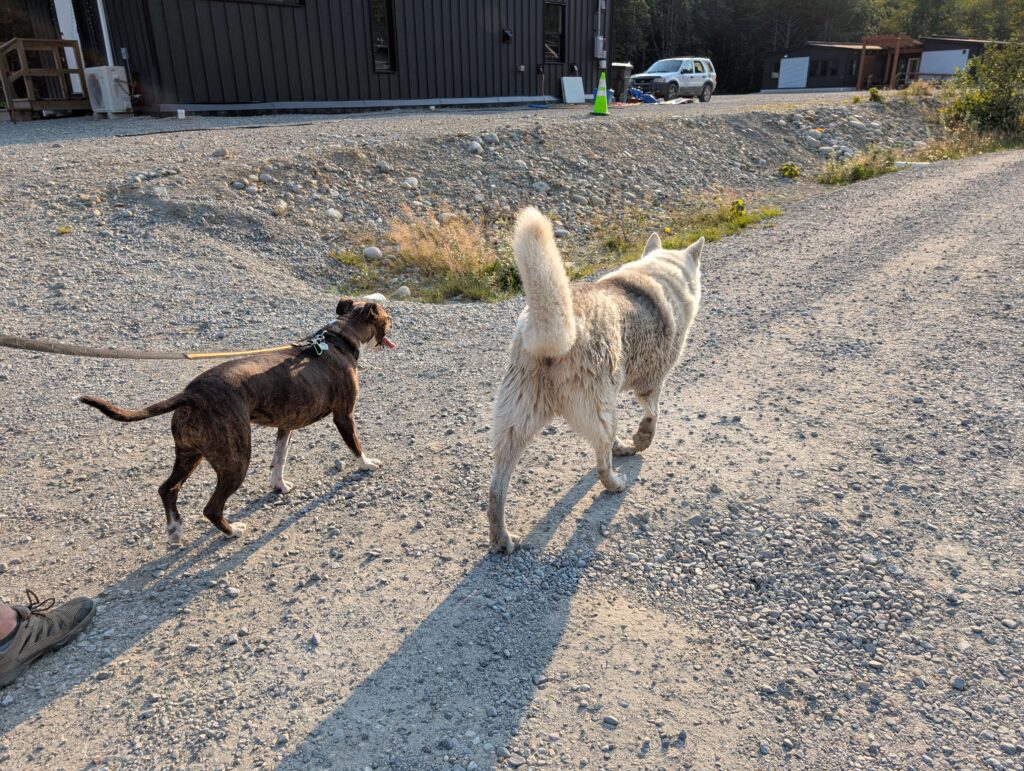
    Granville gets an occasional walk around the village. There are some very rough and snarky dogs in the neighbourhood, but she has made friends with the monarch of the glen. Tokyo is an old dog who seems to keep tabs on the village. He often joins Granville and us when we are walking along the road.


    Following OrangePekoe’s example of sedentary bliss,

    Granville curls up in a warm spot for a snooze after a bit of activity. Nothing compares to a snuggle in a corner of the couch.

    We two adults also enjoy our outings. Thanks to the animals, we get out fairly often. We meander around at the lake

    or R.I.C, accompanied by OrangePekoe and Granville.


    We’re very glad to have two accessible and very pretty places to go for a change of scene and where all of us can re-balance our minds while we stretch our legs.

  • Hallowe’en here


    Hallowe’en is a huge celebration across the country, and Wuikinuxv joins in with vigour.

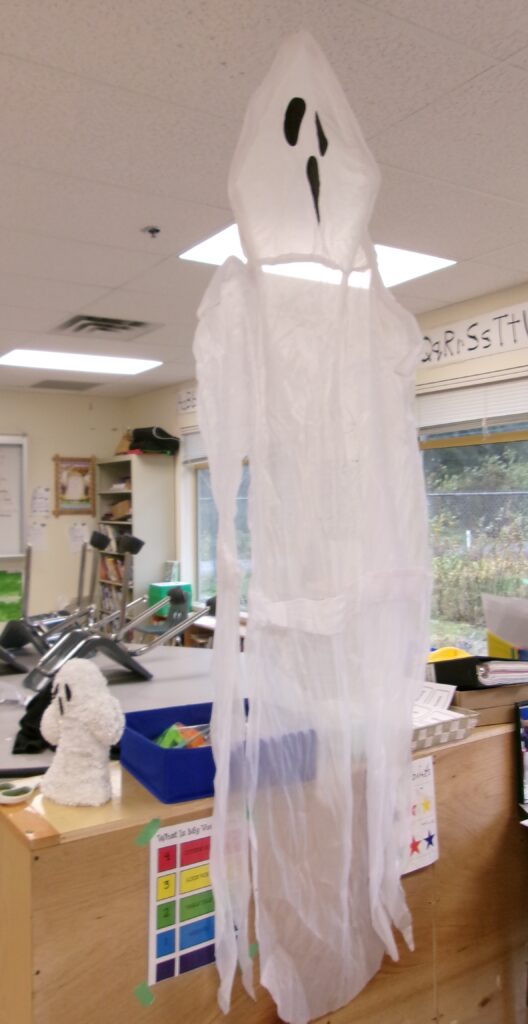
    At the school, the classroom was transformed with thematic decorations.

    KODAK Digital Still Camera

    Academic work was disrupted by bubbling excitement, so we worked at quasi-academic tasks that help the youngsters fine-tune their motor skills and eye-hand coordination … known as cutting and colouring in a simpler, pre-jargon-laden time.
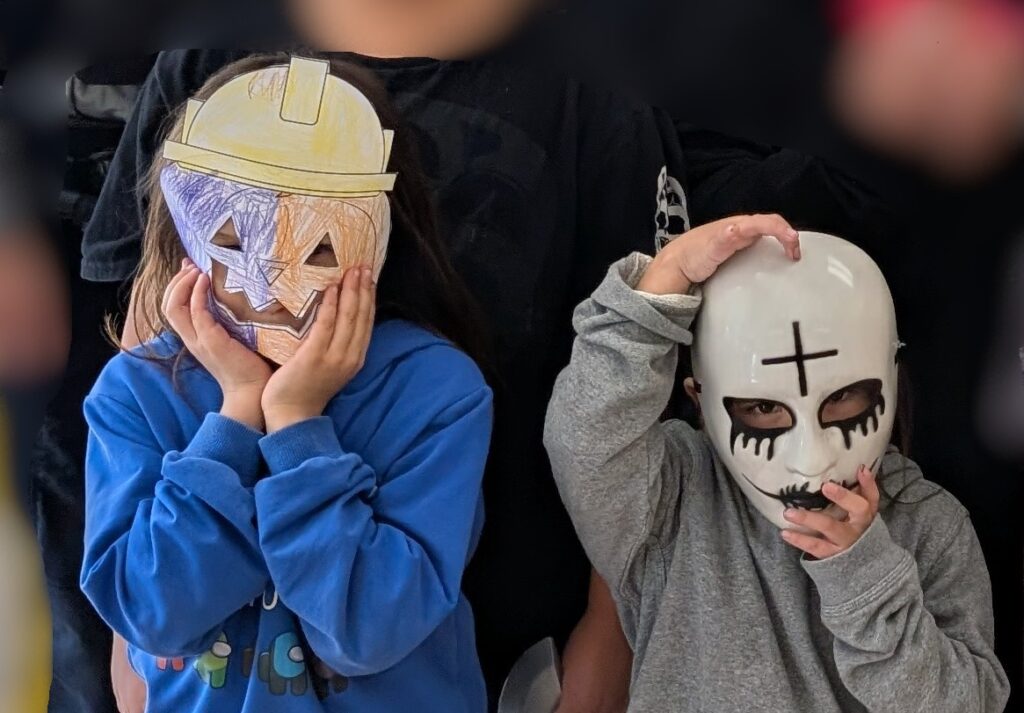
    Colouring included making masks, although the children also brought ready-made masks from home.


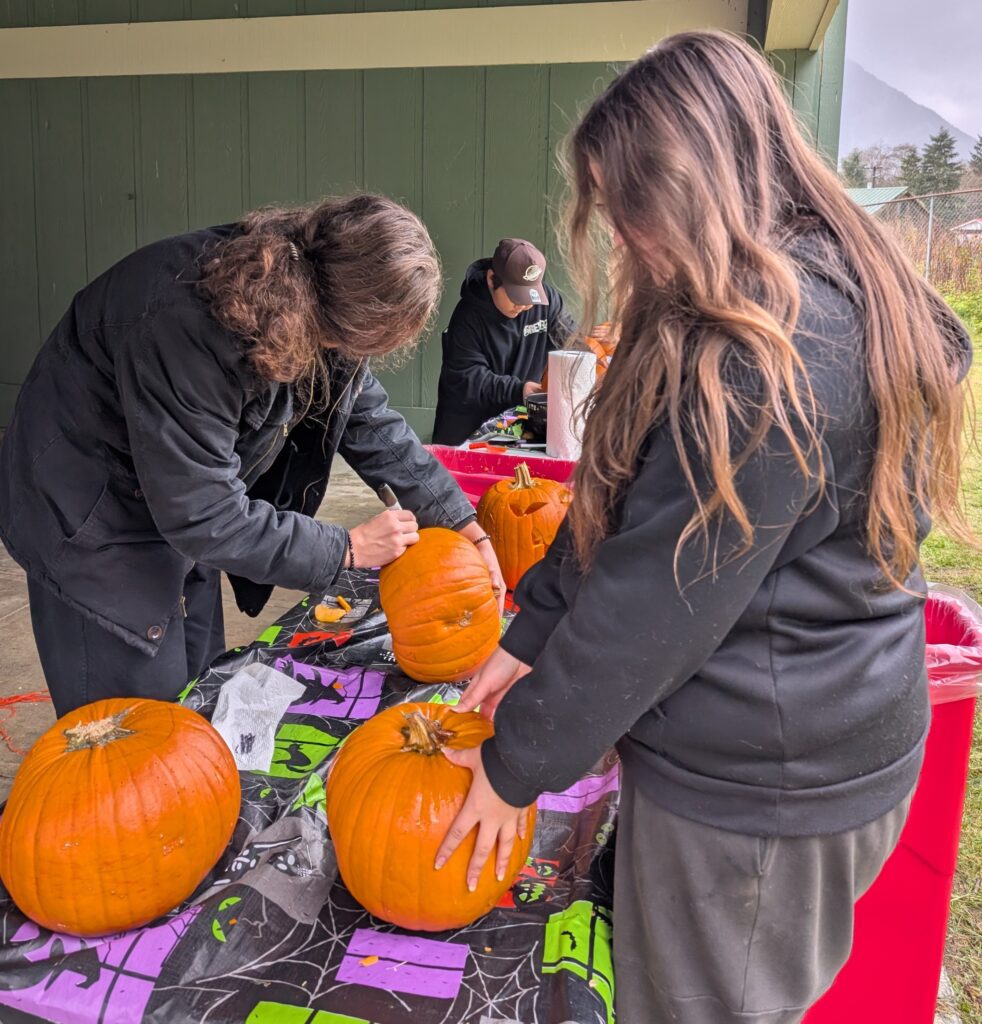
    Some of the cutting included pumpkin carving. Even the secondary students got involved with that activity.

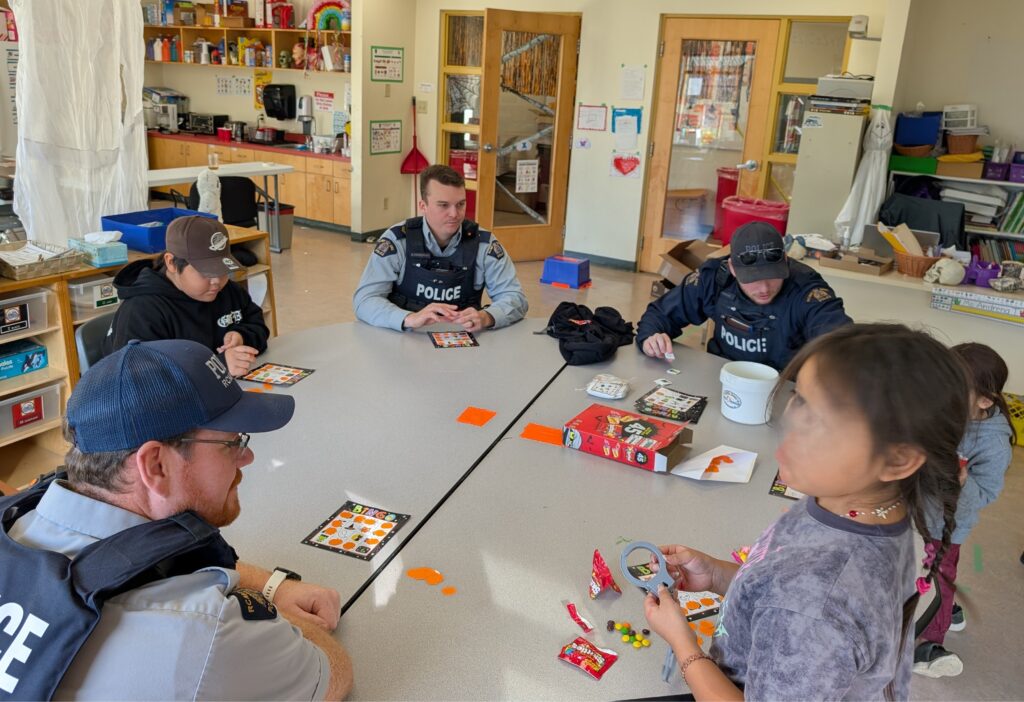
    The RCMP came for a visit the day before Hallowe’en. They joined in the fun, leading a Hallowe’en themed BINGO game. We like to include everyone in the fun activities.


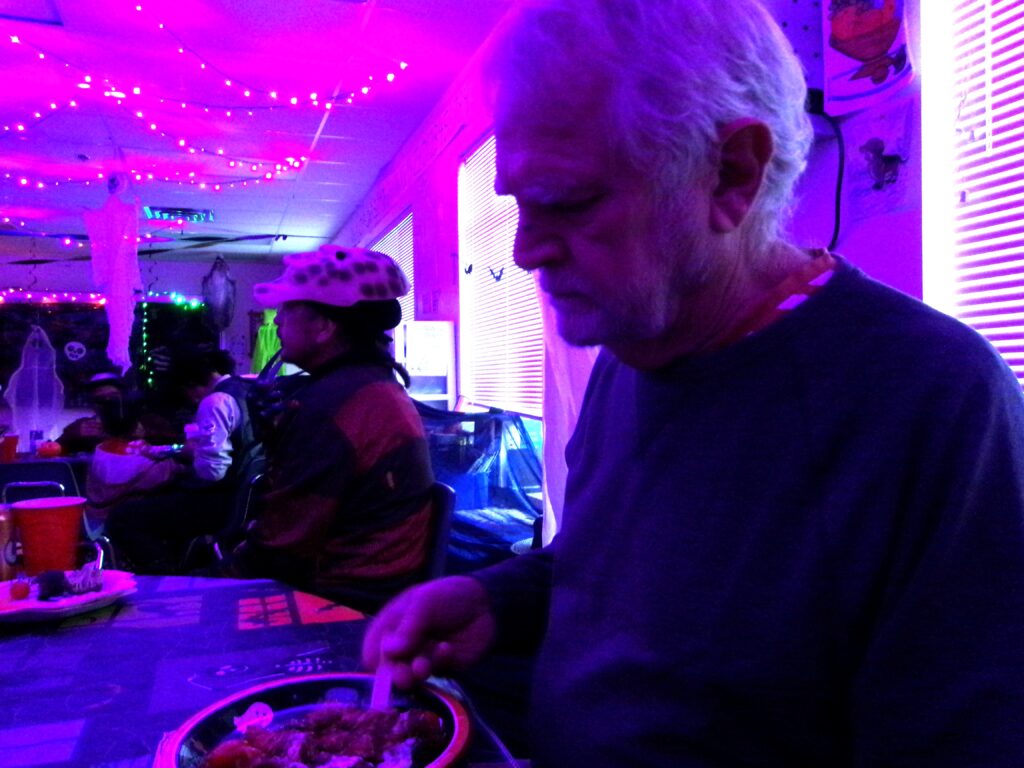
    On Hallowe’en itself, the elementary classroom was transformed into a dance hall and restaurant. Many people from the community came to join the fun – not just the parents and children, although they were there too.

    KODAK Digital Still Camera


    I had a rather stereotyped costume – a witch. It was what I could scrounge from extra items in the Hallowe’en boxes at the school.
    Nigel arrived a bit late, and was not prepared with a costume. That was quite acceptable, because several others , generally our ages, had no costume. He fit in, as he always does.

    KODAK Digital Still Camera


    We opened our house for Trick-or-Treating. No fancy decorations, just a welcoming door.

    KODAK Digital Still Camera


    Many costumed visitors stopped by – the nursery school children, the school children, and some of the secondary age children. Parents drove their children from house to house, from one end of the village to the other. There are still bears around the village. Better to drive the children than have injuries. The parade of cars added a bright sparkle along the road.

    KODAK Digital Still Camera


    Finally, all was quiet, and we relaxed watching a TV show. At about 21:30 we heard lots of crackling noise outside the windows. It heralded the beginning of the fireworks display. What a delightful surprise for us. We watched the display from our dining room window – in warmth and comfort.

    KODAK Digital Still Camera


    It was another wonderful week in Wuikinuxv. The highlight was the party at the school, with costumed neighbours, and plenty of tasty food to savour. We look forward to more thematic weeks during the year.

    KODAK Digital Still Camera
  • Lake Rescue

    Lake Rescue

    Nigel had been hankering to get up on Owikeno Lake. He wanted to get the lay of the water before venturing forth with his boat. His wood-work-shop pals have been planning to look for logs to process at the local mill. They have been foiled by weather.

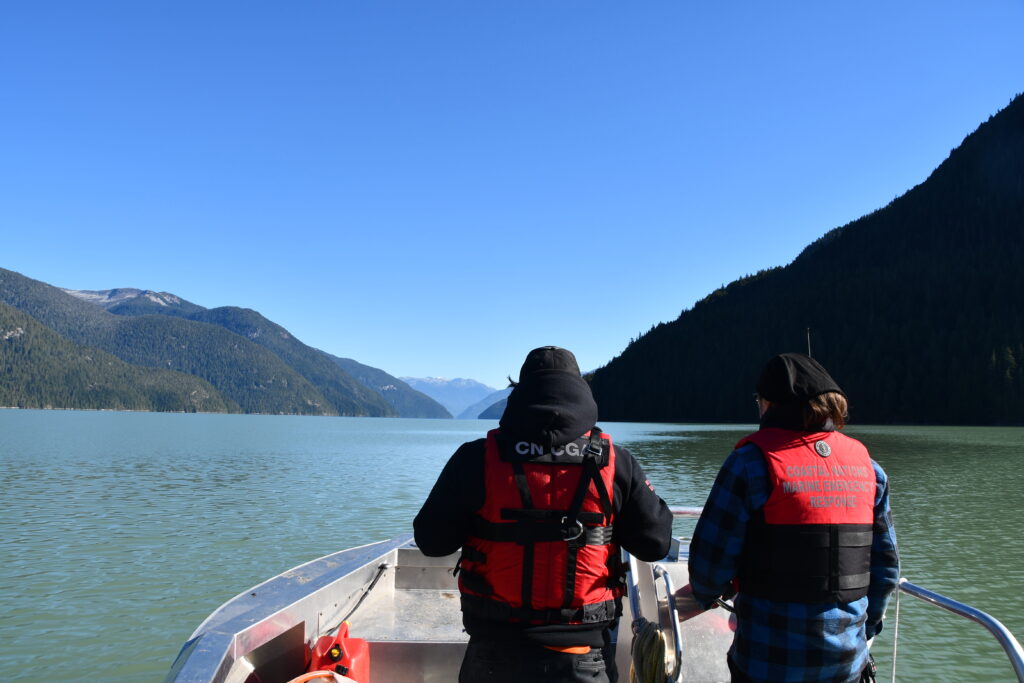
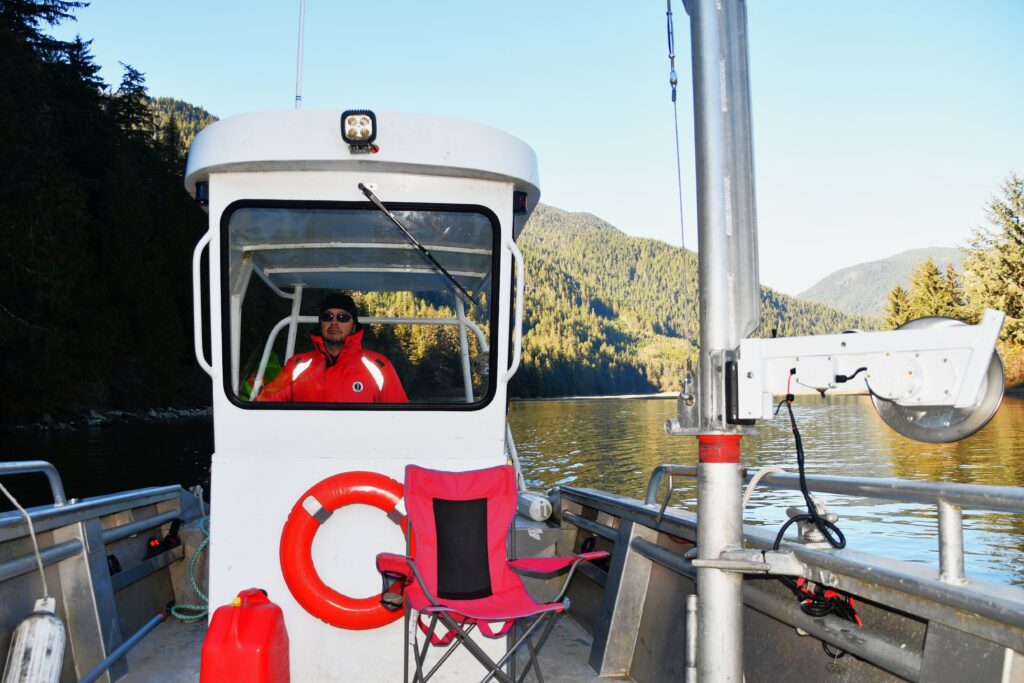
    Nigel was feeling rather despondent about ever getting up on the lake before winter made such a trip impossible. And then, on a fine day, there was a distress call from a federal Fisheries camp up on the lake. Some of the Fisheries employees had become grounded on a sandbar. Two men from the Search & Rescue group picked up Nigel, and they set off on a rescue mission.

    The seemingly simple start got a bit complex because the river access point was too low to launch the boat properly. The muddy shoreline prevented them from pushing their rescue boat further into the river.

    Fortunately the Wuikinuxv Fish Hatchery boat, which had been out working in the lake, arrived and the manager generously passed over his boat for the men to use.

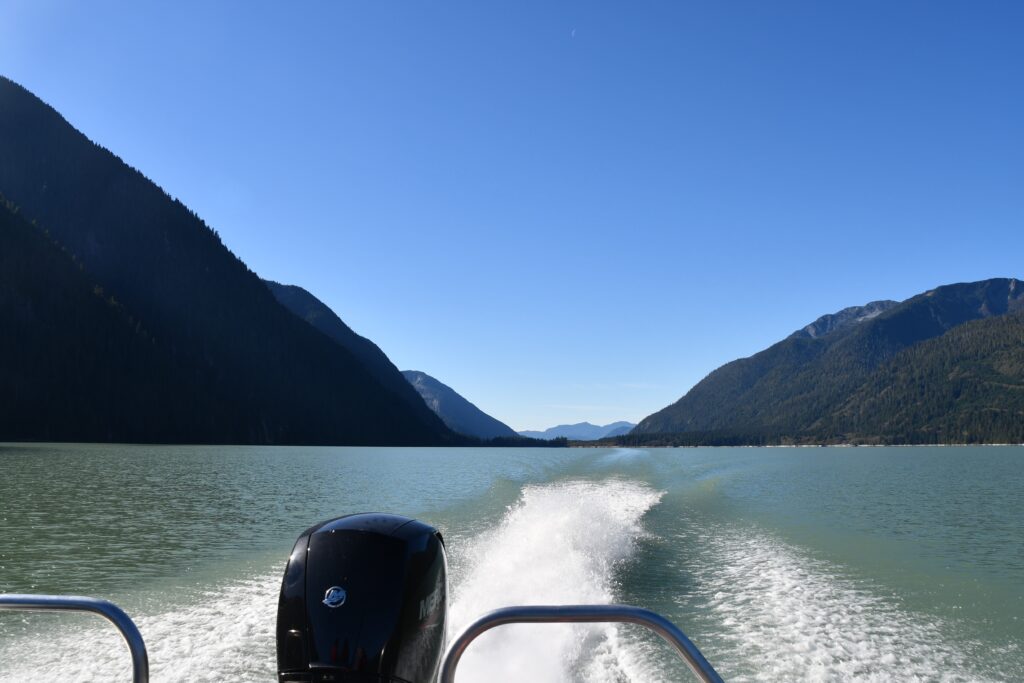
    The lake was calm – flat calm. The only ripples and wavelets were created by their 150 HP outboard jet-boat engine. It’s a powerful, propeller-less engine that can take the boat into shallow water without damaging the engine. Ideal for fish-hatchery work, but suitable for this rescue mission, which because of the sandbar in the equation, would likely need the men to work in shallow water.


    Because they are a water-based group, Search and Rescue in Wuikinuxv is a subsidiary of the Coast Guard. Nigel has experience with Ground Search and Rescue which works under the direction of the Royal Canadian Mounted Police. His groundwork background makes him a valuable volunteer here, but because of his different experience he needs some orientation to the way this group operates. He was invited along to be an extra hand, and to get a feel for how Search and Rescue works here. The two full members of Search and Rescue – William and Frank – were in charge.


    Nigel’s job was to keep his eyes peeled looking for debris in the water. He could almost relax long enough to take a few photographs of the beautiful scenery. One location has intrigued us since we first heard stories. There is a valley near Doos Creek with an angled hill on one side that is renown as a place where Sasquatch lives. Sasquatch is a large, hairy, human-ape-like creature that lives in the Pacific Northwest. Many residents have stories about encounters with Sasquatch in that area. There were no sightings on this trip.


    For a surveyor, a confluence is always a notable location. This spot is where the Neechenz and Machmell Rivers meet. The mountain in the background is likely Mt Somolenko, (2,658 m ) which is a mountain in the Ha-Iltzuk Icefield. It seems that this area has a permanent glacier covering. Coldly beautiful, and it explains the chilly wind from the east.


    The Fisheries camp, dwarfed by its mountains backdrop, is just around the bend in the lake near the river confluence. Everything is built on pillions in the water. It looks rustic, but it is well established, with accommodation for about a dozen people, a kitchen, a communal area, a large office-workshop, and four boathouses. There are many solar panels on the roof, and they have a diesel generator. All mod-cons, and apparently warm and comfortable.

    Logging operations in the area closed down about 30 years ago, but its residue remains. There are many logs floating in the water around the Fisheries camp. Huge logs. Imagine resting in the evening, after a hard day’s work, and looking out at this view. A beautiful and iconic Northwest coast view.

    The men collected a boat from the Fisheries camp because they knew they had to pick up a group of people. The Fish Hatchery boat was too small to carry eight or nine people safely.

    The Fisheries boat had a more shallow draft. William and Nigel waited at the narrows near the Sheemahant River while Frank went ahead past the next narrows to collect the marooned Fisheries employees.


    They whiled away the time looking for logs to possibly retrieve for their woodworking projects. William’s comment was “We’ll never run out of cut logs here.” Apparently not. The shorelines all along the lake were replete with logs.

    Soon enough Frank returned with a half-dozen relieved persons in the Fisheries boat. When you are driving boats with powerful engines, one of the joys is going fast. Because it was getting late in the afternoon, the men had every reason to zoom quickly down the river, back to the Fisheries camp.


    The Fisheries employees and the camp boat were deposited at their camp. The plan was for the Fisheries people to go back up the lake to get their stranded (and anchored) boat after the next big rain when the water level would be higher. The Search and Rescue mission had been successful. Time to head back down the Owikeno Lake to the village. No relaxing yet – Nigel was needed as look-out for floating debris. There were plenty of floating logs, a danger to their boat.

    The wind came up, the water started to get choppy. By the time they were part way back along the lake, the water was very choppy, and the men concentrated on safely getting back to the boat access in the river.

    It wasn’t quite the way in which Nigel thought he’d explore Lake Owikeno, but it certainly gave him a substantial perspective about what to expect when he starts taking his boat up to the lake. Plus, it gave him a decent introduction to the type of Search and Rescue work he will be involved with here after he completes his orientation and training.


    This expedition was an example of how the various groups work cooperatively in small, remote communities across Canada. When Search and Rescue needed a fast boat, the Fish Hatchery immediately passed over the keys, and assured the men that there was plenty of fuel. The Fisheries camp made their second boat available without pause. Before the Search and Rescue team set off for home Fisheries filled fuel enough for the return trip. All the parts pulled together to ensure a successful and happy end to an emergency situation.

  • Settling in, Developing Skills

    Settling in, Developing Skills


    After a couple of months here, Nigel has slotted in like a hand in a glove. He takes Granville for a walk along the road daily. He chats with many people during those walks. I guess you could say that he is becoming a bit of a fixture.


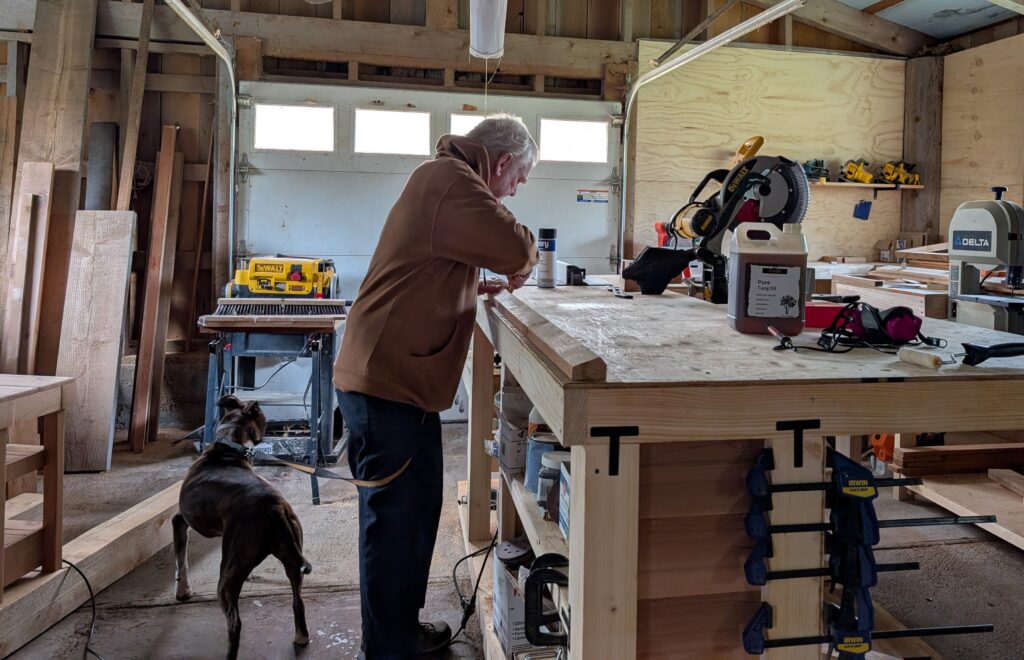
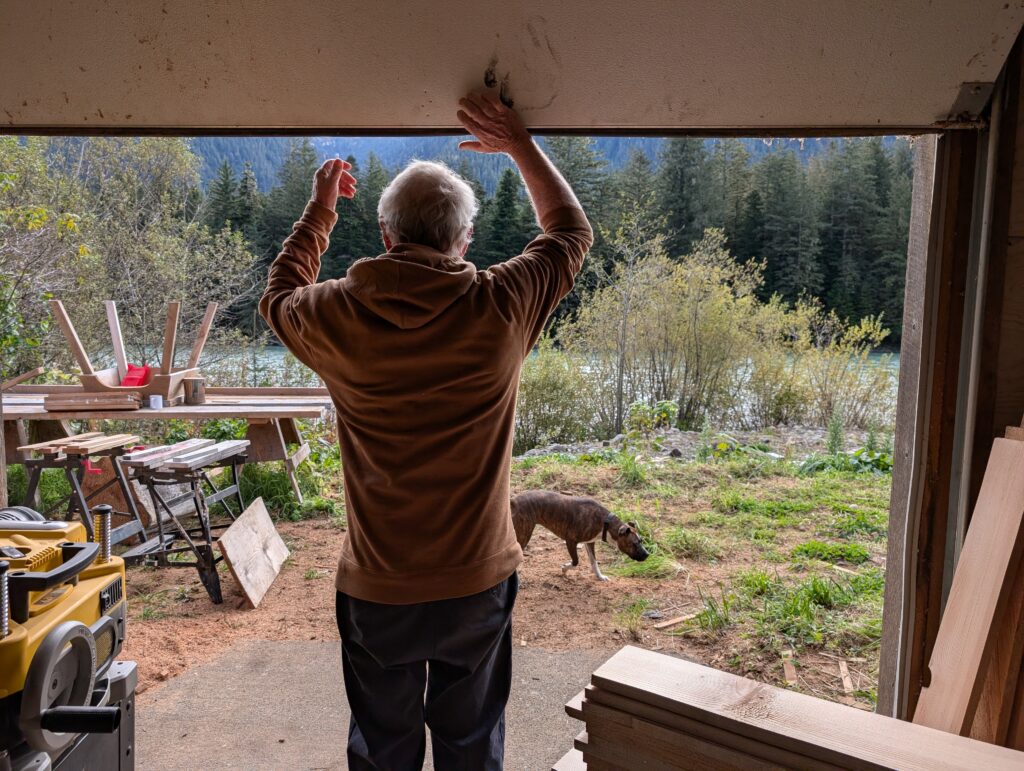
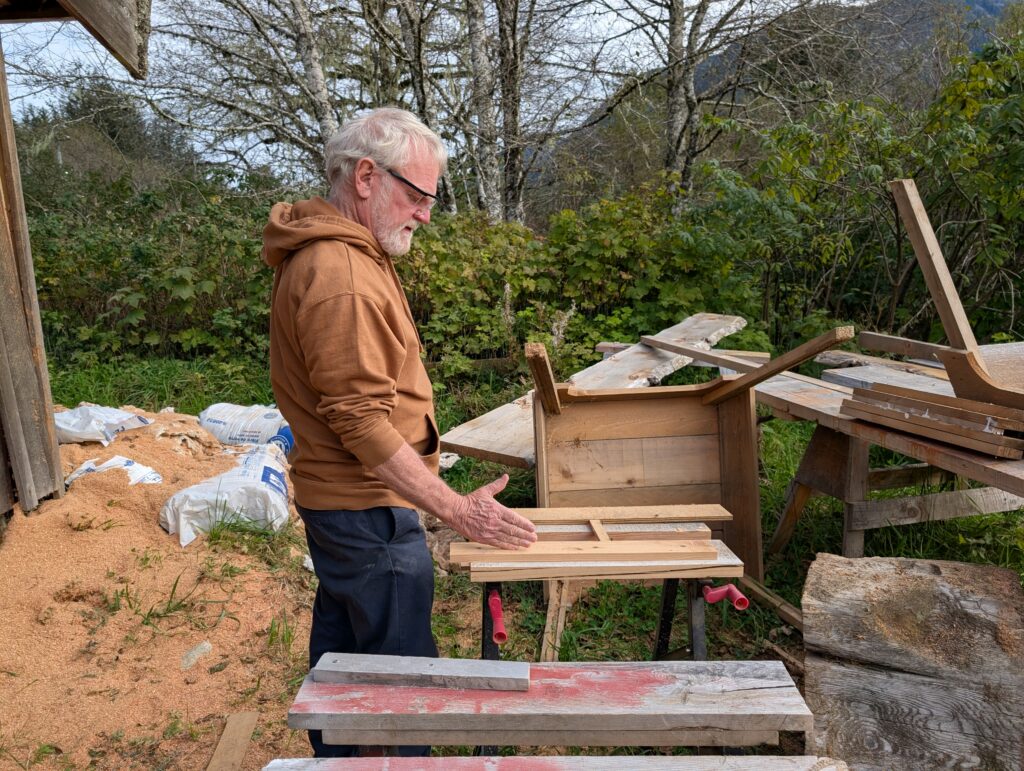
    On some of those walks his destination is the wood-working shed where he has been working on crafting a table. He is not working at great speed because there are other tasks around the shed that needed attention.


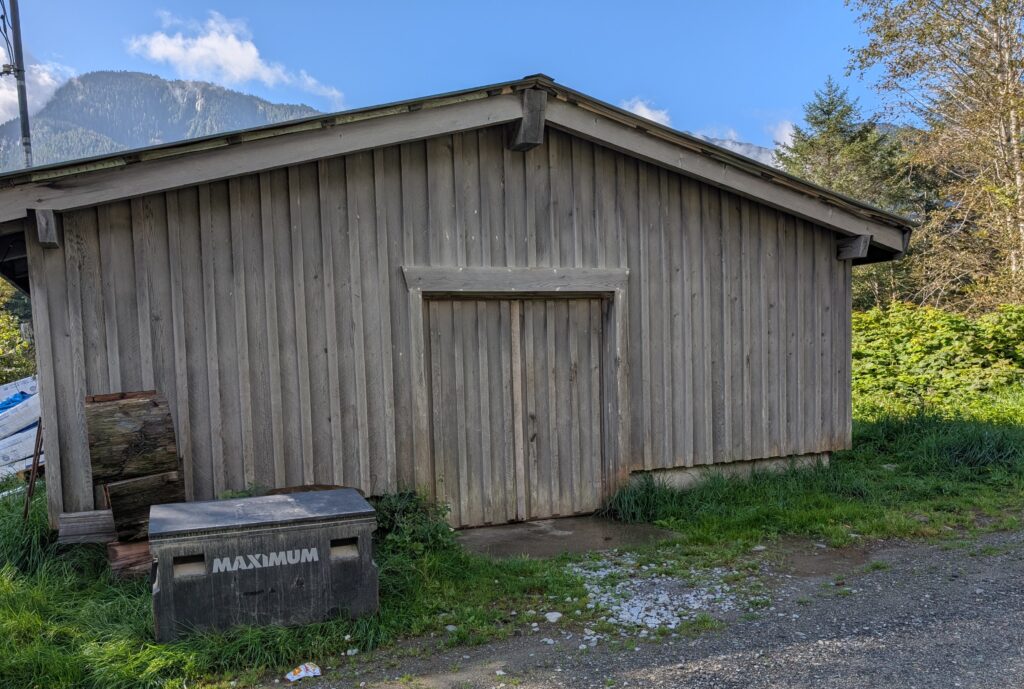
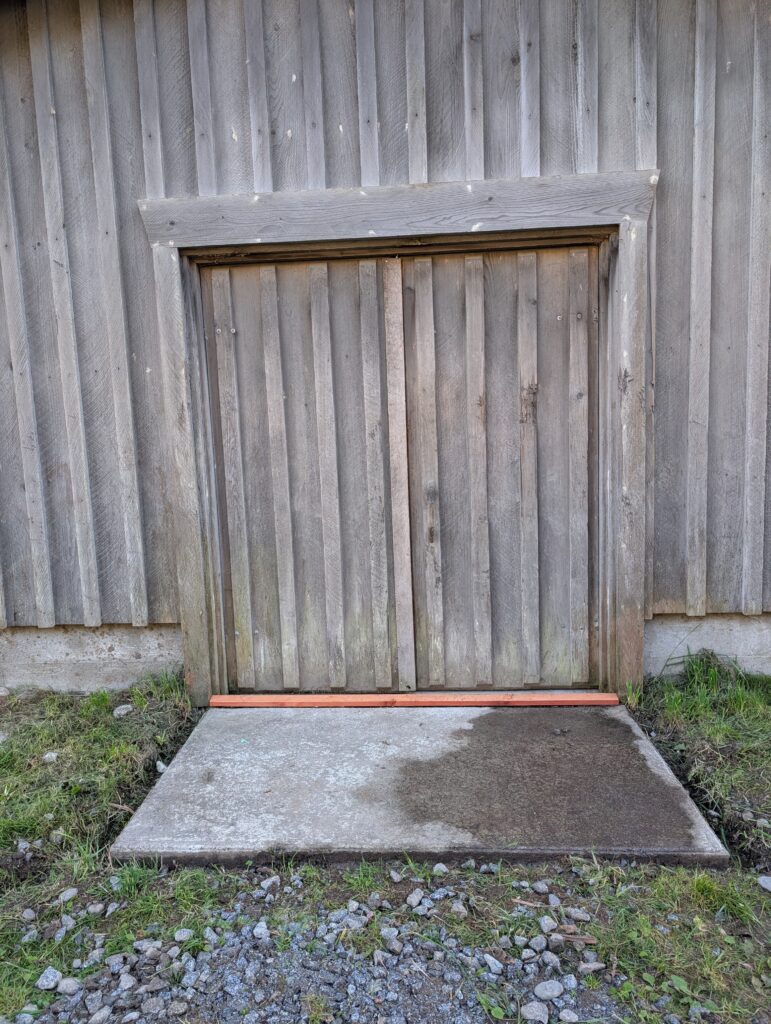
    When it rained, the water leaked in under a gap at the door.

    This is not good when there is plenty of electrical equipment in use, with their power cords lying on the floor.

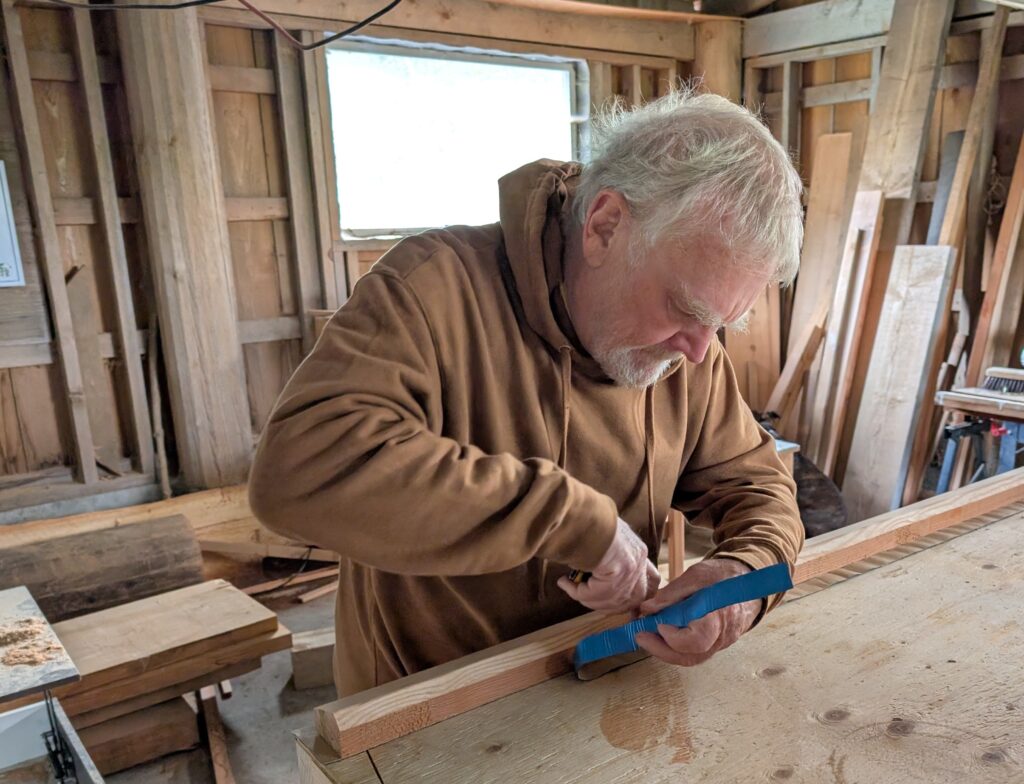
    To alleviate the situation, Nigel fashioned a length of wood into a water-dam.

    Using some blue-skin, which is a rubbery, sticky adhesive that helps hold things in place and makes a really good seal against water, he fashioned a way to secure the wood at the door. This required careful and precise measuring. Surveyors can measure with accuracy. It seems that it’s a transferrable skill.

    A blue-skin spray-on adhesive on the concrete made that surface tacky enough to secure a strip of fabric blue-skin to which he attached the length of wood.

    It worked. At the next rain storm, the water did not leak under the door. It has remained water-tight since. The workshop has a dry floor, making it a safer place to work.

    To ensure the water drained away from the door, Nigel and his buddy, William, dug a channel around the concrete slab at the entrance to the wood-working shed diverting the water to the sides of the building.

    There’s more. Nigel borrowed a whipper-snipper from the ground-keepers and cleared the long grass from around the wood-working shed. It makes the front look neater, and a more receptive place to visit.

    On a roll, he and William cleared the back of the wood-working shed, making it into a more enticing, neater place to work outside.

    That’s where they sand the wood. It’s a creative spot, with the view towards the river.

    On a grassy ledge just below the workshop there is a roughly styled fire pit.

    The back of the wood-working shed is beginning to look like a relaxation and inspiration oasis while definitely remaining a work area- a necessary combination when creating artistic and precision work.

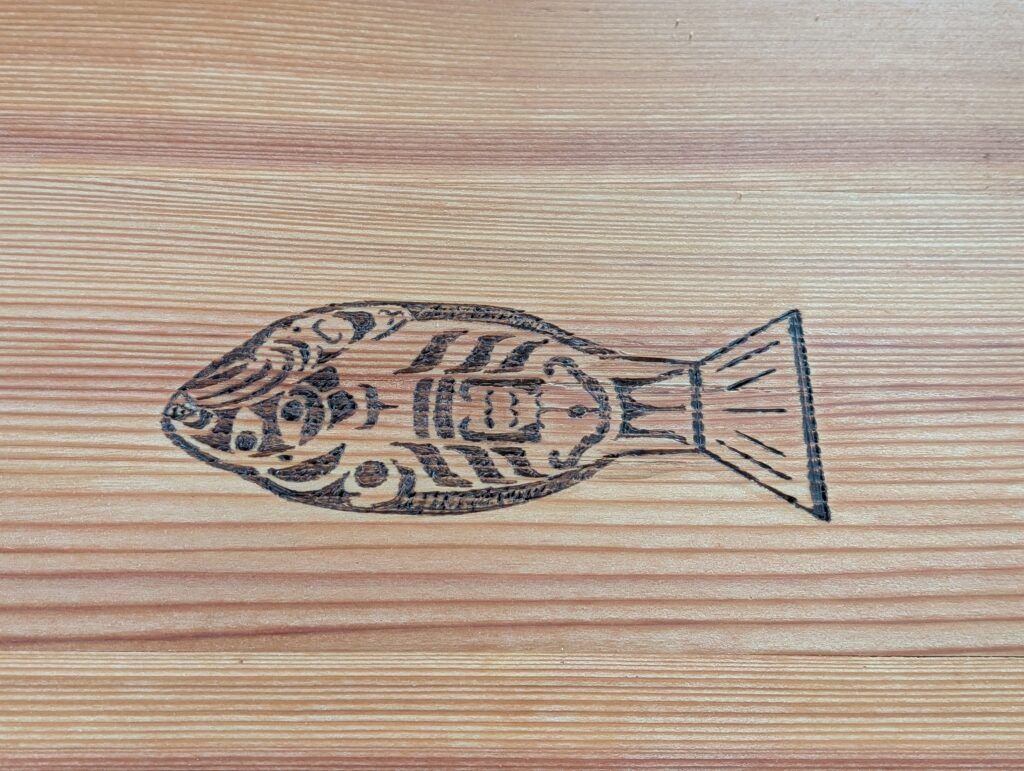
    Both Nigel and William are working on projects,. William has several commissions for furniture, which he decorates with wood-burned etches of flora and fauna typical of the Great Bear Rainforest where we live.

    Nigel is working on furniture for us. At the moment he is making a small table.

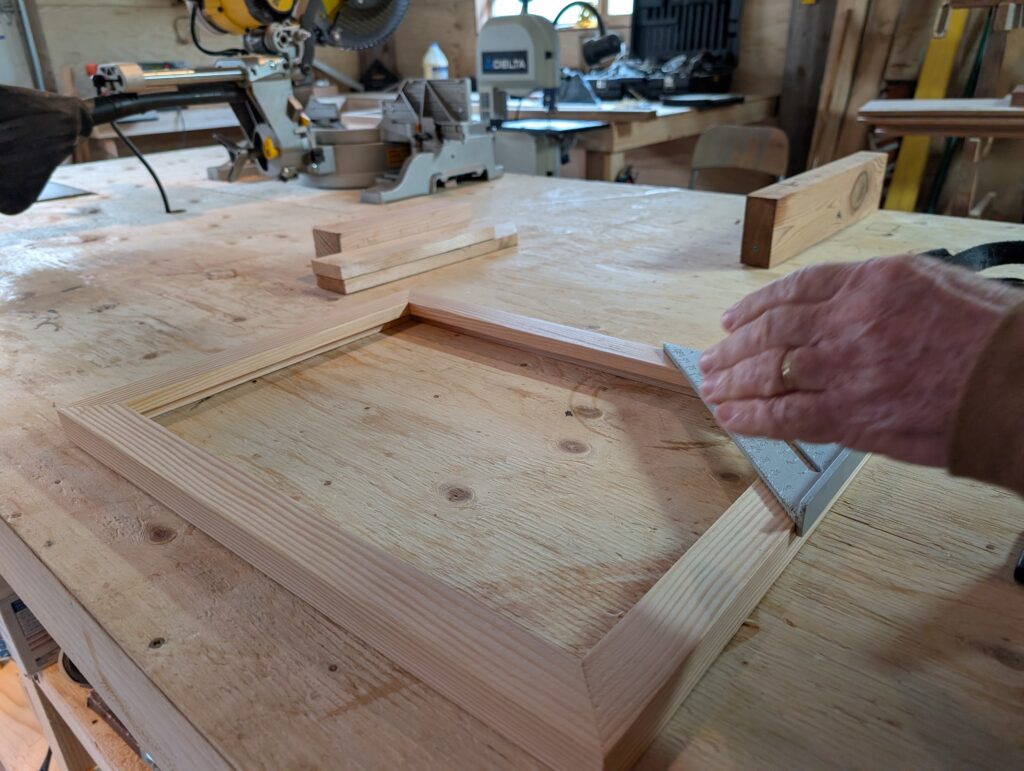
    A small commission for a picture frame came his way. Perhaps there will be more commissions and our framing shingle will hang again.

    He and William will work together on various projects from time to time. They are working on a gate requested by the day-care centre. Nigel has been working on the slats.

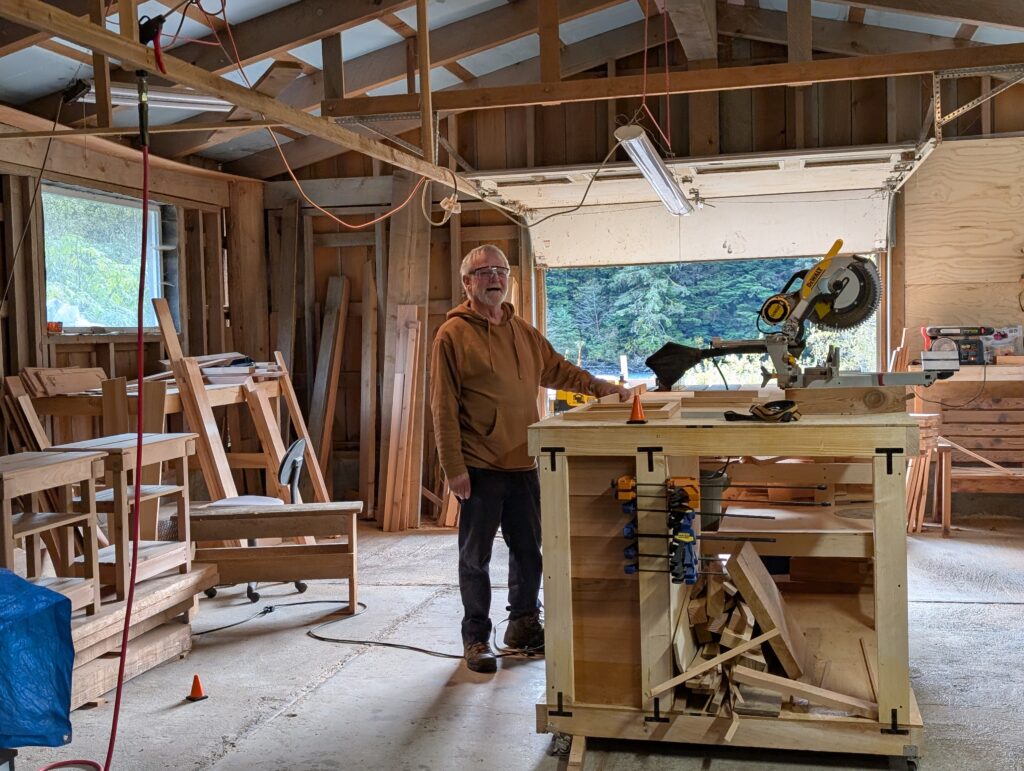
    Together, they are rationalising their workplace. The inside is getting neater as the two men make sense of how the place can work effectively and efficiently. A couple of others have expressed interest in joining the two of them. Slowly, slowly a wood artisan workshop will develop here.

    As Nigel settles in to daily life in Wuikinuxv, he is having fun, making pals, and he will come away with a new skill. All ’round excellent start I’d say.

  • Getting to Wuikinuxv

    Getting to Wuikinuxv

    Flight: expected date 16 August. After a flight delay of a day plus several hours, the mist and rain lifted enough for the  Grumman Goose, an amphibious plane, to fly us to Wuikinuxv on 17 August.

    Us was OrangePekoe the cat, one of my soon-to-be neighbours, and me. The plane was chock-a-block with cargo which is where OrangePekoe was stowed. We humans sat in the first two passenger seats behind the pilot.


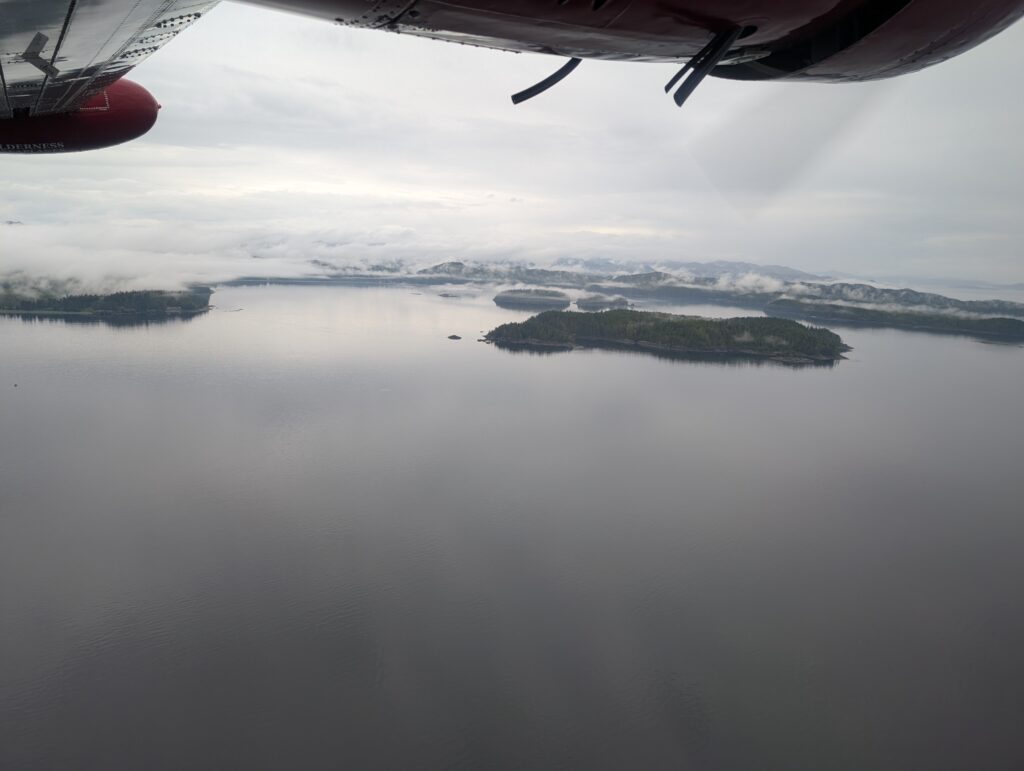
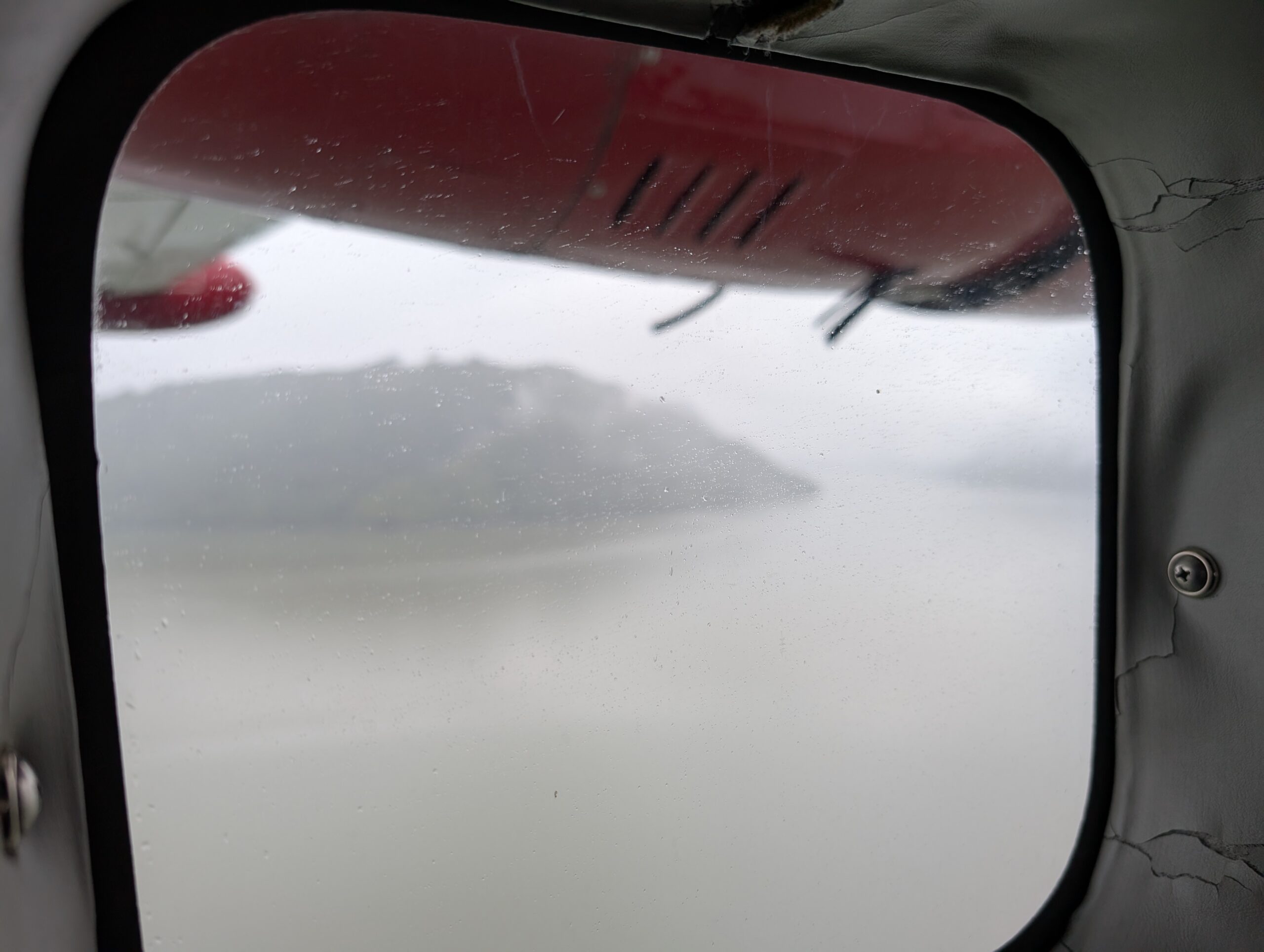
    The mist hovered beneath and just above the plane, but there were enough openings that I caught glimpses of the coastline. It’s a coast riddled with fjords, sotted with islands, and lined with steep walls of evergreen trees (Sitka spruce, Douglas pine, Cedar).


    Below us was boggy land, peppered with marshy lakes, often defined with logging roads. Logging is a major industry in British Columbia. The logs are huge; often diameters exceed my arm width, so at least a meter wide, and more often a couple of meters wide or more. It’s mind-boggling to my East-coast mindset, where trees seem to be much smaller in diameter.


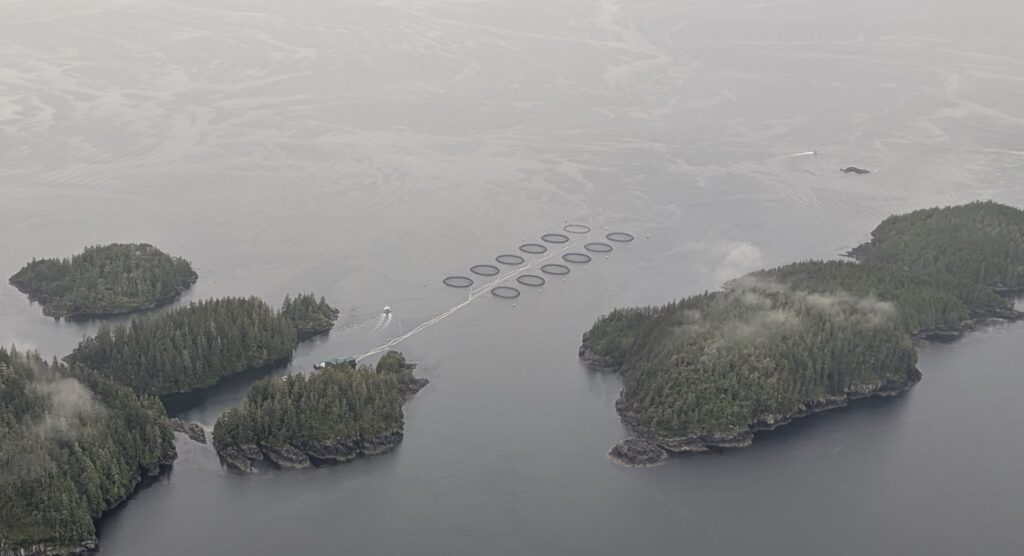
    Large fish farms are located just off-shore, in the ocean water. They are salmon farms, growing Coho and Chinook salmon for the domestic and international markets. I’m told that the fish farms in the fresh water areas cultivate Trout. This farm, with a dozen pens, was in the ocean


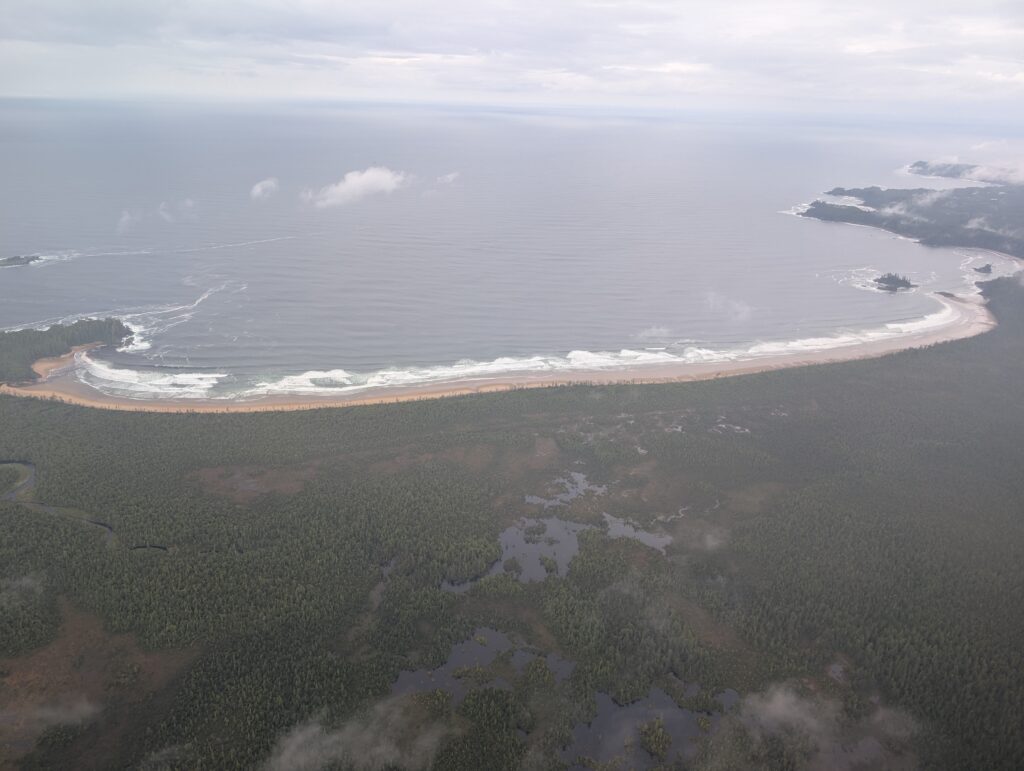
    About half-way to where Rivers Inlet spills into the Pacific Ocean there is a wide crescent-shaped bay facing Queen Charlotte Strait. This is Ugwiwa’/Cape Caution Conservancy, a BC Parks location. Excellent, but unpredictable waves break on a very long, sandy, and isolated beach that defines the land-side of this bay. Today the ocean was calm but there was noticeable surf along the 5 kilometre length of the beach. Both surfing and kayaking are promoted as Ugwiwa’ Bay activities. I rather suspect that these can be considered extreme sports considering the lively sea conditions in this area.


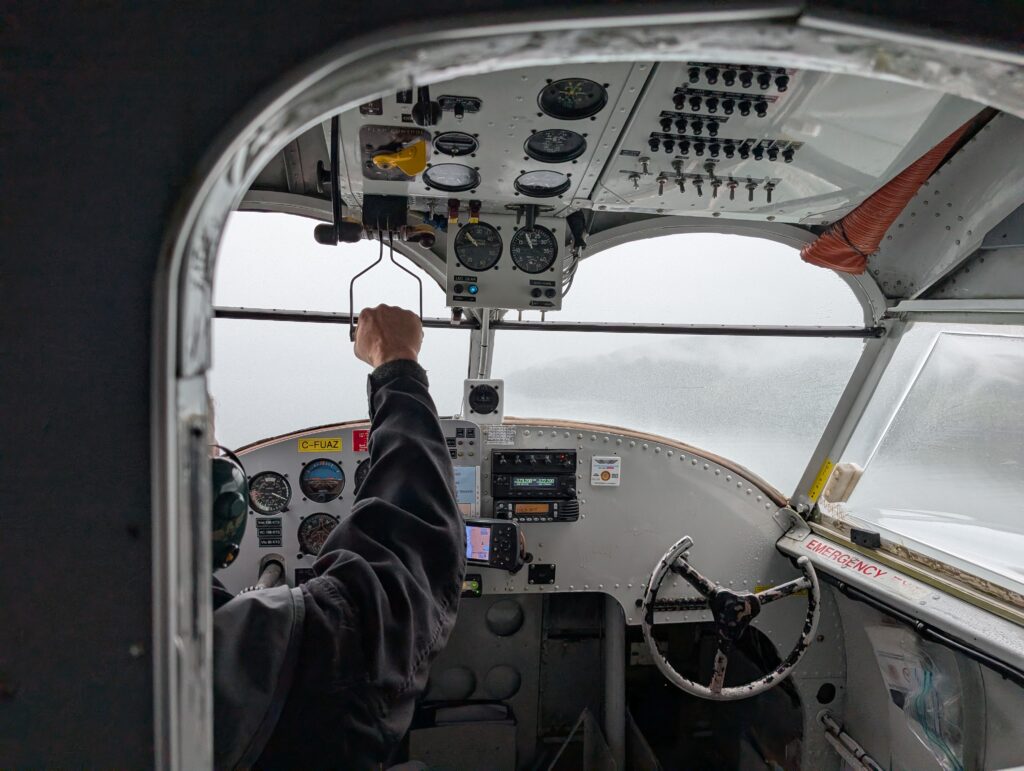
    The pilot, constantly monitoring his instruments, flew us along the coast and up Rivers Inlet. The mist hovered around us. I think he was flying by VFR (Visual Flight Rules), relying on visible landmarks to pilot the Grumman Goose up the fjord. Very impressive.

    We seemed to be skirting the southern side of the Rivers Inlet.

    The northern side was a shadow on our periphery. An atmospheric wonderland!


    We flew low over the village itself,


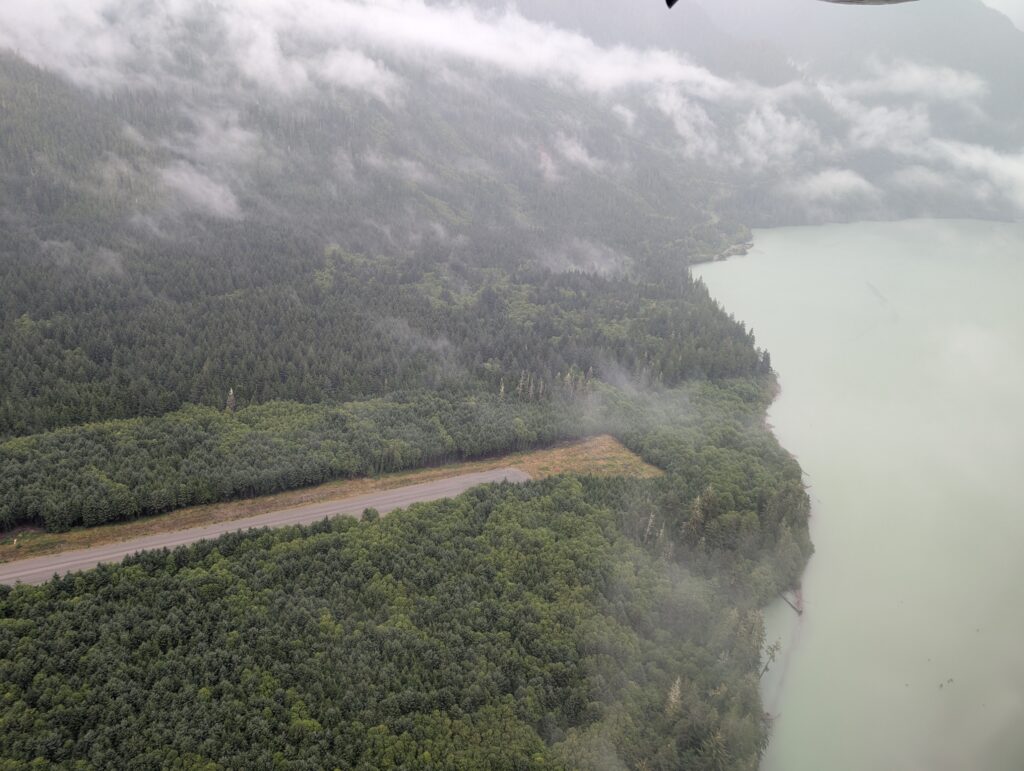
    and out over Owikeno Lake before turning to land at the gravel airstrip.


    I had arrived at Wuikinuxv, where we’ll live for the next year or two, or if it’s a good stretch then maybe three.

  • Wuikinuxv – an overview

    Wuikinuxv – an overview


    In mid-August we arrived in Wuikinuxv. It was a staggered arrival – me first with OrangePekoe, on a very rainy day.

    A week or so later Nigel arrived with Granville.

    Our vehicle and the furniture we purchased came on the barge a week after we arrived.

    Our accommodation was not ready until mid-September. We moved in as soon as the inside was habitable. The rest of the work will happen over time.


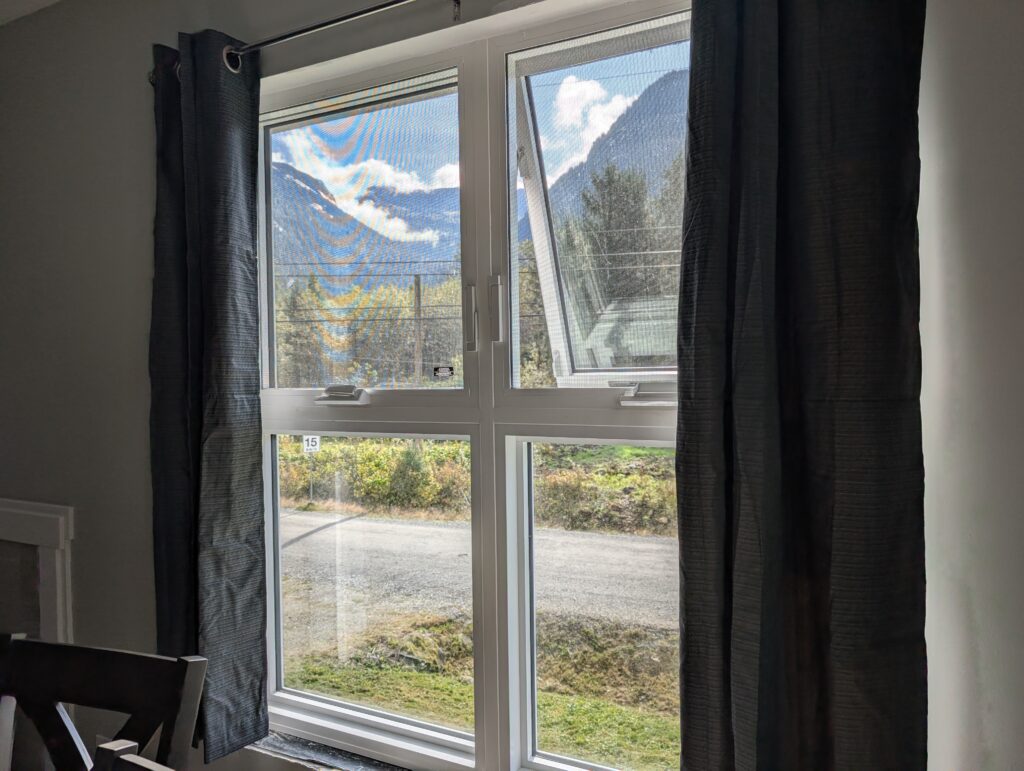
    Our apartment is lovely – many windows make it bright inside, and we look to beautiful views outside.

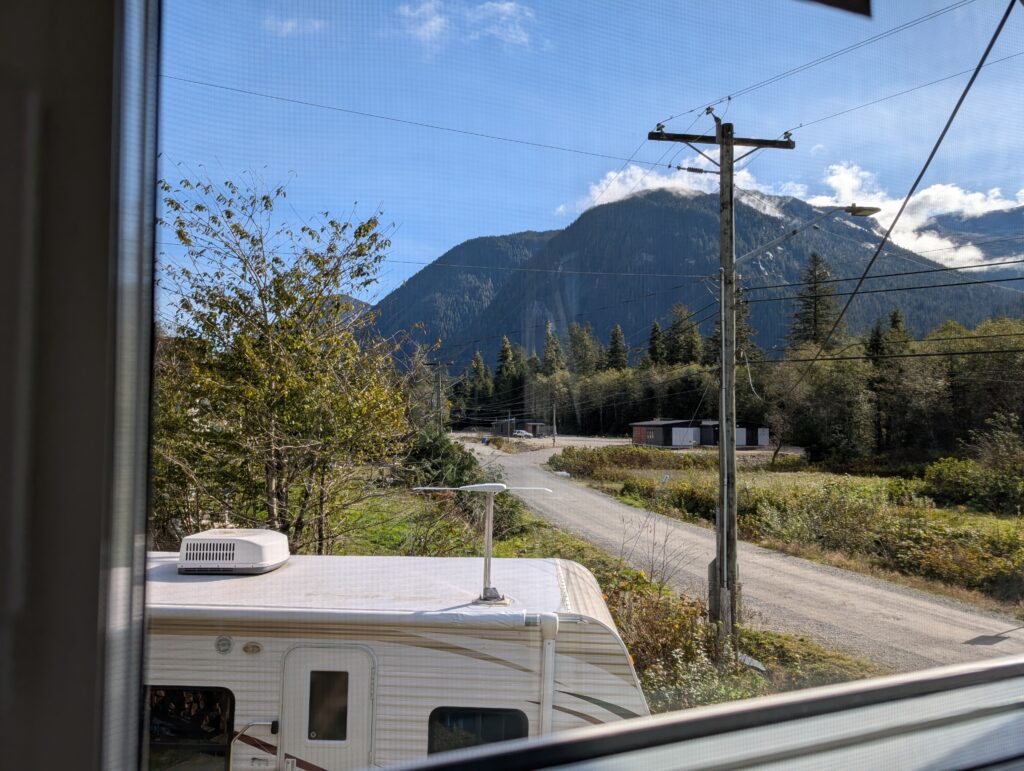
    We look past the powerlines, and the temporary construction trailer to see the mountains that surround us.

    They change by the minute with the play of light and shadow, sometimes engulfed with mist, sometimes etched against the sky.


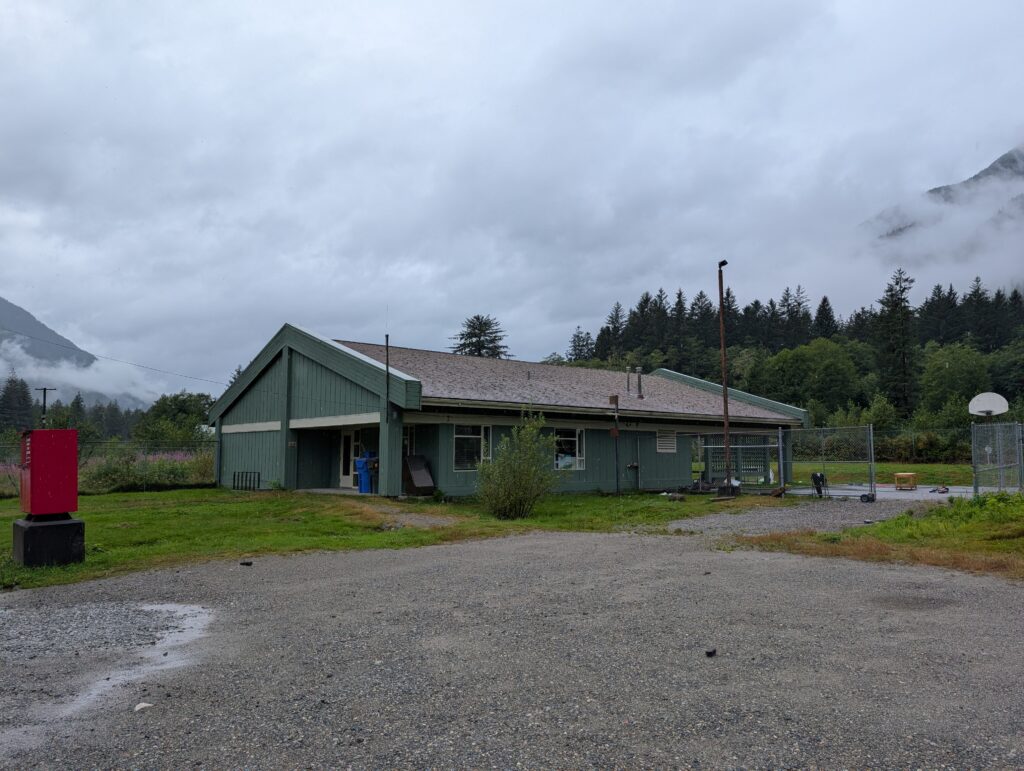
    Work (the green building) is a couple of minutes walk away. I’m there at least 30-minutes before the learners arrive. The school has two classrooms, one for elementary school and one for secondary school. There are eleven students, six are in the elementary school which is my purview.


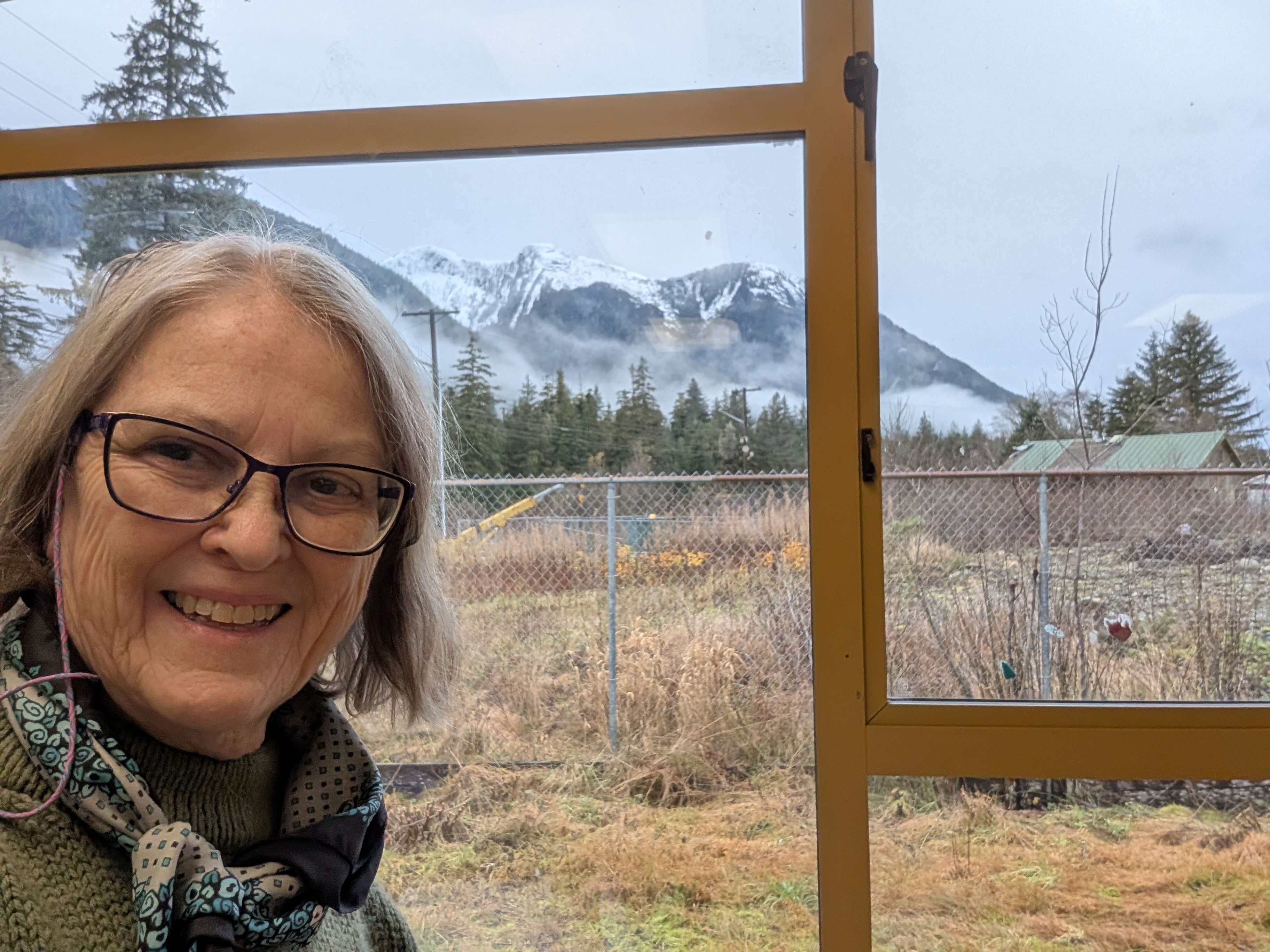
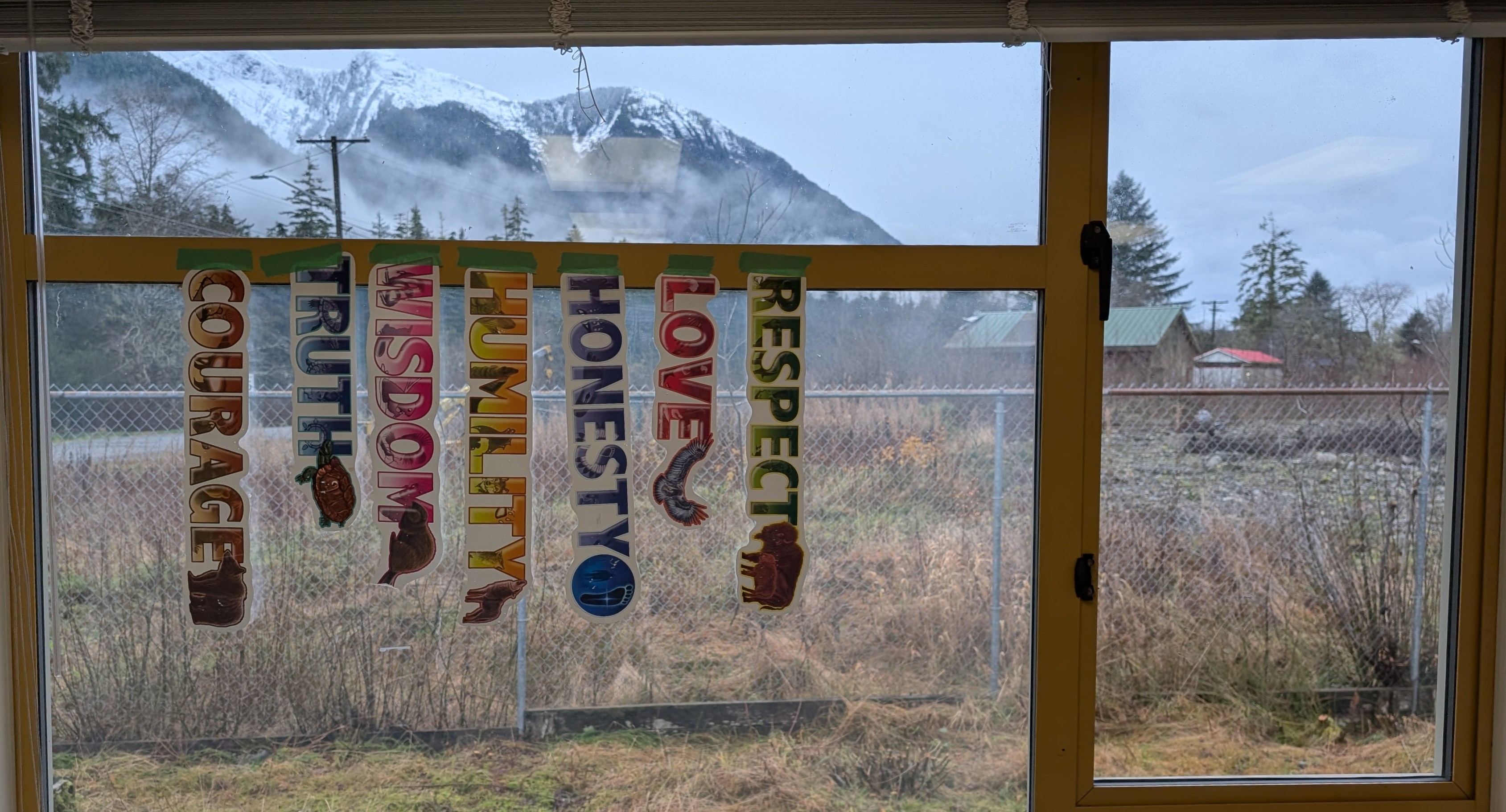
    Like at our apartment, work has large windows. The view is a delight every day.


    The youngsters are an interesting mix of skills, abilities and interests. Working with them is a positive challenge. I’m looking forward to the next year or two, helping them reach towards their potential.

    We celebrated a return to school with a carnival.


    My work is what brought us here. It’s not the only reason why we are here. Living in one of Canada’s iconic landscapes is keeping us here. The village is surrounded by mountains that rise up out of the water. The water – that’s a deep fjord cutting into the British Columbia coast. The best view of the Rivers Inlet fjord is from the government wharf at the western end of the village.


    The fjord narrows at the village, then widens out again to a long lake.

    The narrowing in the channel is a glacial drift, left behind when the Cordilleran ice sheet receded, more than 5 000 years ago.

    The narrow river between fjord and lake is rock-ridden, making it a tad treacherous for those uninitiated to the safe route.

    There is a boat launch about half-way along the river where smaller boats are put in the water.


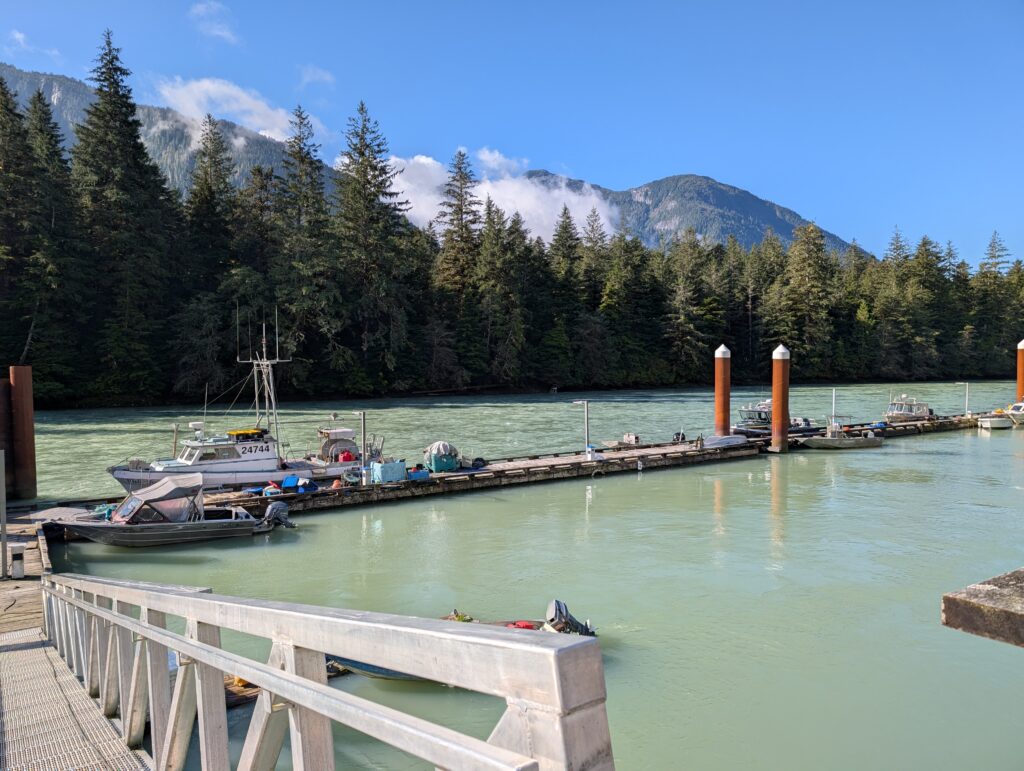
    The larger boats are docked at the village small boat harbour. That includes the Search & Rescue boat, and one of the local fishing boats.

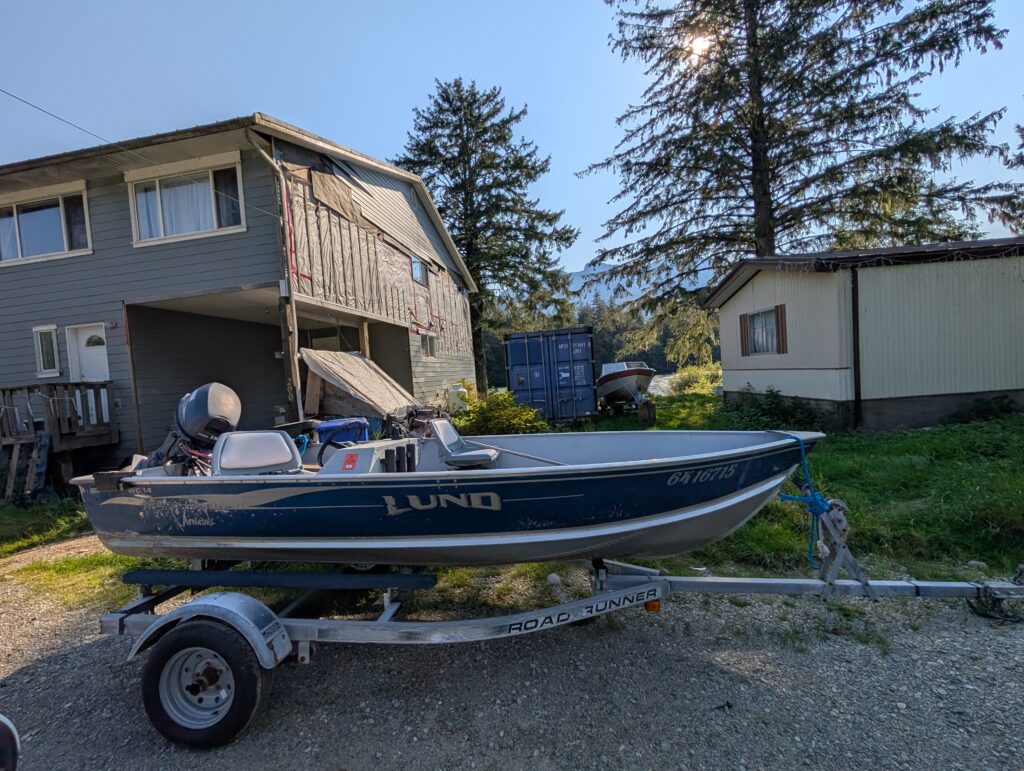
    Nigel bought a boat, which he might tie up at the harbour, but likely it’ll remain on its boat trailer and he’ll take it to the boat launch when he decides to go fishing.
    A boat! Yes. Within a week of arriving, Nigel bought a boat. It was meant to be, it seems. Someone was selling a boat in very good condition, with all the accoutrements plus a trailer – everything on his checklist – for a reasonable price. He couldn’t resist. So, now Nigel owns a fine boat. He hasn’t taken it out on the water because those in the know say he needs to go with someone who knows the water a few times before he goes out alone. He is following that advice.


    Needing a project, Nigel has been working at the wood-shop. This is a building with plenty of wood-working equipment available to interested persons. There are a couple of others who frequent the wood-shop as well. They work together on their individual projects. Some lovely work is happening in that shop.


    Nigel is crafting a table. The legs are done.


    We are slowly settling into daily life in Wuikinuxv.